Loading page, please wait…
What are the Key Facts Regarding Oysters’ Antimicrobial Properties? - UPSC Environment And Ecology
What is What are the Key Facts Regarding Oysters’ Antimicrobial Properties? in UPSC Environment And Ecology?
What are the Key Facts Regarding Oysters’ Antimicrobial Properties? is a key topic under Environment And Ecology for UPSC Civil Services Examination. Key points include: Oysters possess potent antimicrobial proteins and peptides in their hemolymph.. These compounds can kill bacteria (e.g., Streptococcus spp.), inhibit biofilms, and enhance conventional antibiotics (2-32x).. Oysters have strong natural immune defenses due to their marine environment.. Understanding this topic is essential for both UPSC Prelims and Mains preparation.
Why is What are the Key Facts Regarding Oysters’ Antimicrobial Properties? important for UPSC exam?
What are the Key Facts Regarding Oysters’ Antimicrobial Properties? is a Medium-level topic in UPSC Environment And Ecology. It is tested in both Prelims (factual MCQs) and Mains (analytical answer writing). Previous year UPSC questions have frequently covered aspects of What are the Key Facts Regarding Oysters’ Antimicrobial Properties?, making it essential for comprehensive IAS preparation.
How to prepare What are the Key Facts Regarding Oysters’ Antimicrobial Properties? for UPSC?
To prepare What are the Key Facts Regarding Oysters’ Antimicrobial Properties? for UPSC: (1) Study the comprehensive notes covering all key concepts on Vaidra. (2) Practice previous year questions on this topic. (3) Connect it with current affairs using daily updates. (4) Revise using key takeaways and mind maps available for Environment And Ecology. (5) Write practice answers linking What are the Key Facts Regarding Oysters’ Antimicrobial Properties? to related GS Paper topics.
Key takeaways of What are the Key Facts Regarding Oysters’ Antimicrobial Properties? for UPSC
- Oysters possess potent antimicrobial proteins and peptides in their hemolymph.
- These compounds can kill bacteria (e.g., Streptococcus spp.), inhibit biofilms, and enhance conventional antibiotics (2-32x).
- Oysters have strong natural immune defenses due to their marine environment.
- Nature is a primary source for antibiotics; over 90% of current and 65% of developing antibiotics are naturally derived.
- Oysters have been used in Traditional Chinese Medicine and Indigenous Australian health practices.
- Their properties offer a promising avenue to combat the global Antimicrobial Resistance (AMR) crisis, which causes millions of deaths annually.
What are the Key Facts Regarding Oysters’ Antimicrobial Properties?
Medium⏱️ 8 min read
environment and ecology
📖 Introduction
Introduction to Oysters' Antimicrobial Properties
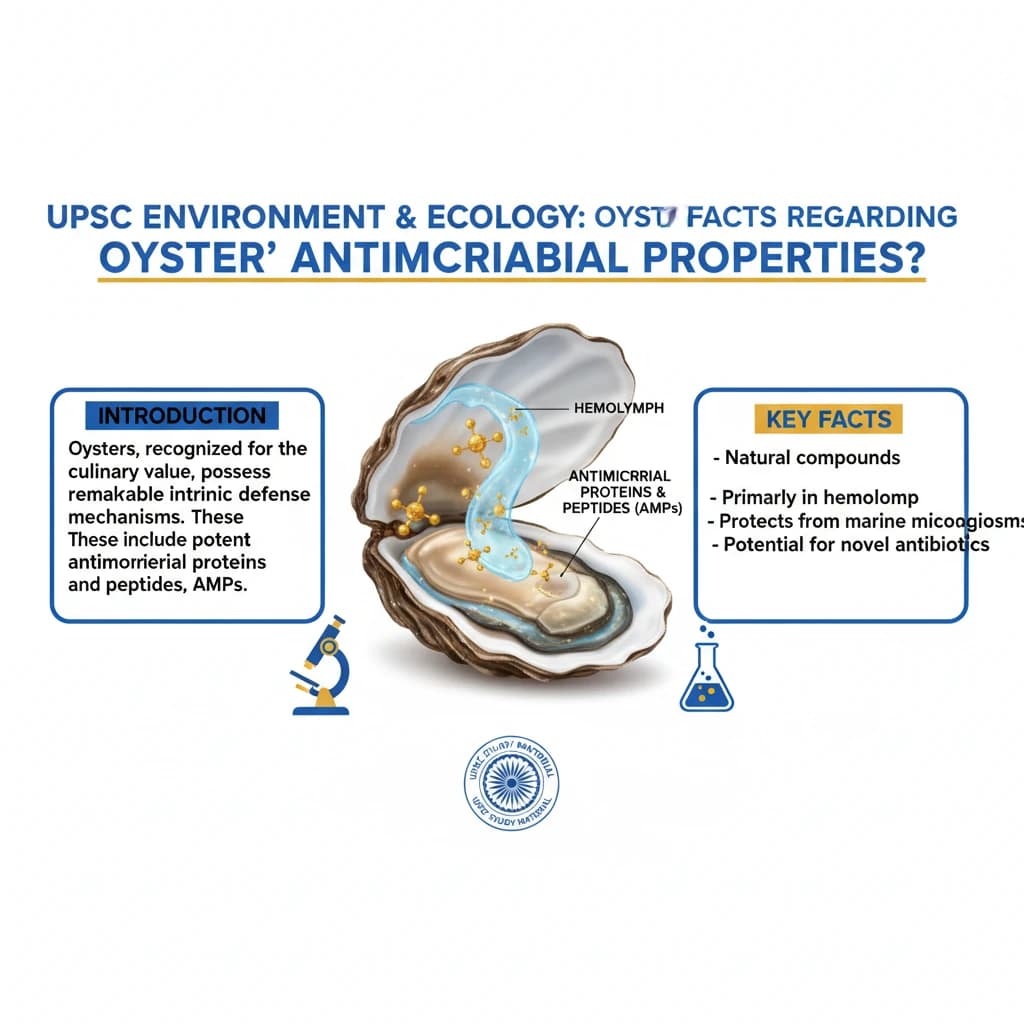
Oysters, known for their ecological role in marine environments, possess remarkable natural defenses. Recent research highlights their significant antimicrobial properties, offering potential solutions to the global challenge of Antimicrobial Resistance (AMR).
These properties are derived primarily from their hemolymph, the invertebrate equivalent of blood, which contains potent antimicrobial proteins and peptides.
Key Antimicrobial Actions of Oyster Hemolymph
The compounds found in oyster hemolymph exhibit a range of powerful actions against harmful microorganisms. These capabilities make oysters a promising source for new therapeutic agents.
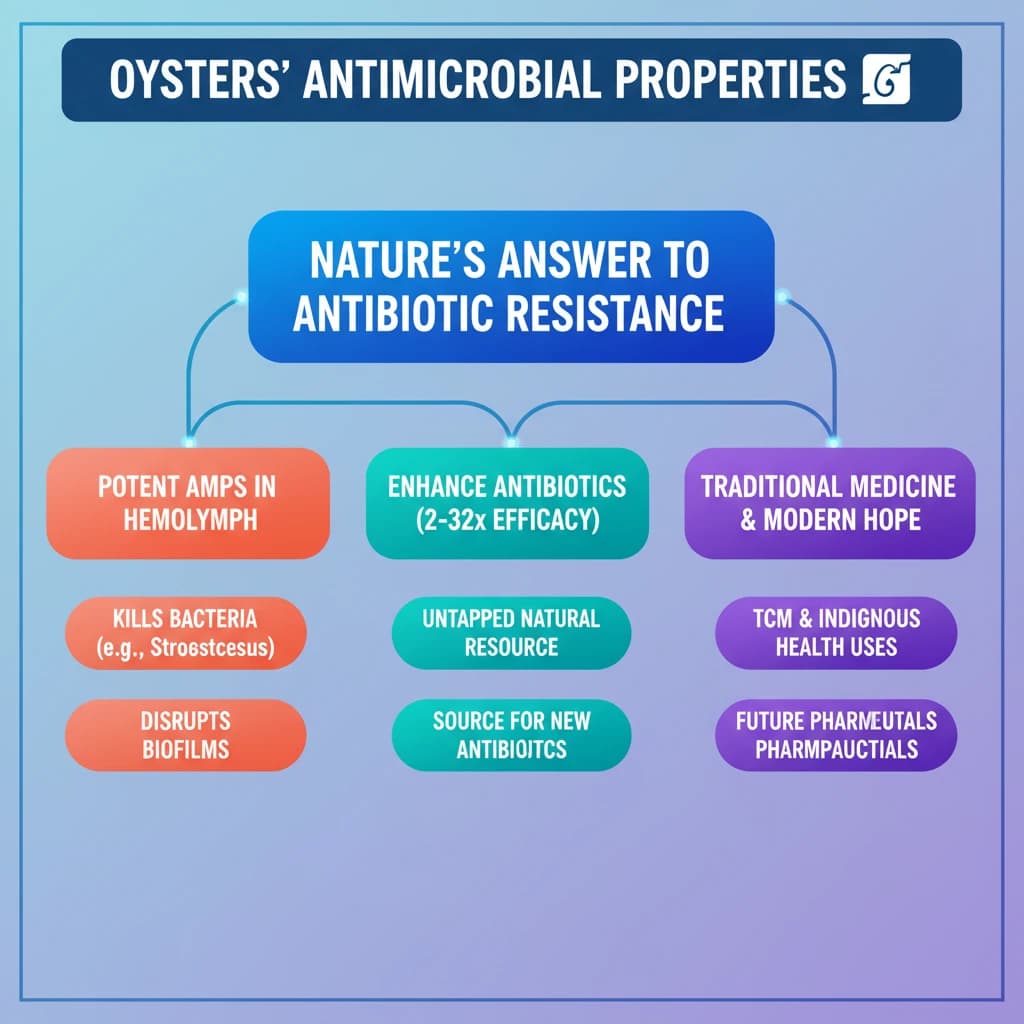
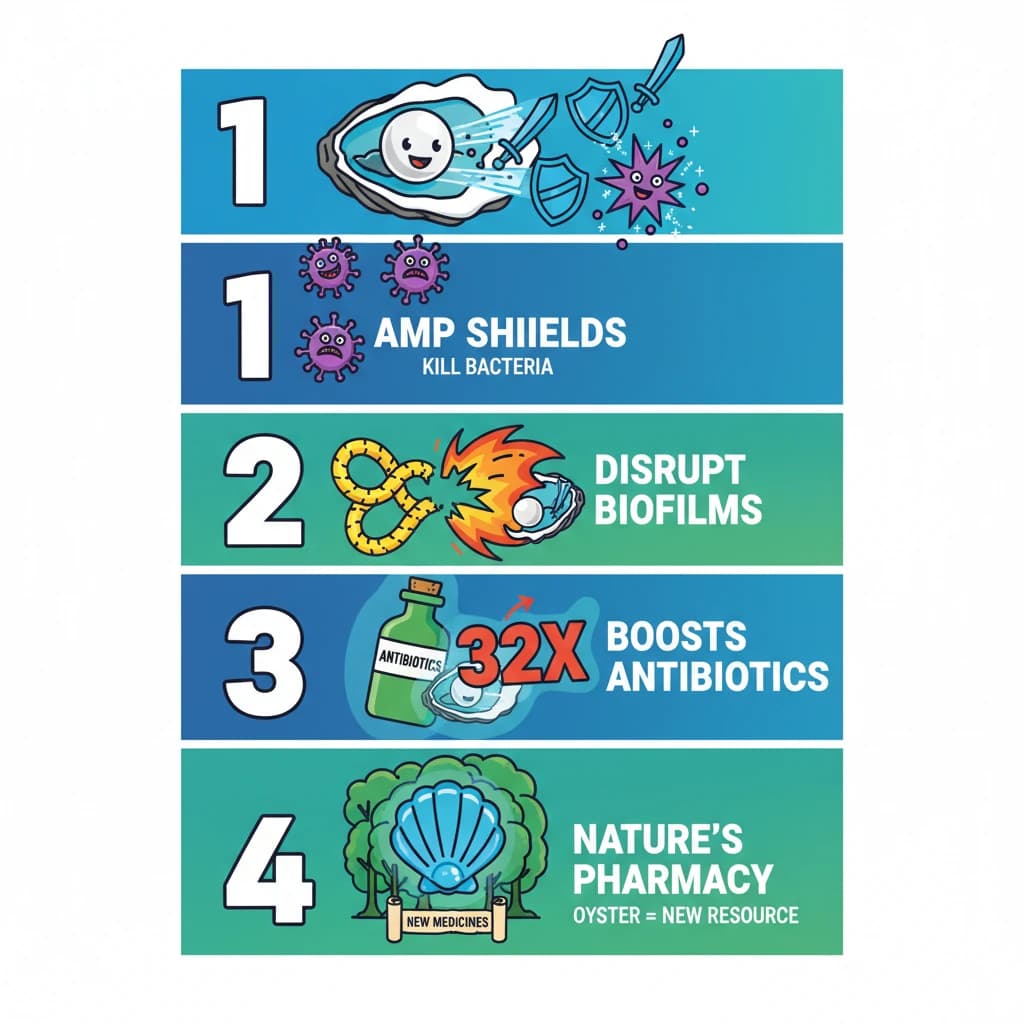
- Bacterial Eradication: Oyster hemolymph can effectively kill bacteria, including species like Streptococcus spp., which are responsible for severe human infections such as pneumonia, tonsillitis, and rheumatic fever.
- Biofilm Disruption: A critical challenge in treating bacterial infections is the formation of biofilms. These protective layers shield bacteria from antibiotics and the host's immune system. Oyster compounds can inhibit and penetrate biofilms, making bacteria more vulnerable.
- Antibiotic Potentiation: Beyond direct action, oyster extracts can significantly enhance the efficacy of conventional antibiotics. Studies show they can boost antibiotic performance by a factor of 2 to 32 times, suggesting a synergistic effect.
Oysters' Robust Immune Defenses
Living in diverse and pathogen-rich marine environments, oysters have evolved highly effective immune defenses. This constant exposure has led to the development of a sophisticated internal protective system.
Their hemolymph is a rich source of various antiviral and antibacterial proteins and peptides. These agents are effective against a broad spectrum of both human and marine pathogens, highlighting their broad-spectrum protective capabilities.
Key Concept: Antimicrobial Peptides (AMPs)
Antimicrobial Peptides (AMPs) are a diverse class of molecules that are part of the innate immune system across various life forms. They typically act by disrupting bacterial cell membranes, offering a different mechanism of action compared to many traditional antibiotics.
Nature as a Source for New Antimicrobial Agents
The search for new antibiotics often leads back to natural sources. The majority of existing and developing antimicrobial drugs originate from the natural world, underscoring its importance in drug discovery.
Antibiotic Origin Statistics:
- Over 90% of antibiotics currently used by humans are derived from nature.
- Over 65% of antibiotics under recent development also originate from natural sources.
Traditional Uses and Historical Significance
The therapeutic potential of oysters is not a new discovery; it has been recognized and utilized in various traditional medicine systems for centuries.
- Traditional Chinese Medicine (TCM): Oysters have been historically used in TCM for treating conditions related to respiratory and inflammatory issues.
- Indigenous Australian Health Practices: Oysters are also an integral component of the traditional health practices of Indigenous Australians, indicating a long-standing understanding of their medicinal benefits.
UPSC Insight: Connecting Traditional Knowledge with Modern Science
This aspect highlights the importance of traditional ecological knowledge and its potential validation through modern scientific research. UPSC often asks about the convergence of traditional practices and contemporary scientific advancements, especially in areas like health and sustainable resource management.
The Looming Threat of Antimicrobial Resistance (AMR)
The discovery of new antimicrobial agents, such as those from oysters, is crucial in the face of the escalating global crisis of Antimicrobial Resistance (AMR). AMR renders existing antibiotics ineffective, posing a severe threat to global public health.
Global AMR Impact:
- Globally, nearly 5 million people die from antimicrobial resistant infections each year.
- The annual toll of AMR infections is projected to rise by 70%, leading to an estimated 40 million deaths between 2025 and 2050.
These stark figures underscore the urgent need for novel antimicrobial therapies and strategies to combat the growing resistance of pathogens.
💡 Key Takeaways
- •Oysters possess potent antimicrobial proteins and peptides in their hemolymph.
- •These compounds can kill bacteria (e.g., Streptococcus spp.), inhibit biofilms, and enhance conventional antibiotics (2-32x).
- •Oysters have strong natural immune defenses due to their marine environment.
- •Nature is a primary source for antibiotics; over 90% of current and 65% of developing antibiotics are naturally derived.
- •Oysters have been used in Traditional Chinese Medicine and Indigenous Australian health practices.
- •Their properties offer a promising avenue to combat the global Antimicrobial Resistance (AMR) crisis, which causes millions of deaths annually.
🧠 Memory Techniques
95% Verified Content