Loading page, please wait…
What are the Key Findings of the Analysis? - UPSC Environment And Ecology
What is What are the Key Findings of the Analysis? in UPSC Environment And Ecology?
What are the Key Findings of the Analysis? is a key topic under Environment And Ecology for UPSC Civil Services Examination. Key points include: Radioactive discharges from nuclear plants have a minimal environmental impact, with concentrations often below detection limits beyond 5 km.. Gaseous discharges include noble gases, Argon-41, radioiodine, and particulates like cobalt-60, strontium-90, caesium-137, and tritium.. Liquid discharges contain fission products, radioiodine, tritium, strontium-90, caesium-137, and activation products like cobalt-60.. Understanding this topic is essential for both UPSC Prelims and Mains preparation.
Why is What are the Key Findings of the Analysis? important for UPSC exam?
What are the Key Findings of the Analysis? is a Medium-level topic in UPSC Environment And Ecology. It is tested in both Prelims (factual MCQs) and Mains (analytical answer writing). Previous year UPSC questions have frequently covered aspects of What are the Key Findings of the Analysis?, making it essential for comprehensive IAS preparation.
How to prepare What are the Key Findings of the Analysis? for UPSC?
To prepare What are the Key Findings of the Analysis? for UPSC: (1) Study the comprehensive notes covering all key concepts on Vaidra. (2) Practice previous year questions on this topic. (3) Connect it with current affairs using daily updates. (4) Revise using key takeaways and mind maps available for Environment And Ecology. (5) Write practice answers linking What are the Key Findings of the Analysis? to related GS Paper topics.
Key takeaways of What are the Key Findings of the Analysis? for UPSC
- Radioactive discharges from nuclear plants have a minimal environmental impact, with concentrations often below detection limits beyond 5 km.
- Gaseous discharges include noble gases, Argon-41, radioiodine, and particulates like cobalt-60, strontium-90, caesium-137, and tritium.
- Liquid discharges contain fission products, radioiodine, tritium, strontium-90, caesium-137, and activation products like cobalt-60.
- Strict regulatory frameworks and continuous monitoring ensure safety and adherence to 'As Low As Reasonably Achievable' (ALARA) principles.
- Nuclear energy is a viable clean energy source, contingent on robust waste management and environmental protection.
What are the Key Findings of the Analysis?
Medium⏱️ 8 min read
environment and ecology
📖 Introduction
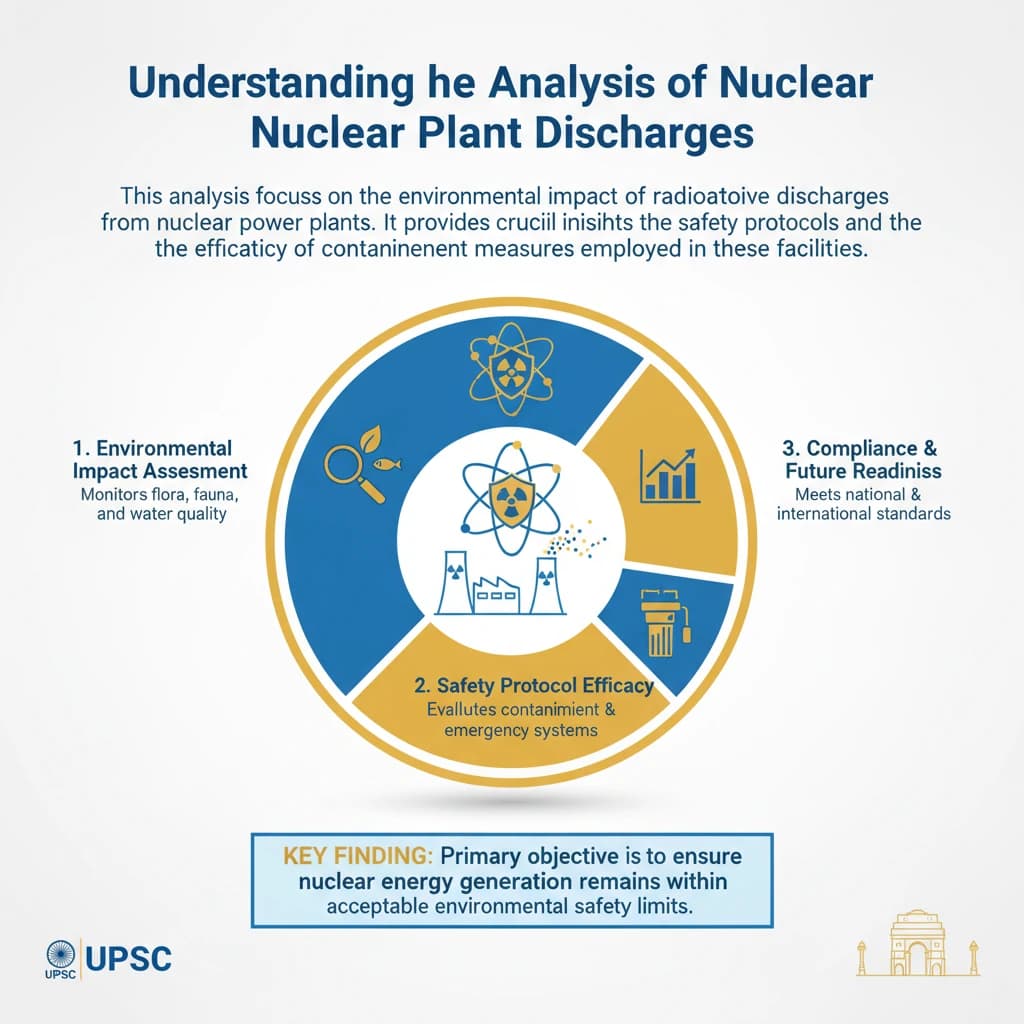
Understanding the Analysis of Nuclear Plant Discharges
This analysis focuses on the environmental impact of radioactive discharges from nuclear power plants. It provides crucial insights into the safety protocols and the efficacy of containment measures employed in these facilities.
The primary objective of such analyses is to ensure that nuclear energy generation remains within acceptable environmental safety limits, safeguarding both ecosystems and human health.
Minimal Environmental Impact Identified
A significant finding of the analysis indicates that the radioactive discharges from the nuclear plants have a minimal impact on the surrounding environment. This suggests effective management and control systems are in place.
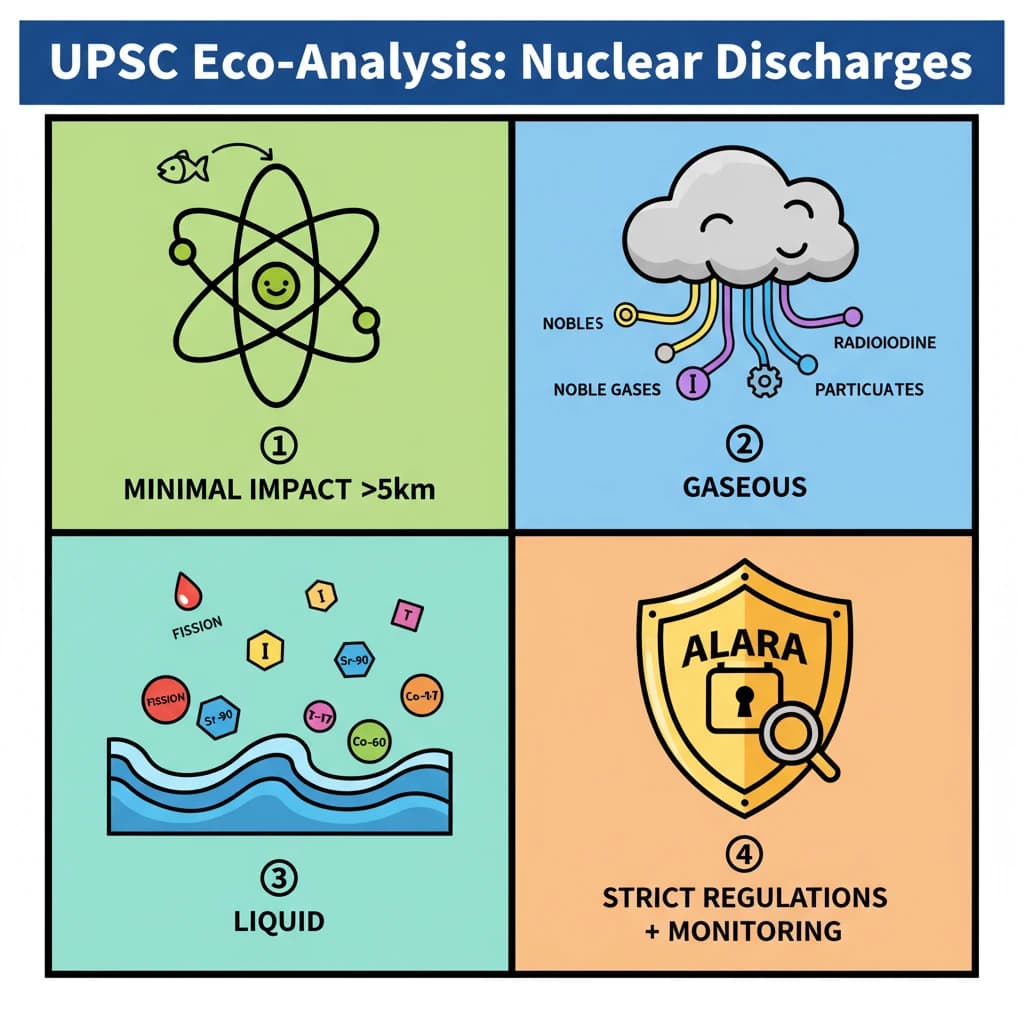
Specifically, the concentrations of fission products detected beyond a 5 km radius from the plants were found to be extremely low. These levels were consistently below the minimum detectable activity of the instruments used for monitoring.
This implies that the monitored values are considered “insignificant” in terms of their potential environmental or health impact, reinforcing the safety claims associated with modern nuclear power operations.
Types of Radioactive Discharges
Nuclear power plants generate various types of radioactive waste, which are carefully managed and, in some cases, discharged into the environment after rigorous treatment to meet regulatory standards.
The analysis categorizes these discharges into two main forms: gaseous waste released into the atmosphere and liquid discharge into water bodies.
Gaseous Waste Discharges
Gaseous waste released into the atmosphere comprises several types of radionuclides. These are carefully filtered and monitored before release.
- Fission product noble gases: Inert gases produced during nuclear fission.
- Argon 41: An activation product from neutron interaction with air.
- Radioiodine: Radioactive isotopes of iodine.
- Particulate radionuclides: These include cobalt-60, strontium-90, caesium-137, and tritium.
Liquid Waste Discharges
Liquid discharge, typically released into water bodies, also contains various radionuclides. These liquids undergo extensive purification processes.
- Fission product radionuclides: Various radioactive elements resulting from fission.
- Radioiodine: Radioactive isotopes of iodine.
- Tritium: A radioactive isotope of hydrogen.
- Strontium-90: A hazardous fission product.
- Caesium-137: Another significant fission product.
- Activation products: Such as cobalt-60, formed by neutron activation of structural materials.
For UPSC Mains GS3, understanding the types of radioactive waste and their environmental impact is crucial for questions on energy, environment, and disaster management. Emphasize the 'minimal impact' finding but also list the specific radionuclides.
💡 Key Takeaways
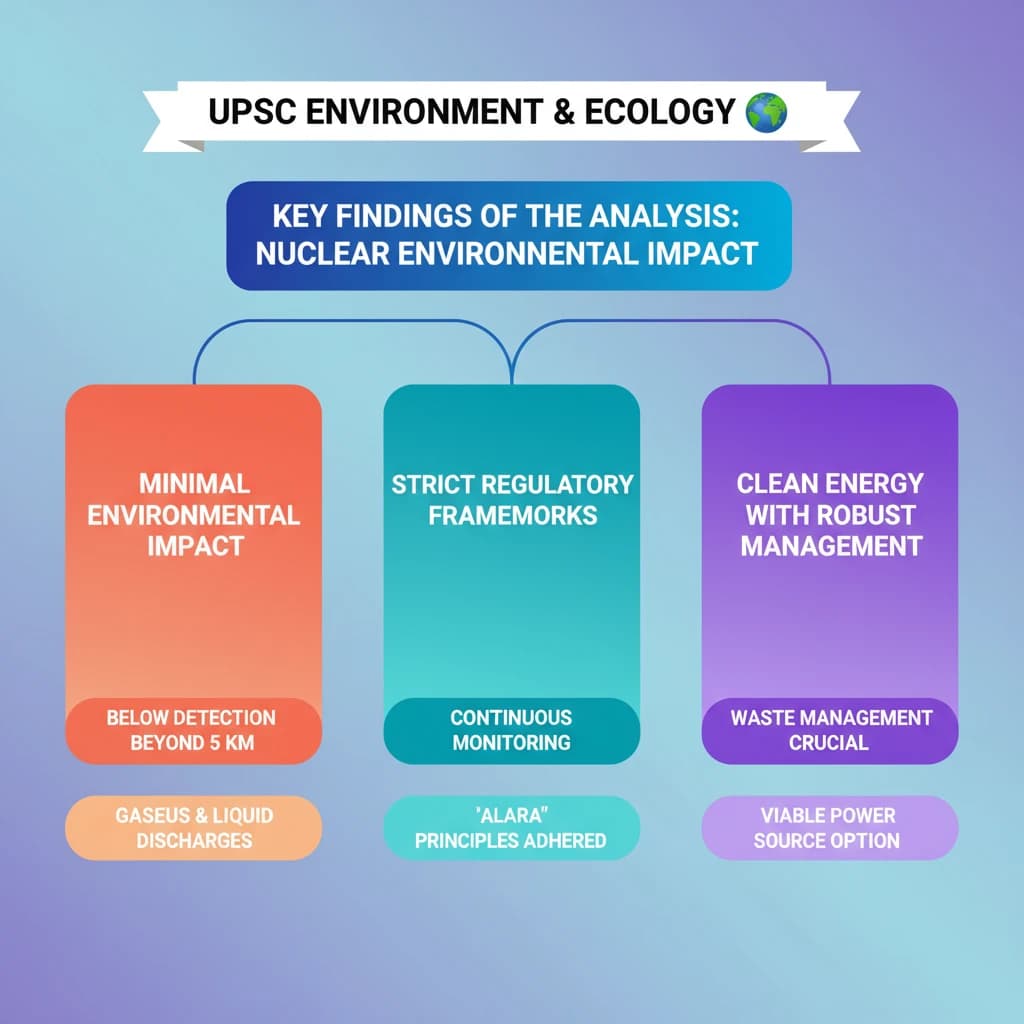
- •Radioactive discharges from nuclear plants have a minimal environmental impact, with concentrations often below detection limits beyond 5 km.
- •Gaseous discharges include noble gases, Argon-41, radioiodine, and particulates like cobalt-60, strontium-90, caesium-137, and tritium.
- •Liquid discharges contain fission products, radioiodine, tritium, strontium-90, caesium-137, and activation products like cobalt-60.
- •Strict regulatory frameworks and continuous monitoring ensure safety and adherence to 'As Low As Reasonably Achievable' (ALARA) principles.
- •Nuclear energy is a viable clean energy source, contingent on robust waste management and environmental protection.
🧠 Memory Techniques
95% Verified Content