Loading page, please wait…
What are the Key Points Related to Gupteswar Forest? - UPSC Environment And Ecology
What is What are the Key Points Related to Gupteswar Forest? in UPSC Environment And Ecology?
What are the Key Points Related to Gupteswar Forest? is a key topic under Environment And Ecology for UPSC Civil Services Examination. Key points include: Gupteswar Forest covers 350 hectares, rich in biodiversity and cultural significance due to sacred groves.. It hosts 608 faunal species, including 28 mammals, and notable species like mugger crocodile and Kanger Valley Rock Gecko.. Limestone caves are home to 8 bat species; Hiposideros galeritus and Rhinolophus rouxii are near-threatened (IUCN).. Understanding this topic is essential for both UPSC Prelims and Mains preparation.
Why is What are the Key Points Related to Gupteswar Forest? important for UPSC exam?
What are the Key Points Related to Gupteswar Forest? is a Medium-level topic in UPSC Environment And Ecology. It is tested in both Prelims (factual MCQs) and Mains (analytical answer writing). Previous year UPSC questions have frequently covered aspects of What are the Key Points Related to Gupteswar Forest?, making it essential for comprehensive IAS preparation.
How to prepare What are the Key Points Related to Gupteswar Forest? for UPSC?
To prepare What are the Key Points Related to Gupteswar Forest? for UPSC: (1) Study the comprehensive notes covering all key concepts on Vaidra. (2) Practice previous year questions on this topic. (3) Connect it with current affairs using daily updates. (4) Revise using key takeaways and mind maps available for Environment And Ecology. (5) Write practice answers linking What are the Key Points Related to Gupteswar Forest? to related GS Paper topics.
Key takeaways of What are the Key Points Related to Gupteswar Forest? for UPSC
- Gupteswar Forest covers 350 hectares, rich in biodiversity and cultural significance due to sacred groves.
- It hosts 608 faunal species, including 28 mammals, and notable species like mugger crocodile and Kanger Valley Rock Gecko.
- Limestone caves are home to 8 bat species; Hiposideros galeritus and Rhinolophus rouxii are near-threatened (IUCN).
- Forest boasts rich floral diversity, including threatened medicinal plants like Indian trumpet tree and Indian snakeroot.
- Sacred groves highlight the importance of traditional community-led conservation practices.
- Represents a critical area for biodiversity protection and cultural heritage in India.
What are the Key Points Related to Gupteswar Forest?
Medium⏱️ 7 min read
environment and ecology
📖 Introduction
Overview and Cultural Significance
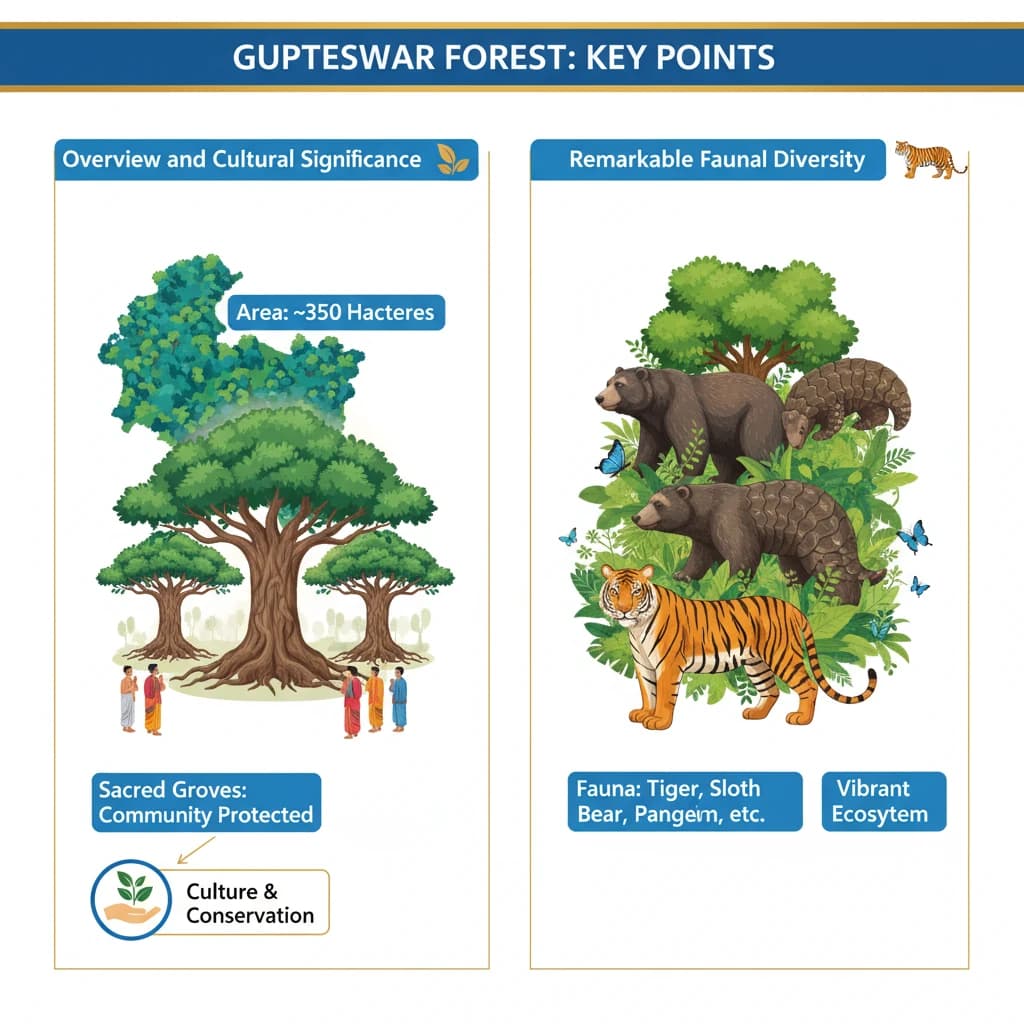
The Gupteswar Forest spans a demarcated area of approximately 350 hectares. This forest holds immense cultural significance, primarily due to its numerous sacred groves. These groves are traditionally revered and protected by the local community, highlighting a deep connection between culture and conservation.
Remarkable Faunal Diversity
The forest is a vibrant ecosystem, boasting a remarkable diversity of flora and fauna. It serves as a habitat for at least 608 faunal species. Among these, a significant number, specifically 28 species, are mammals, contributing to the rich biodiversity of the region.
Gupteswar Forest Key Data:
- Area: 350 hectares
- Total Faunal Species: 608
- Mammal Species: 28
Significant Faunal Species Identified
Several notable faunal species have been documented within the Gupteswar Forest, underscoring its ecological importance. These include a diverse range of reptiles and birds.
- Reptiles: The mugger crocodile and the unique Kanger Valley Rock Gecko.
- Amphibians: The Sacred Grove Bush Frog, a species indicative of healthy sacred grove ecosystems.
- Avifauna (Birds): A variety of birds such as Naktibana, Jerdon’s Baza, Malabar Trogon, Common Hill Myna, White-bellied Woodpecker, and Banded Bay Cuckoo.
Unique Cave Ecosystem and Bat Species
The limestone caves within the Gupteswar Forest provide a specialized habitat for various bat species. These caves are home to eight species of bats, two of which are of particular conservation concern.
Near-Threatened Bat Species:
- Hiposideros galeritus
- Rhinolophus rouxii
Both these species are categorized under the near-threatened category by the IUCN (International Union for Conservation of Nature), highlighting the need for their protection.
Rich Floral Diversity and Threatened Plants
Beyond its faunal wealth, the Gupteswar Forest also exhibits a rich floral diversity. This includes several plant species that are considered threatened, particularly those with medicinal value.
Among the notable threatened medicinal plants found here are the Indian trumpet tree and Indian snakeroot. The presence of such species further emphasizes the forest's ecological importance and its potential as a reservoir for valuable botanical resources.
UPSC Insight: When studying specific forest ecosystems like Gupteswar, remember to note not just the species count but also the presence of endemic, endangered, or near-threatened species, and the role of traditional conservation practices like sacred groves. These points are crucial for both Prelims and Mains answers in GS-III Environment.
💡 Key Takeaways
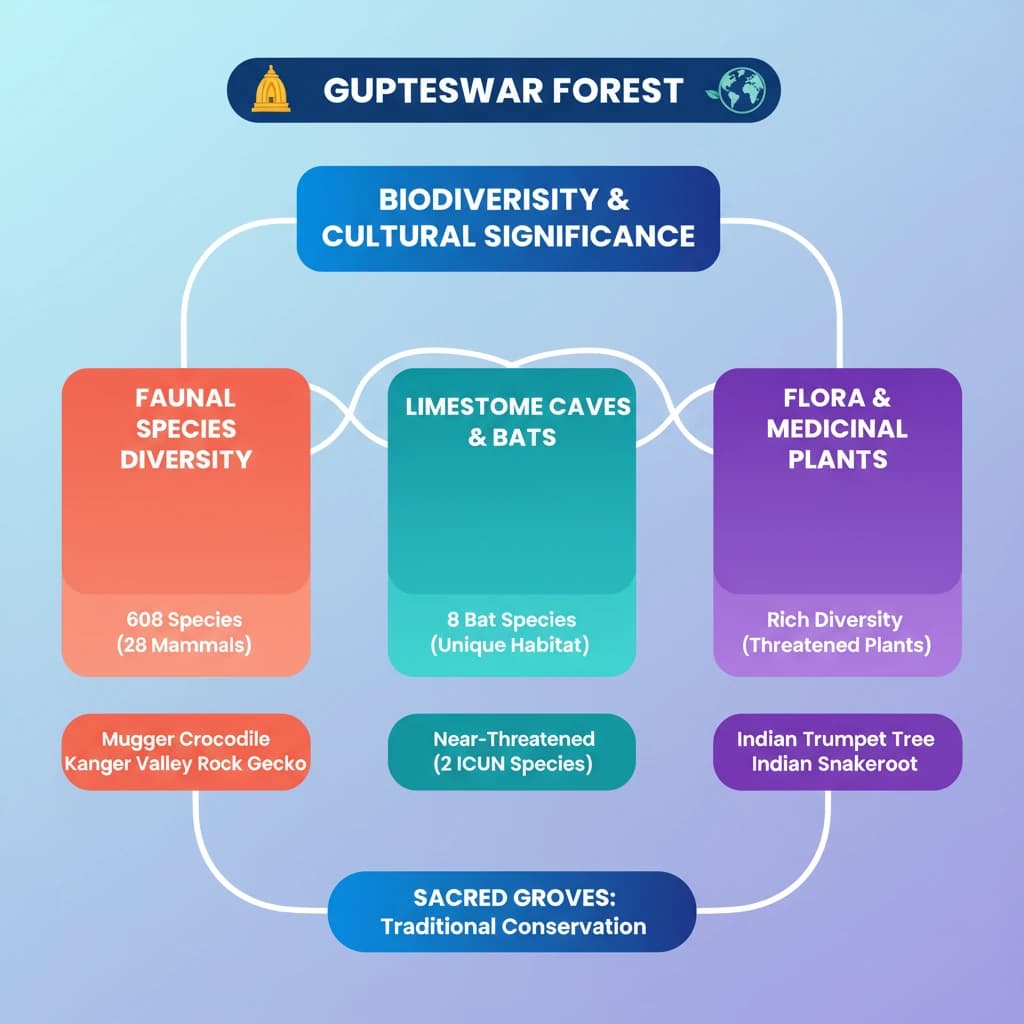
- •Gupteswar Forest covers 350 hectares, rich in biodiversity and cultural significance due to sacred groves.
- •It hosts 608 faunal species, including 28 mammals, and notable species like mugger crocodile and Kanger Valley Rock Gecko.
- •Limestone caves are home to 8 bat species; Hiposideros galeritus and Rhinolophus rouxii are near-threatened (IUCN).
- •Forest boasts rich floral diversity, including threatened medicinal plants like Indian trumpet tree and Indian snakeroot.
- •Sacred groves highlight the importance of traditional community-led conservation practices.
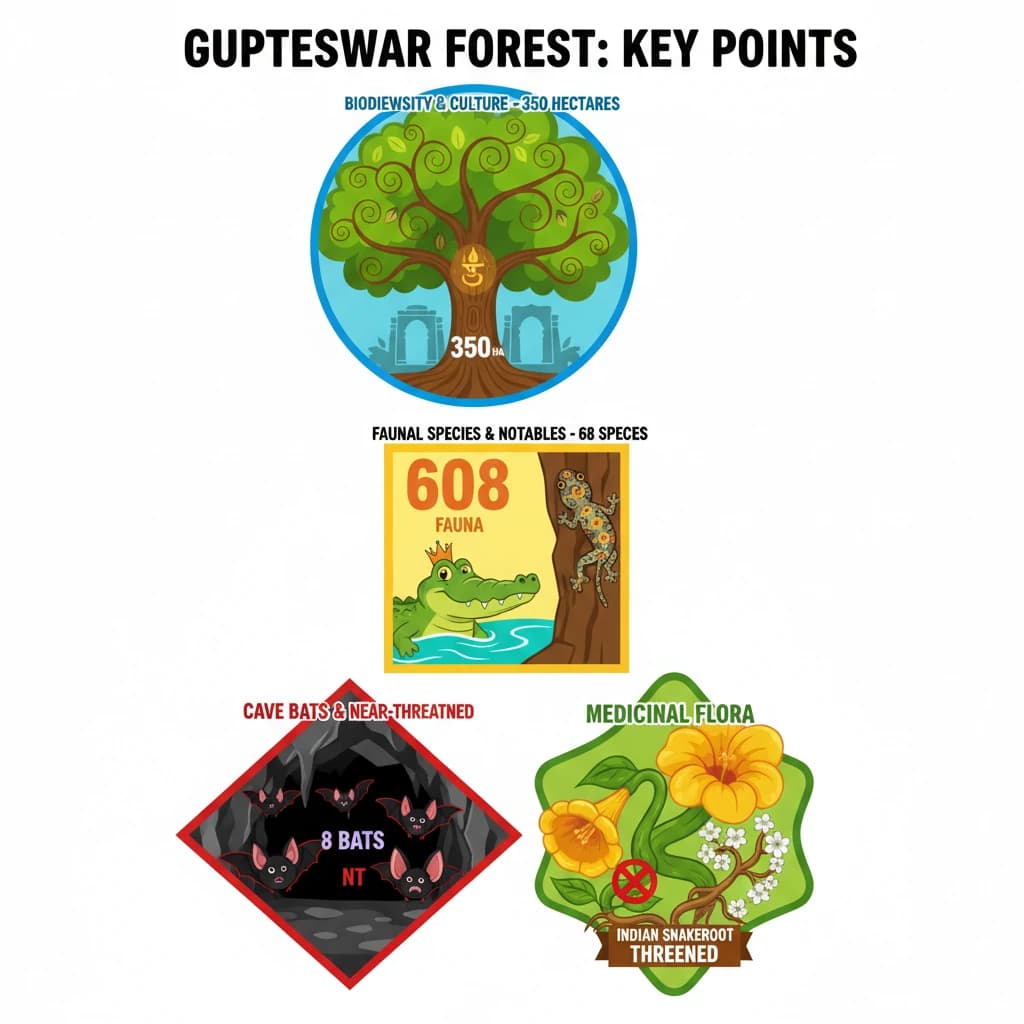
- •Represents a critical area for biodiversity protection and cultural heritage in India.
🧠 Memory Techniques
95% Verified Content
📚 Reference Sources
•IUCN Red List (for Hiposideros galeritus and Rhinolophus rouxii status)