Loading page, please wait…
What are the Major Plants Related to Wolves? - UPSC Environment And Ecology
What is What are the Major Plants Related to Wolves? in UPSC Environment And Ecology?
What are the Major Plants Related to Wolves? is a key topic under Environment And Ecology for UPSC Civil Services Examination. Key points include: Wolves are apex predators (Canidae family) crucial for ecosystem balance.. They act as biocontrol agents, regulating herbivore populations like nilgai and wild boars.. India has two subspecies: Grey Wolf (peninsular) and Himalayan Wolf (northern high-altitudes).. Understanding this topic is essential for both UPSC Prelims and Mains preparation.
Why is What are the Major Plants Related to Wolves? important for UPSC exam?
What are the Major Plants Related to Wolves? is a Medium-level topic in UPSC Environment And Ecology. It is tested in both Prelims (factual MCQs) and Mains (analytical answer writing). Previous year UPSC questions have frequently covered aspects of What are the Major Plants Related to Wolves?, making it essential for comprehensive IAS preparation.
How to prepare What are the Major Plants Related to Wolves? for UPSC?
To prepare What are the Major Plants Related to Wolves? for UPSC: (1) Study the comprehensive notes covering all key concepts on Vaidra. (2) Practice previous year questions on this topic. (3) Connect it with current affairs using daily updates. (4) Revise using key takeaways and mind maps available for Environment And Ecology. (5) Write practice answers linking What are the Major Plants Related to Wolves? to related GS Paper topics.
Key takeaways of What are the Major Plants Related to Wolves? for UPSC
- Wolves are apex predators (Canidae family) crucial for ecosystem balance.
- They act as biocontrol agents, regulating herbivore populations like nilgai and wild boars.
- India has two subspecies: Grey Wolf (peninsular) and Himalayan Wolf (northern high-altitudes).
- Grey Wolf: IUCN Least Concern, WPA Schedule I, CITES Appendix I.
- Himalayan Wolf: IUCN Vulnerable, WPA Schedule I.
- Conservation efforts are vital due to habitat loss and human-wildlife conflict.
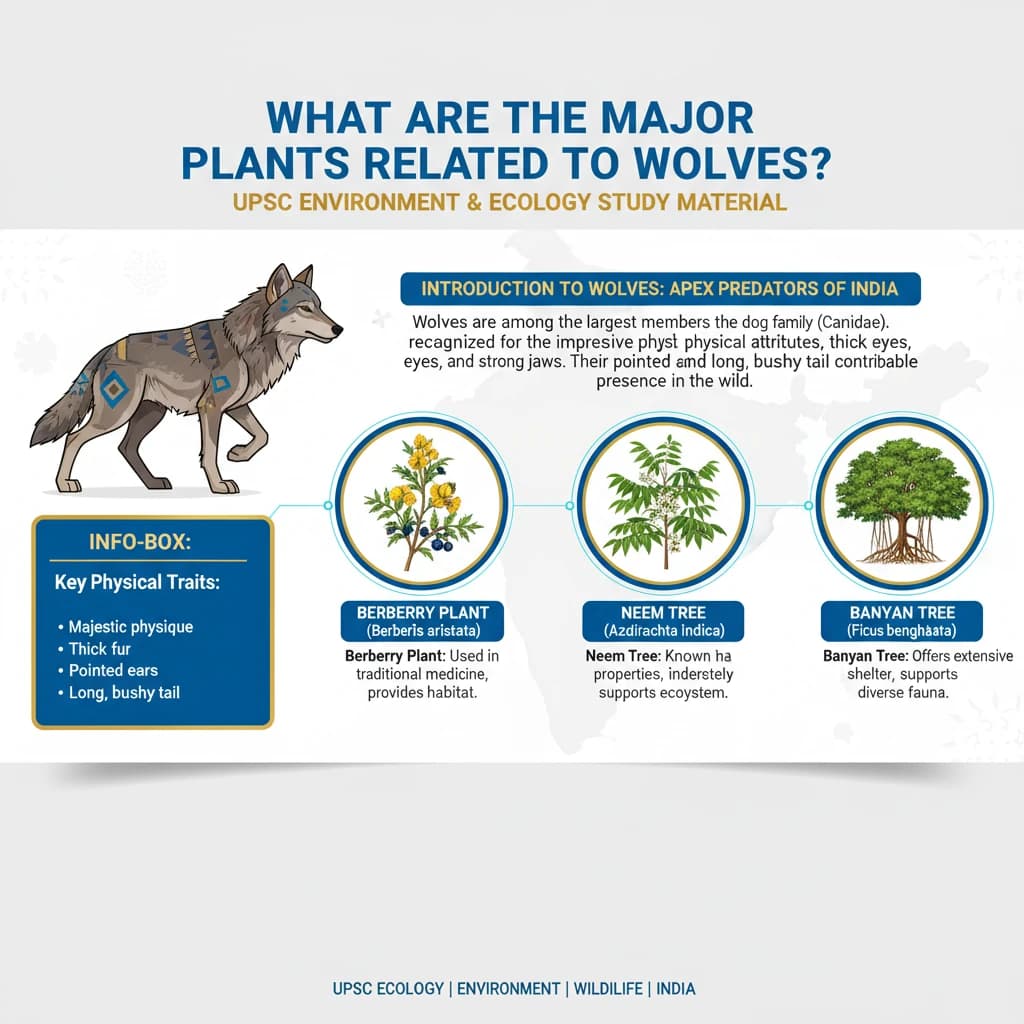
What are the Major Plants Related to Wolves?
Medium⏱️ 8 min read
environment and ecology
📖 Introduction
Introduction to Wolves: Apex Predators of India
Wolves are among the largest members of the dog family (Canidae). They are recognized for their impressive physical attributes, including a majestic physique, thick fur, sharp eyes, and strong jaws. Their pointed ears and long, bushy tail contribute to their formidable presence in the wild.
Key Physical Traits:
- Majestic physique and thick fur
- Sharp eyes and strong jaws
- Pointed ears and a long bushy tail
Ecology and Behavior of Wolves
Wolves are highly social animals, typically living in packs. A pack usually consists of a breeding pair and their offspring, who work together for survival.
Social Structure: Packs collaborate in hunting and raising their young, fostering strong communal bonds.
As apex predators, wolves primarily hunt large ungulates such as deer, elk, and moose. This predatory role is crucial for maintaining the delicate balance of their ecosystems.
Ecological Role: Wolves act as biocontrol agents, regulating populations of wild herbivores like nilgai (blue bulls) and wild boars.
Wolves are also known as communicative masters. Their distinctive howls serve multiple purposes, including strengthening pack bonds, defending territory, and communicating with other wolf packs over long distances.
Wolf Subspecies Found in India
India is home to two distinct wolf subspecies, each adapted to different geographical regions within the country. These subspecies represent a vital part of India's biodiversity.
- Grey Wolf (Canis lupus pallipes): Primarily found in the peninsular region of India.
- Himalayan or Tibetan Wolf (Canis lupus chanco): Inhabits the northern, high-altitude regions of India.
Distribution Range in India
The distribution of wolf subspecies in India is geographically diverse, reflecting their specific habitat requirements and historical ranges. Understanding their range is crucial for conservation efforts.
Grey Wolf Distribution:
- Gujarat
- Rajasthan
- Uttar Pradesh
- Madhya Pradesh
- Maharashtra and other states across the peninsular region.
Himalayan Wolf Distribution:
- Primarily in the Ladakh region.
- Also found in the Lahaul and Spiti region of northeastern Himachal Pradesh, among other high-altitude areas.
Protection Status of Wolves in India
The conservation status of wolf subspecies varies, reflecting different levels of threat and protection measures. These statuses are determined by international and national bodies.
Grey Wolf Protection Status:
- IUCN Red List: Least Concern
- Wildlife Protection Act (India), 1972: Schedule I (highest protection)
- CITES Appendix: I (prohibits international commercial trade)
Himalayan Wolf Protection Status:
- IUCN Red List: Vulnerable
UPSC Insight: Note the difference in IUCN status between the Grey Wolf (Least Concern) and the Himalayan Wolf (Vulnerable). Both are protected under Schedule I of the WPA, 1972, highlighting India's commitment to their conservation.
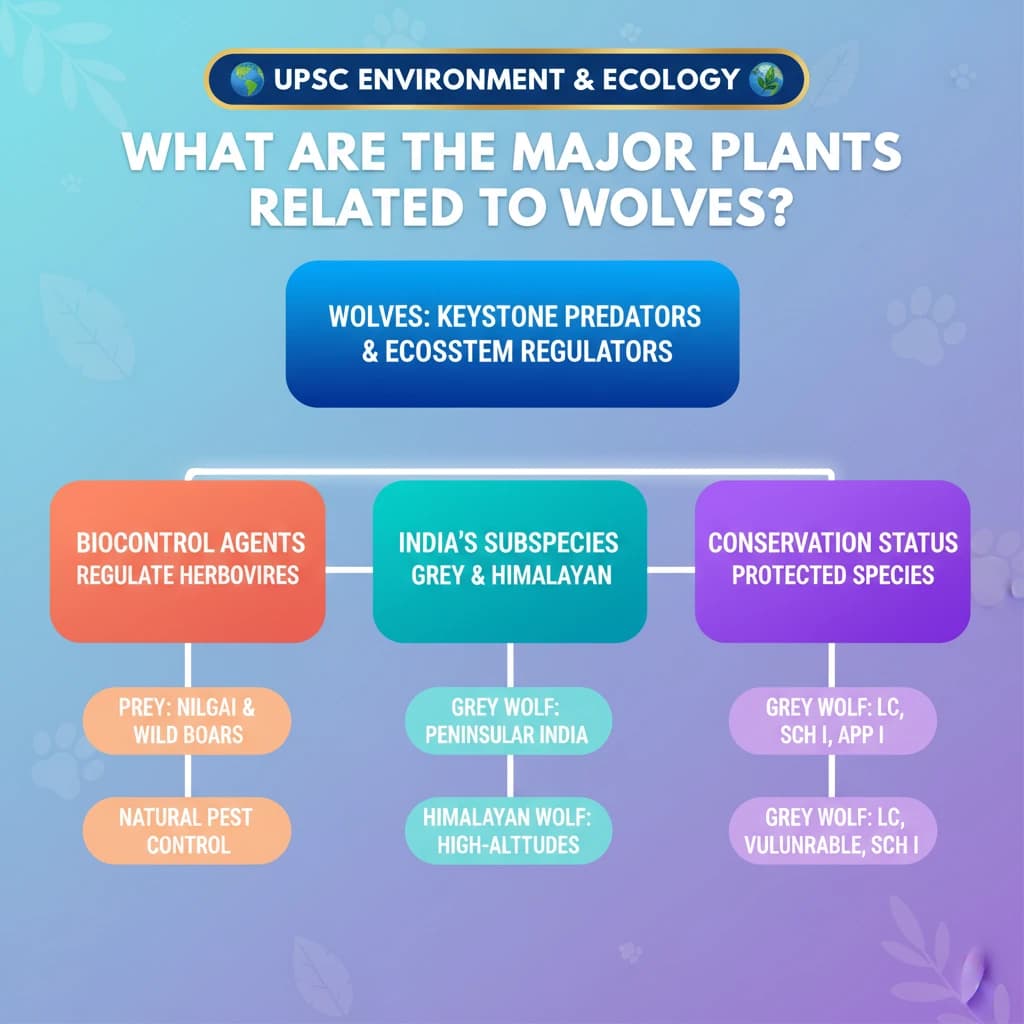
💡 Key Takeaways
- •Wolves are apex predators (Canidae family) crucial for ecosystem balance.
- •They act as biocontrol agents, regulating herbivore populations like nilgai and wild boars.
- •India has two subspecies: Grey Wolf (peninsular) and Himalayan Wolf (northern high-altitudes).
- •Grey Wolf: IUCN Least Concern, WPA Schedule I, CITES Appendix I.
- •Himalayan Wolf: IUCN Vulnerable, WPA Schedule I.
- •Conservation efforts are vital due to habitat loss and human-wildlife conflict.
🧠 Memory Techniques

98% Verified Content
📚 Reference Sources
•IUCN Red List of Threatened Species (for protection status)
•Wildlife Protection Act, 1972 (for Schedule I status)
•CITES Appendices (for international trade status)