Loading page, please wait…
What are the Reasons for High Plastic Pollution in India? - UPSC Environment And Ecology
What is What are the Reasons for High Plastic Pollution in India? in UPSC Environment And Ecology?
What are the Reasons for High Plastic Pollution in India? is a key topic under Environment And Ecology for UPSC Civil Services Examination. Key points include: India's high plastic pollution is driven by rapid population growth, urbanization, and increased consumption.. Inadequate waste management infrastructure, including a lack of sanitary landfills, is a major contributing factor.. Official waste collection rates are often overstated, masking significant operational inefficiencies.. Understanding this topic is essential for both UPSC Prelims and Mains preparation.
Why is What are the Reasons for High Plastic Pollution in India? important for UPSC exam?
What are the Reasons for High Plastic Pollution in India? is a Medium-level topic in UPSC Environment And Ecology. It is tested in both Prelims (factual MCQs) and Mains (analytical answer writing). Previous year UPSC questions have frequently covered aspects of What are the Reasons for High Plastic Pollution in India?, making it essential for comprehensive IAS preparation.
How to prepare What are the Reasons for High Plastic Pollution in India? for UPSC?
To prepare What are the Reasons for High Plastic Pollution in India? for UPSC: (1) Study the comprehensive notes covering all key concepts on Vaidra. (2) Practice previous year questions on this topic. (3) Connect it with current affairs using daily updates. (4) Revise using key takeaways and mind maps available for Environment And Ecology. (5) Write practice answers linking What are the Reasons for High Plastic Pollution in India? to related GS Paper topics.
Key takeaways of What are the Reasons for High Plastic Pollution in India? for UPSC
- India's high plastic pollution is driven by rapid population growth, urbanization, and increased consumption.
- Inadequate waste management infrastructure, including a lack of sanitary landfills, is a major contributing factor.
- Official waste collection rates are often overstated, masking significant operational inefficiencies.
- Open burning of approximately 5.8 million tons of plastic annually exacerbates air pollution and health risks.
- Policy efforts like PWM Rules and EPR are in place, but effective implementation and public participation are crucial.
- Transitioning to a circular economy and promoting alternatives are key to long-term solutions.
What are the Reasons for High Plastic Pollution in India?
Medium⏱️ 8 min read
environment and ecology
📖 Introduction
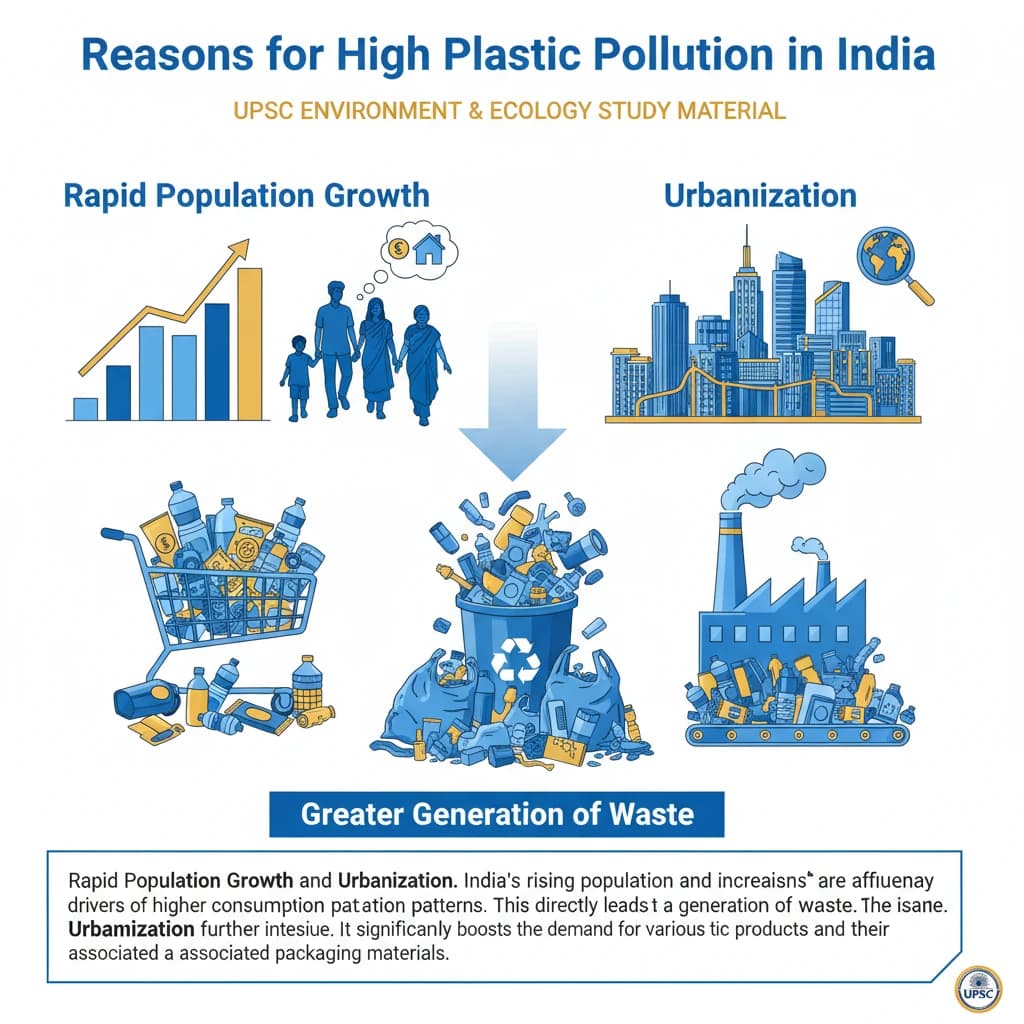
Rapid Population Growth and Urbanization
India’s rising population and increasing affluence are primary drivers of higher consumption patterns. This directly leads to a greater generation of waste.
Urbanization further intensifies the issue. It significantly boosts the demand for various plastic products and their associated packaging materials.
Key Impact: More people and urban living equate to higher per capita plastic use and waste output.
Inadequate Waste Management Infrastructure
India faces a severe challenge with its waste management infrastructure, which is largely insufficient. It cannot effectively handle the immense volumes of municipal solid waste generated daily.
The country has a disproportionately high number of uncontrolled dumping sites. These far outnumber scientifically engineered sanitary landfills.
This imbalance reflects critical deficiencies in proper waste disposal facilities and the widespread adoption of effective waste management practices.
Core Problem: Lack of proper infrastructure leads to accumulation and environmental leakage of plastic waste.
Discrepancies in Waste Collection Data
Official statistics often present an inflated picture of waste collection efficiency in India. The reported collection rate is frequently cited as high as 95%.
However, independent research and ground-level assessments reveal a significant disparity. The actual waste collection rate is estimated to be around 81%.
This substantial gap indicates a major shortfall in the operational efficiency of waste collection mechanisms across the country, contributing to uncollected plastic waste.
UPSC Insight: Be critical of official data; always look for independent assessments to present a balanced view in answers.
Open Burning of Waste
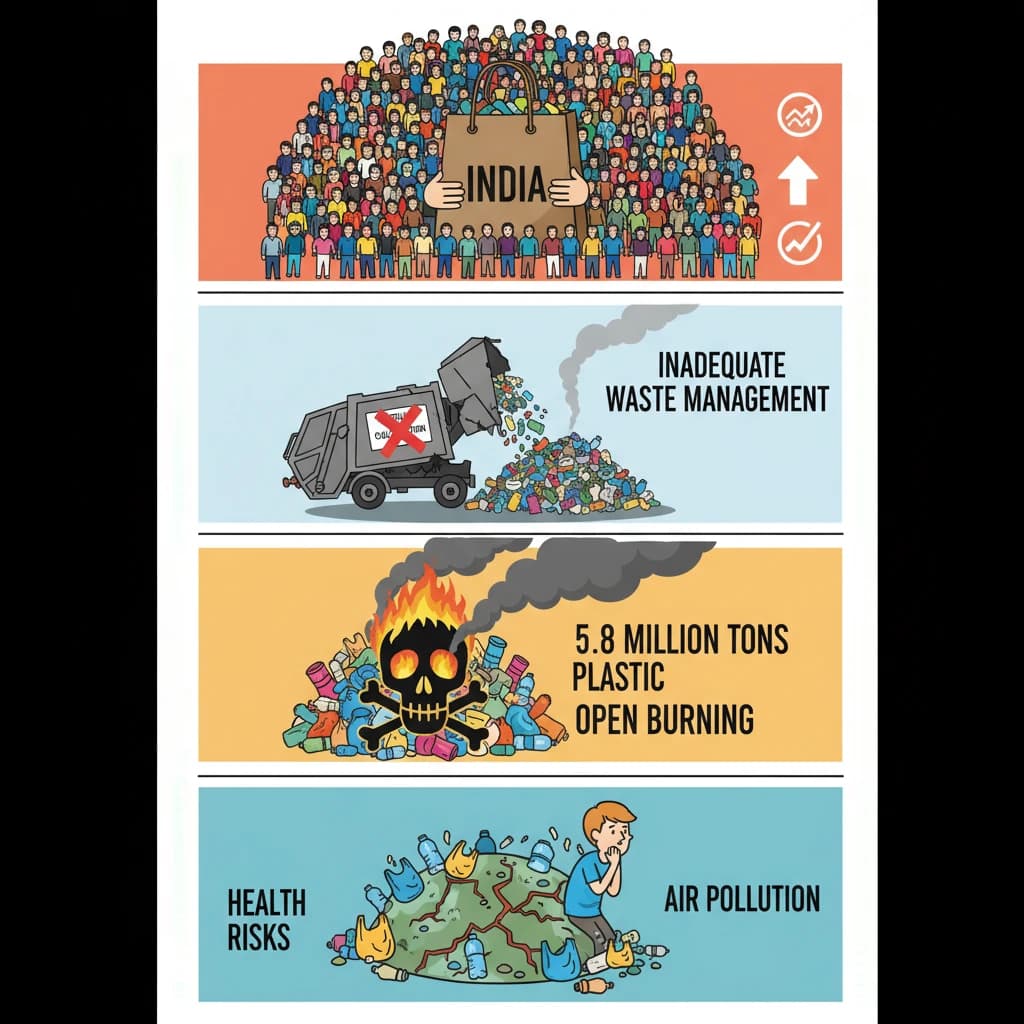
A significant quantity of plastic waste in India is disposed of through open burning. Approximately 5.8 million tons of plastic waste are burned annually.
This practice severely exacerbates air pollution and releases a range of toxic pollutants into the atmosphere. These include dioxins and furans.
Such emissions pose grave health risks to communities, leading to respiratory illnesses and other chronic conditions, alongside causing substantial environmental degradation.
Annual Plastic Waste Burned: Approximately 5.8 million tons.
💡 Key Takeaways
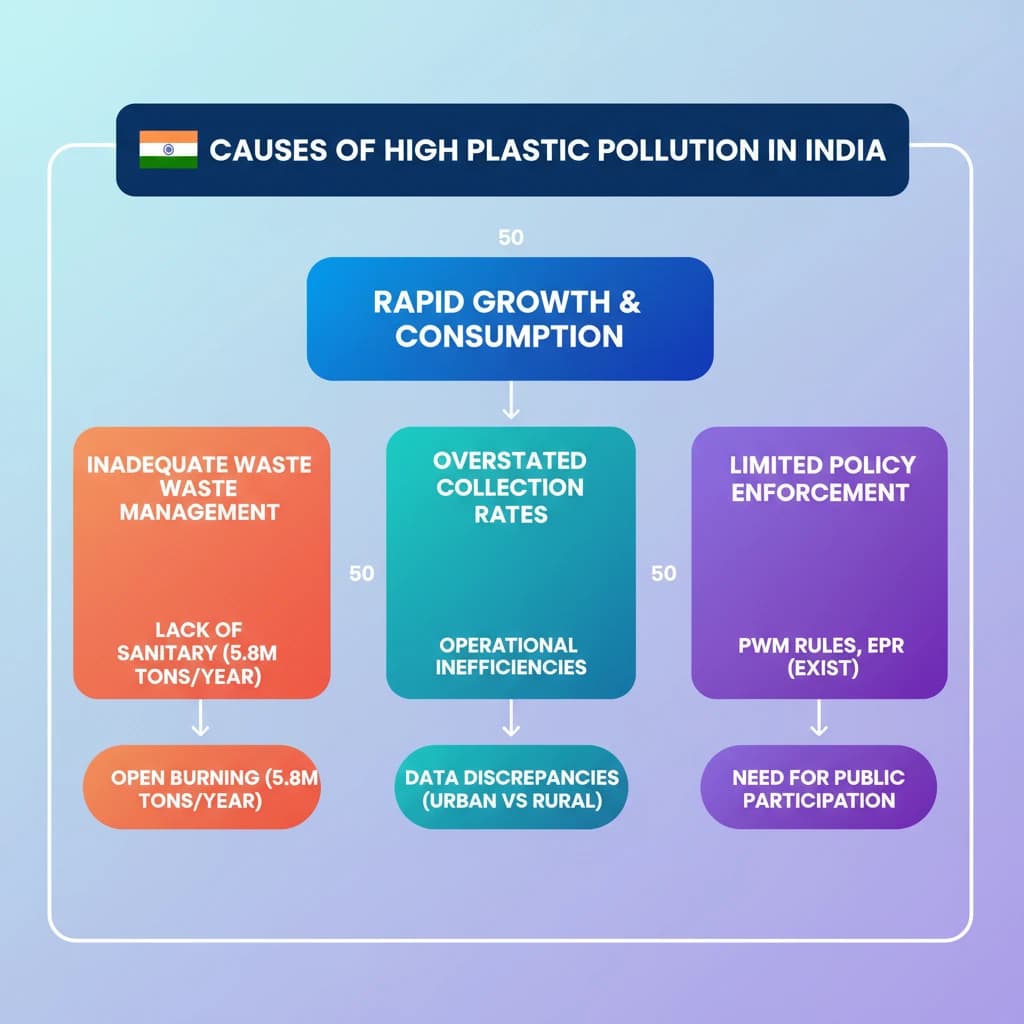
- •India's high plastic pollution is driven by rapid population growth, urbanization, and increased consumption.
- •Inadequate waste management infrastructure, including a lack of sanitary landfills, is a major contributing factor.
- •Official waste collection rates are often overstated, masking significant operational inefficiencies.
- •Open burning of approximately 5.8 million tons of plastic annually exacerbates air pollution and health risks.
- •Policy efforts like PWM Rules and EPR are in place, but effective implementation and public participation are crucial.
- •Transitioning to a circular economy and promoting alternatives are key to long-term solutions.
🧠 Memory Techniques
95% Verified Content
📚 Reference Sources
•Ministry of Environment, Forest and Climate Change (MoEFCC) reports
•Various academic studies and environmental reports on plastic waste management in India