Loading page, please wait…
What are the Sources of Groundwater Contamination? - UPSC Environment And Ecology
What is What are the Sources of Groundwater Contamination? in UPSC Environment And Ecology?
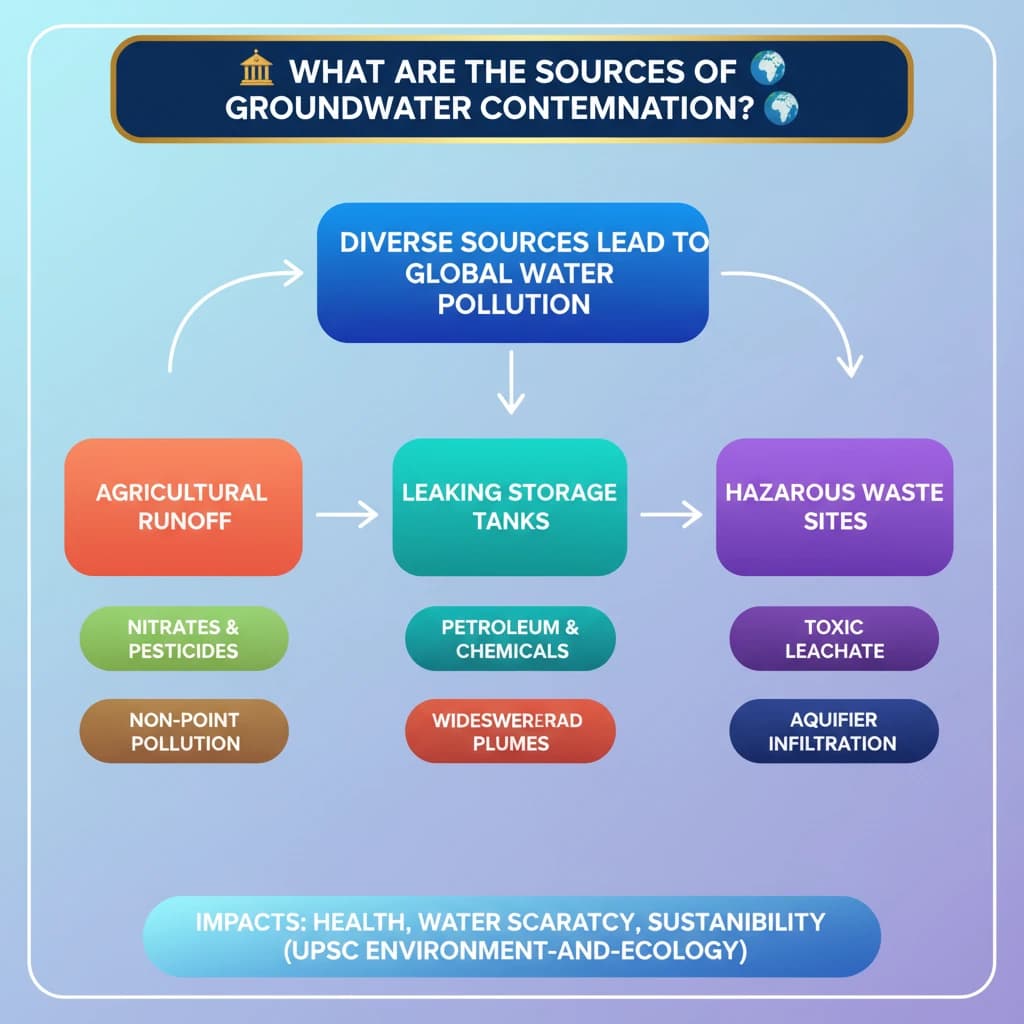
What are the Sources of Groundwater Contamination? is a key topic under Environment And Ecology for UPSC Civil Services Examination. Key points include: Groundwater contamination stems from diverse sources: agriculture, leaking storage tanks, and hazardous waste sites.. Agricultural runoff, rich in nitrates and pesticides, is a major non-point source of pollution.. Corroding underground storage tanks leak petroleum and chemicals, forming widespread plumes.. Understanding this topic is essential for both UPSC Prelims and Mains preparation.
Why is What are the Sources of Groundwater Contamination? important for UPSC exam?
What are the Sources of Groundwater Contamination? is a Medium-level topic in UPSC Environment And Ecology. It is tested in both Prelims (factual MCQs) and Mains (analytical answer writing). Previous year UPSC questions have frequently covered aspects of What are the Sources of Groundwater Contamination?, making it essential for comprehensive IAS preparation.
How to prepare What are the Sources of Groundwater Contamination? for UPSC?
To prepare What are the Sources of Groundwater Contamination? for UPSC: (1) Study the comprehensive notes covering all key concepts on Vaidra. (2) Practice previous year questions on this topic. (3) Connect it with current affairs using daily updates. (4) Revise using key takeaways and mind maps available for Environment And Ecology. (5) Write practice answers linking What are the Sources of Groundwater Contamination? to related GS Paper topics.
Key takeaways of What are the Sources of Groundwater Contamination? for UPSC
- Groundwater contamination stems from diverse sources: agriculture, leaking storage tanks, and hazardous waste sites.
- Agricultural runoff, rich in nitrates and pesticides, is a major non-point source of pollution.
- Corroding underground storage tanks leak petroleum and chemicals, forming widespread plumes.
- Hazardous waste sites and landfills generate toxic leachate that infiltrates aquifers.
- Contamination impacts water availability, public health, and sustainable development.
- Effective management requires stringent regulations, monitoring, and sustainable practices.
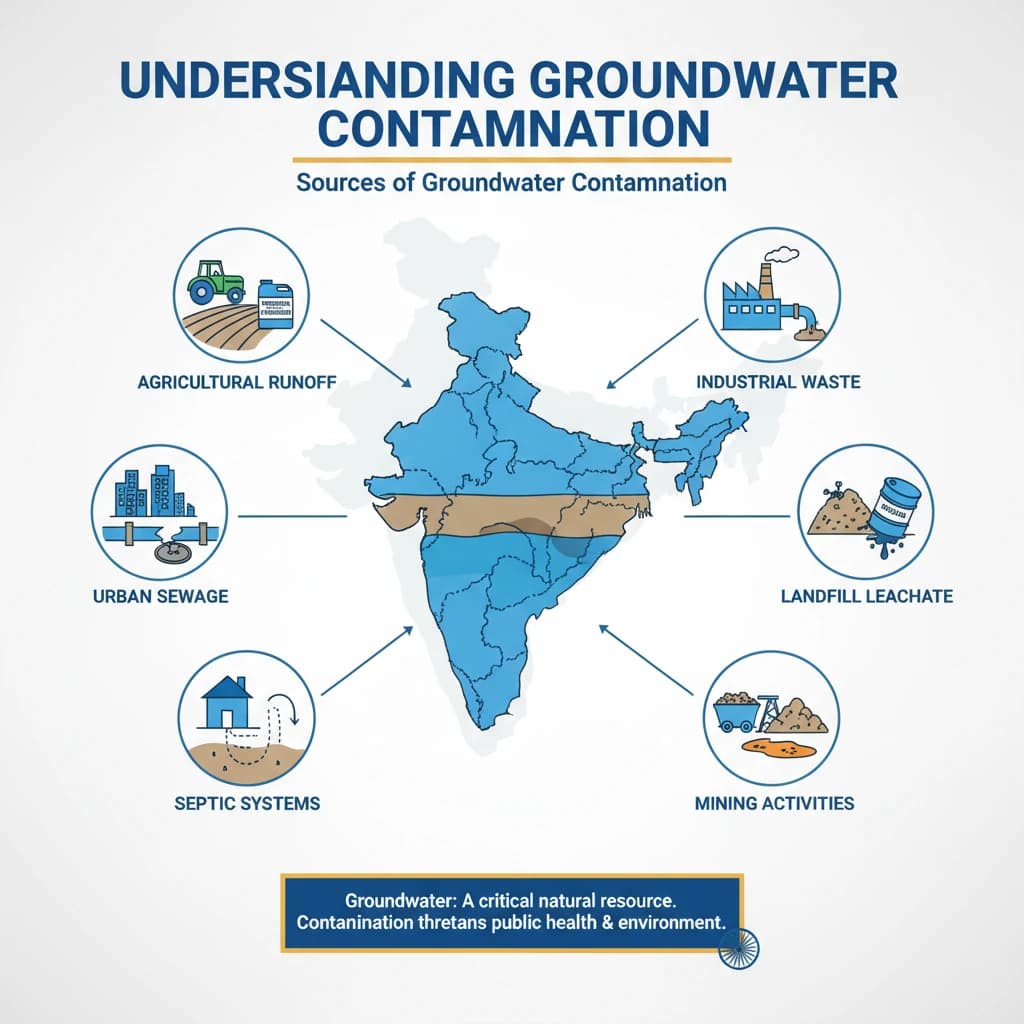
What are the Sources of Groundwater Contamination?
Medium⏱️ 8 min read
environment and ecology
📖 Introduction
Understanding Groundwater Contamination
Groundwater is a critical natural resource, serving as a primary source of drinking water and irrigation globally. However, human activities often lead to its degradation through various forms of contamination.
Understanding the sources of this contamination is essential for effective environmental management and public health protection. These sources can be broadly categorized into agricultural, industrial, and waste-related origins.
Key Concept: Groundwater contamination occurs when pollutants infiltrate the ground and reach the underground water reservoirs known as aquifers, making the water unsafe for consumption or other uses.
Agricultural Practices
Agricultural activities are a significant contributor to groundwater contamination, primarily due to the intensive use of chemical inputs.
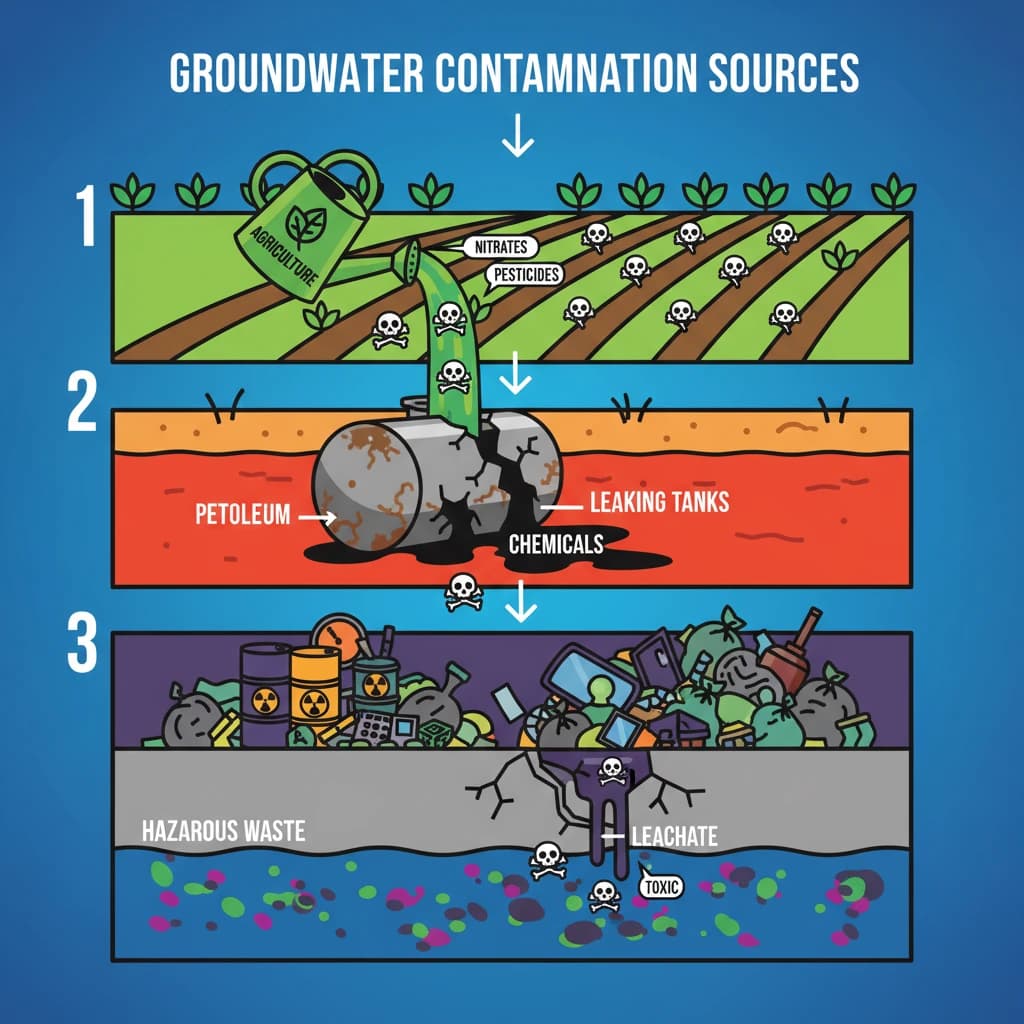
The excessive application of fertilizers and pesticides on agricultural lands leads to their leaching into the soil. These chemicals, particularly nitrates and phosphates from fertilizers, are highly soluble and can easily percolate through the soil profile.
Common Contaminants:
- Nitrates: From nitrogenous fertilizers, linked to 'blue baby syndrome' (methemoglobinemia) in infants.
- Pesticides: Including insecticides, herbicides, and fungicides, which can be toxic and persistent.
Furthermore, improper irrigation practices, such as over-irrigation, can exacerbate the issue by increasing the downward movement of these dissolved contaminants. Over-extraction of water also lowers the water table, potentially drawing in contaminants from surrounding areas.
UPSC Insight: Agricultural runoff is often termed a non-point source pollution, making it challenging to regulate and control compared to point sources. This is a crucial distinction for Mains answers.
Leaking Storage Tanks
Storage tanks, particularly those buried underground, pose a substantial risk of groundwater contamination if not properly maintained or monitored.
Over time, these underground storage tanks (USTs) can corrode and develop leaks. The contents, which often include hazardous substances like gasoline, oil, or various industrial chemicals, then seep directly into the surrounding soil and groundwater.
Typical Contents of Leaking Tanks:
- Petroleum Products: Gasoline, diesel, heating oil.
- Industrial Solvents: Used in manufacturing and dry cleaning.
- Chemical Reagents: Stored at industrial facilities.
Even small leaks can lead to significant contamination over time, as these substances can spread widely through the aquifer, affecting large areas and numerous water sources.
Hazardous Waste Sites
Hazardous waste sites, especially abandoned or improperly managed ones, represent a severe threat to groundwater quality. These sites often contain a cocktail of toxic materials.
When such sites are left without proper containment, the hazardous materials can leach into the soil. Rainwater percolating through these wastes can form highly toxic liquid known as leachate.
Definition: Leachate is a liquid that has passed through a solid material and has extracted soluble or suspended solids from it. In waste sites, it carries concentrated pollutants.
This leachate then infiltrates the ground, carrying a range of pollutants including heavy metals, organic compounds, and other toxic chemicals directly into the groundwater system. The remediation of such contaminated sites is often complex, costly, and time-consuming.
💡 Key Takeaways
- •Groundwater contamination stems from diverse sources: agriculture, leaking storage tanks, and hazardous waste sites.
- •Agricultural runoff, rich in nitrates and pesticides, is a major non-point source of pollution.
- •Corroding underground storage tanks leak petroleum and chemicals, forming widespread plumes.
- •Hazardous waste sites and landfills generate toxic leachate that infiltrates aquifers.
- •Contamination impacts water availability, public health, and sustainable development.
- •Effective management requires stringent regulations, monitoring, and sustainable practices.
🧠 Memory Techniques
98% Verified Content
📚 Reference Sources
•Central Ground Water Board (CGWB) Reports, Ministry of Jal Shakti, Government of India
•Ministry of Environment, Forest and Climate Change (MoEFCC) Publications
•National Water Mission Documents