Loading page, please wait…
What is Forest Fire? - UPSC Environment And Ecology
What is What is Forest Fire? in UPSC Environment And Ecology?
What is Forest Fire? is a key topic under Environment And Ecology for UPSC Civil Services Examination. Key points include: Forest fire is an uncontrolled combustion of vegetation in natural settings, driven by fuel, oxygen, and heat (Fire Triangle).. Fires are classified into Surface, Underground, and Ground fires based on the layer of vegetation consumed.. Surface fires burn surface litter and spread quickly; underground fires burn slowly beneath the surface, difficult to detect.. Understanding this topic is essential for both UPSC Prelims and Mains preparation.
Why is What is Forest Fire? important for UPSC exam?
What is Forest Fire? is a Medium-level topic in UPSC Environment And Ecology. It is tested in both Prelims (factual MCQs) and Mains (analytical answer writing). Previous year UPSC questions have frequently covered aspects of What is Forest Fire?, making it essential for comprehensive IAS preparation.
How to prepare What is Forest Fire? for UPSC?
To prepare What is Forest Fire? for UPSC: (1) Study the comprehensive notes covering all key concepts on Vaidra. (2) Practice previous year questions on this topic. (3) Connect it with current affairs using daily updates. (4) Revise using key takeaways and mind maps available for Environment And Ecology. (5) Write practice answers linking What is Forest Fire? to related GS Paper topics.
Key takeaways of What is Forest Fire? for UPSC
- Forest fire is an uncontrolled combustion of vegetation in natural settings, driven by fuel, oxygen, and heat (Fire Triangle).
- Fires are classified into Surface, Underground, and Ground fires based on the layer of vegetation consumed.
- Surface fires burn surface litter and spread quickly; underground fires burn slowly beneath the surface, difficult to detect.
- Ground fires consume deep organic layers and roots, causing more complete destruction than surface fires.
- Historically natural, modern forest fires are increasingly linked to human activities and exacerbated by climate change.
- Fires have significant impacts on climate, biodiversity, air quality, and the economy, necessitating comprehensive management.
What is Forest Fire?
Medium⏱️ 10 min read
environment and ecology
📖 Introduction
Understanding Forest Fires: An Overview
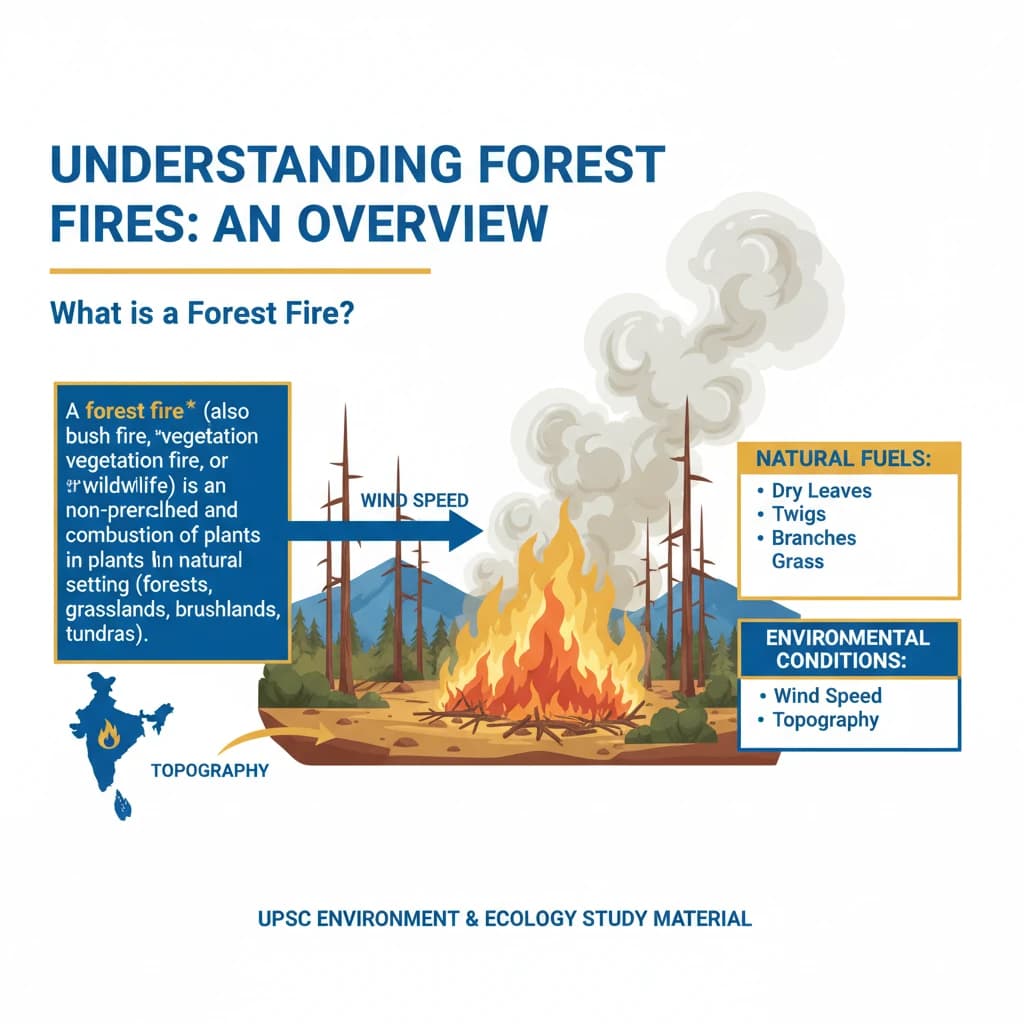
A forest fire, also known as a bush fire, vegetation fire, or wildfire, is an uncontrolled and non-prescribed combustion or burning of plants in a natural setting. These settings include forests, grasslands, brushlands, or tundras.
The fire consumes natural fuels and spreads based on prevailing environmental conditions, such as wind speed and topography.
The Fire Triangle
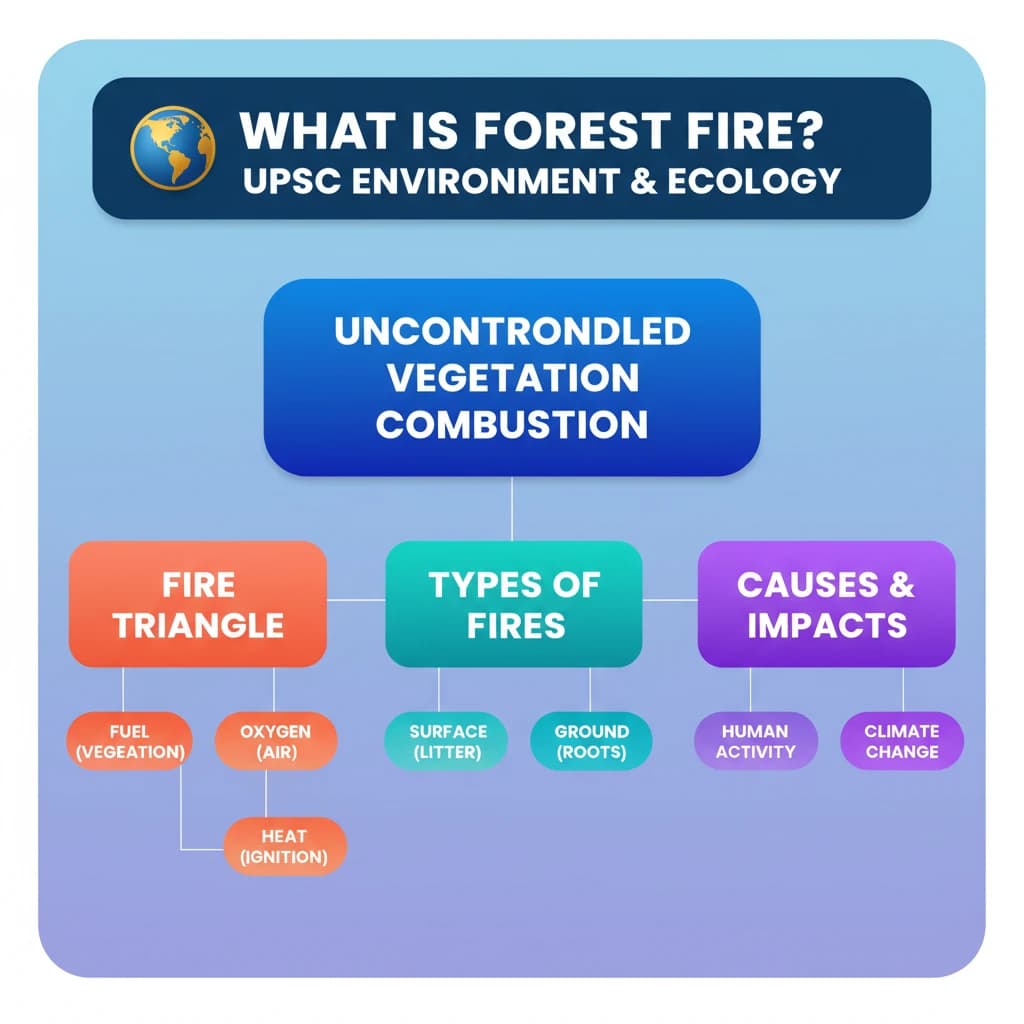
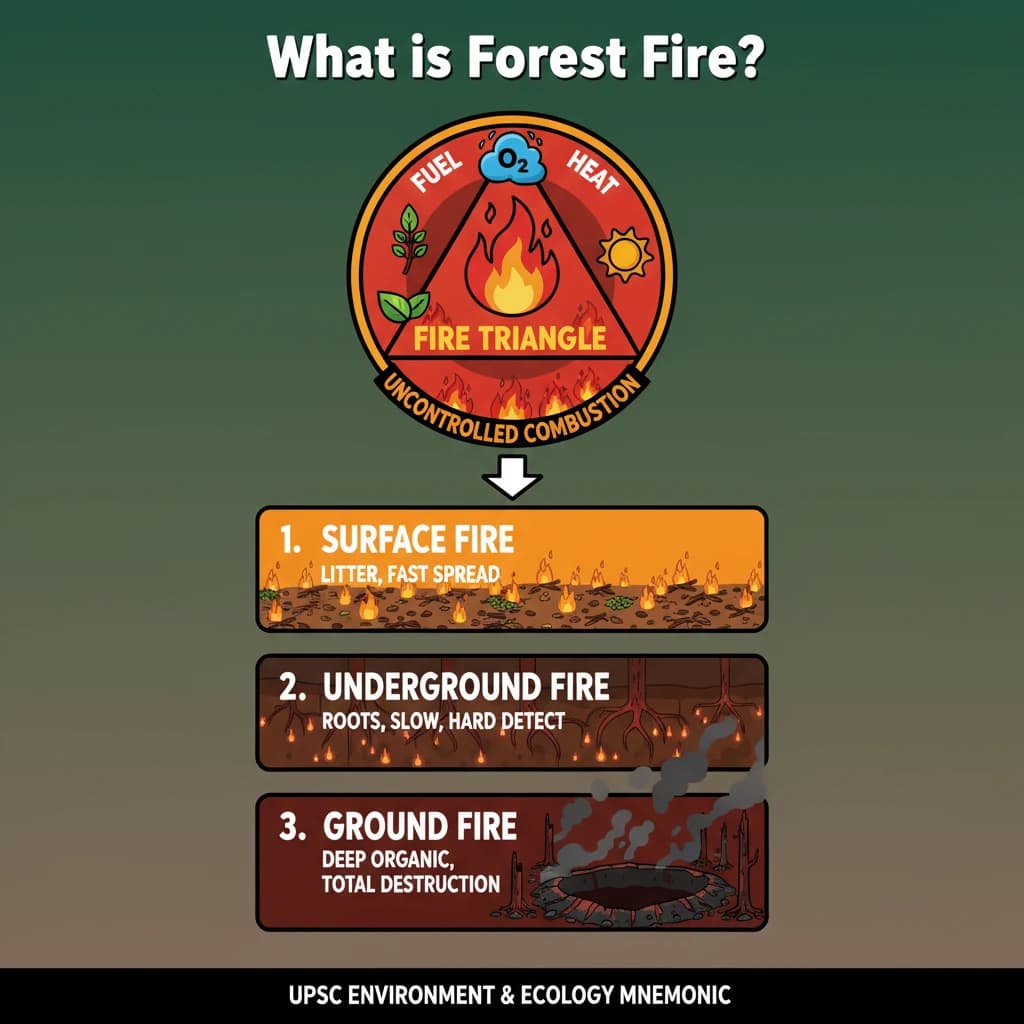
For any wildfire to ignite and sustain itself, three essential conditions, often referred to as the 'Fire Triangle', must be present simultaneously:
- Fuel: Any combustible material like dry leaves, twigs, grass, trees, or organic matter.
- Oxygen: Present in the atmosphere, sustaining the combustion process.
- Heat Source: An ignition point, which could be natural (e.g., lightning) or anthropogenic (e.g., campfires, discarded cigarettes).
Classification of Forest Fires
Forest fires are typically classified into different types based on the layer of vegetation or organic matter they consume and their intensity.
Surface Fire
A surface fire is the most common type of forest fire. It spreads along the ground, consuming the surface litter on the forest floor.
Characteristics of Surface Fires:
- Primarily burns senescent leaves, twigs, and dry grasses.
- Spreads relatively quickly across the forest floor.
- Generally less intense than other types of fires, but can escalate.
Underground Fire
Underground fires are characterized by their low intensity and the consumption of organic matter beneath the surface litter of the forest floor.
These fires are common in dense forests where a thick mantle of organic matter has accumulated on top of the mineral soil.
Characteristics of Underground Fires:
- Spread entirely underground, sometimes several meters below the surface.
- Spread very slowly, making them difficult to detect and control.
- Can continue to burn for months, causing significant long-term damage to the soil's vegetative cover.
Ground Fire
Ground fires are closely related to underground fires, often without a clear distinction between the two. They involve fires in sub-surface organic fuels.
These fuels include duff layers under forest stands, organic soils of Arctic tundra or taiga, and swamps or bogs.
Characteristics of Ground Fires:
- Burn roots and other organic material on or beneath the surface.
- Consume herbaceous growth and layers of decaying organic matter.
- More damaging than surface fires as they can destroy vegetation completely.
- Often ignited by surface fires and burn underneath the surface through smoldering combustion.
UPSC Insight: Understanding the different types of forest fires is crucial for disaster management and environmental policy questions. Differentiating between surface, underground, and ground fires helps in strategizing appropriate mitigation and control measures. Pay attention to their distinct characteristics and impacts.
💡 Key Takeaways
- •Forest fire is an uncontrolled combustion of vegetation in natural settings, driven by fuel, oxygen, and heat (Fire Triangle).
- •Fires are classified into Surface, Underground, and Ground fires based on the layer of vegetation consumed.
- •Surface fires burn surface litter and spread quickly; underground fires burn slowly beneath the surface, difficult to detect.
- •Ground fires consume deep organic layers and roots, causing more complete destruction than surface fires.
- •Historically natural, modern forest fires are increasingly linked to human activities and exacerbated by climate change.
- •Fires have significant impacts on climate, biodiversity, air quality, and the economy, necessitating comprehensive management.
🧠 Memory Techniques
95% Verified Content
📚 Reference Sources
•National Disaster Management Authority (NDMA) guidelines on Forest Fire Management
•Ministry of Environment, Forest and Climate Change (MoEFCC) reports