Loading page, please wait…
What is Greenwashing? - UPSC Environment And Ecology
What is What is Greenwashing? in UPSC Environment And Ecology?
What is Greenwashing? is a key topic under Environment And Ecology for UPSC Civil Services Examination. Key points include: Greenwashing is a deceptive practice exaggerating or falsifying environmental claims.. The term was coined by Jay Westerveld in 1986, observing hotel towel reuse.. It involves misleading symbols, language, and omission of harmful impacts.. Understanding this topic is essential for both UPSC Prelims and Mains preparation.
Why is What is Greenwashing? important for UPSC exam?
What is Greenwashing? is a Medium-level topic in UPSC Environment And Ecology. It is tested in both Prelims (factual MCQs) and Mains (analytical answer writing). Previous year UPSC questions have frequently covered aspects of What is Greenwashing?, making it essential for comprehensive IAS preparation.
How to prepare What is Greenwashing? for UPSC?
To prepare What is Greenwashing? for UPSC: (1) Study the comprehensive notes covering all key concepts on Vaidra. (2) Practice previous year questions on this topic. (3) Connect it with current affairs using daily updates. (4) Revise using key takeaways and mind maps available for Environment And Ecology. (5) Write practice answers linking What is Greenwashing? to related GS Paper topics.
Key takeaways of What is Greenwashing? for UPSC
- Greenwashing is a deceptive practice exaggerating or falsifying environmental claims.
- The term was coined by Jay Westerveld in 1986, observing hotel towel reuse.
- It involves misleading symbols, language, and omission of harmful impacts.
- Excludes obvious hyperbole or generic, non-deceptive imagery.
- Environmental claims refer to representations about goods/services, components, or processes.
- Undermines genuine sustainability efforts and erodes consumer trust.
- Combating greenwashing requires strong regulation and informed consumer choices.
What is Greenwashing?
Medium⏱️ 8 min read
environment and ecology
📖 Introduction
Understanding Greenwashing: A Deceptive Practice
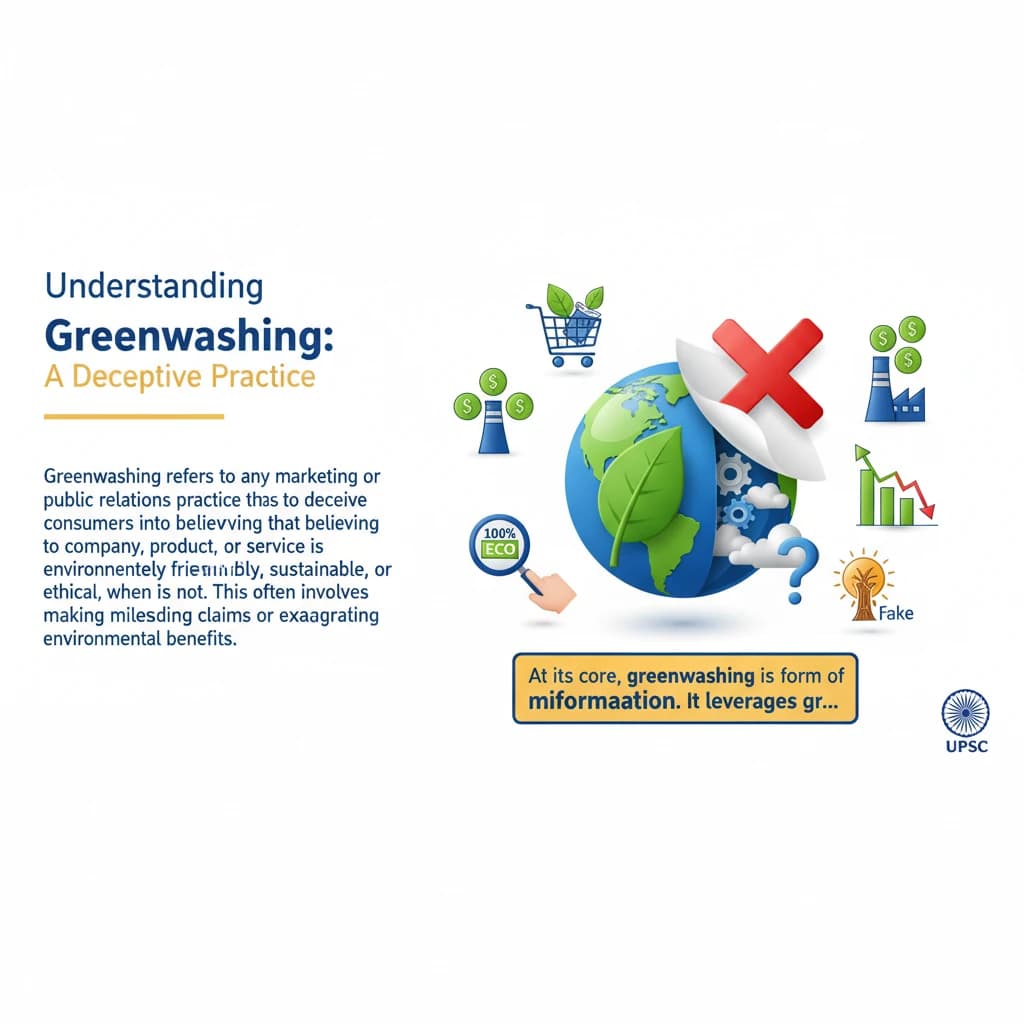
Greenwashing refers to any marketing or public relations practice that aims to deceive consumers into believing that a company, product, or service is environmentally friendly, sustainable, or ethical, when it is not. This often involves making misleading claims or exaggerating environmental benefits.
At its core, greenwashing is a form of misinformation. It leverages growing consumer environmental awareness to boost sales or improve brand image without genuinely committing to sustainable practices.
Origin of the Term Greenwashing
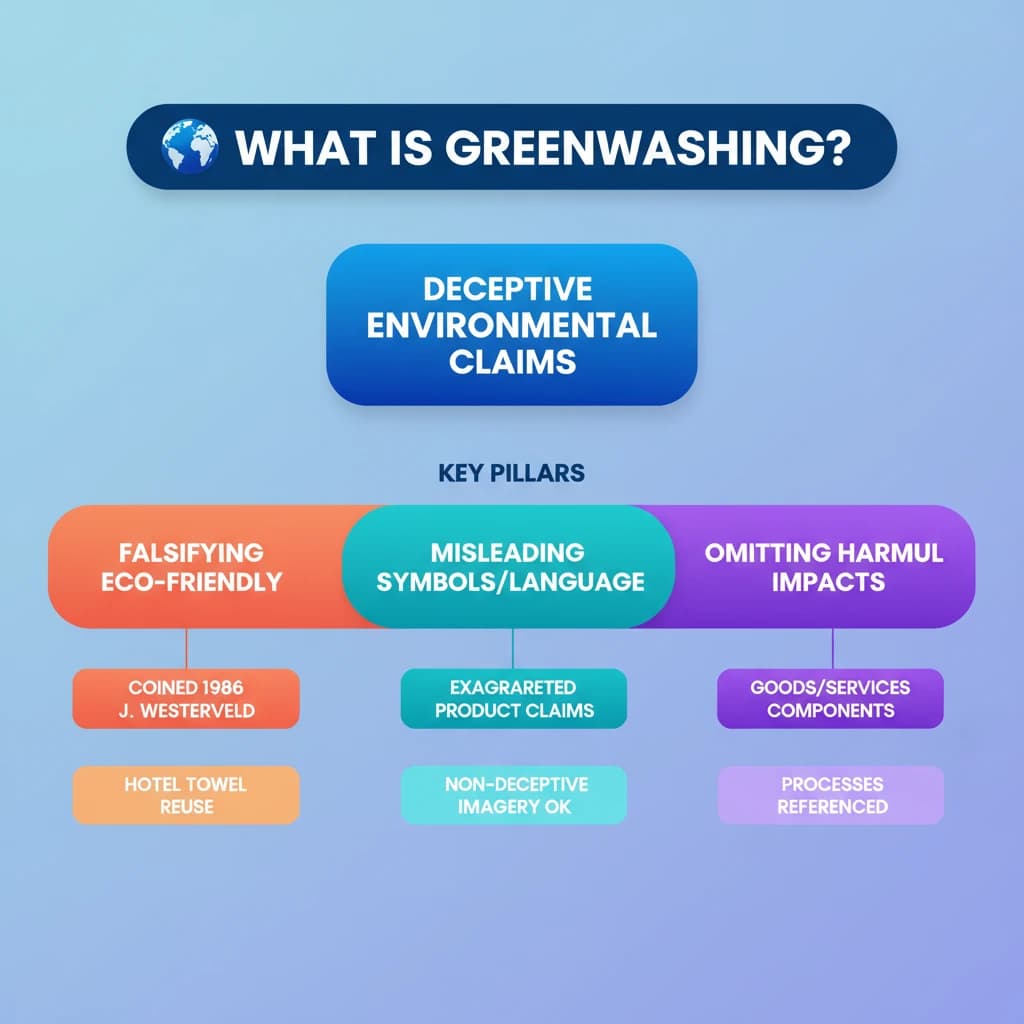
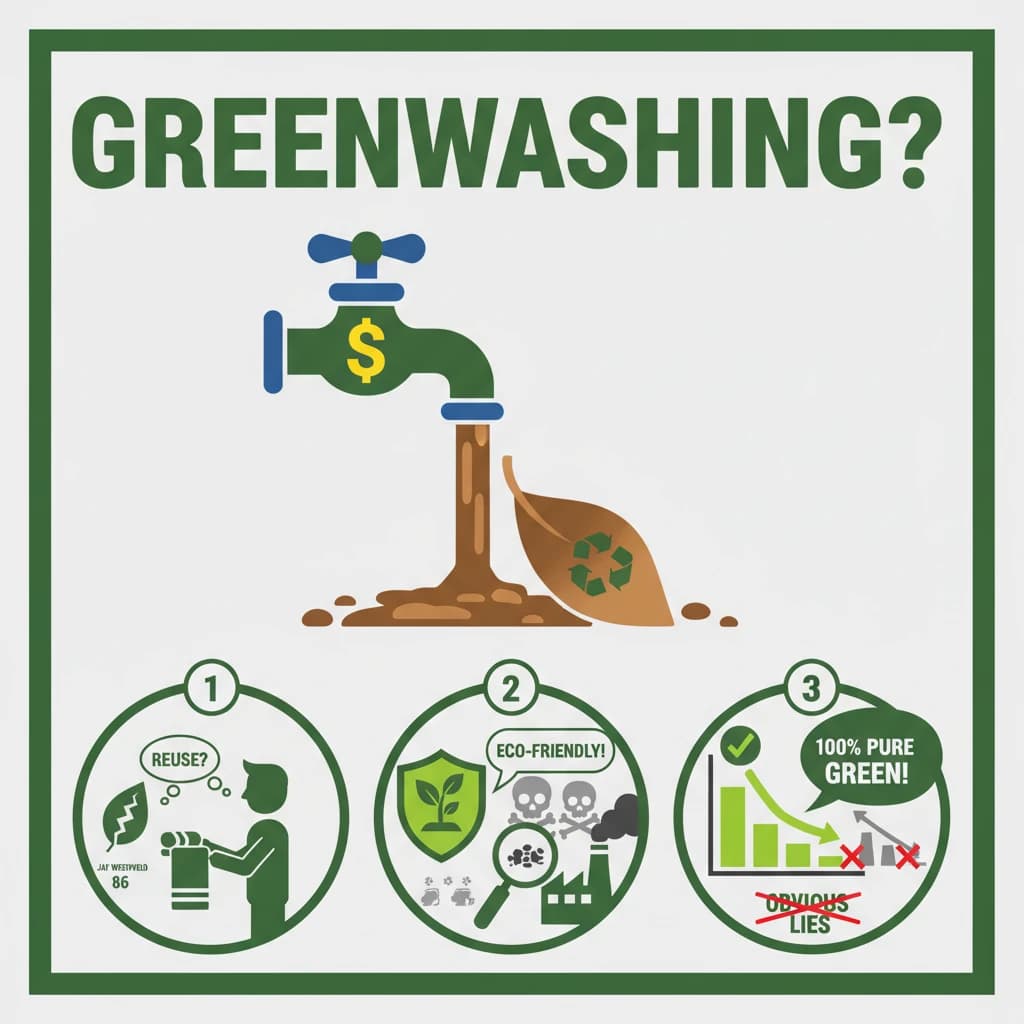
The term greenwashing was first coined in 1986 by Jay Westerveld, an American environmentalist and researcher. He observed hotels placing 'reuse your towel' notices to save laundry costs, while simultaneously expanding their environmental footprint in other, more significant ways.
First Use: Jay Westerveld, 1986
Characteristics of Greenwashing
Greenwashing involves a range of deceptive tactics. These often include exaggeration, omission of crucial information, or making outright false environmental claims about goods or services.
- Exaggeration: Overstating minor environmental benefits.
- Omission: Hiding significant negative environmental impacts while highlighting minor positive ones.
- False Claims: Making statements that are simply untrue or lack credible evidence.
Misleading Visuals and Language
Companies frequently employ misleading symbols, imagery, or language to create an eco-friendly perception. This often involves using green colors, nature imagery, or vague terms like 'natural' or 'eco-friendly' without specific substantiation.
These visual and linguistic cues highlight positive environmental aspects while cleverly concealing more harmful ones associated with the product's lifecycle or manufacturing processes.
What Greenwashing Does NOT Include
It is important to distinguish genuine greenwashing from other marketing practices. Greenwashing specifically excludes obvious hyperbole, common puffery, or generic colour schemes/images that are not inherently deceptive in their context.
For UPSC, understanding the nuances of greenwashing is crucial for topics like environmental ethics, sustainable development, and consumer protection. Be prepared to identify examples and discuss regulatory challenges.
Defining Environmental Claims
In the context of greenwashing, environmental claims refer to any representations made about goods or services. This includes their components, manufacturing processes, packaging, or disposal, which imply a positive environmental impact.
💡 Key Takeaways
- •Greenwashing is a deceptive practice exaggerating or falsifying environmental claims.
- •The term was coined by Jay Westerveld in 1986, observing hotel towel reuse.
- •It involves misleading symbols, language, and omission of harmful impacts.
- •Excludes obvious hyperbole or generic, non-deceptive imagery.
- •Environmental claims refer to representations about goods/services, components, or processes.
- •Undermines genuine sustainability efforts and erodes consumer trust.
- •Combating greenwashing requires strong regulation and informed consumer choices.
🧠 Memory Techniques
98% Verified Content
📚 Reference Sources
•Environmental Protection Agency (EPA) resources on greenwashing
•TerraChoice Environmental Marketing Inc. - 'The Sins of Greenwashing' report
•Academic articles on corporate social responsibility and environmental marketing