Loading page, please wait…
What is KMGBF 2022? - UPSC Environment And Ecology
What is What is KMGBF 2022? in UPSC Environment And Ecology?
What is KMGBF 2022? is a key topic under Environment And Ecology for UPSC Civil Services Examination. Key points include: KMGBF 2022 adopted at COP 15 (Montreal, Dec 2022) aims to halt and reverse global biodiversity loss by 2030.. It supports SDGs and builds on the Strategic Plan for Biodiversity 2011-2020 (Aichi Targets).. Includes 23 action-oriented global targets, like the '30x30' target for protected areas.. Understanding this topic is essential for both UPSC Prelims and Mains preparation.
Why is What is KMGBF 2022? important for UPSC exam?
What is KMGBF 2022? is a Medium-level topic in UPSC Environment And Ecology. It is tested in both Prelims (factual MCQs) and Mains (analytical answer writing). Previous year UPSC questions have frequently covered aspects of What is KMGBF 2022?, making it essential for comprehensive IAS preparation.
How to prepare What is KMGBF 2022? for UPSC?
To prepare What is KMGBF 2022? for UPSC: (1) Study the comprehensive notes covering all key concepts on Vaidra. (2) Practice previous year questions on this topic. (3) Connect it with current affairs using daily updates. (4) Revise using key takeaways and mind maps available for Environment And Ecology. (5) Write practice answers linking What is KMGBF 2022? to related GS Paper topics.
Key takeaways of What is KMGBF 2022? for UPSC
- KMGBF 2022 adopted at COP 15 (Montreal, Dec 2022) aims to halt and reverse global biodiversity loss by 2030.
- It supports SDGs and builds on the Strategic Plan for Biodiversity 2011-2020 (Aichi Targets).
- Includes 23 action-oriented global targets, like the '30x30' target for protected areas.
- IUCN, created in 1948, is a global environmental network providing crucial conservation data and analysis.
- KMGBF represents a critical step in global efforts to address the biodiversity crisis and guide national policies.
What is KMGBF 2022?
Medium⏱️ 8 min read
environment and ecology
📖 Introduction
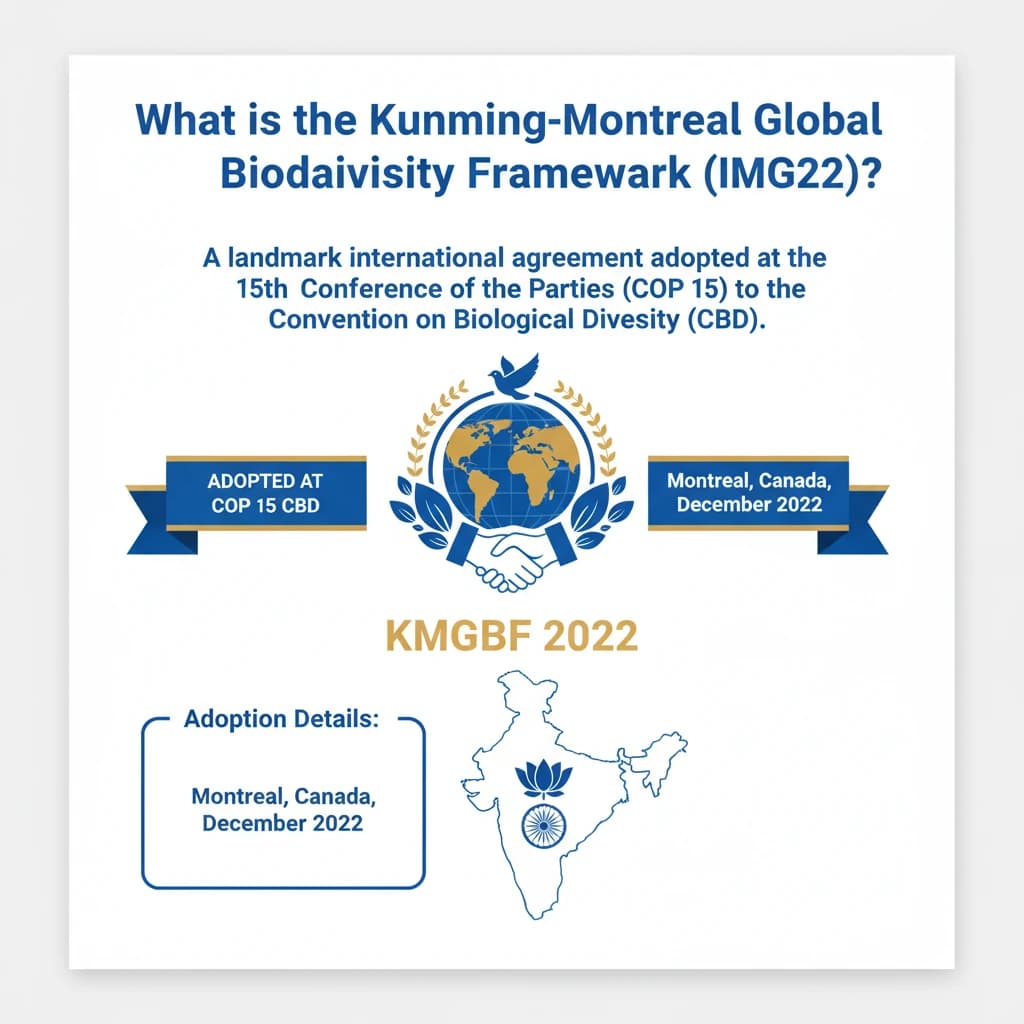
What is the Kunming-Montreal Global Biodiversity Framework (KMGBF) 2022?
The Kunming-Montreal Global Biodiversity Framework (KMGBF) 2022 is a landmark international agreement. It was adopted at the 15th Conference of the Parties (COP 15) to the Convention on Biological Diversity (CBD).
Adoption Details: The KMGBF was adopted in Montreal, Canada, during December 2022. This significant event marked a global commitment to address biodiversity loss.
Primary Aim: The overarching goal of the KMGBF is to halt and reverse global biodiversity loss by 2030. This ambitious target emphasizes urgent action.
The framework also provides crucial support for achieving the Sustainable Development Goals (SDGs). It recognizes the interconnectedness of environmental protection and sustainable development.
Building upon past efforts, the KMGBF incorporates lessons learned from the previous Strategic Plan for Biodiversity 2011–2020. This ensures continuity and improvement in global conservation strategies.
Objectives and Targets of KMGBF
The KMGBF includes 23 action-oriented global targets designed for urgent implementation. These targets are set to be achieved by the year 2030.
The objectives aim to restore ecosystems and promote sustainable use of biodiversity. They cover various aspects from protected areas to finance and traditional knowledge.
UPSC Insight: Questions on international environmental agreements like KMGBF are common in GS Paper III (Environment & Ecology). Focus on its aim, key targets, and adoption details.
Understanding the IUCN
The International Union for Conservation of Nature (IUCN) is the world's largest and most diverse environmental network. It plays a pivotal role in global conservation efforts.
IUCN Foundation: The organization was created in 1948. Its long history underscores its foundational role in environmental protection.
The IUCN operates as a membership union, comprising over 1,400 organizations. This diverse membership includes both government agencies and various civil society groups.
It is a leading provider of essential conservation data, assessments, and analysis. The IUCN offers critical tools and knowledge to support environmental initiatives worldwide.
💡 Key Takeaways
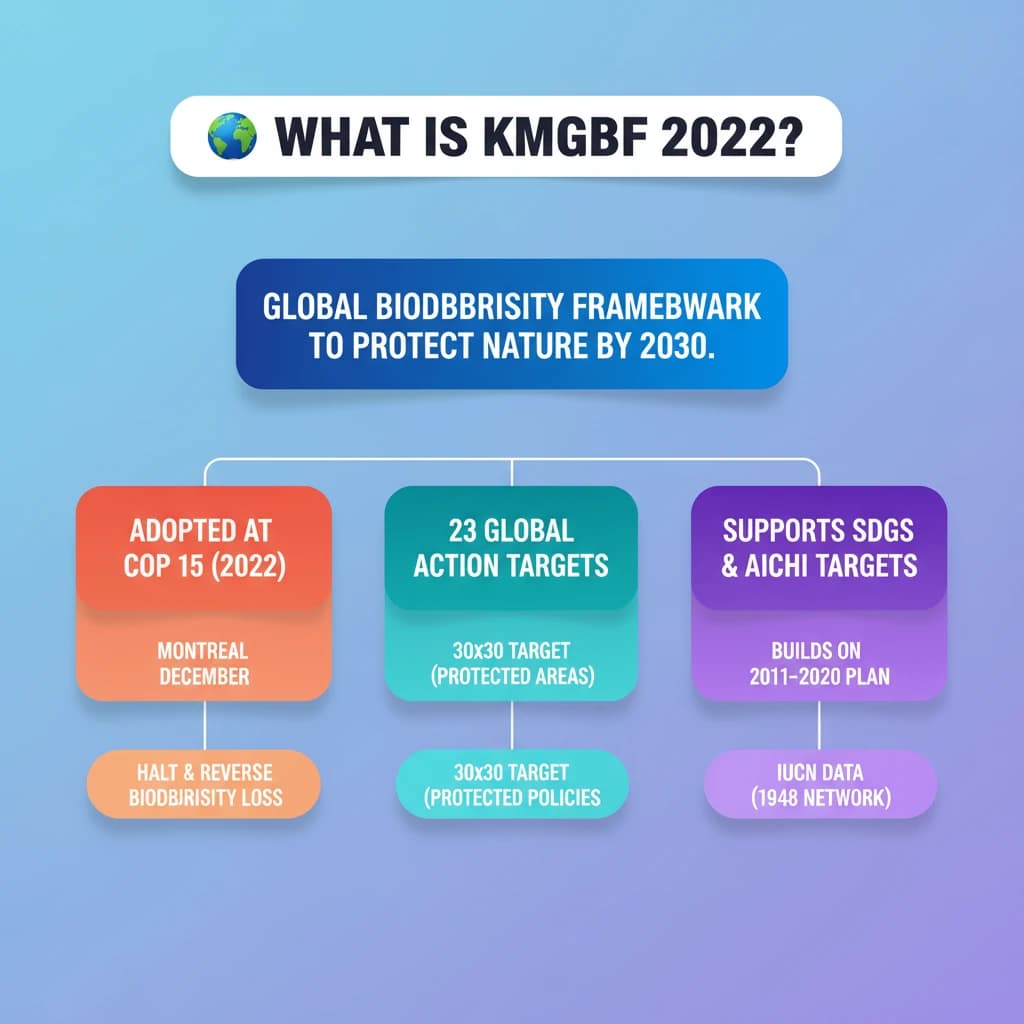
- •KMGBF 2022 adopted at COP 15 (Montreal, Dec 2022) aims to halt and reverse global biodiversity loss by 2030.
- •It supports SDGs and builds on the Strategic Plan for Biodiversity 2011-2020 (Aichi Targets).
- •Includes 23 action-oriented global targets, like the '30x30' target for protected areas.
- •IUCN, created in 1948, is a global environmental network providing crucial conservation data and analysis.
- •KMGBF represents a critical step in global efforts to address the biodiversity crisis and guide national policies.
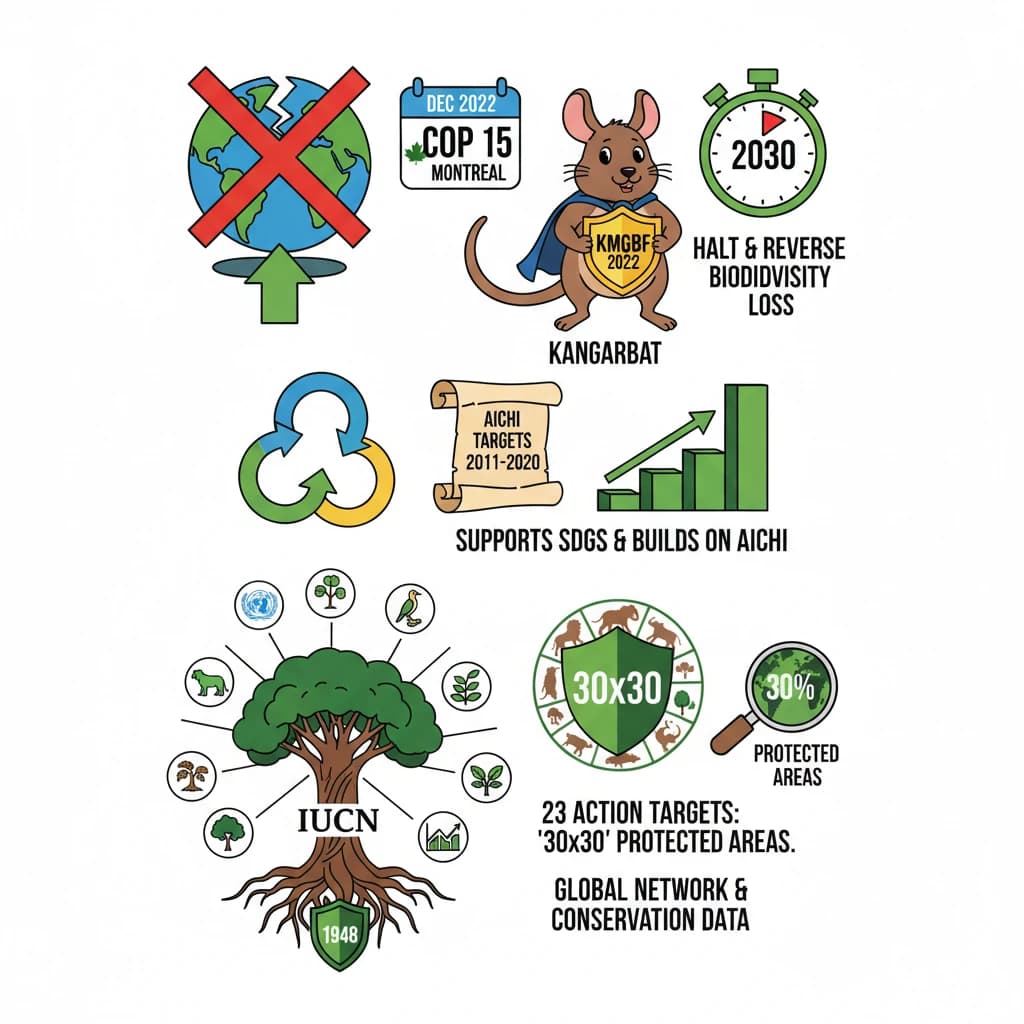
🧠 Memory Techniques
95% Verified Content
📚 Reference Sources
•Official Website of the Convention on Biological Diversity (CBD)
•IUCN Official Website