Loading page, please wait…
What is the Great Nicobar ‘Holistic Development’ Project? - UPSC Environment And Ecology
What is What is the Great Nicobar ‘Holistic Development’ Project? in UPSC Environment And Ecology?
What is the Great Nicobar ‘Holistic Development’ Project? is a key topic under Environment And Ecology for UPSC Civil Services Examination. Key points include: Great Nicobar Project, launched in 2021, is a mega infrastructure initiative in Andaman and Nicobar Islands.. Key components include a Trans-shipment Port, International Airport, Township, and Power Plant.. Strategically located near Malacca Strait, crucial for India's maritime security and countering Chinese influence.. Understanding this topic is essential for both UPSC Prelims and Mains preparation.
Why is What is the Great Nicobar ‘Holistic Development’ Project? important for UPSC exam?
What is the Great Nicobar ‘Holistic Development’ Project? is a Medium-level topic in UPSC Environment And Ecology. It is tested in both Prelims (factual MCQs) and Mains (analytical answer writing). Previous year UPSC questions have frequently covered aspects of What is the Great Nicobar ‘Holistic Development’ Project?, making it essential for comprehensive IAS preparation.
How to prepare What is the Great Nicobar ‘Holistic Development’ Project? for UPSC?
To prepare What is the Great Nicobar ‘Holistic Development’ Project? for UPSC: (1) Study the comprehensive notes covering all key concepts on Vaidra. (2) Practice previous year questions on this topic. (3) Connect it with current affairs using daily updates. (4) Revise using key takeaways and mind maps available for Environment And Ecology. (5) Write practice answers linking What is the Great Nicobar ‘Holistic Development’ Project? to related GS Paper topics.
Key takeaways of What is the Great Nicobar ‘Holistic Development’ Project? for UPSC
- Great Nicobar Project, launched in 2021, is a mega infrastructure initiative in Andaman and Nicobar Islands.
- Key components include a Trans-shipment Port, International Airport, Township, and Power Plant.
- Strategically located near Malacca Strait, crucial for India's maritime security and countering Chinese influence.
- Significant environmental impact: felling of 8.5 lakh trees, de-notification of Galathea Bay Wildlife Sanctuary.
- Threatens endemic species like Nicobar Megapode and leatherback turtles due to ecological destruction.
What is the Great Nicobar ‘Holistic Development’ Project?
Medium⏱️ 7 min read
environment and ecology
📖 Introduction
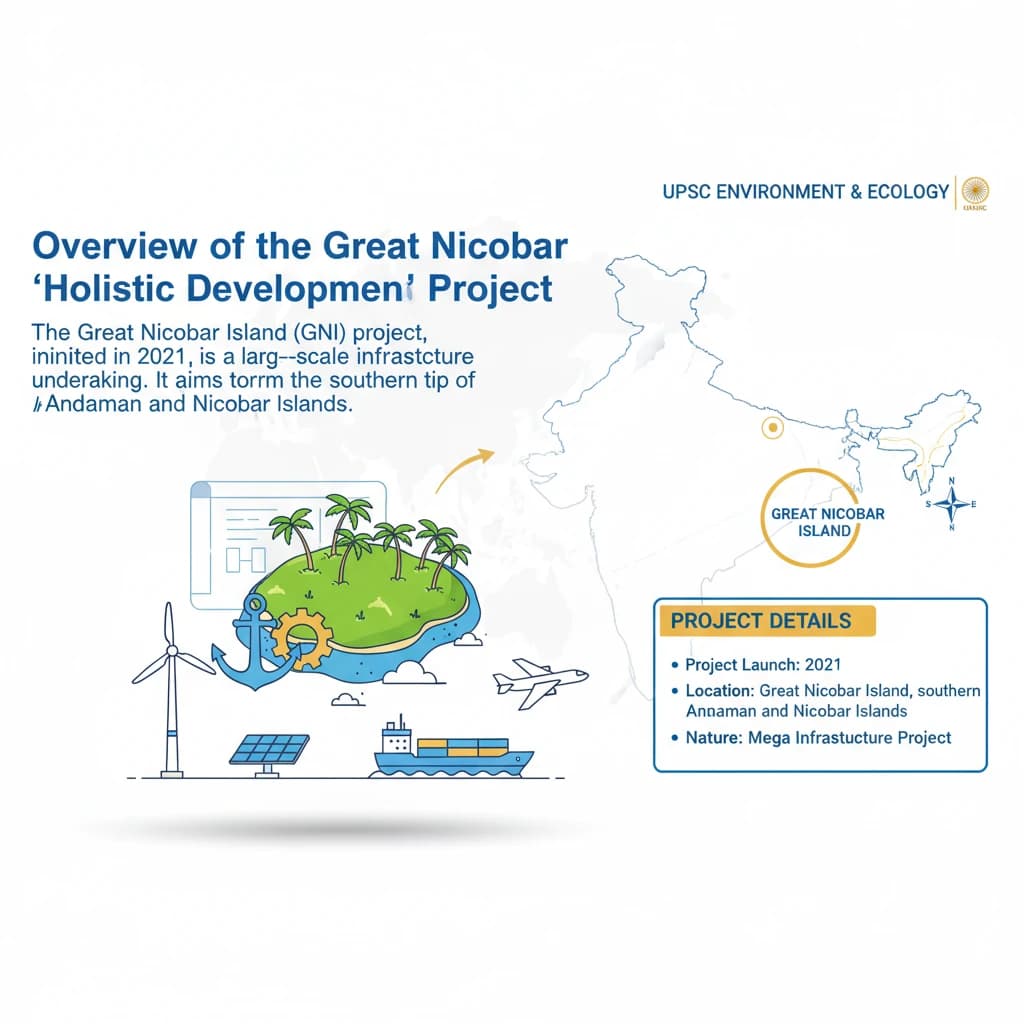
Overview of the Great Nicobar ‘Holistic Development’ Project
The Great Nicobar Island (GNI) project, initiated in 2021, is a large-scale infrastructure undertaking. It aims to transform the southern tip of the Andaman and Nicobar Islands.
Project Launch: 2021
Location: Great Nicobar Island, southern Andaman and Nicobar Islands
Nature: Mega infrastructure initiative
Key Components of the Project
The project encompasses several critical infrastructure developments designed to enhance connectivity, economy, and strategic capabilities.
- International Container Trans-shipment Terminal (ICTT): This port is envisioned to significantly boost the regional and global maritime economy by facilitating cargo movement.
- Greenfield International Airport: A new airport designed to improve global connectivity for the region, supporting both civilian and strategic needs.
- Township Development: Plans include new urban development, potentially featuring a Special Economic Zone (SEZ), to support the growing population and economic activities.
- Power Plant: A substantial 450 MVA power plant, utilizing a combination of gas and solar-based energy, to meet the island's energy demands.
Strategic Location and Importance
The Great Nicobar Island holds immense strategic value due to its geographical positioning. It is situated in close proximity to the vital Malacca Strait.
The Malacca Strait is a crucial maritime route. It connects the Indian Ocean to the Pacific Ocean, making it one of the world's busiest shipping lanes.
This project is designed to bolster India's strategic interests, particularly in light of increasing Chinese presence and influence in the Indo-Pacific region.
The upgrade is vital for facilitating the deployment of additional military forces, larger warships, aircraft, missile batteries, and troops, enhancing India's defense posture.
Environmental Impact of the Project
Despite its strategic and economic benefits, the project raises significant environmental concerns, threatening the unique biodiversity of Great Nicobar.
Deforestation: The project will necessitate the felling of approximately 8.5 lakh trees. These trees are part of the rich rainforests of Great Nicobar.
Wildlife Displacement: Critical habitats are under threat due to the de-notification of the Galathea Bay Wildlife Sanctuary. Additionally, a "zero extent" eco-sensitive zone has been declared for Galathea National Park.
The island is home to unique and threatened tropical evergreen forest ecosystems. Construction activities risk causing irreversible damage to this biodiversity.
Endemic Species: The project directly threatens several endemic species. These include the Nicobar Megapode and globally significant nesting sites for leatherback turtles.
UPSC often asks about the balance between development and environmental conservation. This project is a prime example of such a dilemma, relevant for GS Paper 3 (Environment & Ecology).
💡 Key Takeaways
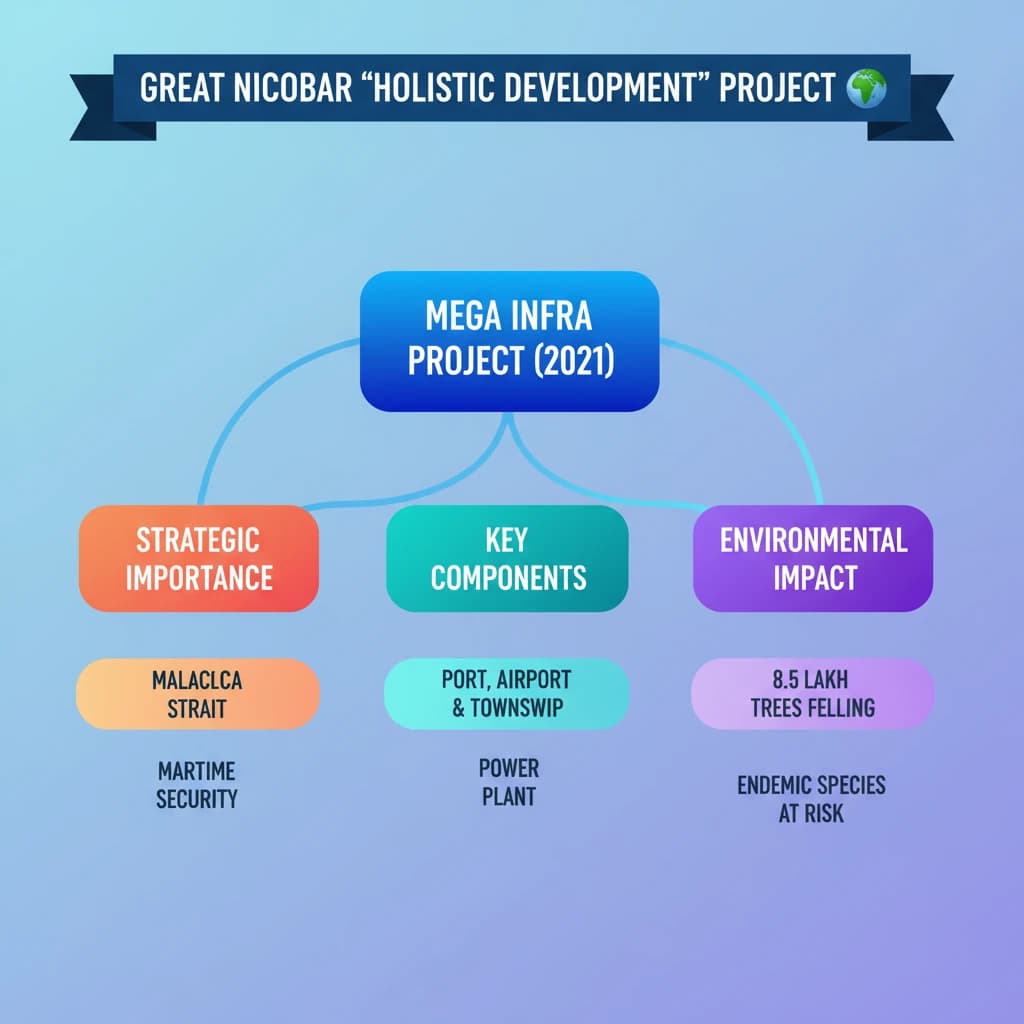
- •Great Nicobar Project, launched in 2021, is a mega infrastructure initiative in Andaman and Nicobar Islands.
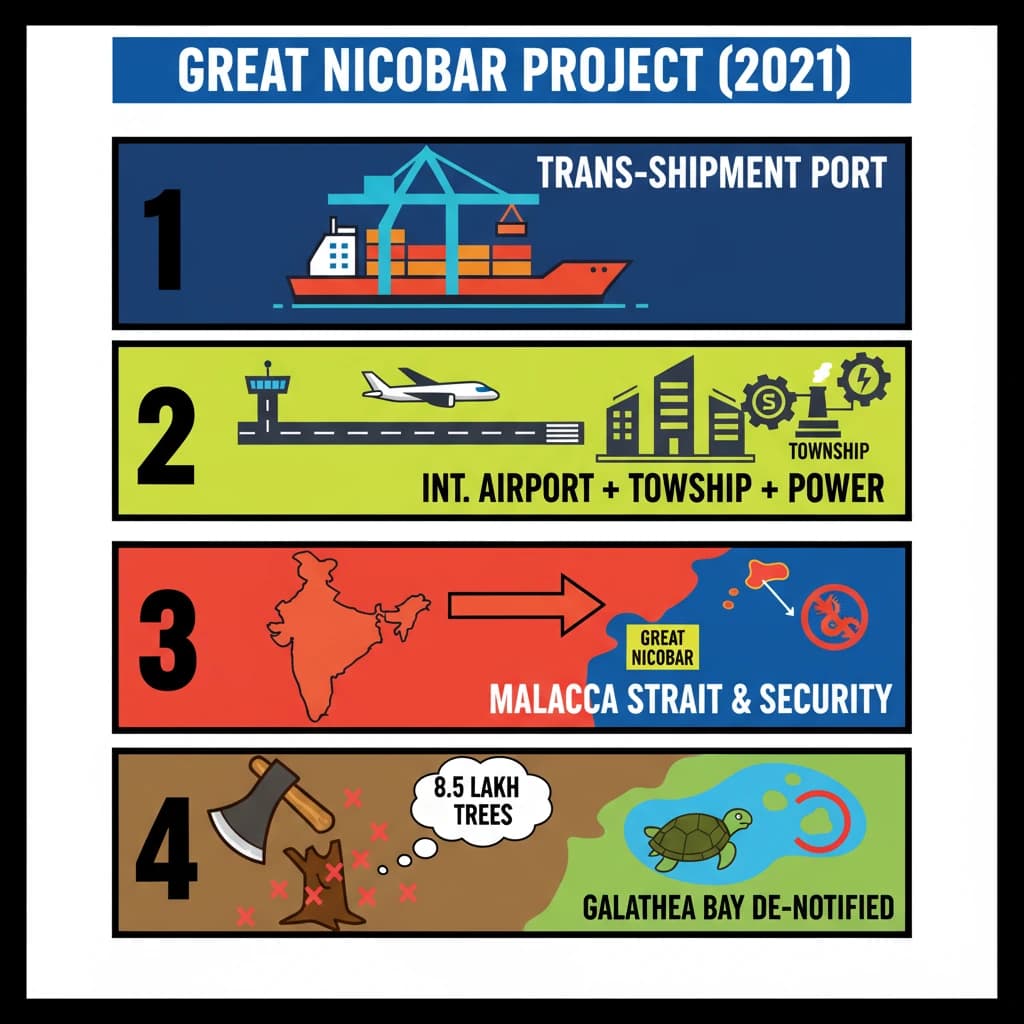
- •Key components include a Trans-shipment Port, International Airport, Township, and Power Plant.
- •Strategically located near Malacca Strait, crucial for India's maritime security and countering Chinese influence.
- •Significant environmental impact: felling of 8.5 lakh trees, de-notification of Galathea Bay Wildlife Sanctuary.
- •Threatens endemic species like Nicobar Megapode and leatherback turtles due to ecological destruction.
🧠 Memory Techniques
95% Verified Content