Loading page, please wait…
What is the Green Climate Fund (GCF)? - UPSC Environment And Ecology
What is What is the Green Climate Fund (GCF)? in UPSC Environment And Ecology?
What is the Green Climate Fund (GCF)? is a key topic under Environment And Ecology for UPSC Civil Services Examination. Key points include: GCF is a climate finance fund established in 2010 under the UNFCCC.. Headquartered in the Republic of Korea, it supports developing countries.. Governed by the GCF Board and accountable to the COP.. Understanding this topic is essential for both UPSC Prelims and Mains preparation.
Why is What is the Green Climate Fund (GCF)? important for UPSC exam?
What is the Green Climate Fund (GCF)? is a Medium-level topic in UPSC Environment And Ecology. It is tested in both Prelims (factual MCQs) and Mains (analytical answer writing). Previous year UPSC questions have frequently covered aspects of What is the Green Climate Fund (GCF)?, making it essential for comprehensive IAS preparation.
How to prepare What is the Green Climate Fund (GCF)? for UPSC?
To prepare What is the Green Climate Fund (GCF)? for UPSC: (1) Study the comprehensive notes covering all key concepts on Vaidra. (2) Practice previous year questions on this topic. (3) Connect it with current affairs using daily updates. (4) Revise using key takeaways and mind maps available for Environment And Ecology. (5) Write practice answers linking What is the Green Climate Fund (GCF)? to related GS Paper topics.
Key takeaways of What is the Green Climate Fund (GCF)? for UPSC
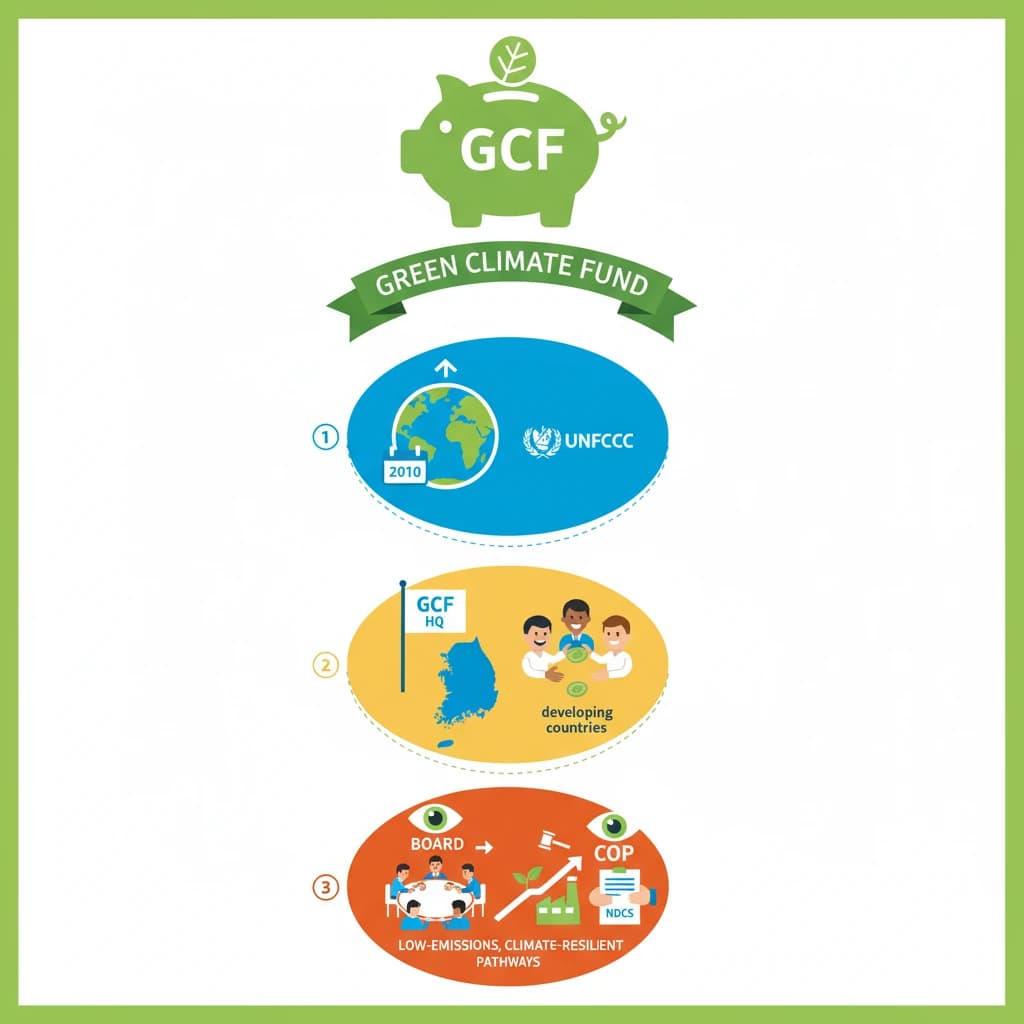
- GCF is a climate finance fund established in 2010 under the UNFCCC.
- Headquartered in the Republic of Korea, it supports developing countries.
- Governed by the GCF Board and accountable to the COP.
- Mandated to help developing countries achieve their NDCs towards low-emissions, climate-resilient pathways.
- NDCs are national climate action plans for emissions reduction and adaptation, updated every five years per the Paris Agreement.
What is the Green Climate Fund (GCF)?
Medium⏱️ 6 min read
environment and ecology
📖 Introduction
What is the Green Climate Fund (GCF)?
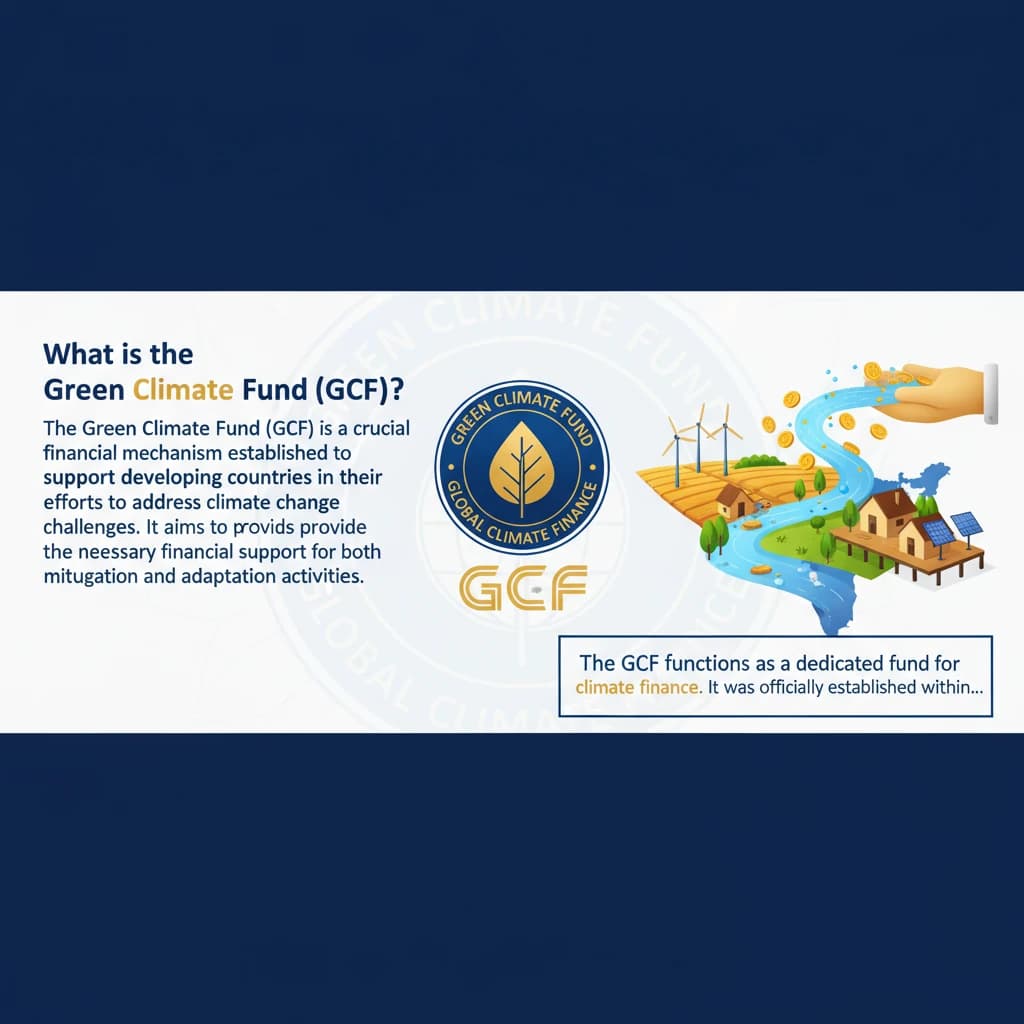
The Green Climate Fund (GCF) is a crucial financial mechanism established to support developing countries in their efforts to address climate change challenges. It aims to provide the necessary financial support for both mitigation and adaptation activities.
The GCF functions as a dedicated fund for climate finance. It was officially established within the framework of the United Nations Framework Convention on Climate Change (UNFCCC).
Establishment and Headquarters
The Green Climate Fund was formally established in 2010 during the 16th Conference of the Parties (COP 16) in Cancún, Mexico. Its creation was a significant step towards mobilizing financial resources for climate action.
The headquarters of the Green Climate Fund are located in Songdo, Incheon, Republic of Korea. This central location facilitates its global operations and coordination.
Governance and Accountability
The GCF operates under a robust governance structure to ensure transparency and effectiveness. It is overseen by a dedicated board that guides its strategic direction and operations.
The Fund operates under the governance of the GCF Board. It is also directly accountable to the Conference of the Parties (COP) of the UNFCCC, ensuring alignment with international climate policy and guidance.
Support Mechanism and Thematic Windows
The GCF provides financial assistance for a wide array of climate-related initiatives in developing countries. This support is channeled through specific thematic areas designed to address priority needs.
It supports various projects, programs, policies, and activities in developing country Parties. This is done through designated thematic funding windows aimed at addressing specific priority areas such as mitigation and adaptation.
Core Mandate and Nationally Determined Contributions (NDCs)
A primary function of the GCF is to assist developing nations in achieving their climate goals. This includes helping them implement their commitments under international agreements.
The GCF is mandated to support developing countries in raising and realizing their Nationally Determined Contributions (NDCs) ambitions. The ultimate goal is to facilitate pathways towards low-emissions and climate-resilient development.
Nationally Determined Contributions (NDCs) are comprehensive climate action plans. They outline how individual countries intend to reduce their greenhouse gas emissions and adapt to the impacts of climate change.
The Paris Agreement mandates that all signatory countries must create, communicate, and regularly update their NDCs every five years. Understanding NDCs is crucial for UPSC, especially in relation to international environmental agreements (GS Paper 3).
💡 Key Takeaways
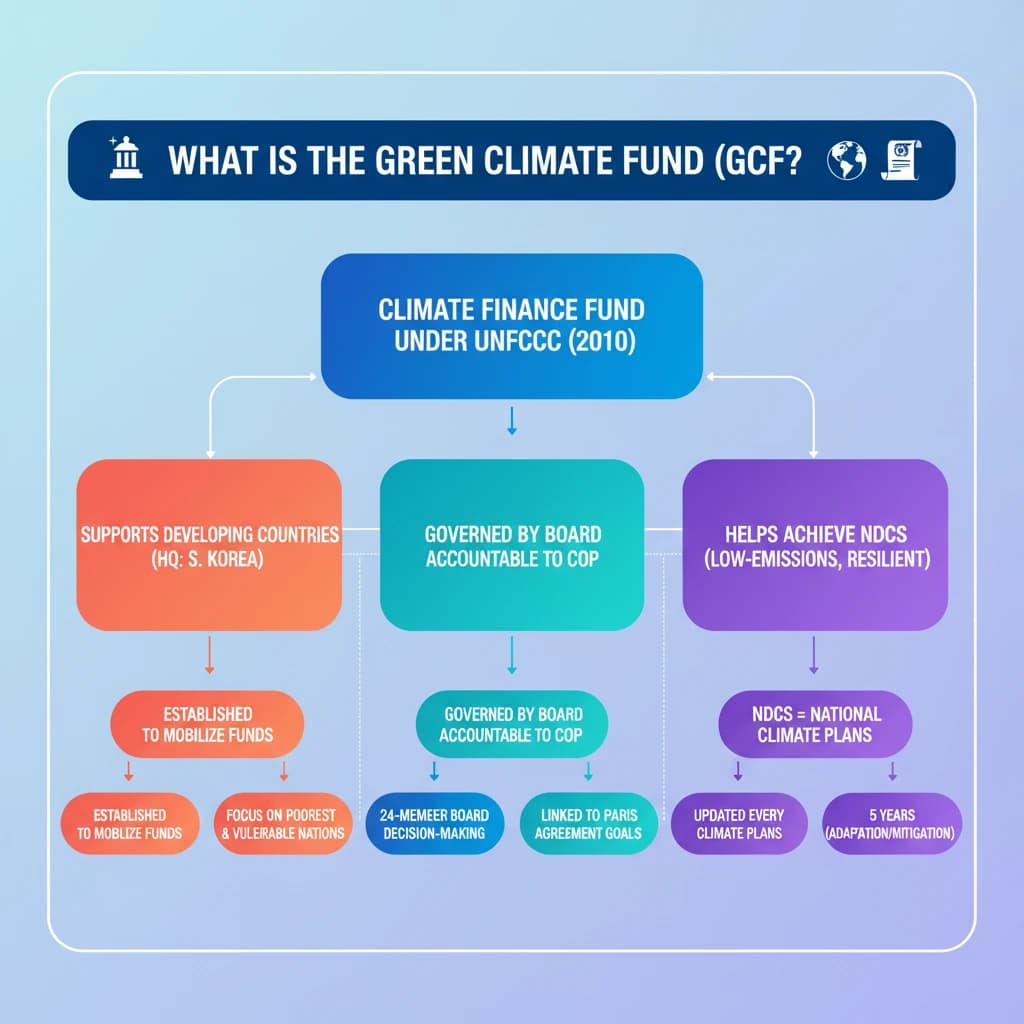
- •GCF is a climate finance fund established in 2010 under the UNFCCC.
- •Headquartered in the Republic of Korea, it supports developing countries.
- •Governed by the GCF Board and accountable to the COP.
- •Mandated to help developing countries achieve their NDCs towards low-emissions, climate-resilient pathways.
- •NDCs are national climate action plans for emissions reduction and adaptation, updated every five years per the Paris Agreement.
🧠 Memory Techniques
98% Verified Content
📚 Reference Sources
•Official Green Climate Fund (GCF) Website
•UNFCCC Website