Loading page, please wait…
What is the IUCN Red List? - UPSC Environment And Ecology
What is What is the IUCN Red List? in UPSC Environment And Ecology?
What is the IUCN Red List? is a key topic under Environment And Ecology for UPSC Civil Services Examination. Key points include: The IUCN Red List assesses extinction risk for animals, fungi, and plants.. It has nine categories, with Critically Endangered (CR), Endangered (EN), and Vulnerable (VU) denoting 'threatened' species.. It's a key indicator for Sustainable Development Goals (SDGs) and Aichi Targets.. Understanding this topic is essential for both UPSC Prelims and Mains preparation.
Why is What is the IUCN Red List? important for UPSC exam?
What is the IUCN Red List? is a Medium-level topic in UPSC Environment And Ecology. It is tested in both Prelims (factual MCQs) and Mains (analytical answer writing). Previous year UPSC questions have frequently covered aspects of What is the IUCN Red List?, making it essential for comprehensive IAS preparation.
How to prepare What is the IUCN Red List? for UPSC?
To prepare What is the IUCN Red List? for UPSC: (1) Study the comprehensive notes covering all key concepts on Vaidra. (2) Practice previous year questions on this topic. (3) Connect it with current affairs using daily updates. (4) Revise using key takeaways and mind maps available for Environment And Ecology. (5) Write practice answers linking What is the IUCN Red List? to related GS Paper topics.
Key takeaways of What is the IUCN Red List? for UPSC
- The IUCN Red List assesses extinction risk for animals, fungi, and plants.
- It has nine categories, with Critically Endangered (CR), Endangered (EN), and Vulnerable (VU) denoting 'threatened' species.
- It's a key indicator for Sustainable Development Goals (SDGs) and Aichi Targets.
- The IUCN Green Status of Species measures conservation success and population recovery.
- The Red List guides global conservation policies and resource allocation.
What is the IUCN Red List?
Medium⏱️ 6 min read
environment and ecology
📖 Introduction
Understanding the IUCN Red List
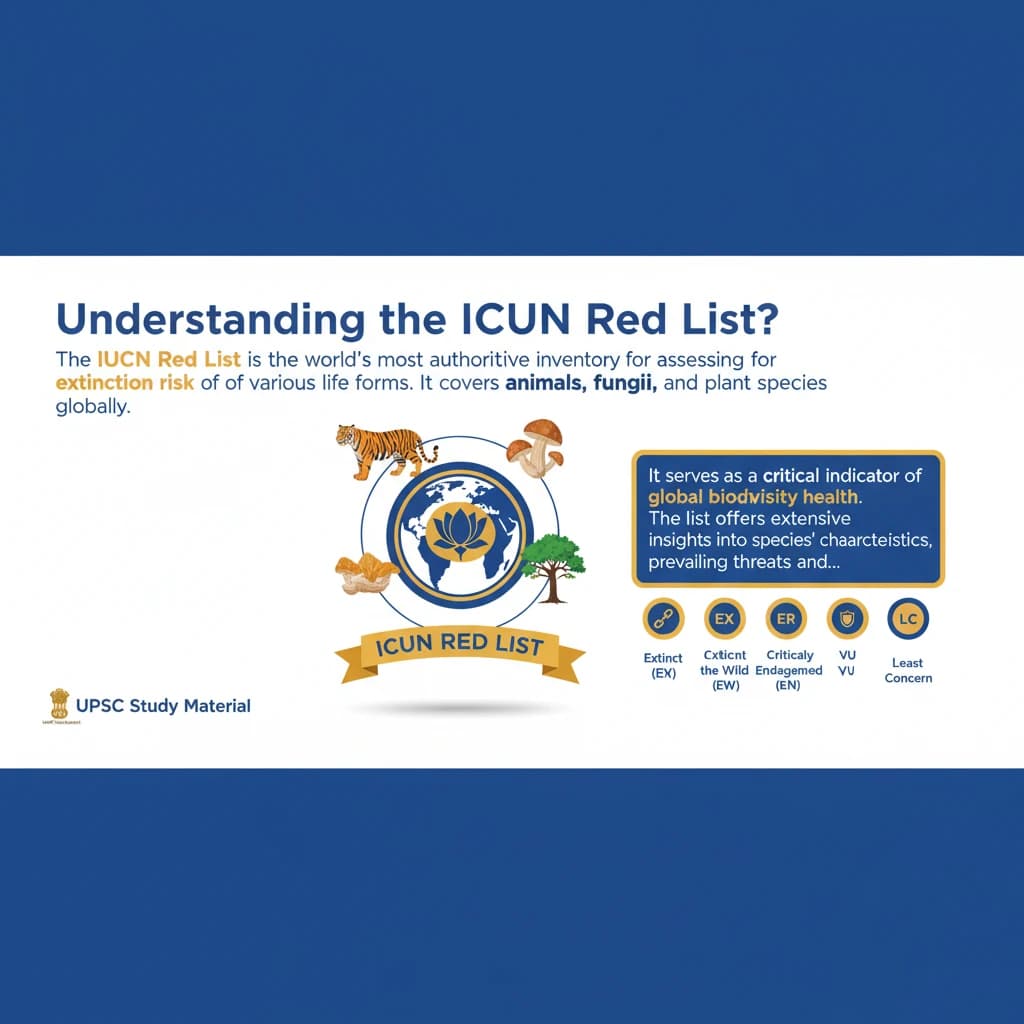
The IUCN Red List is the world's most authoritative inventory for assessing the extinction risk of various life forms. It covers animals, fungi, and plant species globally.
It serves as a critical indicator of global biodiversity health. The list offers extensive insights into species' characteristics, prevailing threats, and necessary conservation measures.
This comprehensive resource plays a pivotal role in shaping informed conservation decisions and policies worldwide.
IUCN Red List Categories of Extinction Risk
The IUCN Red List Categories define the specific extinction risk for each assessed species. There are nine categories in total, ranging from Not Evaluated (NE) to Extinct (EX).
Species classified as Critically Endangered (CR), Endangered (EN), and Vulnerable (VU) are collectively considered to be threatened with extinction.
These categories provide a standardized framework for understanding the urgency of conservation actions required for different species.
Role in Global Targets
The IUCN Red List is a key indicator for monitoring progress towards major international environmental goals. It is explicitly linked to both the Sustainable Development Goals (SDGs) and the former Aichi Targets for biodiversity.
UPSC Insight: Understanding the Red List's role in global targets like SDGs (especially Goal 15: Life on Land) is crucial for Mains answers on conservation and international conventions.
The IUCN Green Status of Species
Complementing the Red List, the IUCN Green Status of Species assesses the recovery of species' populations. It provides a measure of their conservation success.
There are eight Green Status Categories:
- Extinct in the Wild
- Critically Depleted
- Largely Depleted
- Moderately Depleted
- Slightly Depleted
- Fully Recovered
- Non-depleted
- Indeterminate
A Green Status assessment specifically examines how various conservation actions have influenced a species' current Red List status, highlighting effective interventions.
💡 Key Takeaways
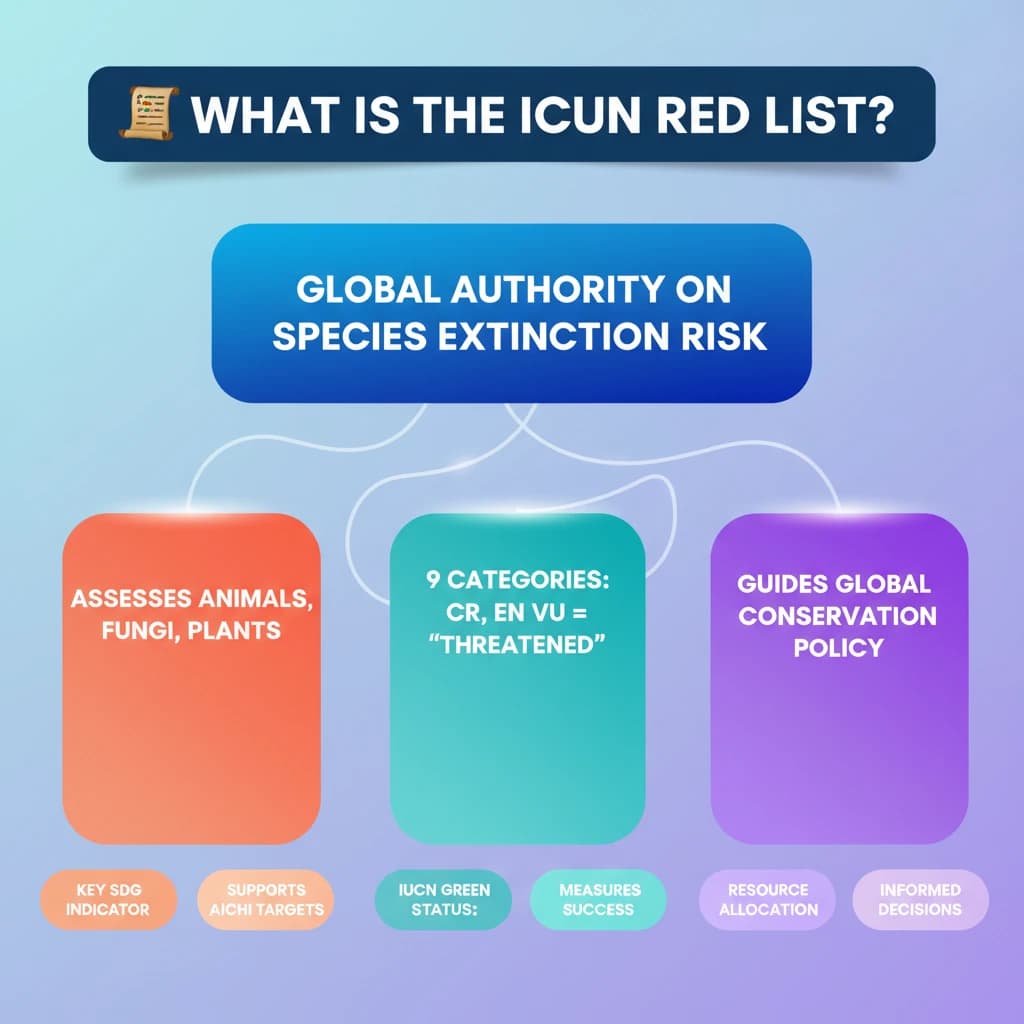
- •The IUCN Red List assesses extinction risk for animals, fungi, and plants.
- •It has nine categories, with Critically Endangered (CR), Endangered (EN), and Vulnerable (VU) denoting 'threatened' species.
- •It's a key indicator for Sustainable Development Goals (SDGs) and Aichi Targets.
- •The IUCN Green Status of Species measures conservation success and population recovery.
- •The Red List guides global conservation policies and resource allocation.
🧠 Memory Techniques

98% Verified Content
📚 Reference Sources
•IUCN Red List official website (www.iucnredlist.org)
•IUCN official website (www.iucn.org)