Loading page, please wait…
World’s Oceans Approaching Critical Acidification Level - UPSC Environment And Ecology
What is World’s Oceans Approaching Critical Acidification Level in UPSC Environment And Ecology?
World’s Oceans Approaching Critical Acidification Level is a key topic under Environment And Ecology for UPSC Civil Services Examination. Key points include: Ocean acidification is the ongoing decrease in ocean pH due to absorption of anthropogenic CO2.. The Potsdam Institute for Climate Impact Research (PIK) report highlights oceans nearing a critical acidification threshold.. Increased CO2 forms carbonic acid, releasing hydrogen ions and reducing essential carbonate ions.. Understanding this topic is essential for both UPSC Prelims and Mains preparation.
Why is World’s Oceans Approaching Critical Acidification Level important for UPSC exam?
World’s Oceans Approaching Critical Acidification Level is a Medium-level topic in UPSC Environment And Ecology. It is tested in both Prelims (factual MCQs) and Mains (analytical answer writing). Previous year UPSC questions have frequently covered aspects of World’s Oceans Approaching Critical Acidification Level, making it essential for comprehensive IAS preparation.
How to prepare World’s Oceans Approaching Critical Acidification Level for UPSC?
To prepare World’s Oceans Approaching Critical Acidification Level for UPSC: (1) Study the comprehensive notes covering all key concepts on Vaidra. (2) Practice previous year questions on this topic. (3) Connect it with current affairs using daily updates. (4) Revise using key takeaways and mind maps available for Environment And Ecology. (5) Write practice answers linking World’s Oceans Approaching Critical Acidification Level to related GS Paper topics.
Key takeaways of World’s Oceans Approaching Critical Acidification Level for UPSC
- Ocean acidification is the ongoing decrease in ocean pH due to absorption of anthropogenic CO2.
- The Potsdam Institute for Climate Impact Research (PIK) report highlights oceans nearing a critical acidification threshold.
- Increased CO2 forms carbonic acid, releasing hydrogen ions and reducing essential carbonate ions.
- This impacts marine calcifiers (corals, mollusks, pteropods) by hindering shell/skeleton formation.
- Arctic Ocean is particularly vulnerable due to colder waters and melting ice.
- Mitigation requires drastic reduction in global CO2 emissions; adaptation includes ecosystem protection.
- Recognized under SDG 14.3, addressing OA is crucial for marine life and global climate stability.
World’s Oceans Approaching Critical Acidification Level
Medium⏱️ 12 min read
environment and ecology
📖 Introduction
Introduction to Ocean Acidification
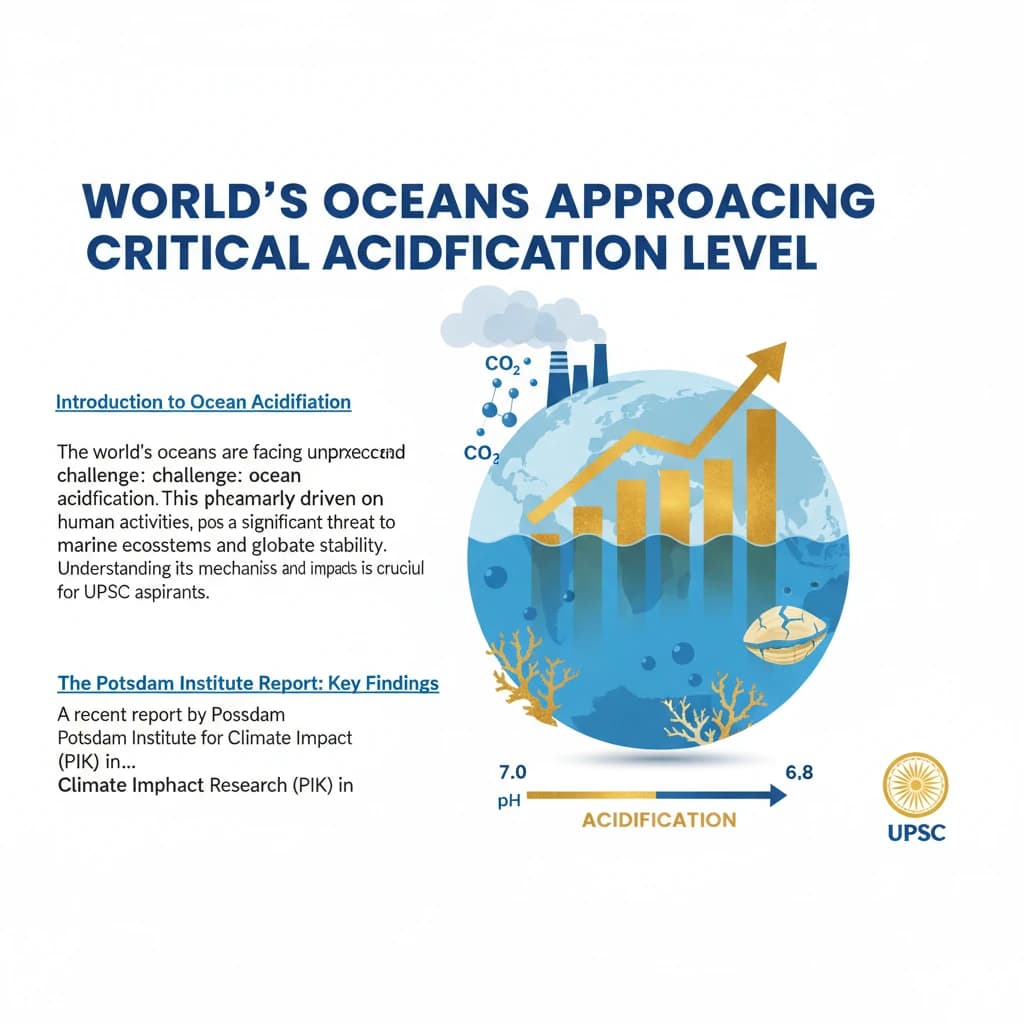
The world's oceans are facing an unprecedented challenge: ocean acidification. This phenomenon, primarily driven by human activities, poses a significant threat to marine ecosystems and global climate stability. Understanding its mechanisms and impacts is crucial for UPSC aspirants.
The Potsdam Institute Report: Key Findings
A recent report by the Potsdam Institute for Climate Impact Research (PIK) in Germany has highlighted an alarming trend. It indicates that the world’s oceans are rapidly approaching a critical acidification threshold.
This threshold, if crossed, could lead to severe and irreversible impacts on marine life and further destabilize the global climate system. The report serves as a stark warning about the urgency of addressing carbon emissions.
What is Ocean Acidification?
Ocean acidification (OA) refers to the ongoing decrease in the pH of the Earth's oceans, caused by the uptake of anthropogenic carbon dioxide (CO2) from the atmosphere. The oceans act as a major carbon sink, absorbing a significant portion of atmospheric CO2.
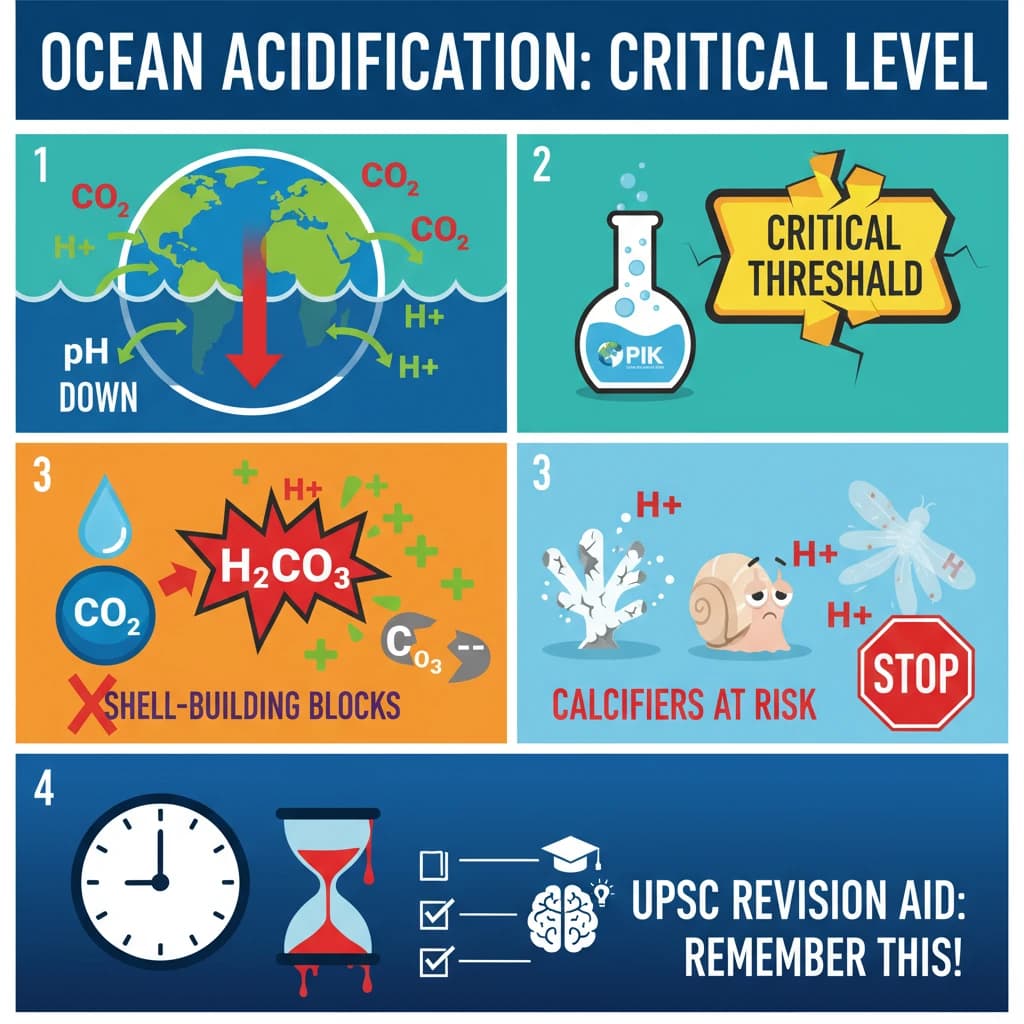
When CO2 dissolves in seawater, it reacts with water to form carbonic acid (H2CO3). This acid then dissociates, releasing hydrogen ions (H+), which increases the acidity of the water and lowers its pH.
Causes of Ocean Acidification
The primary cause of ocean acidification is the increase in atmospheric CO2 concentrations due to human activities. Since the Industrial Revolution, the burning of fossil fuels (coal, oil, gas) and deforestation have significantly elevated CO2 levels.
- Fossil Fuel Combustion: Power generation, industrial processes, and transportation release vast amounts of CO2.
- Deforestation: Reduces the Earth's capacity to absorb CO2 through photosynthesis, contributing to its accumulation in the atmosphere.
Impacts of Ocean Acidification
The increase in hydrogen ions leads to a reduction in the availability of carbonate ions (CO3^2-). These ions are essential building blocks for many marine organisms to form their shells and skeletons.
Marine Calcifiers: Organisms such as corals, mollusks (oysters, mussels), pteropods (sea butterflies), and certain plankton rely on carbonate ions to build their calcium carbonate structures. Reduced availability makes calcification difficult, leading to weaker shells and skeletons, or even dissolution.
- Coral Reefs: Acidification hinders coral growth and can lead to coral bleaching, impacting biodiversity hotspots and coastal protection.
- Food Webs: Pteropods are a vital food source for many fish, whales, and birds. Their decline can have cascading effects throughout the marine food web.
- Fisheries: Shellfish industries face significant economic losses due to reduced growth and survival rates of commercially important species.
Measuring Ocean Acidification
Ocean pH has dropped by approximately 0.1 units since the pre-industrial era, representing a 30% increase in acidity on the logarithmic pH scale. Scientists monitor ocean pH, CO2 levels, and carbonate chemistry to track these changes.
For UPSC, remember that a decrease in pH means an increase in acidity. The 0.1 pH unit drop is a key statistic often cited in environmental reports and can be used in your answers for GS-III Environment.
Mitigation and Adaptation Strategies
Addressing ocean acidification requires a two-pronged approach: global mitigation of CO2 emissions and local adaptation strategies.
- Global Mitigation: Reducing greenhouse gas emissions through international agreements (e.g., Paris Agreement), transitioning to renewable energy sources, and improving energy efficiency.
- Local Adaptation: Protecting and restoring vulnerable ecosystems like coral reefs and mangroves, developing aquaculture techniques for more resilient species, and establishing Marine Protected Areas (MPAs).
💡 Key Takeaways
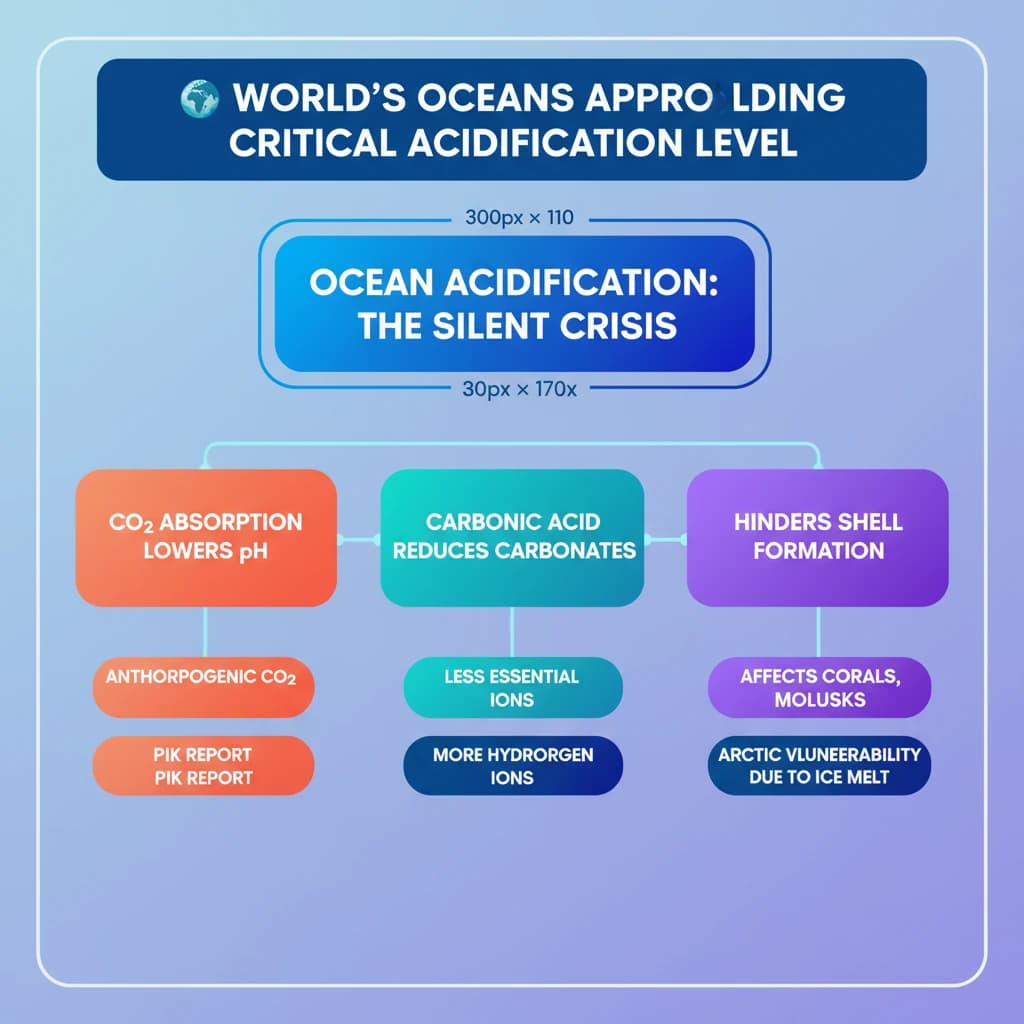
- •Ocean acidification is the ongoing decrease in ocean pH due to absorption of anthropogenic CO2.
- •The Potsdam Institute for Climate Impact Research (PIK) report highlights oceans nearing a critical acidification threshold.
- •Increased CO2 forms carbonic acid, releasing hydrogen ions and reducing essential carbonate ions.
- •This impacts marine calcifiers (corals, mollusks, pteropods) by hindering shell/skeleton formation.
- •Arctic Ocean is particularly vulnerable due to colder waters and melting ice.
- •Mitigation requires drastic reduction in global CO2 emissions; adaptation includes ecosystem protection.
- •Recognized under SDG 14.3, addressing OA is crucial for marine life and global climate stability.
🧠 Memory Techniques
95% Verified Content
📚 Reference Sources
•Intergovernmental Panel on Climate Change (IPCC) Assessment Reports (AR5, AR6) on Oceans and Cryosphere.
•National Oceanic and Atmospheric Administration (NOAA) Ocean Acidification Program.
•United Nations Environment Programme (UNEP) and Sustainable Development Goal 14 (Life Below Water) documentation.
•Scientific literature on marine biology and oceanography.