Loading page, please wait…
Chenab, Jhelum, and Beas Rivers: Tributaries of the Indus System - UPSC Geography
What is Chenab, Jhelum, and Beas Rivers: Tributaries of the Indus System in UPSC Geography?
Chenab, Jhelum, and Beas Rivers: Tributaries of the Indus System is a key topic under Geography for UPSC Civil Services Examination. Key points include: Chenab originates from Chandra and Bhaga streams at Tandi, Himachal Pradesh, known as Chandrabhaga.. Chenab, Jhelum, and Indus are Western Rivers allocated to Pakistan under the Indus Waters Treaty (1960).. Beas, Ravi, and Sutlej are Eastern Rivers allocated to India under the Indus Waters Treaty (1960).. Understanding this topic is essential for both UPSC Prelims and Mains preparation.
Why is Chenab, Jhelum, and Beas Rivers: Tributaries of the Indus System important for UPSC exam?
Chenab, Jhelum, and Beas Rivers: Tributaries of the Indus System is a Medium-level topic in UPSC Geography. It is tested in both Prelims (factual MCQs) and Mains (analytical answer writing). Previous year UPSC questions have frequently covered aspects of Chenab, Jhelum, and Beas Rivers: Tributaries of the Indus System, making it essential for comprehensive IAS preparation.
How to prepare Chenab, Jhelum, and Beas Rivers: Tributaries of the Indus System for UPSC?
To prepare Chenab, Jhelum, and Beas Rivers: Tributaries of the Indus System for UPSC: (1) Study the comprehensive notes covering all key concepts on Vaidra. (2) Practice previous year questions on this topic. (3) Connect it with current affairs using daily updates. (4) Revise using key takeaways and mind maps available for Geography. (5) Write practice answers linking Chenab, Jhelum, and Beas Rivers: Tributaries of the Indus System to related GS Paper topics.
Key takeaways of Chenab, Jhelum, and Beas Rivers: Tributaries of the Indus System for UPSC
- Chenab originates from Chandra and Bhaga streams at Tandi, Himachal Pradesh, known as Chandrabhaga.
- Chenab, Jhelum, and Indus are Western Rivers allocated to Pakistan under the Indus Waters Treaty (1960).
- Beas, Ravi, and Sutlej are Eastern Rivers allocated to India under the Indus Waters Treaty (1960).
- Jhelum originates from Verinag Spring in Kashmir Valley, passes through Wular Lake.
- Beas originates from Beas Kund near Rohtang Pass, joins Sutlej at Harike in Punjab.
- Ravi originates from Bara Bangal, Kangra district, Himachal Pradesh.
Chenab, Jhelum, and Beas Rivers: Tributaries of the Indus System
Medium⏱️ 6 min read
geography
📖 Introduction
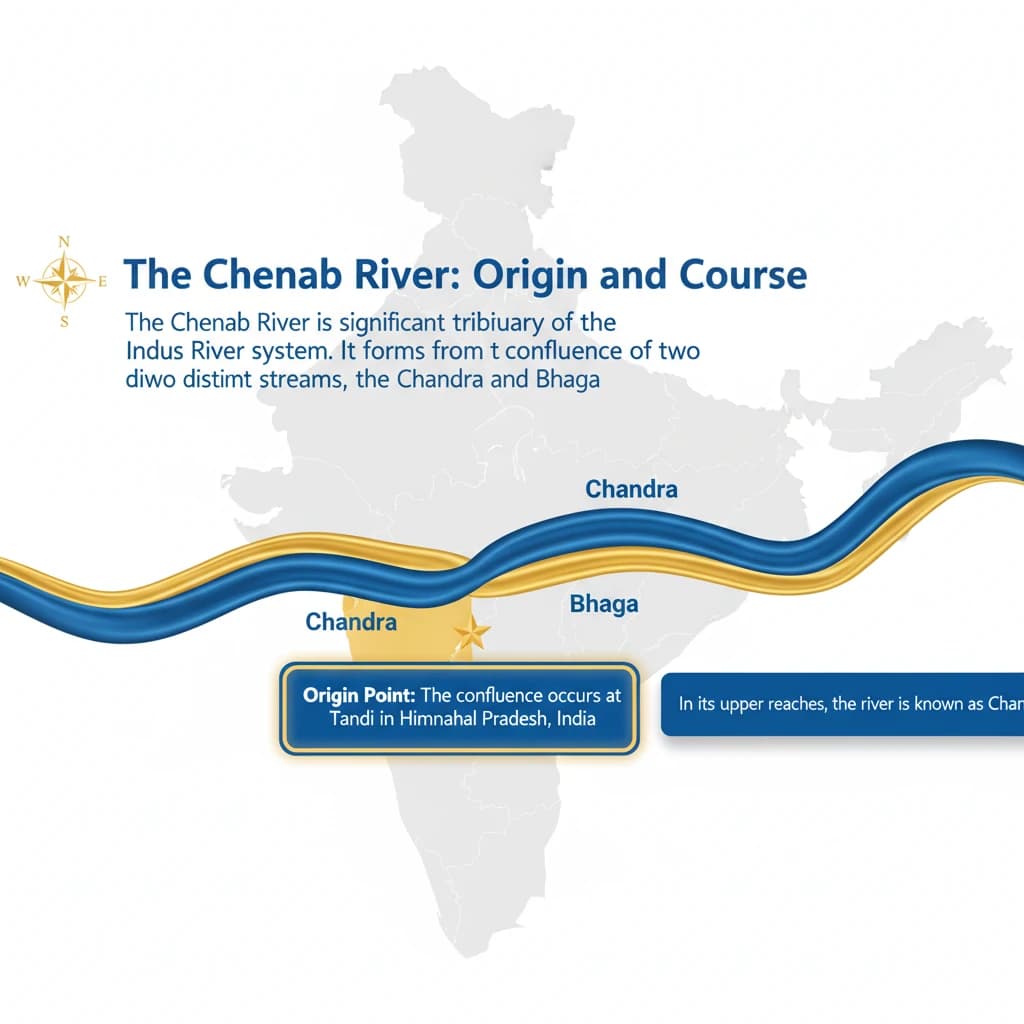
The Chenab River: Origin and Course
The Chenab River is a significant tributary of the Indus River system. It forms from the confluence of two distinct streams, the Chandra and Bhaga.
Origin Point: The confluence occurs at Tandi in Himachal Pradesh, India.
In its upper reaches, the river is known as Chandrabhaga. It initially flows westward through Jammu and Kashmir before turning southwest into Pakistan.
Upon entering Pakistan, the Chenab descends into the alluvial lowlands of the Punjab province. It then merges with the Jhelum River near Trimmu.
Key Tributaries of the Indus System
Understanding the individual characteristics of the Indus tributaries is crucial for UPSC Geography.
Jhelum River
The Jhelum River originates from the Verinag Spring located in the Kashmir Valley. It traverses through Jammu and Kashmir and Punjab.
Key Features: The Jhelum passes through Srinagar and the prominent Wular Lake. It enters Pakistan via a gorge near Gilgit.
The Jhelum River eventually merges with the Chenab River near Jhang in Pakistan.
Beas River
The Beas River has its source at Beas Kund, which is situated near Rohtang Pass in Himachal Pradesh.
Course: It flows through the picturesque Kullu valley. Unlike some other tributaries, the Beas remains entirely within India for its major course.
The Beas River ultimately joins the Sutlej River at Harike, located in Punjab, India.
Ravi River
The Ravi River originates from Bara Bangal in the Kangra district of Himachal Pradesh. It flows through several locations including Bara Bansu, Tretha, Chanota, and Ulhansa.
Length in HP: The Ravi covers approximately 158 km within Himachal Pradesh before entering the state of Punjab.
Its notable tributaries include Budhil, Siul, Baljari, Chhatrari, and Baira. These smaller streams contribute significantly to its flow.
The Indus Waters Treaty (1960)
The allocation of waters for these rivers is governed by a crucial international agreement.
The Indus Waters Treaty, signed in 1960, is a landmark agreement between India and Pakistan concerning the sharing of the Indus River System waters.
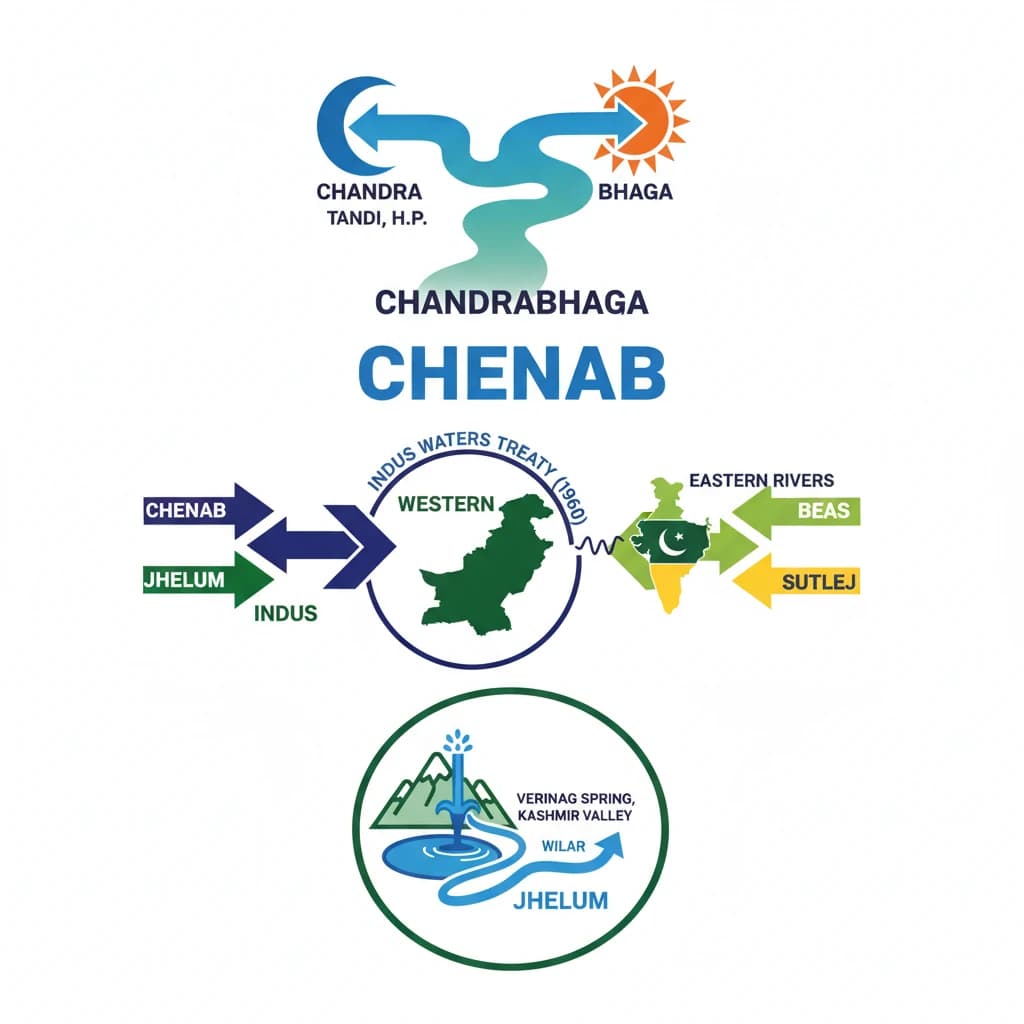
Under this treaty, control of the Eastern Rivers—Beas, Ravi, and Sutlej—was allocated to India.
Conversely, the control of the Western Rivers—the Indus itself, Chenab, and Jhelum—was allocated to Pakistan.
UPSC Insight: The Indus Waters Treaty is a frequently asked topic in both Prelims (facts about rivers and allocation) and Mains (geopolitics, water resource management, India-Pakistan relations).
💡 Key Takeaways
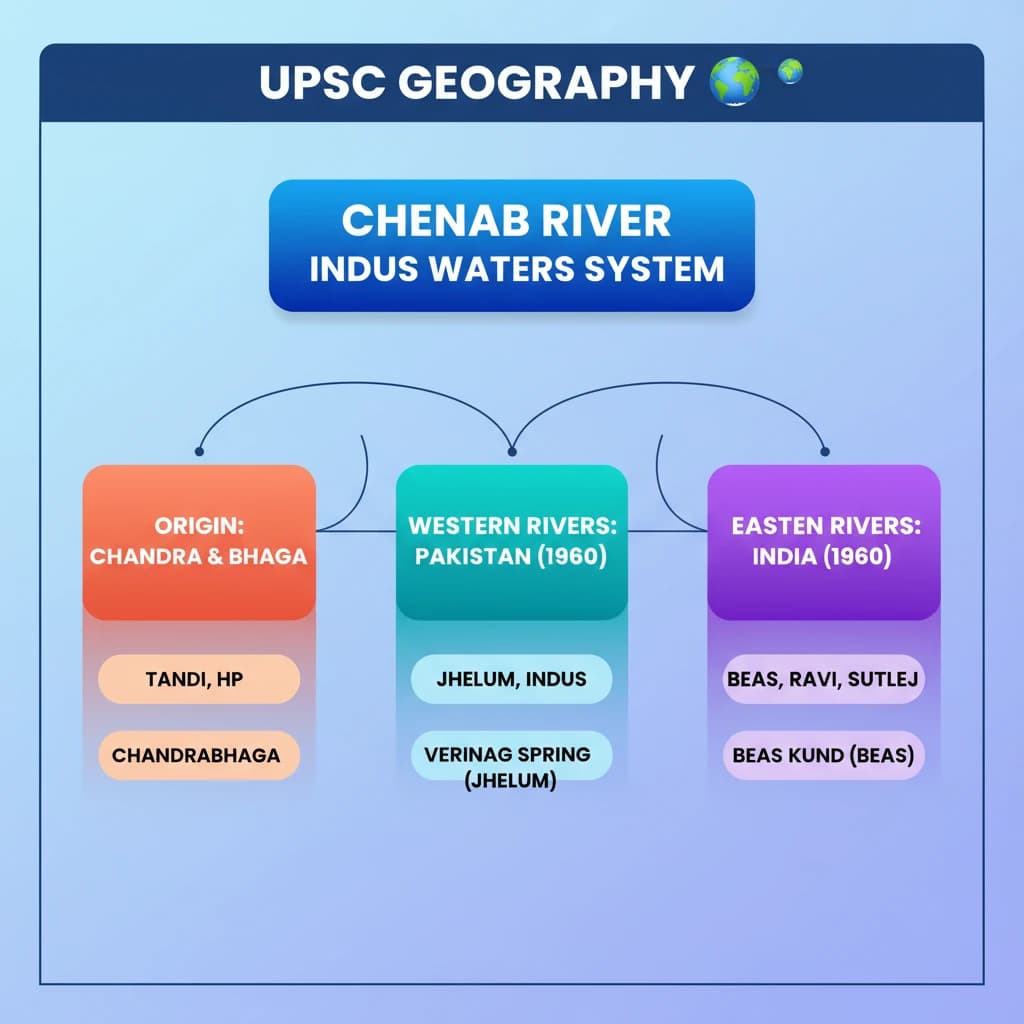
- •Chenab originates from Chandra and Bhaga streams at Tandi, Himachal Pradesh, known as Chandrabhaga.
- •Chenab, Jhelum, and Indus are Western Rivers allocated to Pakistan under the Indus Waters Treaty (1960).
- •Beas, Ravi, and Sutlej are Eastern Rivers allocated to India under the Indus Waters Treaty (1960).
- •Jhelum originates from Verinag Spring in Kashmir Valley, passes through Wular Lake.
- •Beas originates from Beas Kund near Rohtang Pass, joins Sutlej at Harike in Punjab.
- •Ravi originates from Bara Bangal, Kangra district, Himachal Pradesh.
🧠 Memory Techniques
98% Verified Content