Loading page, please wait…
India-Nepal Rivers: Kosi, Gandak & Himalayan River Systems - UPSC Geography
What is India-Nepal Rivers: Kosi, Gandak & Himalayan River Systems in UPSC Geography?
India-Nepal Rivers: Kosi, Gandak & Himalayan River Systems is a key topic under Geography for UPSC Civil Services Examination. Key points include: Kosi, Gandak, and Kali (Sharda/Mahakali) are major transboundary rivers between India and Nepal.. The Kosi River is known as the 'sorrow of Bihar' due to frequent floods and course changes.. The Sharda/Kali/Mahakali River is central to a border dispute (Kalapani, Lipulekh, Limpiyadhura) based on the Sugauli Treaty of 1816.. Understanding this topic is essential for both UPSC Prelims and Mains preparation.
Why is India-Nepal Rivers: Kosi, Gandak & Himalayan River Systems important for UPSC exam?
India-Nepal Rivers: Kosi, Gandak & Himalayan River Systems is a Medium-level topic in UPSC Geography. It is tested in both Prelims (factual MCQs) and Mains (analytical answer writing). Previous year UPSC questions have frequently covered aspects of India-Nepal Rivers: Kosi, Gandak & Himalayan River Systems, making it essential for comprehensive IAS preparation.
How to prepare India-Nepal Rivers: Kosi, Gandak & Himalayan River Systems for UPSC?
To prepare India-Nepal Rivers: Kosi, Gandak & Himalayan River Systems for UPSC: (1) Study the comprehensive notes covering all key concepts on Vaidra. (2) Practice previous year questions on this topic. (3) Connect it with current affairs using daily updates. (4) Revise using key takeaways and mind maps available for Geography. (5) Write practice answers linking India-Nepal Rivers: Kosi, Gandak & Himalayan River Systems to related GS Paper topics.
Key takeaways of India-Nepal Rivers: Kosi, Gandak & Himalayan River Systems for UPSC
- Kosi, Gandak, and Kali (Sharda/Mahakali) are major transboundary rivers between India and Nepal.
- The Kosi River is known as the 'sorrow of Bihar' due to frequent floods and course changes.
- The Sharda/Kali/Mahakali River is central to a border dispute (Kalapani, Lipulekh, Limpiyadhura) based on the Sugauli Treaty of 1816.
- The Pancheshwar Dam is a proposed joint India-Nepal project on the Sharda/Kali/Mahakali River for irrigation and hydroelectric power.
- Effective management of these rivers is crucial for water security, flood control, and bilateral relations.
India-Nepal Rivers: Kosi, Gandak & Himalayan River Systems
Medium⏱️ 7 min read
geography
📖 Introduction
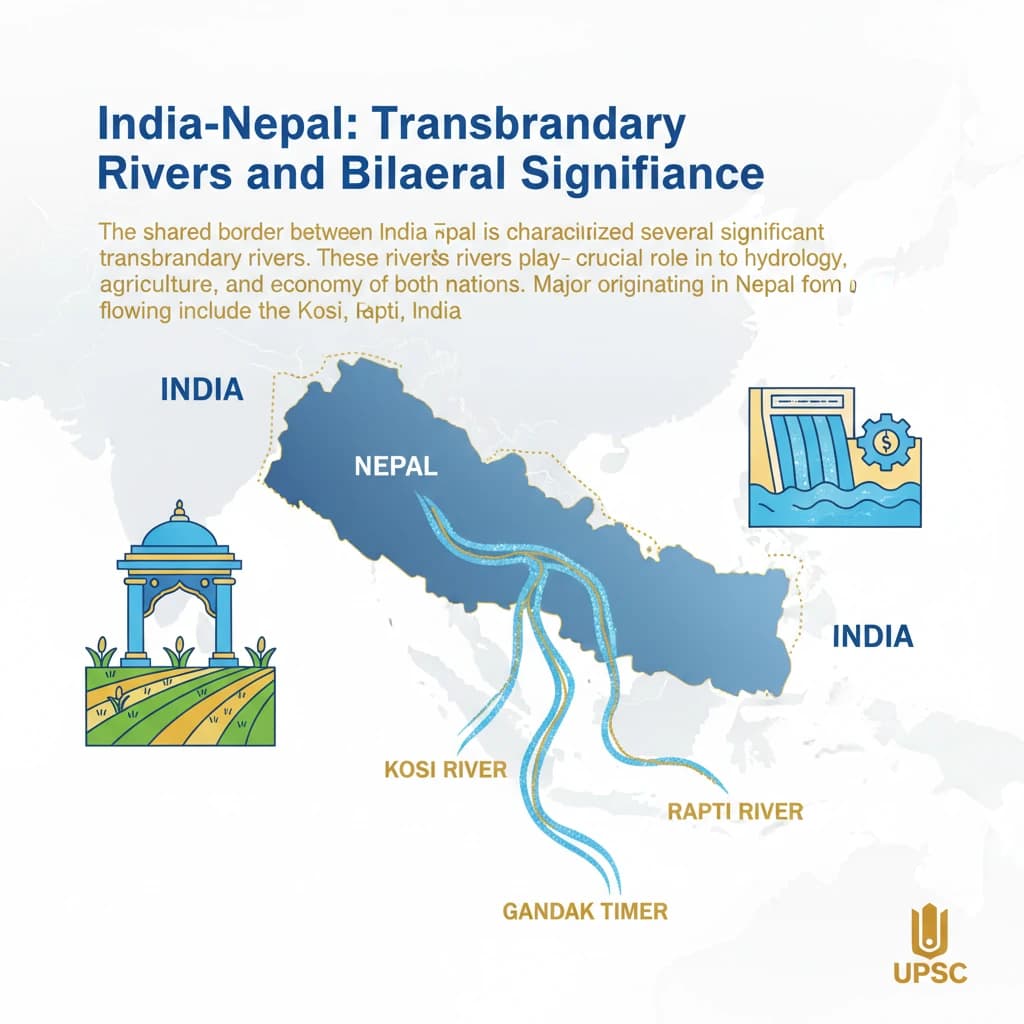
India-Nepal: Transboundary Rivers and Bilateral Significance
The shared border between India and Nepal is characterized by several significant transboundary rivers. These rivers play a crucial role in the hydrology, agriculture, and economy of both nations.
Major rivers originating in Nepal and flowing into India include the Kosi, Gandak, Rapti, Narayani, and Kali (also known as Sharda or Mahakali).
River Origins: These rivers primarily originate in the Tibetan Plateau and the Himalayan ranges, highlighting their glacial and snow-fed nature.
The Kosi River: The 'Sorrow of Bihar'
The Kosi River is a vital transboundary river that traverses through China, Nepal, and India. It is a major tributary of the Ganges River.
Origin and Flow: The Kosi originates from the confluence of three main streams: the Sun Kosi, Arun Kosi, and Tamar Kosi in the Himalayas. It flows through Nepal and the Indian state of Bihar before merging with the Ganges in Bihar.
The Kosi is infamous for its frequent course changes and devastating flooding. This characteristic has earned it the poignant nickname, the “sorrow of Bihar.”
The Gandak River: A Himalayan Lifeline
Also known as the Gandaki or Narayani River, the Gandak is another significant river flowing through Nepal and northern India.
Origin: The Gandak River originates in Tibet, near the Nepal border, at an impressive altitude of 7,620 metres.
Course: It flows through the Indian states of Bihar and Uttar Pradesh. It eventually merges with the Ganges River near Patna.
Major Tributaries: Key tributaries of the Gandak include the Mayangadi, Bari, Trisuli, Panchnad, Sarhad, and Budhi Gandak.
The Sharda/Kali/Mahakali River: A Border River with Disputes
The Sharda River, also known as the Kali or Mahakali River, holds particular geopolitical significance due to its role as a border delineator.
Origin: This river originates at Kalapani in Uttarakhand, India.
Course: It flows along the western border of Nepal and India. After merging with the Ghaghra River, it passes through the hills as the Kali River. Upon entering the Terai plains, it becomes known as the Sharda River.
A major proposed initiative on this river is the Pancheshwar Dam. This is a joint India-Nepal project envisioned for both irrigation and hydroelectric power generation.
UPSC Insight: The Sugauli Treaty Dispute
India and Nepal have a long-standing disagreement regarding the interpretation of the Sugauli Treaty of 1816. This treaty delimited the boundary along the Maha Kali River. The core of the dispute lies in the differing views on which specific stream constitutes the source of the river, impacting territorial claims, particularly around Kalapani, Lipulekh, and Limpiyadhura.
💡 Key Takeaways
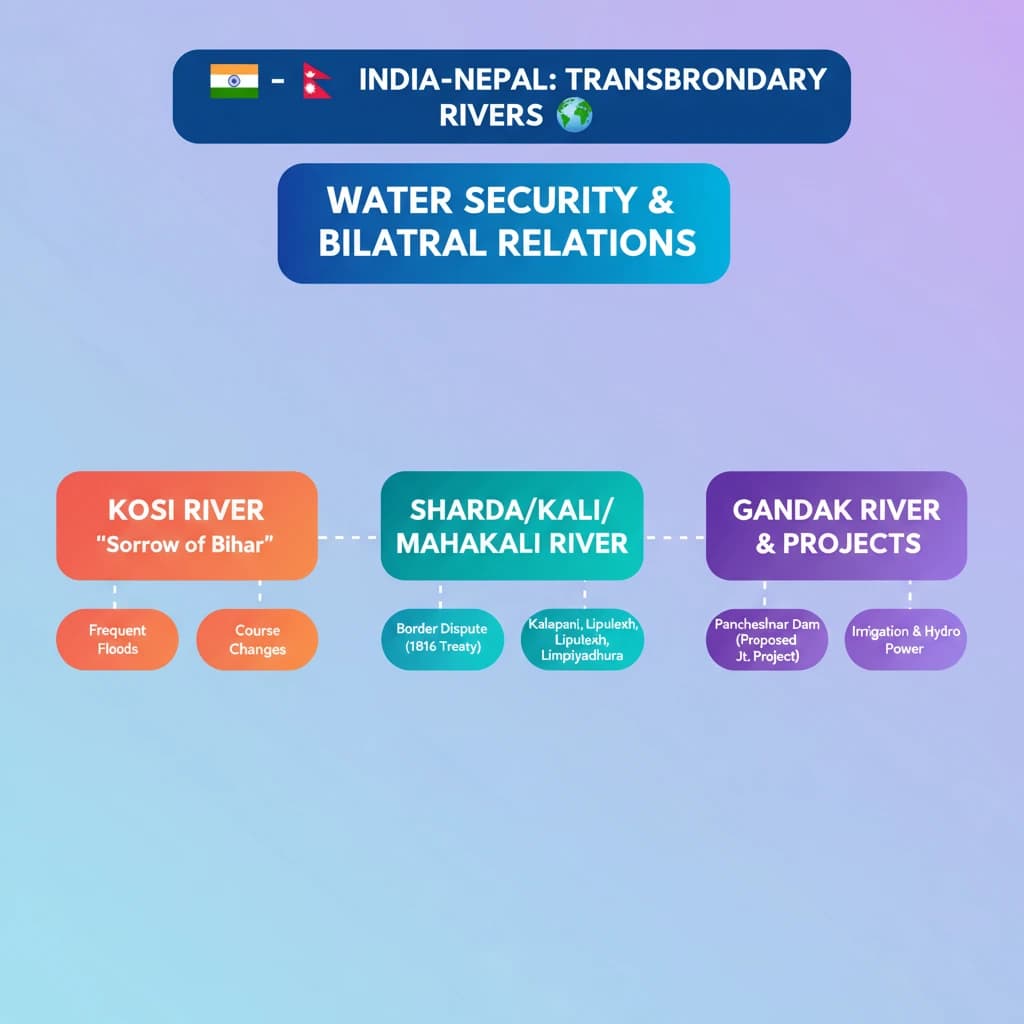
- •Kosi, Gandak, and Kali (Sharda/Mahakali) are major transboundary rivers between India and Nepal.
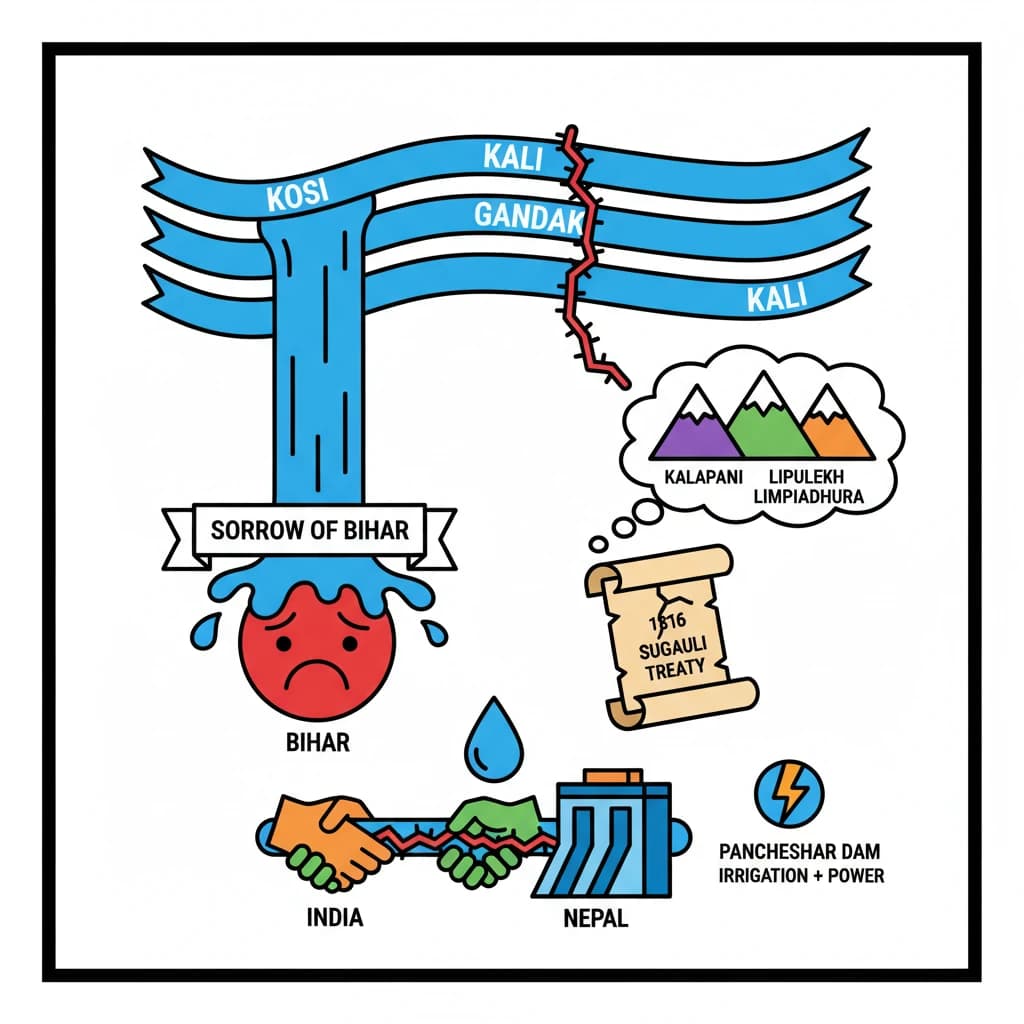
- •The Kosi River is known as the 'sorrow of Bihar' due to frequent floods and course changes.
- •The Sharda/Kali/Mahakali River is central to a border dispute (Kalapani, Lipulekh, Limpiyadhura) based on the Sugauli Treaty of 1816.
- •The Pancheshwar Dam is a proposed joint India-Nepal project on the Sharda/Kali/Mahakali River for irrigation and hydroelectric power.
- •Effective management of these rivers is crucial for water security, flood control, and bilateral relations.
🧠 Memory Techniques
95% Verified Content
📚 Reference Sources
•General knowledge on Indian geography and international relations