Overview
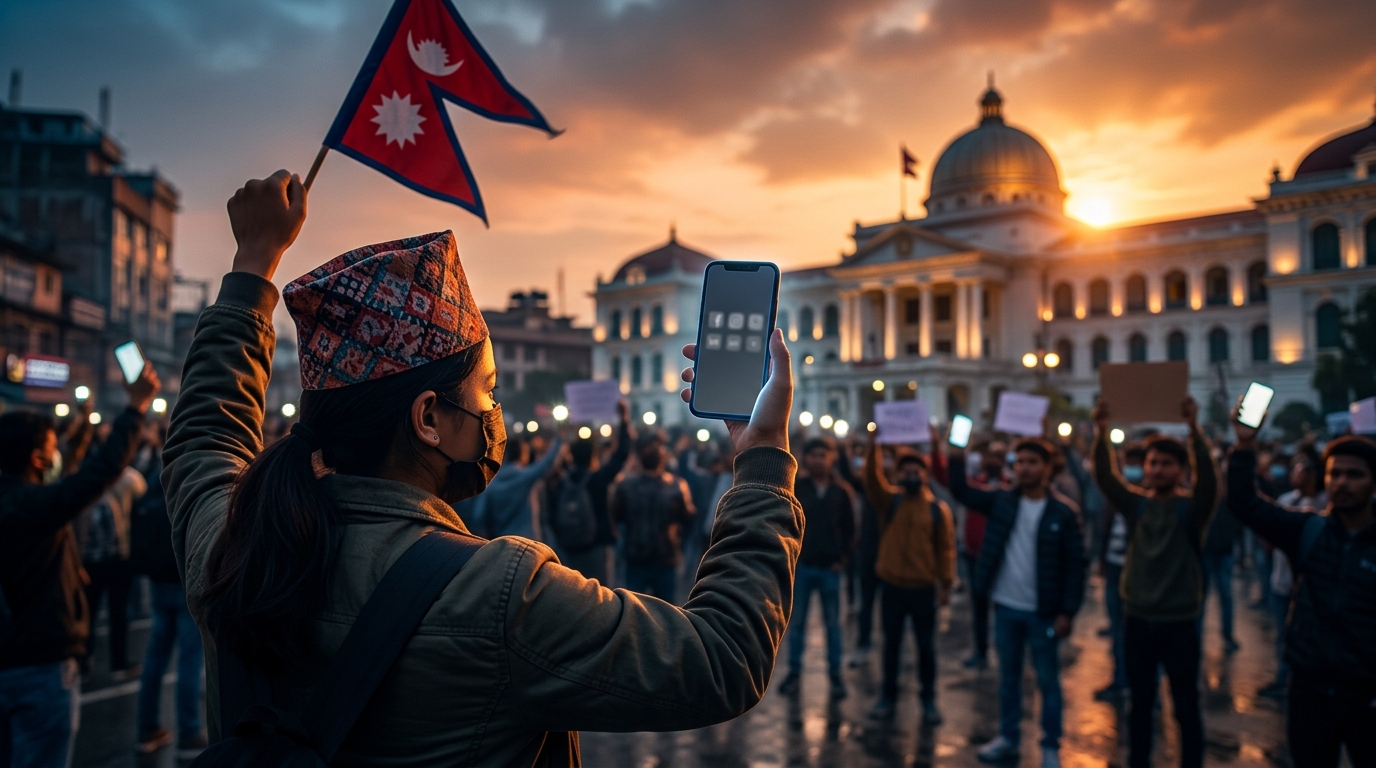
In September 2025, the Nepalese government imposed a government ban on social media. Rather than silencing dissent, the ban ignited a nationwide Gen Z uprising, a digitally‑native revolt that displaced the long‑standing political elite.
Key Developments
- The youth organised through decentralised horizontal networks, bypassing traditional party hierarchies.
- Political communication shifted to an attention economy, with memes, live‑streams, and viral hashtags shaping public discourse.
- Calls for genuine federalism intensified, questioning the implementation of the 2015 constitution’s provisions.
- Historical narratives linked the uprising to Nepal’s journey from feudalism to republican democracy, suggesting a possible break in the cycle of failed reforms.
Important Facts
The e‑book published by The Hindu analyses the uprising through multiple lenses:
- "A tectonic shift in Nepal’s politics" – Akhilesh Upadhyay
- "The September uprising: How Nepal’s youth changed the game" – Sanjeev Satgainya
- "Political Metamorphosis of Contemporary Nepal" – Swatahsiddha Sarkar & Pranab Kharel
- "Situating Nepal’s current political moment in the long history of feudalism to republican democracy" – Srinivasan Ramani
- "Federalism in Nepal: Contested Past, Controversial Present, and Challenged Future" – C.K. Lal
- "A Tide in the Affairs of Nepal" – K.V. Rajan & Atul K. Thakur
Readers can download a sample at https://newsth.live/Nepal_Sample and subscribe for the full e‑book via The Hindu Premium.
Exam Relevance
The episode touches upon several GS papers:
- GS‑2 (Polity): The role of digital activism, the challenge to traditional party structures, and the debate on federalism.
- GS‑1 (History): Continuities and ruptures from Nepal’s feudal past to its present republican framework.
- GS‑3 (Economy): Impact of the attention economy on political mobilisation and the economics of social‑media bans.
- GS‑4 (Ethics): Youth agency, civil liberties, and the ethical dimensions of state‑imposed internet restrictions.
Way Forward
For aspirants, the key take‑aways are:
- Monitor how government bans on social media affect democratic discourse in South Asia.
- Analyse the sustainability of movements that rely on decentralised horizontal networks once the initial fervour wanes.
- Assess the implementation challenges of federalism in a post‑conflict, multi‑ethnic state.
- Link the Nepalese experience to broader global trends of digital mobilisation and anti‑establishment politics.
Understanding this nexus of technology, youth agency, and constitutional politics equips candidates to answer questions on contemporary political change, governance reforms, and the impact of digital tools on democratic processes.