Loading page, please wait…
Polar Vortex: Recent US Winter Storm & Impacts - UPSC Geography
What is Polar Vortex: Recent US Winter Storm & Impacts in UPSC Geography?
Polar Vortex: Recent US Winter Storm & Impacts is a key topic under Geography for UPSC Civil Services Examination. Key points include: The Polar Vortex is a persistent low-pressure system of cold air over the poles, always present.. A strong polar vortex keeps cold air trapped at the poles; a weak or disrupted one allows cold air to spill south.. Weakening is often linked to disturbances in the jet stream, potentially influenced by stratospheric warming.. Understanding this topic is essential for both UPSC Prelims and Mains preparation.
Why is Polar Vortex: Recent US Winter Storm & Impacts important for UPSC exam?
Polar Vortex: Recent US Winter Storm & Impacts is a Medium-level topic in UPSC Geography. It is tested in both Prelims (factual MCQs) and Mains (analytical answer writing). Previous year UPSC questions have frequently covered aspects of Polar Vortex: Recent US Winter Storm & Impacts, making it essential for comprehensive IAS preparation.
How to prepare Polar Vortex: Recent US Winter Storm & Impacts for UPSC?
To prepare Polar Vortex: Recent US Winter Storm & Impacts for UPSC: (1) Study the comprehensive notes covering all key concepts on Vaidra. (2) Practice previous year questions on this topic. (3) Connect it with current affairs using daily updates. (4) Revise using key takeaways and mind maps available for Geography. (5) Write practice answers linking Polar Vortex: Recent US Winter Storm & Impacts to related GS Paper topics.
Key takeaways of Polar Vortex: Recent US Winter Storm & Impacts for UPSC
- The Polar Vortex is a persistent low-pressure system of cold air over the poles, always present.
- A strong polar vortex keeps cold air trapped at the poles; a weak or disrupted one allows cold air to spill south.
- Weakening is often linked to disturbances in the jet stream, potentially influenced by stratospheric warming.
- Southward shifts cause severe winter storms, extreme cold, and significant disruptions in mid-latitude regions.
- Recent US winter storms are examples of polar vortex disruptions, impacting millions.
- Research is ongoing into the link between Arctic warming (climate change) and polar vortex behavior.
Polar Vortex: Recent US Winter Storm & Impacts
Medium⏱️ 7 min read
geography
📖 Introduction
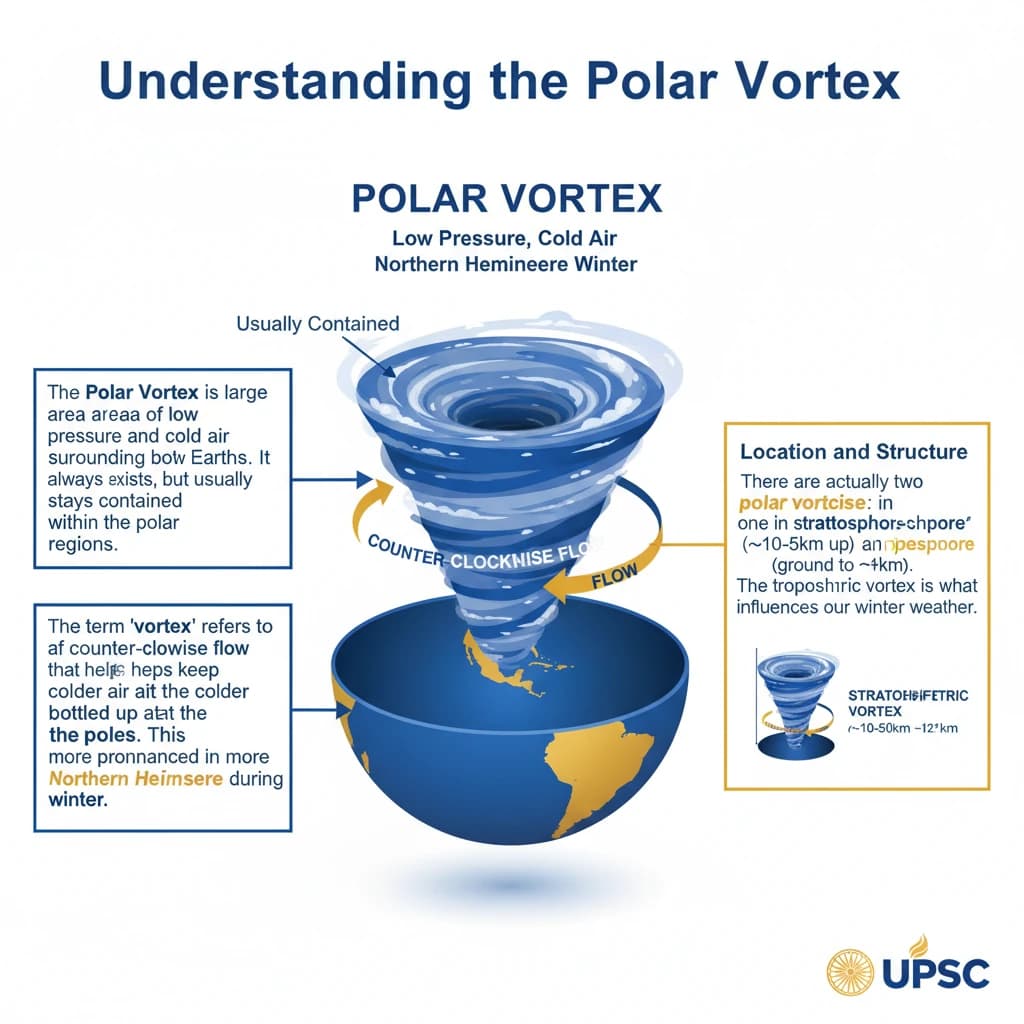
Understanding the Polar Vortex
The Polar Vortex is a large area of low pressure and cold air surrounding both of the Earth's poles. It always exists, but usually stays contained within the polar regions.
The term 'vortex' refers to the counter-clockwise flow of air that helps keep the colder air bottled up at the poles. This phenomenon is more pronounced in the Northern Hemisphere during winter.
Location and Structure
There are actually two main types of polar vortices. The stronger one is located in the stratosphere, approximately 10 to 50 km above the Earth's surface. A weaker, larger one exists in the troposphere, closer to the ground.
The stratospheric polar vortex is a massive, persistent low-pressure system that forms over the poles during winter, characterized by extremely cold temperatures and strong westerly winds.
Normal Behavior and Stability
Normally, the polar vortex is strong and stable. It acts like a barrier, keeping the frigid polar air confined to the Arctic and Antarctic regions. This is largely influenced by the strength and stability of the jet stream.
A strong polar vortex means a more stable, circular flow, effectively trapping cold air at the poles. This leads to milder winters in mid-latitudes.
Weakening and Destabilization
Occasionally, the polar vortex can weaken or become unstable. This often happens due to disturbances in the jet stream, which can be influenced by phenomena like sudden stratospheric warming (SSW) events.
When the vortex weakens, it can become elongated or split into multiple lobes. This allows parts of the extremely cold polar air to 'spill out' or migrate southward into mid-latitude regions.
Impact on Mid-Latitudes
The southward migration of polar air masses leads to significant drops in temperature, often causing severe winter storms, heavy snowfall, and dangerous wind chills in areas not typically accustomed to such extreme cold.
UPSC often asks about the relationship between Polar Vortex, Jet Streams, and Climate Change. Understanding the 'why' behind its destabilization is crucial for Mains answers.
Recent Events: The US Winter Storm
The recent severe winter storm in the US, impacting over 60 million people across 30 states, is a prime example of a weakened or disrupted polar vortex event. This brought unusually low temperatures and widespread disruption.
💡 Key Takeaways
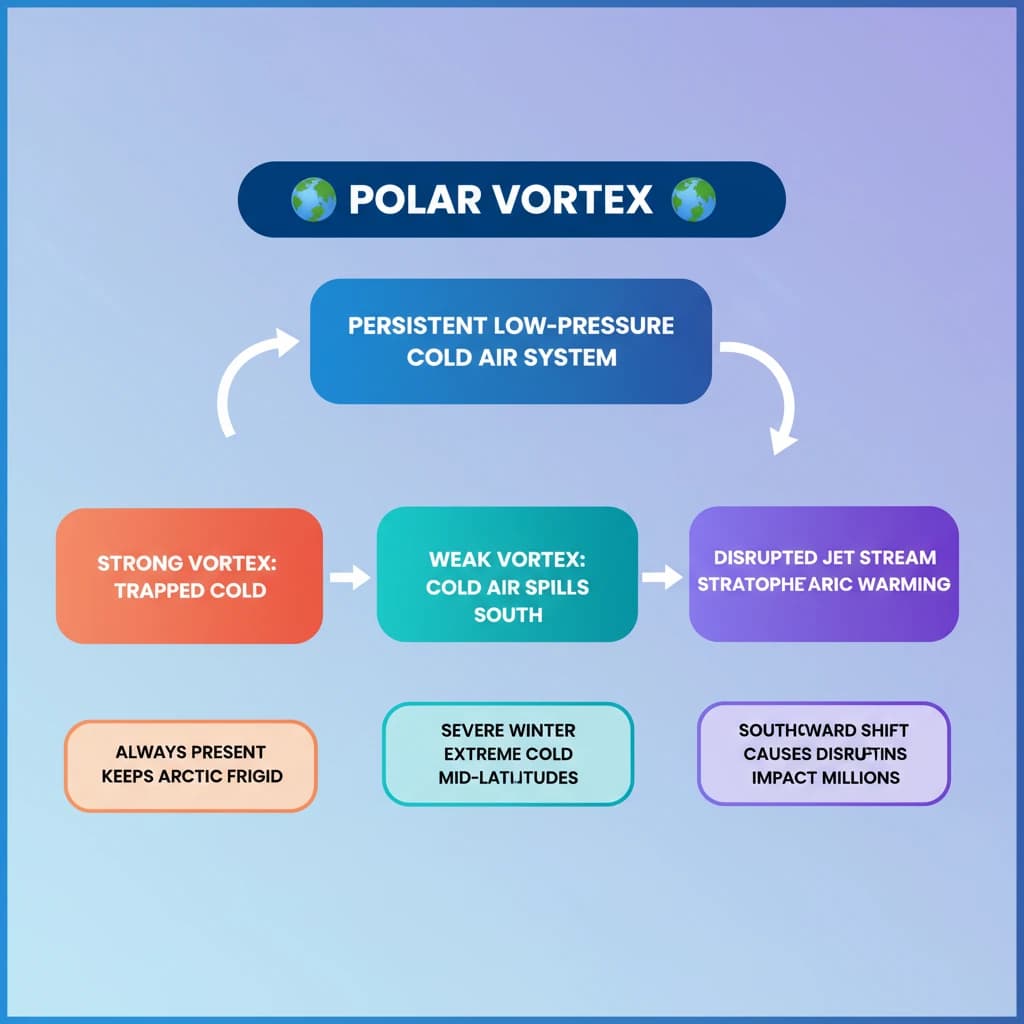
- •The Polar Vortex is a persistent low-pressure system of cold air over the poles, always present.
- •A strong polar vortex keeps cold air trapped at the poles; a weak or disrupted one allows cold air to spill south.
- •Weakening is often linked to disturbances in the jet stream, potentially influenced by stratospheric warming.
- •Southward shifts cause severe winter storms, extreme cold, and significant disruptions in mid-latitude regions.
- •Recent US winter storms are examples of polar vortex disruptions, impacting millions.
- •Research is ongoing into the link between Arctic warming (climate change) and polar vortex behavior.
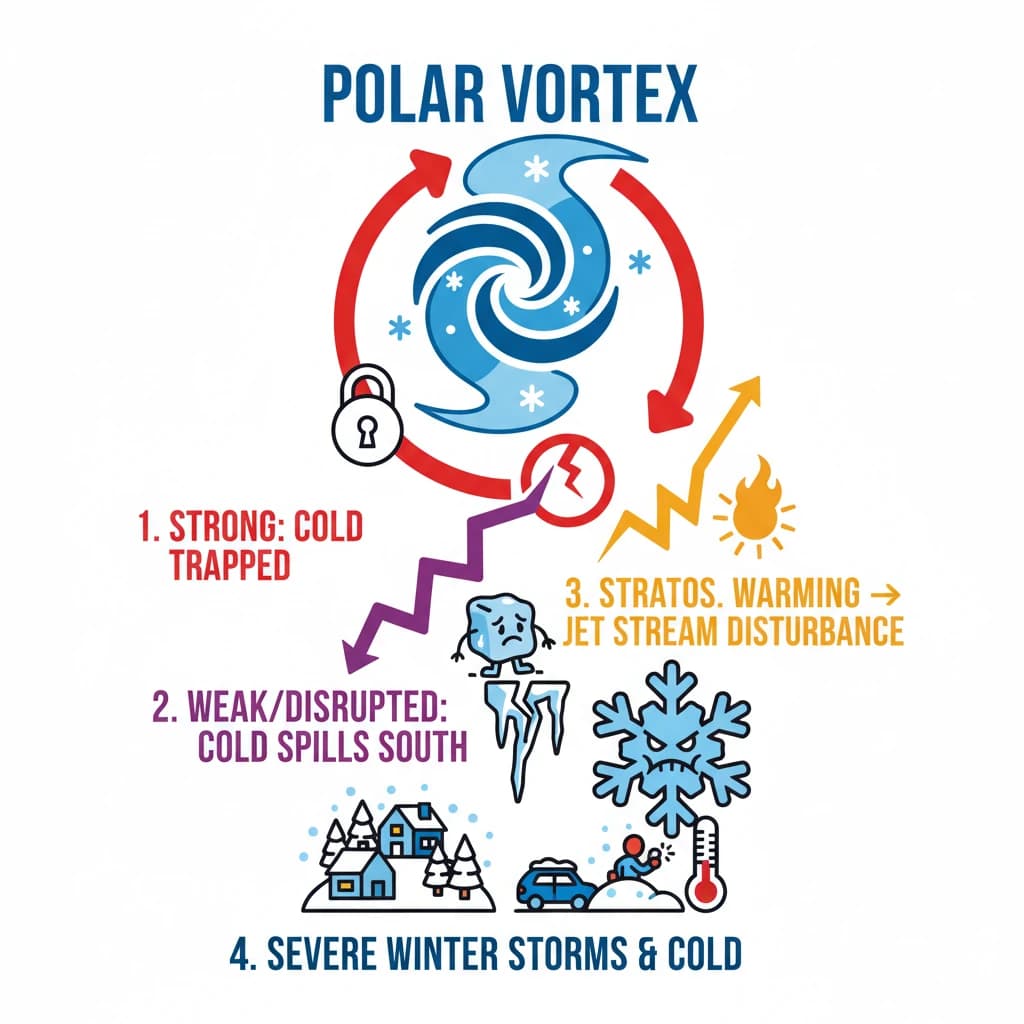
🧠 Memory Techniques
95% Verified Content
📚 Reference Sources
•National Aeronautics and Space Administration (NASA)
•World Meteorological Organization (WMO)
•Intergovernmental Panel on Climate Change (IPCC) Reports
•Scientific American articles on Polar Vortex