Loading page, please wait…
Volcanic Eruption and Ionospheric Disturbances - UPSC Geography
What is Volcanic Eruption and Ionospheric Disturbances in UPSC Geography?
Volcanic Eruption and Ionospheric Disturbances is a key topic under Geography for UPSC Civil Services Examination. Key points include: The <strong>Hunga Tonga-Hunga Ha'apai eruption</strong> was linked to <strong>Equatorial Plasma Bubbles (EPBs)</strong> over India, showing global atmospheric coupling.. Volcanoes emit harmful gases (ash, CO2, SO2, H2S) causing respiratory issues, acid rain, and global warming, but also provide valuable resources and fertile soil.. Historical eruptions like <strong>Krakatoa (1883)</strong> and the <strong>1815 Indonesian eruption</strong> demonstrate immense destructive power and widespread effects.. Understanding this topic is essential for both UPSC Prelims and Mains preparation.
Why is Volcanic Eruption and Ionospheric Disturbances important for UPSC exam?
Volcanic Eruption and Ionospheric Disturbances is a Medium-level topic in UPSC Geography. It is tested in both Prelims (factual MCQs) and Mains (analytical answer writing). Previous year UPSC questions have frequently covered aspects of Volcanic Eruption and Ionospheric Disturbances, making it essential for comprehensive IAS preparation.
How to prepare Volcanic Eruption and Ionospheric Disturbances for UPSC?
To prepare Volcanic Eruption and Ionospheric Disturbances for UPSC: (1) Study the comprehensive notes covering all key concepts on Vaidra. (2) Practice previous year questions on this topic. (3) Connect it with current affairs using daily updates. (4) Revise using key takeaways and mind maps available for Geography. (5) Write practice answers linking Volcanic Eruption and Ionospheric Disturbances to related GS Paper topics.
Key takeaways of Volcanic Eruption and Ionospheric Disturbances for UPSC
- The <strong>Hunga Tonga-Hunga Ha'apai eruption</strong> was linked to <strong>Equatorial Plasma Bubbles (EPBs)</strong> over India, showing global atmospheric coupling.
- Volcanoes emit harmful gases (ash, CO2, SO2, H2S) causing respiratory issues, acid rain, and global warming, but also provide valuable resources and fertile soil.
- Historical eruptions like <strong>Krakatoa (1883)</strong> and the <strong>1815 Indonesian eruption</strong> demonstrate immense destructive power and widespread effects.
- The <strong>Deccan Traps</strong> are a significant example of ancient, massive volcanic activity in India, influencing its geography.
- Understanding volcanic-ionospheric links is crucial for <strong>space weather forecasting</strong> and refining <strong>climate models</strong>.
Volcanic Eruption and Ionospheric Disturbances
Medium⏱️ 8 min read
geography
📖 Introduction
Introduction: Volcanic Eruptions and Ionospheric Disturbances
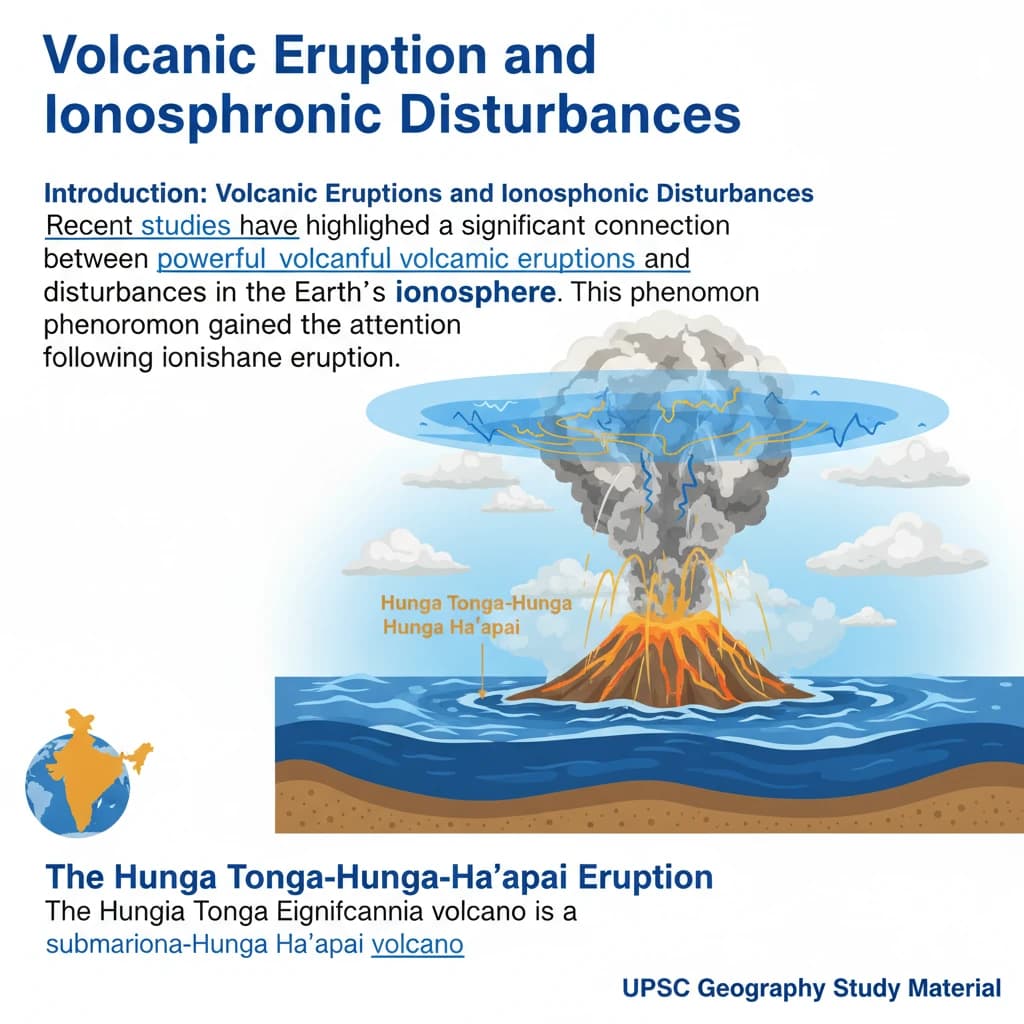
Recent studies have highlighted a significant connection between powerful volcanic eruptions and disturbances in the Earth's ionosphere.
This phenomenon gained attention following the Hunga Tonga-Hunga Ha'apai volcano eruption.
The Hunga Tonga-Hunga Ha'apai Eruption
The Hunga Tonga-Hunga Ha'apai volcano is a submarine volcano located in the South Pacific Ocean.
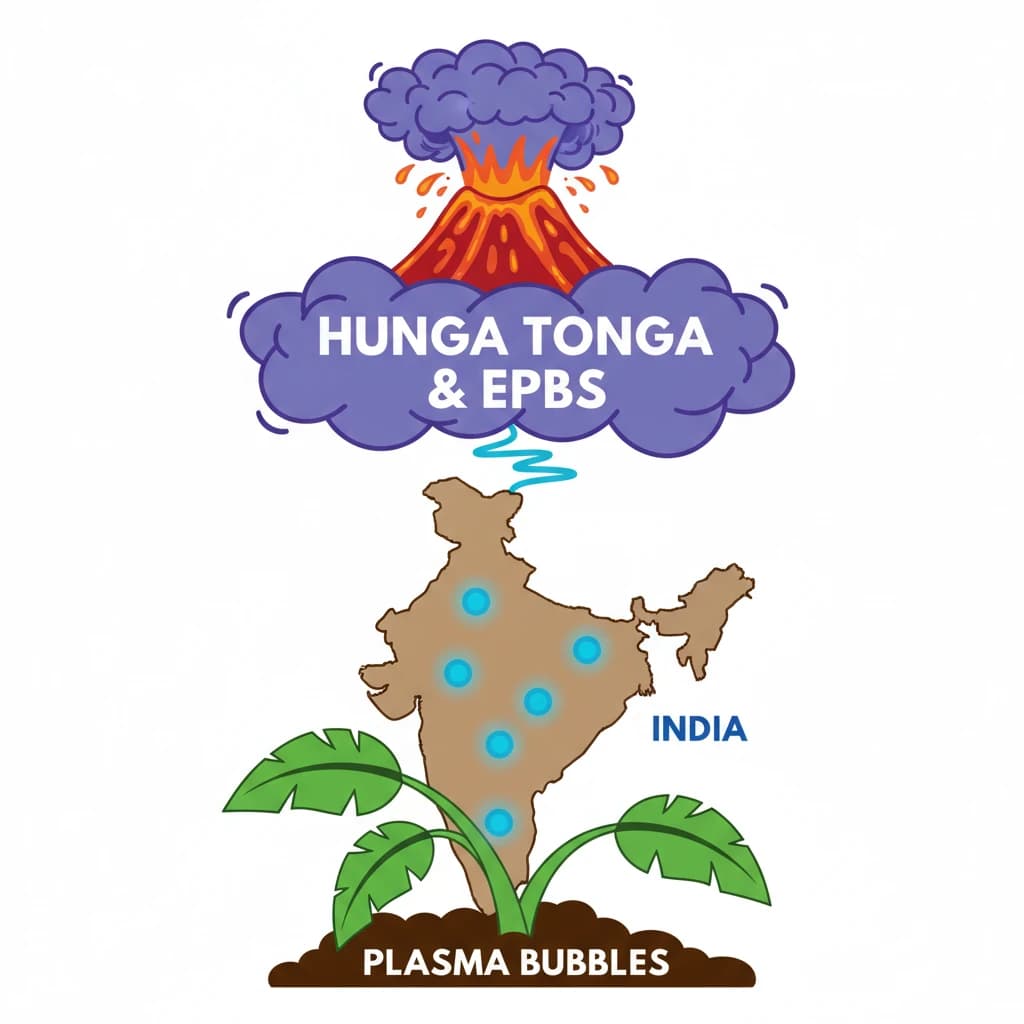
A new study recently revealed a direct link between this eruption and the formation of Equatorial Plasma Bubbles (EPBs) over the Indian subcontinent.
Understanding Volcanic Emissions: The Bad
Volcanic eruptions release various substances into the atmosphere, many of which have detrimental effects.
- Ash: Causes respiratory problems and can trigger lightning.
- H2O (Water Vapour): While natural, it is the largest contributor to the greenhouse gas effect on Earth.
- CO2 (Carbon Dioxide): Toxic in large amounts (above 10%) and significantly contributes to global warming.
- SO2 (Sulfur Dioxide): Dissolves in water vapour to form damaging acid rain.
- H2S (Hydrogen Sulfide): A highly toxic gas known for its characteristic smell of rotten eggs.
Benefits of Volcanic Activity: The Good
Despite their destructive potential, volcanoes also offer several advantages.
- Source of Materials: They are a rich source of valuable materials, including metals, precious gems, and construction materials.
- Power Generation: Volcanic regions provide opportunities for geothermal and hydroelectric power generation.
- Rich Volcanic Soils: The ash and minerals deposited by eruptions create exceptionally fertile soils, ideal for agriculture, famously for coffee cultivation.
Key Facts and Historical Impacts of Volcanoes
- Deadliest Eruption: Approximately 92,000 people were killed in the deadliest volcano eruption in Indonesia in 1815.
- Active Volcanoes: On average, about 20 volcanoes are erupting globally at any given moment.
- Supervolcanoes: Eruptions from supervolcanoes have the potential to plunge the world into an ice age.
- Krakatoa Eruption (1883): This powerful eruption ruptured eardrums within a 50 KM radius.
- Mount St. Helens (1980): Erupted twice more ash by weight than the entire US produces in gas damage in one year.
- Krakatoa Energy Waste: The 1883 Krakatoa volcano eruption in Indonesia wasted an estimated $2.2 Billion worth of electrical energy.
Understanding both the destructive and constructive aspects of volcanic activity is crucial for UPSC Mains GS Paper I (Geography) and GS Paper III (Disaster Management).

💡 Key Takeaways
- •The <strong>Hunga Tonga-Hunga Ha'apai eruption</strong> was linked to <strong>Equatorial Plasma Bubbles (EPBs)</strong> over India, showing global atmospheric coupling.
- •Volcanoes emit harmful gases (ash, CO2, SO2, H2S) causing respiratory issues, acid rain, and global warming, but also provide valuable resources and fertile soil.
- •Historical eruptions like <strong>Krakatoa (1883)</strong> and the <strong>1815 Indonesian eruption</strong> demonstrate immense destructive power and widespread effects.
- •The <strong>Deccan Traps</strong> are a significant example of ancient, massive volcanic activity in India, influencing its geography.
- •Understanding volcanic-ionospheric links is crucial for <strong>space weather forecasting</strong> and refining <strong>climate models</strong>.
🧠 Memory Techniques
95% Verified Content