Loading page, please wait…
Archaeological Discoveries - UPSC History
What is Archaeological Discoveries in UPSC History?
Archaeological Discoveries is a key topic under History for UPSC Civil Services Examination. Key points include: First excavation (1912-1915) found one intact pillar, 80 pits, and stone fragments.. Ash layers indicated destruction by fire, possibly during Indo-Greek or Huna invasions.. Second excavation (1961-1965) unearthed four more pillars, confirming a large structure.. Understanding this topic is essential for both UPSC Prelims and Mains preparation.
Why is Archaeological Discoveries important for UPSC exam?
Archaeological Discoveries is a Medium-level topic in UPSC History. It is tested in both Prelims (factual MCQs) and Mains (analytical answer writing). Previous year UPSC questions have frequently covered aspects of Archaeological Discoveries, making it essential for comprehensive IAS preparation.
How to prepare Archaeological Discoveries for UPSC?
To prepare Archaeological Discoveries for UPSC: (1) Study the comprehensive notes covering all key concepts on Vaidra. (2) Practice previous year questions on this topic. (3) Connect it with current affairs using daily updates. (4) Revise using key takeaways and mind maps available for History. (5) Write practice answers linking Archaeological Discoveries to related GS Paper topics.
Key takeaways of Archaeological Discoveries for UPSC
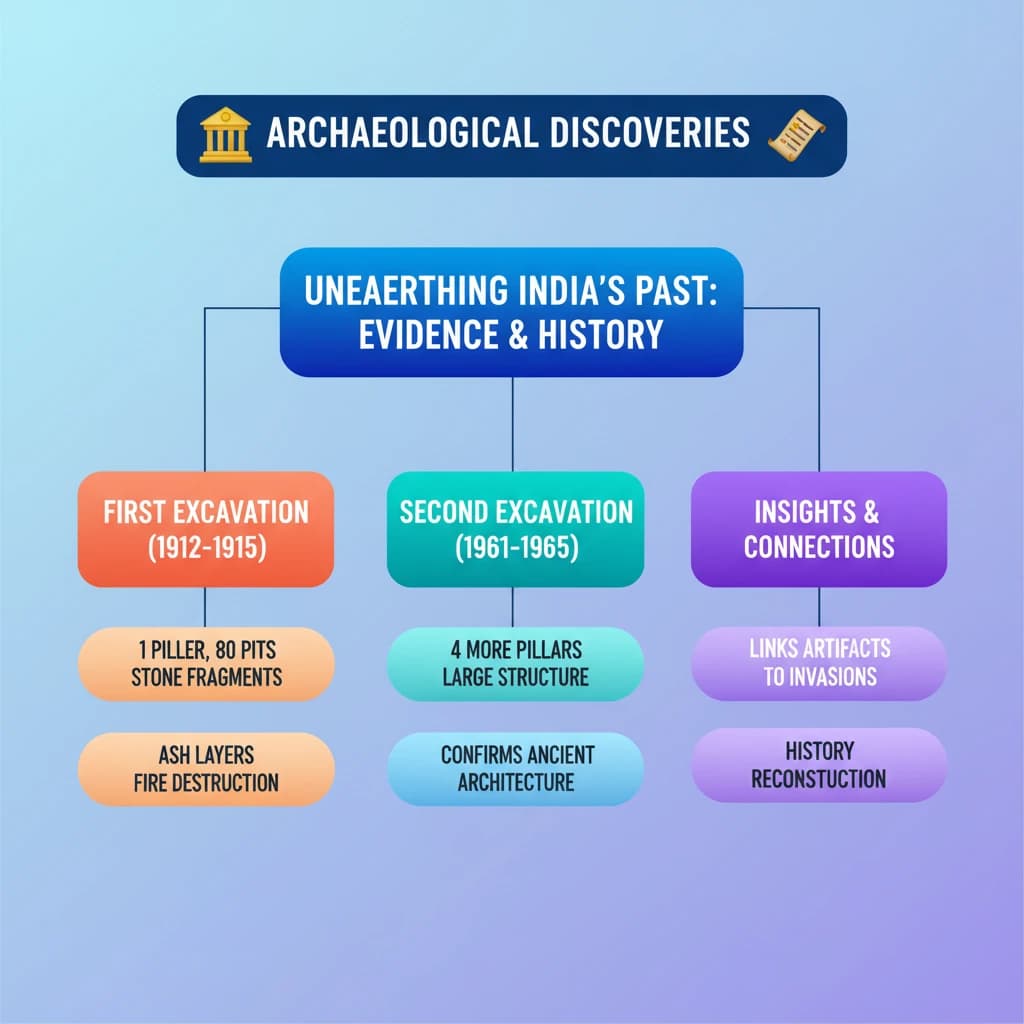
- First excavation (1912-1915) found one intact pillar, 80 pits, and stone fragments.
- Ash layers indicated destruction by fire, possibly during Indo-Greek or Huna invasions.
- Second excavation (1961-1965) unearthed four more pillars, confirming a large structure.
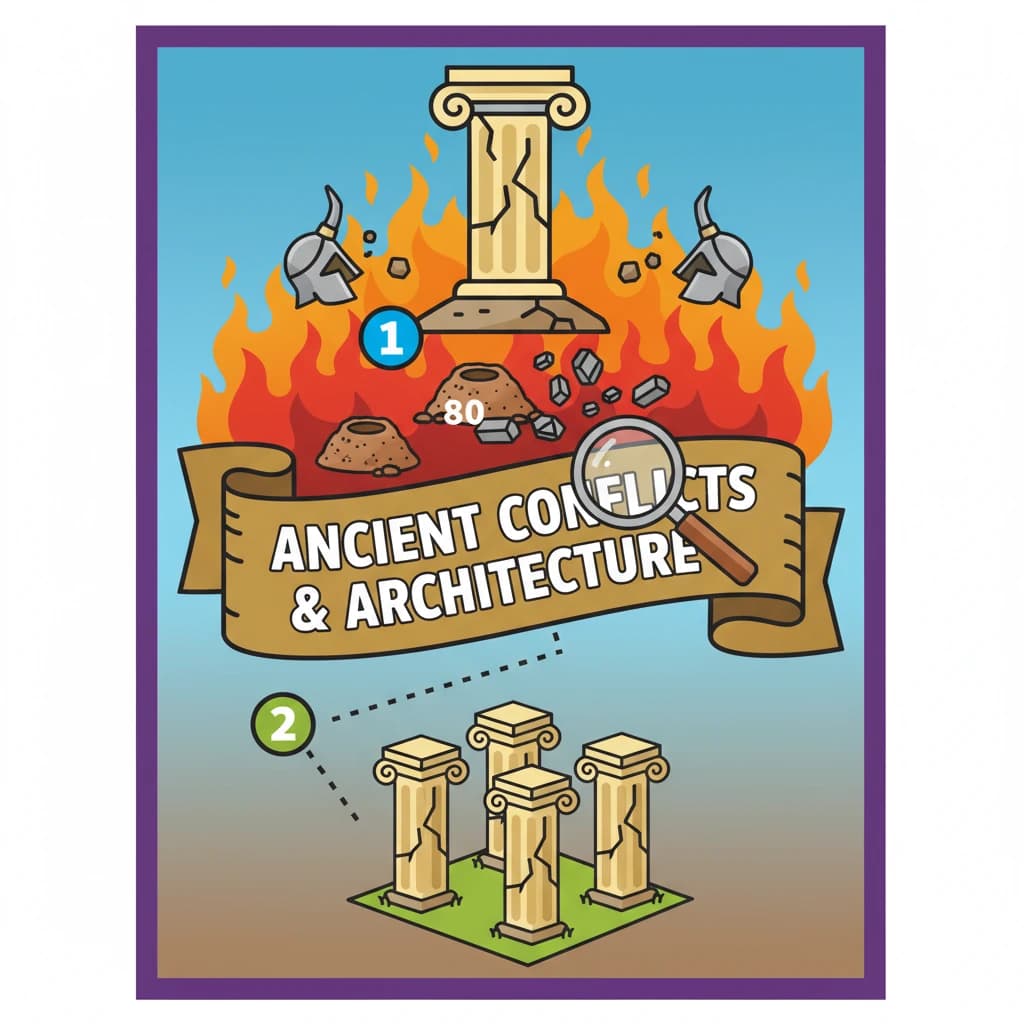
- Archaeological evidence provides crucial insights into ancient conflicts and architectural practices.
- Linking physical finds (ash, pillars) to historical events (invasions) is key to historical reconstruction.
Archaeological Discoveries
Medium⏱️ 8 min read
history
📖 Introduction
Introduction to Archaeological Discoveries
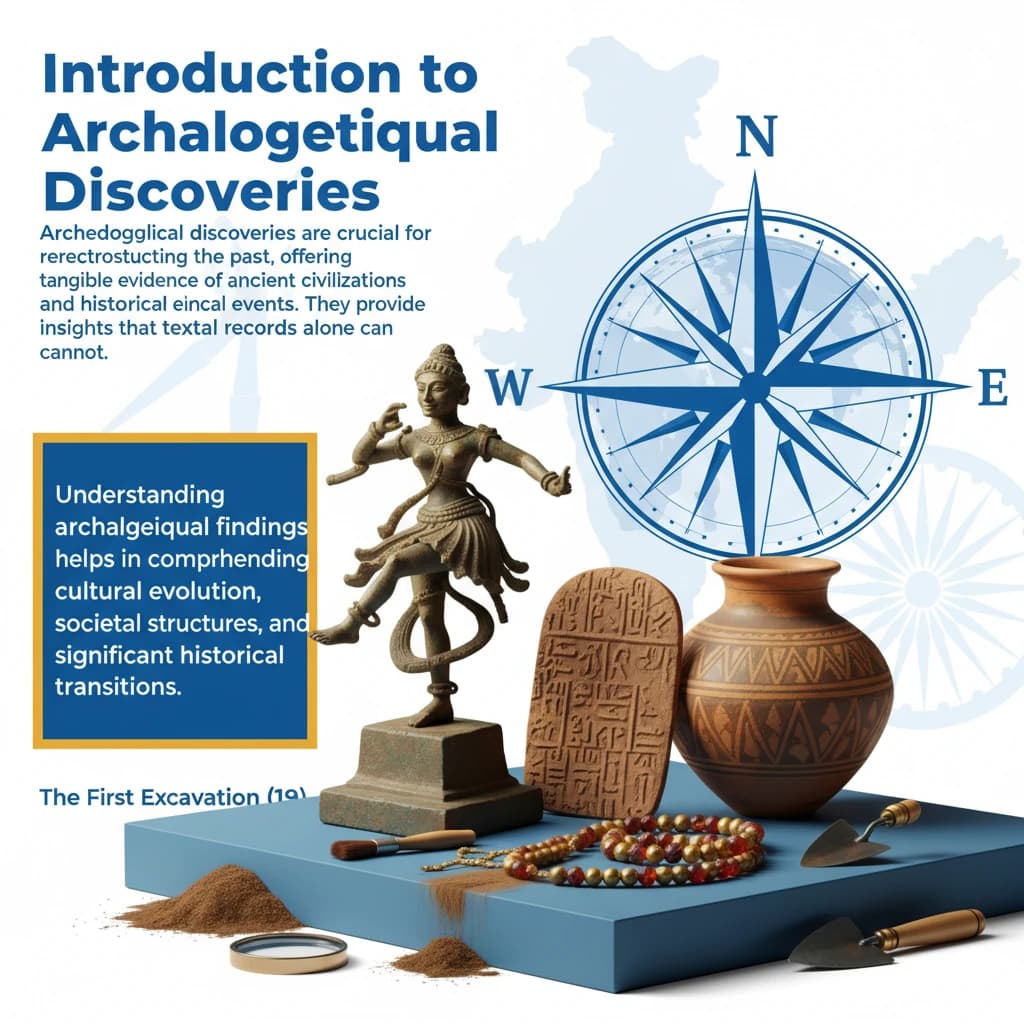
Archaeological discoveries are crucial for reconstructing the past, offering tangible evidence of ancient civilizations and historical events. They provide insights that textual records alone cannot.
Understanding archaeological findings helps in comprehending cultural evolution, societal structures, and significant historical transitions.
The First Excavation (1912-1915)
The initial phase of excavation, conducted between 1912 and 1915, yielded significant insights into an ancient site. This pioneering work laid the groundwork for further understanding.
Key findings from the first excavation included:
- One intact pillar, suggesting a grand architectural structure.
- 80 pits, clearly marking the original placement of other pillars, indicating a large hall or temple.
- Various stone fragments, providing clues about the building materials and decorative elements used.
Evidence of Destruction by Fire
A critical discovery during these excavations was the presence of distinct ash layers. These layers strongly suggested that the site had suffered extensive destruction by fire at some point in its history.
The presence of ash layers is a direct indicator of catastrophic events, often linked to conflict or natural disaster, providing a narrative of the site's demise.
The destruction by fire is hypothesized to have occurred during periods of significant upheaval. Two primary historical events are considered as potential causes for this devastation.
Potential periods of destruction include:
- The Indo-Greek invasion, which saw significant military campaigns and territorial shifts in ancient India.
- Later Huna invasions, known for their destructive impact on various regions and settlements.
The Second Excavation (1961-1965)
Decades later, a second, more extensive excavation was undertaken from 1961 to 1965. This phase aimed to uncover more about the site and corroborate earlier findings.
The second excavation successfully unearthed four additional pillars. These new discoveries further supported the hypothesis of a substantial ancient structure and provided more context to the initial findings.
For UPSC, remember to link specific archaeological findings (like ash layers or pillar pits) to broader historical narratives (e.g., impact of invasions). This demonstrates analytical depth.
💡 Key Takeaways
- •First excavation (1912-1915) found one intact pillar, 80 pits, and stone fragments.
- •Ash layers indicated destruction by fire, possibly during Indo-Greek or Huna invasions.
- •Second excavation (1961-1965) unearthed four more pillars, confirming a large structure.
- •Archaeological evidence provides crucial insights into ancient conflicts and architectural practices.
- •Linking physical finds (ash, pillars) to historical events (invasions) is key to historical reconstruction.
🧠 Memory Techniques
95% Verified Content
📚 Reference Sources
•Standard textbooks on Ancient Indian History (e.g., R.S. Sharma, Upinder Singh)
•Archaeological Survey of India (ASI) reports (general knowledge base)