Overview
Recent archaeological investigations at Keeladi, Porunai and other sites have repositioned Tamil Nadu as a cradle of early urban civilisation in South Asia. Scientific analyses, carbon dating and extensive museum projects launched by the Government of Tamil Nadu under Chief Minister M.K. Stalin (2021‑2026) aim to conserve artefacts, promote public engagement and project a nuanced Tamil identity rooted in micro‑history.
Key Developments
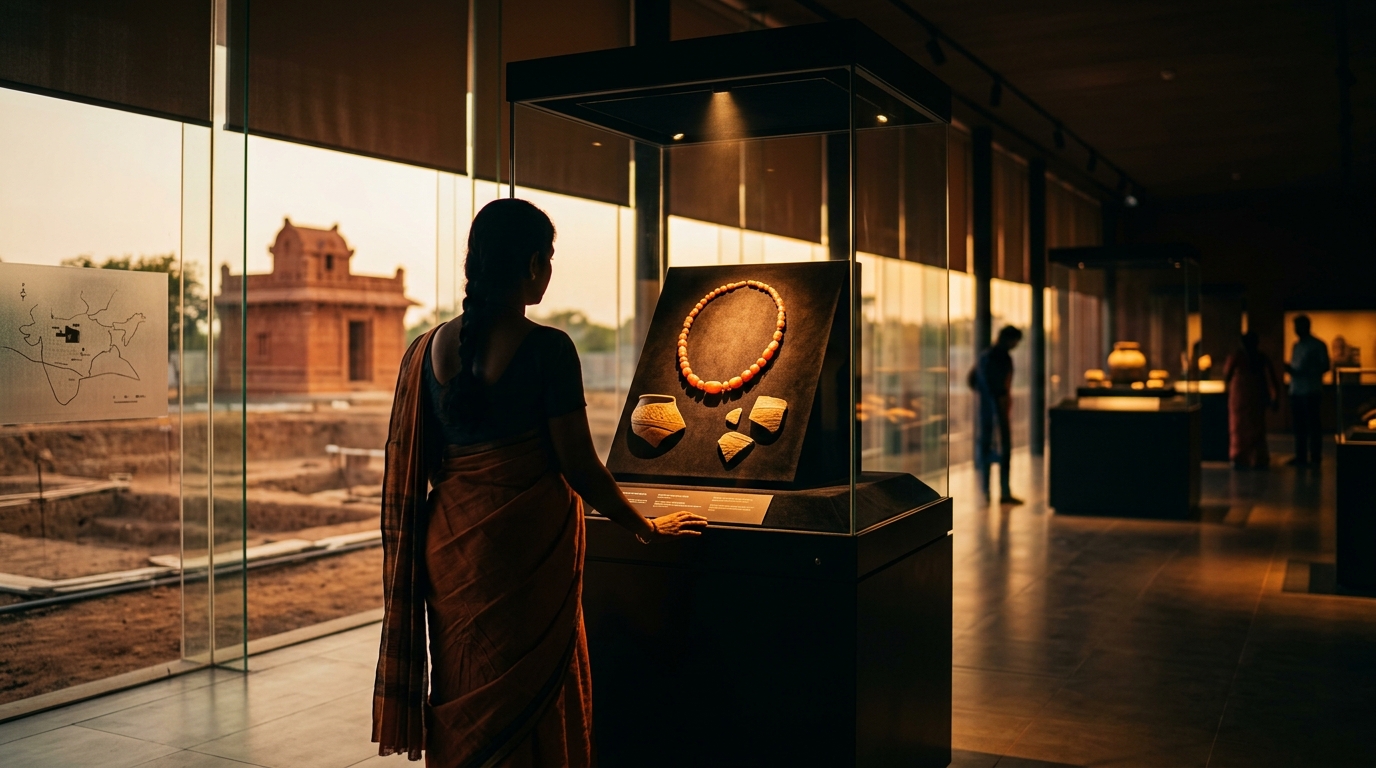
- Keeladi Museum & Open‑air Site Museum: Built on 4.48 acres at a cost of ₹17.10 crore, it showcases Sangam‑age brick structures, literacy evidence from the 6th century BCE and a virtual tour that has attracted ~42,000 visitors from 60 countries.
- Porunai Museum: Houses >33,000 artefacts from Sivagalai, Korkai and Adichanallur, featuring a 5D theatre, VR boat simulators and displays of Roman pottery, lead ingots and shipwreck material, underscoring Indo‑Roman maritime links.
- Chola‑Era Museums (Gangaikonda Cholapuram, Grand Chola, Naavaai, Noyyal, Mamallapuram): A series of thematic museums (costing ₹4.25‑₹60 crore) highlight imperial architecture, naval power, industrial bead‑making, iron‑smelting and the trans‑Oceanic trade networks of the Cholas and Pandyas.
Important Facts
- Chronology: Carbon dating places Keeladi artefacts between the 6th century BCE and 1st century CE, confirming an urban, literate settlement along the Vaigai River.
- Economic Scale: Museum projects collectively involve an outlay of over ₹150 crore, reflecting the state’s commitment to heritage tourism and scholarly research.
- Trade Networks: Finds such as lapis lazuli from Afghanistan, Roman amphorae, and a three‑masted ship graffito at Alagankulam illustrate long‑distance commerce from the 2nd century BCE to 5th century CE.
- Public Outreach: Digital platforms (virtual tours, 2D/3D animations) have logged >42,000 global visitors, demonstrating the role of technology in heritage dissemination.
Exam Relevance
This topic intersects multiple sections of the UPSC syllabus. In GS Paper II (History – Ancient & Medieval), questions may probe the urbanisation of South India, Sangam culture and Chola maritime dominance. GS Paper III (Science & Technology – Conservation) can address heritage management, museum curation and the use of AMS dating. The initiatives also relate to GS Paper I (Geography – Physical features & human‑environment interaction) through river‑valley settlements and water‑management systems. Optional History candidates can explore primary sources such as Tamil‑Brahmi inscriptions, while those opting for Public Administration can examine state‑level cultural policy and tourism‑linked economic planning.
Way Forward
To maximise impact, the government should integrate these museums into the broader National Heritage Corridor framework, encourage community‑led documentation, and expand digital archives for remote scholars. Strengthening inter‑state collaborations for artefact exchange, and linking museum curricula with school textbooks, can foster a historically informed citizenry—an outcome directly aligned with the UPSC’s emphasis on cultural awareness and policy‑driven heritage preservation.