Loading page, please wait…
Sant Kabir Das: Life, Philosophy, and the Bhakti Movement - UPSC History
What is Sant Kabir Das: Life, Philosophy, and the Bhakti Movement in UPSC History?
Sant Kabir Das: Life, Philosophy, and the Bhakti Movement is a key topic under History for UPSC Civil Services Examination. Key points include: Sant Kabir Das (15th century) was a mystic poet-saint of the Bhakti movement, born in Varanasi.. He was raised by a Muslim weaver couple, fostering a unique syncretic philosophy blending Hindu and Islamic traditions.. Kabir advocated Nirguna Bhakti, worshipping a formless God and rejecting idol worship and ritualism.. Understanding this topic is essential for both UPSC Prelims and Mains preparation.
Why is Sant Kabir Das: Life, Philosophy, and the Bhakti Movement important for UPSC exam?
Sant Kabir Das: Life, Philosophy, and the Bhakti Movement is a Medium-level topic in UPSC History. It is tested in both Prelims (factual MCQs) and Mains (analytical answer writing). Previous year UPSC questions have frequently covered aspects of Sant Kabir Das: Life, Philosophy, and the Bhakti Movement, making it essential for comprehensive IAS preparation.
How to prepare Sant Kabir Das: Life, Philosophy, and the Bhakti Movement for UPSC?
To prepare Sant Kabir Das: Life, Philosophy, and the Bhakti Movement for UPSC: (1) Study the comprehensive notes covering all key concepts on Vaidra. (2) Practice previous year questions on this topic. (3) Connect it with current affairs using daily updates. (4) Revise using key takeaways and mind maps available for History. (5) Write practice answers linking Sant Kabir Das: Life, Philosophy, and the Bhakti Movement to related GS Paper topics.
Key takeaways of Sant Kabir Das: Life, Philosophy, and the Bhakti Movement for UPSC
- Sant Kabir Das (15th century) was a mystic poet-saint of the Bhakti movement, born in Varanasi.
- He was raised by a Muslim weaver couple, fostering a unique syncretic philosophy blending Hindu and Islamic traditions.
- Kabir advocated Nirguna Bhakti, worshipping a formless God and rejecting idol worship and ritualism.
- He strongly criticized caste distinctions and religious dogma, promoting universal love and equality.
- His major literary works include Kabir Bijak, Sakhi Granth, and verses in the Adi Granth.
- His followers are known as 'Kabir Panthis', continuing his legacy of communal harmony and simple living.
Sant Kabir Das: Life, Philosophy, and the Bhakti Movement
Medium⏱️ 8 min read
history
📖 Introduction
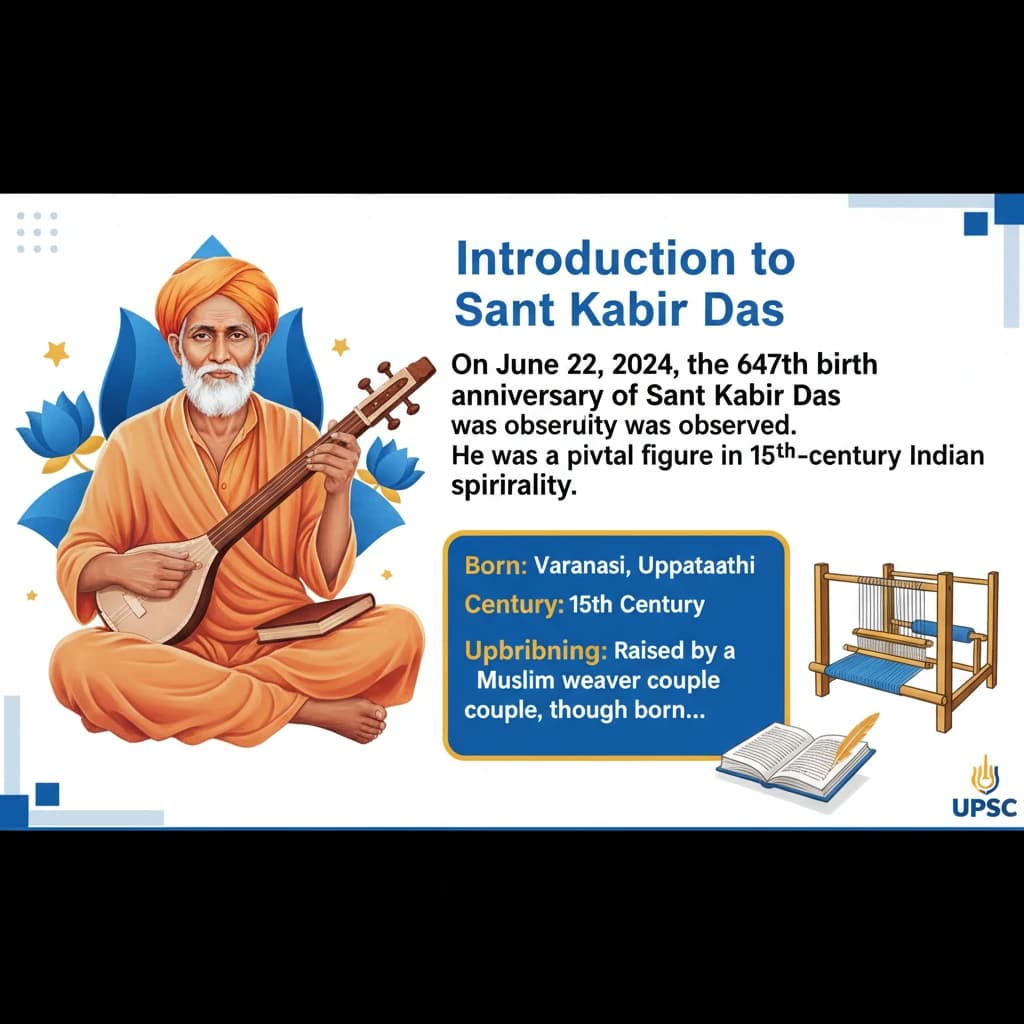
Introduction to Sant Kabir Das
On June 22, 2024, the 647th birth anniversary of Sant Kabir Das was observed. He was a pivotal figure in 15th-century Indian spirituality.
Born: Varanasi, Uttar Pradesh
Century: 15th Century
Upbringing: Raised by a Muslim weaver couple, though born to a Hindu family.
Kabir and the Bhakti Movement
Sant Kabir Das was a prominent poet-saint of the Bhakti movement. This spiritual wave emphasized profound devotion and love for the divine, transcending ritualistic practices.
The Bhakti movement originated in South India in the 7th century. It subsequently spread to North India during the 14th and 15th centuries, influencing many regions.
Like other popular poet-saints such as Ramananda, Kabir Das composed and sang devotional songs in vernacular languages. This made spiritual teachings accessible to the common people.
Spiritual Guidance and Unique Philosophy
Kabir's spiritual journey was shaped by diverse influences. He sought guidance from teachers including the renowned Ramananda and Sheikh Taqi.
This unique blend of influences contributed to his distinctive philosophy, which often bridged the divides between different religious traditions.
Legacy and Literary Works
Kabir Das is revered across religious boundaries, held in high esteem by both Hindus and Muslims. His followers are known as “Kabir Panthis”, who continue to propagate his teachings.
UPSC Insight: Kabir's syncretic philosophy and his role in promoting Hindu-Muslim unity are crucial for GS Paper I (History & Culture) and GS Paper IV (Ethics) discussions.
His profound spiritual insights are captured in his extensive literary works:
- Kabir Bijak: A collection of his poems and verses, considered his most important work.
- Kabir Parachai: Biographical accounts and teachings.
- Sakhi Granth: Another significant compilation of his couplets.
- Adi Granth: Many of his verses are included in the holy scripture of Sikhism.
- Kabir Granthawali: A collection popular in the Rajasthan region.
💡 Key Takeaways
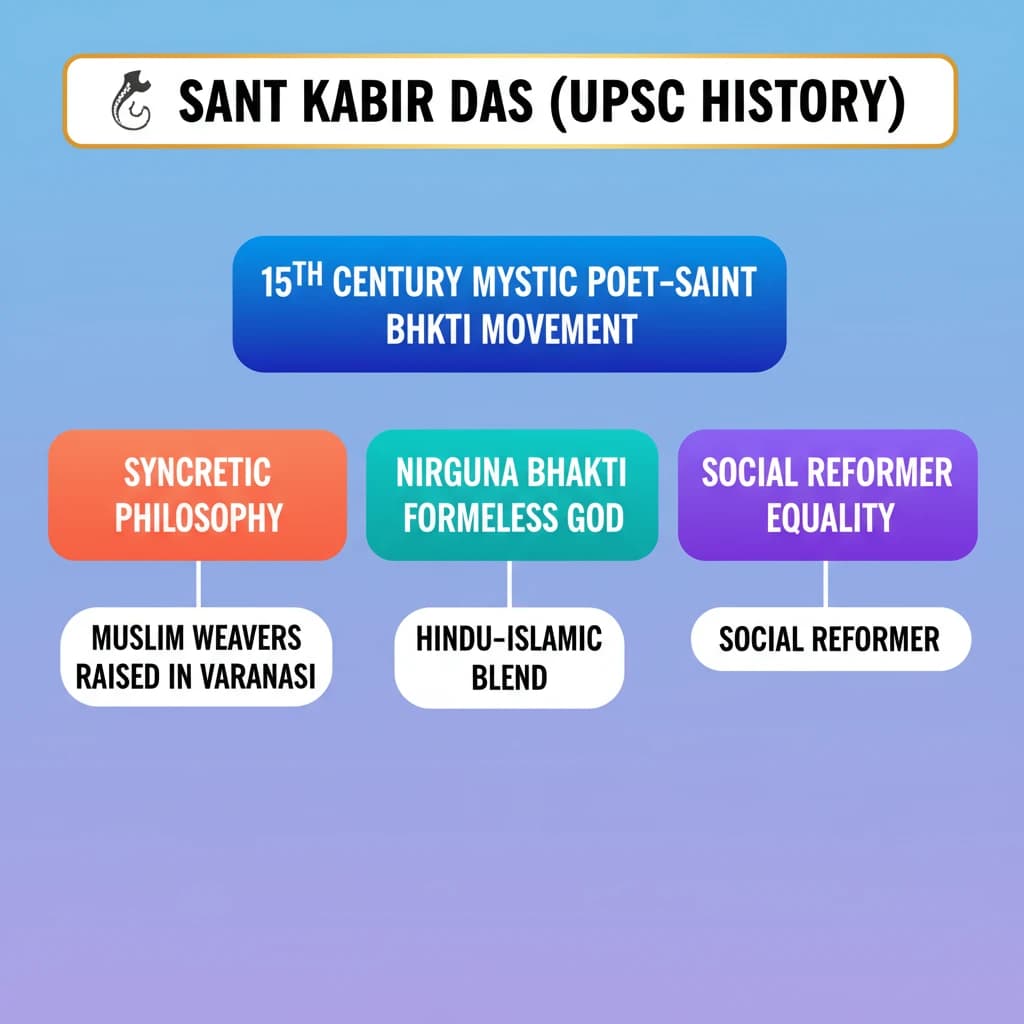
- •Sant Kabir Das (15th century) was a mystic poet-saint of the Bhakti movement, born in Varanasi.
- •He was raised by a Muslim weaver couple, fostering a unique syncretic philosophy blending Hindu and Islamic traditions.
- •Kabir advocated Nirguna Bhakti, worshipping a formless God and rejecting idol worship and ritualism.
- •He strongly criticized caste distinctions and religious dogma, promoting universal love and equality.
- •His major literary works include Kabir Bijak, Sakhi Granth, and verses in the Adi Granth.
- •His followers are known as 'Kabir Panthis', continuing his legacy of communal harmony and simple living.
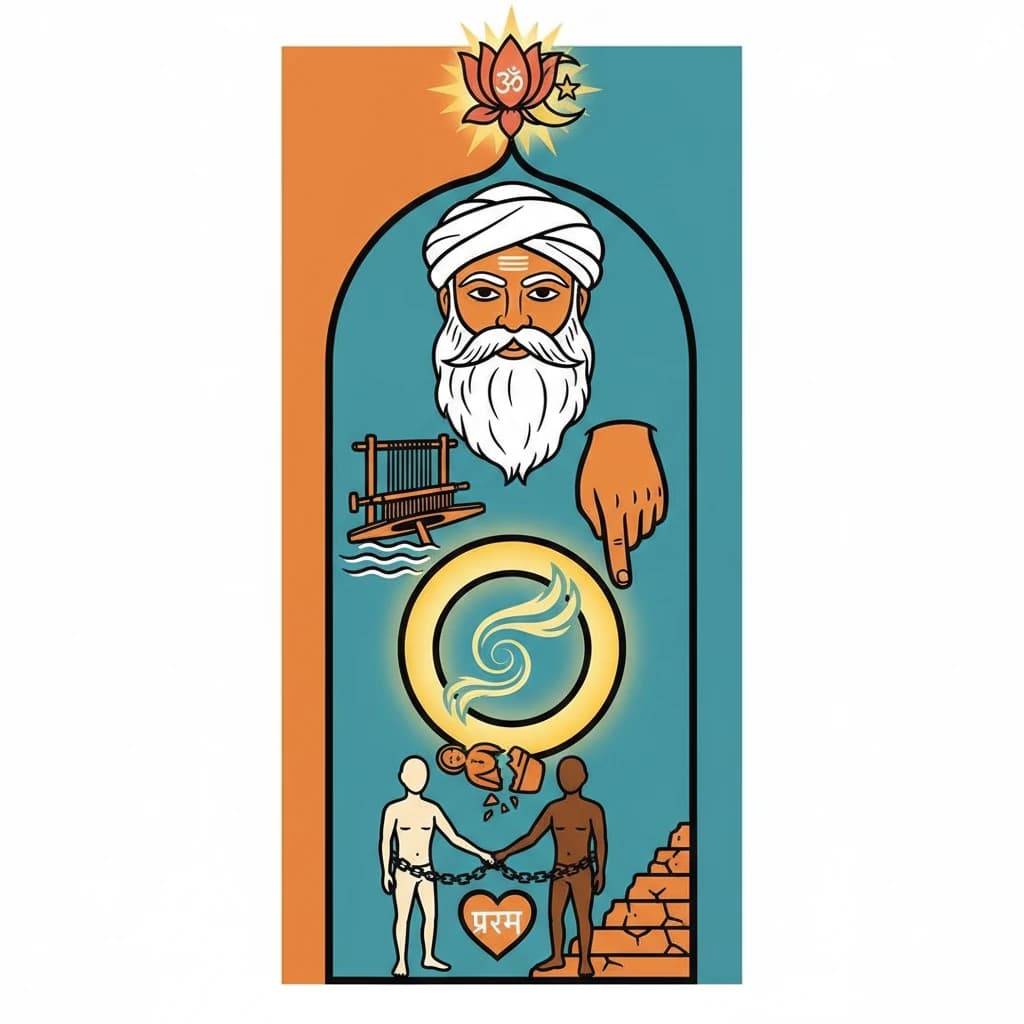
🧠 Memory Techniques
98% Verified Content
📚 Reference Sources
•General knowledge of Indian history and Bhakti movement