Overview
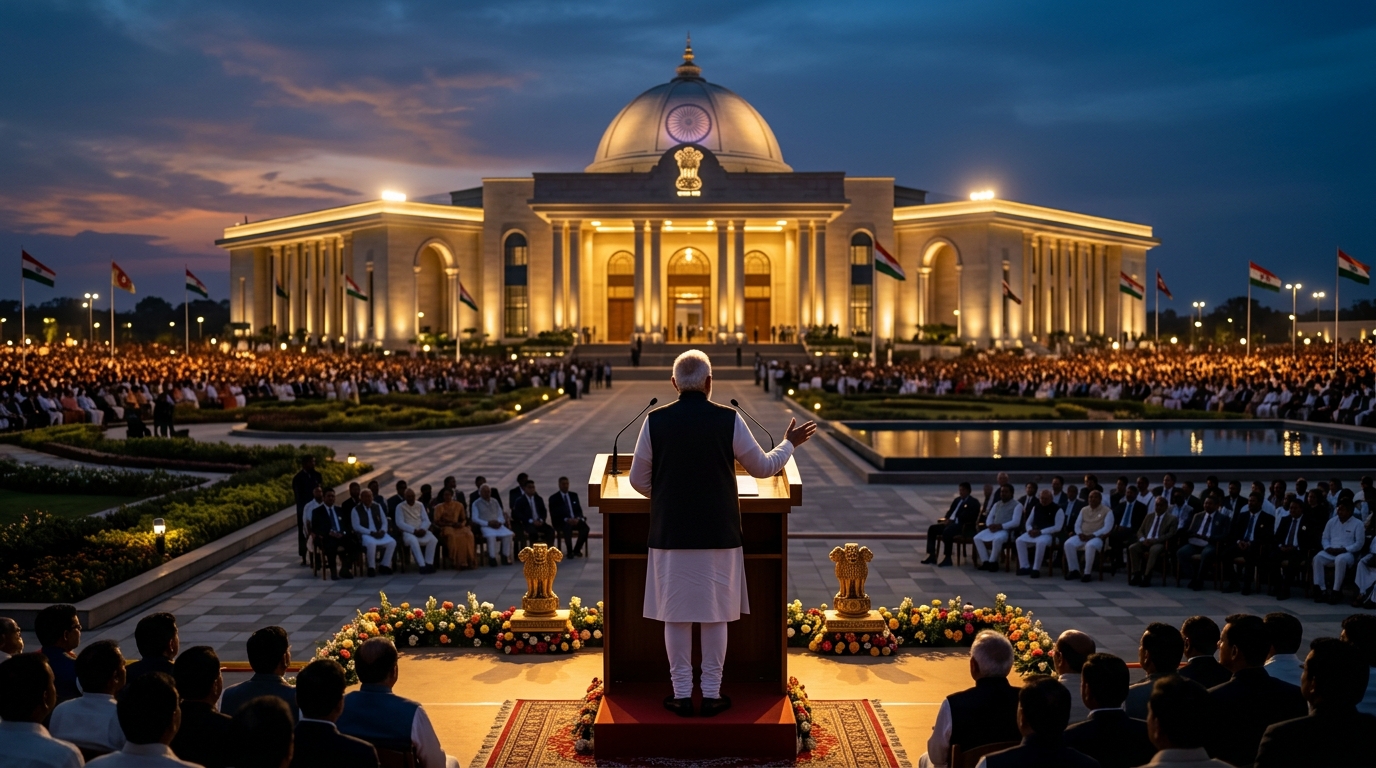
On November 1, 2025, the Prime Minister inaugurated the new Chhattisgarh Vidhansabha building in Nava Raipur. This event coincided with the 25th anniversary of Chhattisgarh's formation, marking a significant milestone in the state's history. The new building symbolizes the state's progress and aspirations for the future.
Key Speakers and Attendees
- Chhattisgarh Governor: Raman Deka
- Lok Sabha Speaker: Om Birla
- Chhattisgarh Vidhansabha Speaker: Rman Singh
- Chief Minister of Chhattisgarh: Vishnu Dev Sai
- Union Minister: Tokhan Sahu
- Deputy Chief Ministers: Vijay Sharma, Arun Sao
- Leader of Opposition: Charan Das Mahant
Historical Context
The Prime Minister's speech emphasized the historical significance of the event, linking it to the 75th year of the Indian Republic. He paid tribute to members of the Constituent Assembly from the region, including रविशंकर शुक्ल जी, बैरिस्टर ठाकुर छेदीलाल जी, घनश्याम सिंह गुप्त जी, किशोरी मोहन त्रिपाठी जी, रामप्रसाद पोटाई जी और रघुराज सिंह, recognizing their contributions to the drafting of the Indian Constitution.
Formation of Chhattisgarh
Atal Bihari Vajpayee played a crucial role in the formation of Chhattisgarh in 2000. This decision was described as a step towards unlocking new avenues for development and recognizing the unique identity of the region. The unveiling of Atal Ji's statue alongside the new Vidhansabha building underscores his lasting legacy.
Evolution of the Vidhansabha
The Chhattisgarh Vidhansabha's journey began in the Jashpur Hall of Rajkumar College, Raipur. Despite limited resources, the initial sessions were driven by a strong desire to shape a brighter future for the state. The subsequent Vidhansabha building, initially a different department's complex, served as the foundation for democratic processes in Chhattisgarh. The inauguration of the modern, digital, and self-reliant Vidhansabha building marks a significant upgrade after 25 years.
Significance of the New Building
The new Vidhansabha building is portrayed as a temple of democracy, embodying transparency, accountability, and the voice of the people. Decisions made within its walls are expected to shape Chhattisgarh's future for decades to come. The building is envisioned as a center for policy-making and governance.
Cultural Integration
The design of the new Vidhansabha reflects Chhattisgarh's rich cultural heritage. The incorporation of Bastar Art symbolizes the state's creativity and cultural strength. The building's walls feature messages from prominent figures like Baba Guru Ghasidas, माता शबरी, संत कबीर, and महाप्रभु वल्लभाचार्य, promoting inclusivity, hospitality, truthfulness, and service.
Muria Darbar
The Muria Darbar, a traditional tribal council, is recognized as an example of democratic traditions in Chhattisgarh's tribal society. The inclusion of the Muria Darbar tradition in the new Vidhansabha highlights the importance of community participation in governance.
Exam Relevance
This event is relevant to GS1 (Modern Indian History, Indian Culture) and GS2 (Polity, Governance). It provides insights into state formation, democratic evolution, and the integration of cultural heritage in governance. The role of key figures like Atal Bihari Vajpayee and the significance of tribal traditions are important aspects for UPSC preparation.