Loading page, please wait…
UNESCO World Heritage Sites Related to Buddhism in India - UPSC History
What is UNESCO World Heritage Sites Related to Buddhism in India in UPSC History?
UNESCO World Heritage Sites Related to Buddhism in India is a key topic under History for UPSC Civil Services Examination. Key points include: India has four major UNESCO Buddhist World Heritage Sites: Nalanda, Sanchi, Mahabodhi Temple, and Ajanta Caves.. These sites represent key phases of Buddhist art, architecture, and learning from the Mauryan to the Pala periods.. Nalanda was an ancient university, Sanchi is famous for its stupas, Mahabodhi is where Buddha attained enlightenment, and Ajanta for its rock-cut paintings.. Understanding this topic is essential for both UPSC Prelims and Mains preparation.
Why is UNESCO World Heritage Sites Related to Buddhism in India important for UPSC exam?
UNESCO World Heritage Sites Related to Buddhism in India is a Medium-level topic in UPSC History. It is tested in both Prelims (factual MCQs) and Mains (analytical answer writing). Previous year UPSC questions have frequently covered aspects of UNESCO World Heritage Sites Related to Buddhism in India, making it essential for comprehensive IAS preparation.
How to prepare UNESCO World Heritage Sites Related to Buddhism in India for UPSC?
To prepare UNESCO World Heritage Sites Related to Buddhism in India for UPSC: (1) Study the comprehensive notes covering all key concepts on Vaidra. (2) Practice previous year questions on this topic. (3) Connect it with current affairs using daily updates. (4) Revise using key takeaways and mind maps available for History. (5) Write practice answers linking UNESCO World Heritage Sites Related to Buddhism in India to related GS Paper topics.
Key takeaways of UNESCO World Heritage Sites Related to Buddhism in India for UPSC
- India has four major UNESCO Buddhist World Heritage Sites: Nalanda, Sanchi, Mahabodhi Temple, and Ajanta Caves.
- These sites represent key phases of Buddhist art, architecture, and learning from the Mauryan to the Pala periods.
- Nalanda was an ancient university, Sanchi is famous for its stupas, Mahabodhi is where Buddha attained enlightenment, and Ajanta for its rock-cut paintings.
- The Buddhist chanting of Ladakh is recognized as UNESCO Intangible Cultural Heritage.
- These sites are crucial for understanding India's historical, cultural, and spiritual legacy, and play a role in India's cultural diplomacy.
UNESCO World Heritage Sites Related to Buddhism in India
Medium⏱️ 6 min read
history
📖 Introduction
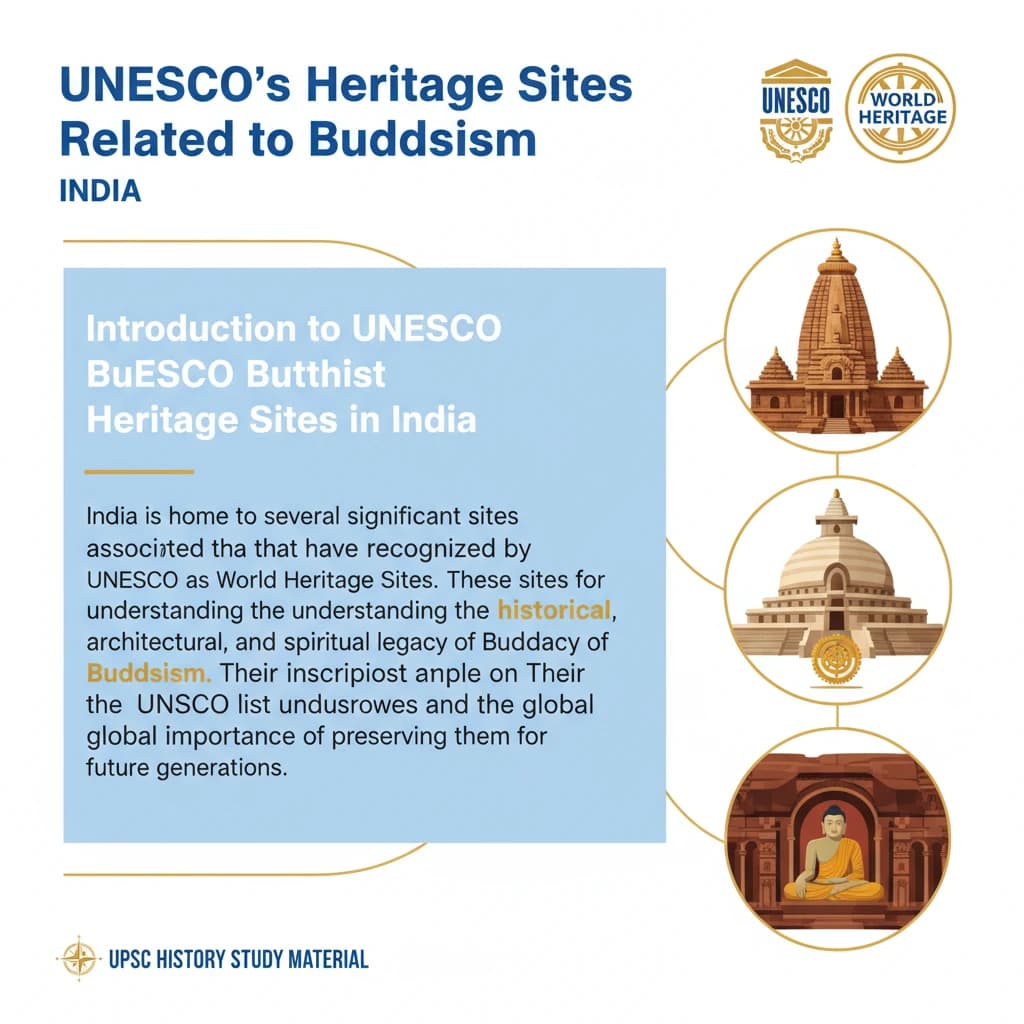
Introduction to UNESCO Buddhist Heritage Sites in India
India is home to several significant sites associated with Buddhism that have been recognized by UNESCO as World Heritage Sites. These sites are crucial for understanding the historical, architectural, and spiritual legacy of Buddhism.
Their inscription on the UNESCO list underscores their universal value and the global importance of preserving them for future generations.
Archaeological Site of Nalanda Mahavihara, Bihar
The Archaeological Site of Nalanda Mahavihara is located in Nalanda, Bihar. It represents a monumental center of learning and a monastic university.
Nalanda was a renowned Buddhist monastery and a prominent educational institution from the 5th to the 12th century CE. It attracted scholars and students from across Asia.
The ruins showcase the architectural and artistic brilliance of the Gupta period and later eras, reflecting the development of monastic architecture.
Buddhist Monuments at Sanchi, Madhya Pradesh
The Buddhist Monuments at Sanchi are situated in Madhya Pradesh. This complex is one of the oldest and most important Buddhist sites in India.
It is famous for its Stupas, monasteries, temples, and monolithic pillars dating from the 3rd century BCE to the 12th century CE. The most notable is the Great Stupa built by Emperor Ashoka.
The site provides invaluable insights into the evolution of Buddhist art and architecture, particularly the early phases of Buddhist iconography.
Mahabodhi Temple Complex at Bodh Gaya, Bihar
The Mahabodhi Temple Complex is located in Bodh Gaya, Bihar. This site holds immense spiritual significance as it is where Siddhartha Gautama attained enlightenment and became the Buddha.
The complex features the Mahabodhi Temple, the sacred Bodhi Tree, and numerous other shrines and monuments. Its current structure largely dates back to the 5th-6th centuries CE.
It is a major pilgrimage site for Buddhists worldwide and a living testament to the origins of Buddhism.
Ajanta Caves, Maharashtra
The Ajanta Caves are located in Aurangabad, Maharashtra. These rock-cut Buddhist cave monuments date from the 2nd century BCE to about 480 CE.
The caves are famous for their exquisite frescoes and wall paintings depicting the Jataka tales (stories of Buddha's previous lives) and Buddhist deities.
They represent a masterpiece of Buddhist religious art, influencing art and architecture across Asia.
Intangible Cultural Heritage: Buddhist Chanting of Ladakh
Beyond physical sites, UNESCO also recognizes Intangible Cultural Heritage. The Buddhist chanting of Ladakh was inscribed on UNESCO’s Representative List of Humanity’s Intangible Cultural Heritage in 2012.
This chanting is a vital part of the daily life and spiritual practice of the Buddhist communities in the Ladakh region, particularly in monasteries and sacred spaces.
While the focus is often on tangible sites, remember that intangible heritage like chanting or traditional performing arts also holds significant UPSC relevance, especially in Art & Culture (GS Paper 1).
Dhamma Dipa International Buddhist University
The establishment of institutions like the Dhamma Dipa International Buddhist University in Tripura further highlights India's commitment to promoting Buddhist studies and heritage.
Such initiatives contribute to the global understanding and preservation of Buddhist philosophy and practices.
💡 Key Takeaways
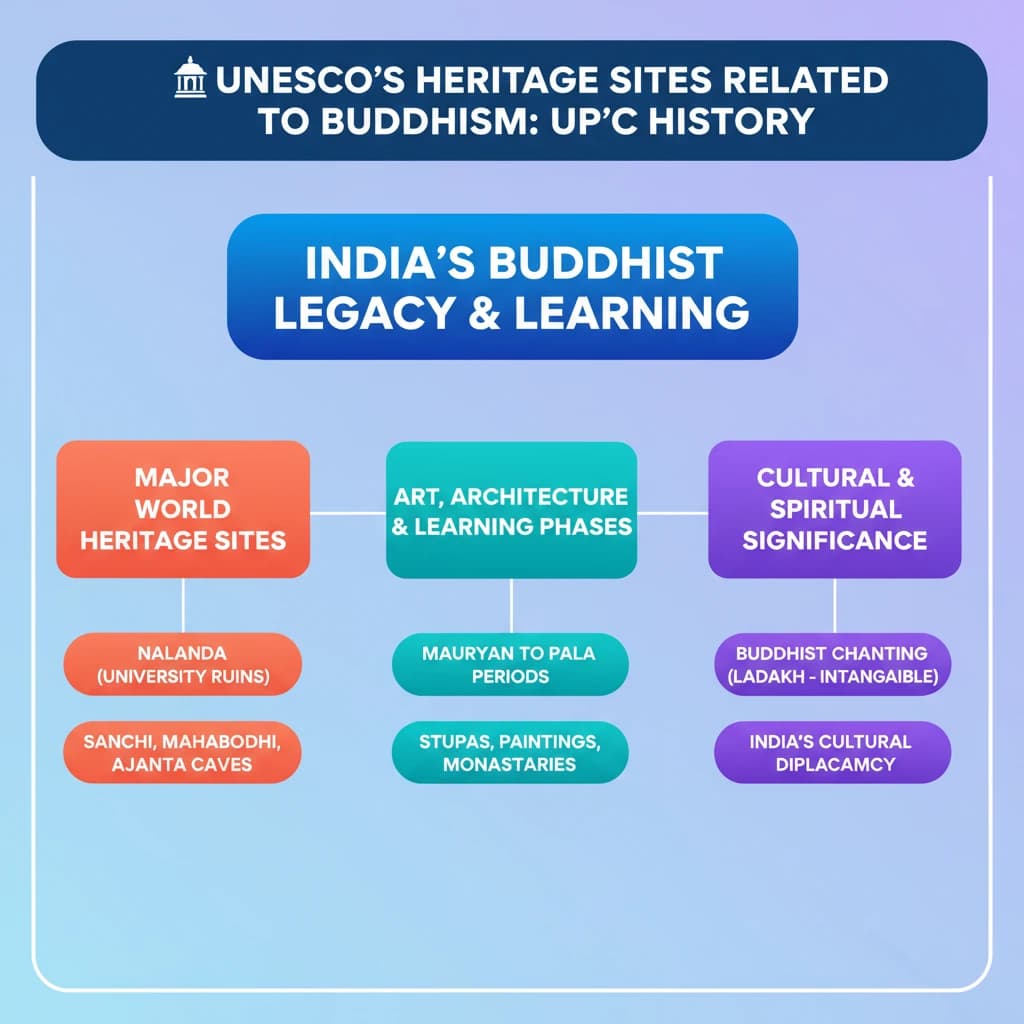
- •India has four major UNESCO Buddhist World Heritage Sites: Nalanda, Sanchi, Mahabodhi Temple, and Ajanta Caves.
- •These sites represent key phases of Buddhist art, architecture, and learning from the Mauryan to the Pala periods.
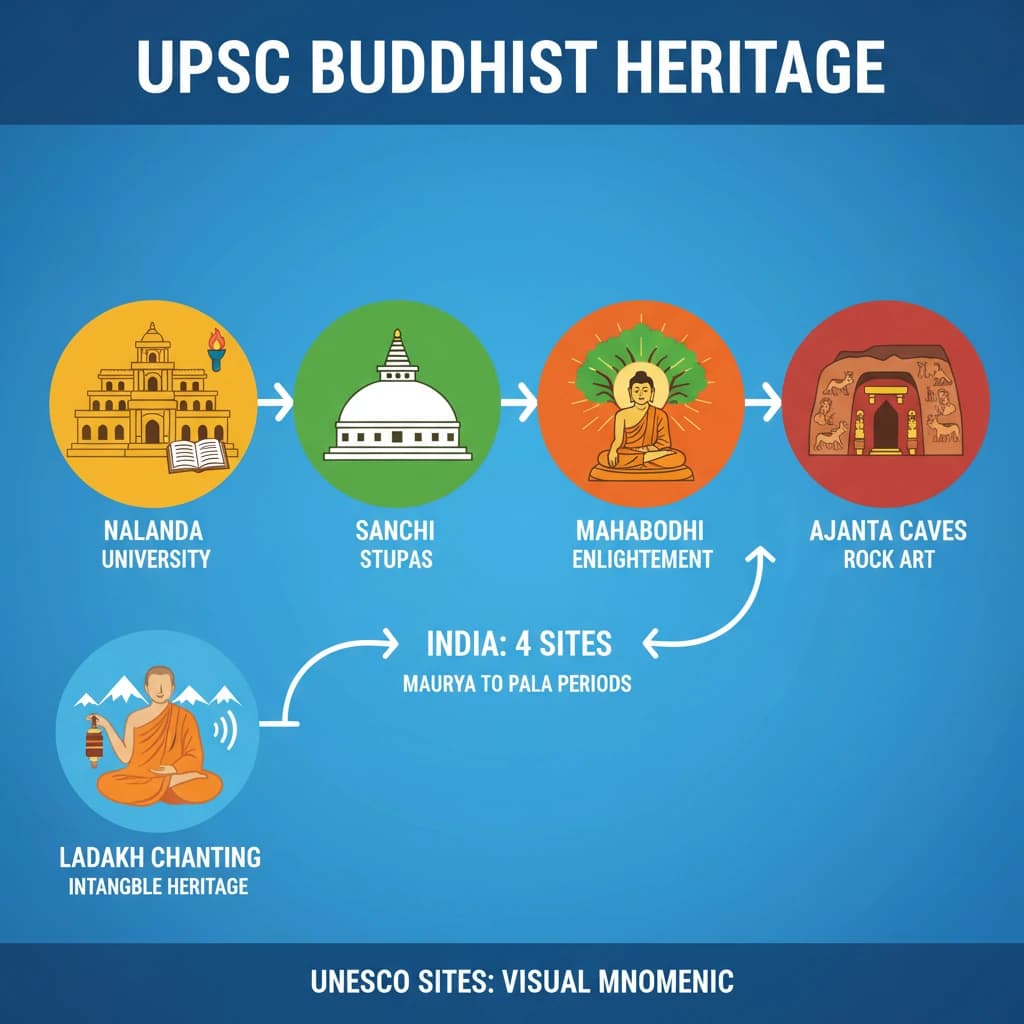
- •Nalanda was an ancient university, Sanchi is famous for its stupas, Mahabodhi is where Buddha attained enlightenment, and Ajanta for its rock-cut paintings.
- •The Buddhist chanting of Ladakh is recognized as UNESCO Intangible Cultural Heritage.
- •These sites are crucial for understanding India's historical, cultural, and spiritual legacy, and play a role in India's cultural diplomacy.
🧠 Memory Techniques
95% Verified Content
📚 Reference Sources
•UNESCO World Heritage Centre official website (for site details and dates)