Loading page, please wait…
7th India-Germany Intergovernmental Consultations - UPSC International Relations
What is 7th India-Germany Intergovernmental Consultations in UPSC International Relations?
7th India-Germany Intergovernmental Consultations is a key topic under International Relations for UPSC Civil Services Examination. Key points include: 7th India-Germany IIC co-chaired by PM Modi and Chancellor Scholz in New Delhi.. Motto: 'Growing Together with Innovation, Mobility and Sustainability,' focusing on technology, climate, strategic cooperation.. Germany accorded special status to India for quicker military purchase approvals.. Understanding this topic is essential for both UPSC Prelims and Mains preparation.
Why is 7th India-Germany Intergovernmental Consultations important for UPSC exam?
7th India-Germany Intergovernmental Consultations is a Medium-level topic in UPSC International Relations. It is tested in both Prelims (factual MCQs) and Mains (analytical answer writing). Previous year UPSC questions have frequently covered aspects of 7th India-Germany Intergovernmental Consultations, making it essential for comprehensive IAS preparation.
How to prepare 7th India-Germany Intergovernmental Consultations for UPSC?
To prepare 7th India-Germany Intergovernmental Consultations for UPSC: (1) Study the comprehensive notes covering all key concepts on Vaidra. (2) Practice previous year questions on this topic. (3) Connect it with current affairs using daily updates. (4) Revise using key takeaways and mind maps available for International Relations. (5) Write practice answers linking 7th India-Germany Intergovernmental Consultations to related GS Paper topics.
Key takeaways of 7th India-Germany Intergovernmental Consultations for UPSC
- 7th India-Germany IIC co-chaired by PM Modi and Chancellor Scholz in New Delhi.
- Motto: 'Growing Together with Innovation, Mobility and Sustainability,' focusing on technology, climate, strategic cooperation.
- Germany accorded special status to India for quicker military purchase approvals.
- Key outcomes include Digital & Technology Partnerships (internet governance, AI, IoT), Disaster Mitigation MoUs, and Space Cooperation (Neustrelitz ground station upgrade).
- Major focus on Green Future: launched Indo-German Green Hydrogen Roadmap, supported NCQG (USD 100bn for developing countries), and promoted sustainable urban mobility.
- Both nations supported India-EU Trade and Technology Council and India Middle East-Europe Economic Corridor.
7th India-Germany Intergovernmental Consultations
Medium⏱️ 8 min read
international relations
📖 Introduction
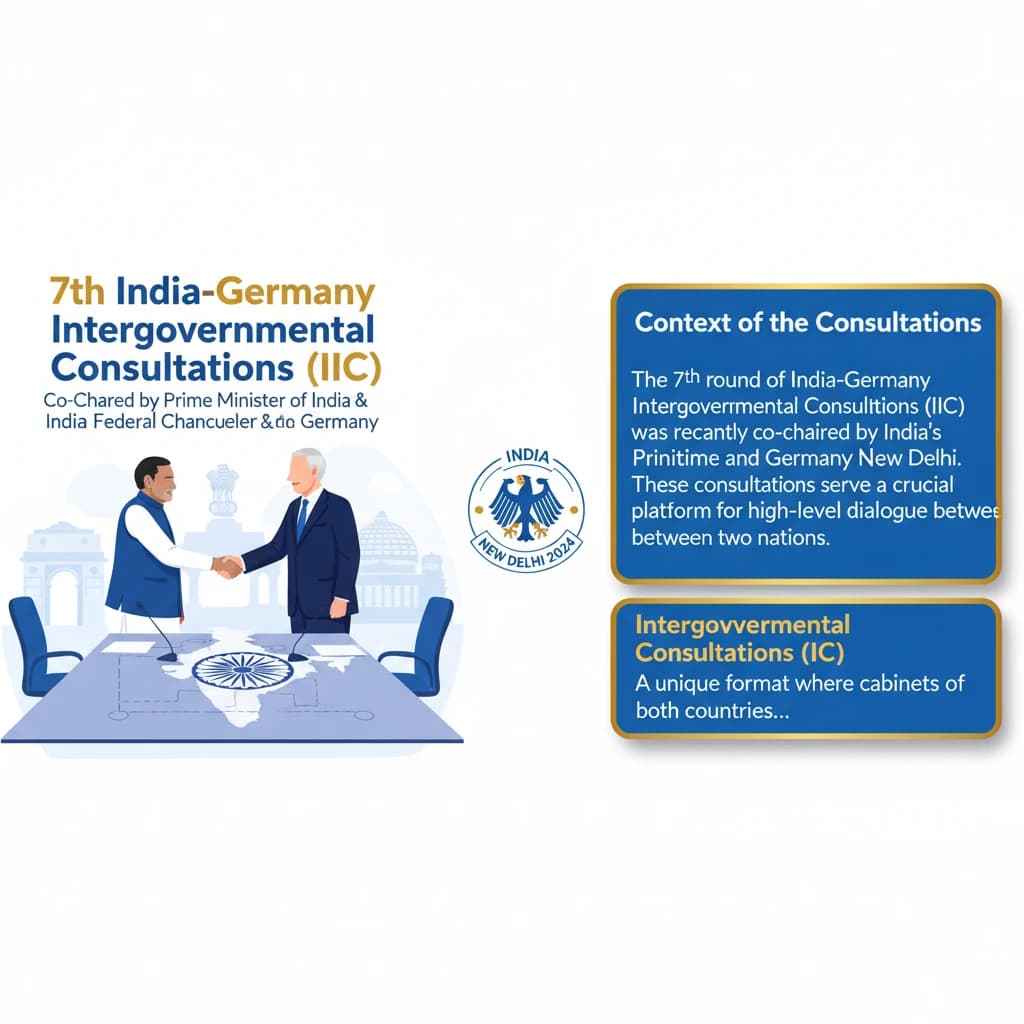
Context of the Consultations
The 7th round of India-Germany Intergovernmental Consultations (IIC) was recently co-chaired by India’s Prime Minister and Germany’s Federal Chancellor in New Delhi. These consultations serve as a crucial platform for high-level dialogue between the two nations.
Intergovernmental Consultations (IIC): A unique format where cabinets of both countries meet to discuss a wide range of bilateral issues and cooperation areas.
Theme and Focus Areas
The 7th IIC was held under the motto “Growing Together with Innovation, Mobility and Sustainability.” This theme underscored the primary areas of focus for the discussions.
Key areas of cooperation included technology, innovation, climate action, and broader strategic cooperation. These pillars guide the bilateral agenda for strengthening ties.
Germany Accords Special Status to India
Prior to these consultations, Germany had granted a special status to India. This significant move streamlines various processes between the two countries.
This special status allows for quicker approvals for military purchases by India from Germany. It reflects a deepening of strategic trust and cooperation.
Key Highlights of the Meeting
Digital and Technology Partnerships
Both nations finalized a comprehensive work plan for internet governance. This plan addresses regulations and the digital transformation of the economy.
The partnership also focuses on emerging digital technologies, including Digital Agriculture, Artificial Intelligence (AI), and the Internet of Things (IoT), to foster innovation.
Disaster Mitigation
Several Memoranda of Understanding (MoUs) were signed to enhance cooperation in disaster mitigation. These agreements target critical research areas.
Specific MoUs were inked between the Indian National Centre for Ocean Information Services (INCOIS) and the National Centre for Polar and Ocean Research (NCPOR) to boost research in related fields.
Space Cooperation
Significant progress was made in space collaboration. New Space India Ltd, India's public sector undertaking, partnered with GAF AG, a Germany-based remote sensing company.
Their agreement focuses on upgrading the international ground station in Neustrelitz, Germany. This upgrade will facilitate processing data from OceanSat – 3 and RISAT – 1A satellites.
Green and Sustainable Future
Both sides emphasized the critical need to collaborate on the new Collective Quantified Goal (NCQG). This goal calls for at least USD 100 billion per year for developing countries to address climate change.
Furthering environmental goals, the Indo-German Green Hydrogen Roadmap was launched. Additionally, initiatives for the promotion of sustainable urban mobility in India were introduced.
India-EU Strategic Partnership
The consultations also affirmed strong support for the India-EU Trade and Technology Council. This council aims to deepen economic and technological ties between India and the European Union.
Both countries committed to coordinating efforts to advance key connectivity initiatives, including the ambitious India Middle East-Europe Economic Corridor.
UPSC Insight: The 7th IIC highlights India's deepening strategic partnerships beyond traditional allies. Note the emphasis on technology, climate, and connectivity, which are recurring themes in GS-2 (International Relations) and GS-3 (Economy, Environment). Understanding specific agreements like the Green Hydrogen Roadmap or India Middle East-Europe Economic Corridor is crucial for Mains answers.
💡 Key Takeaways
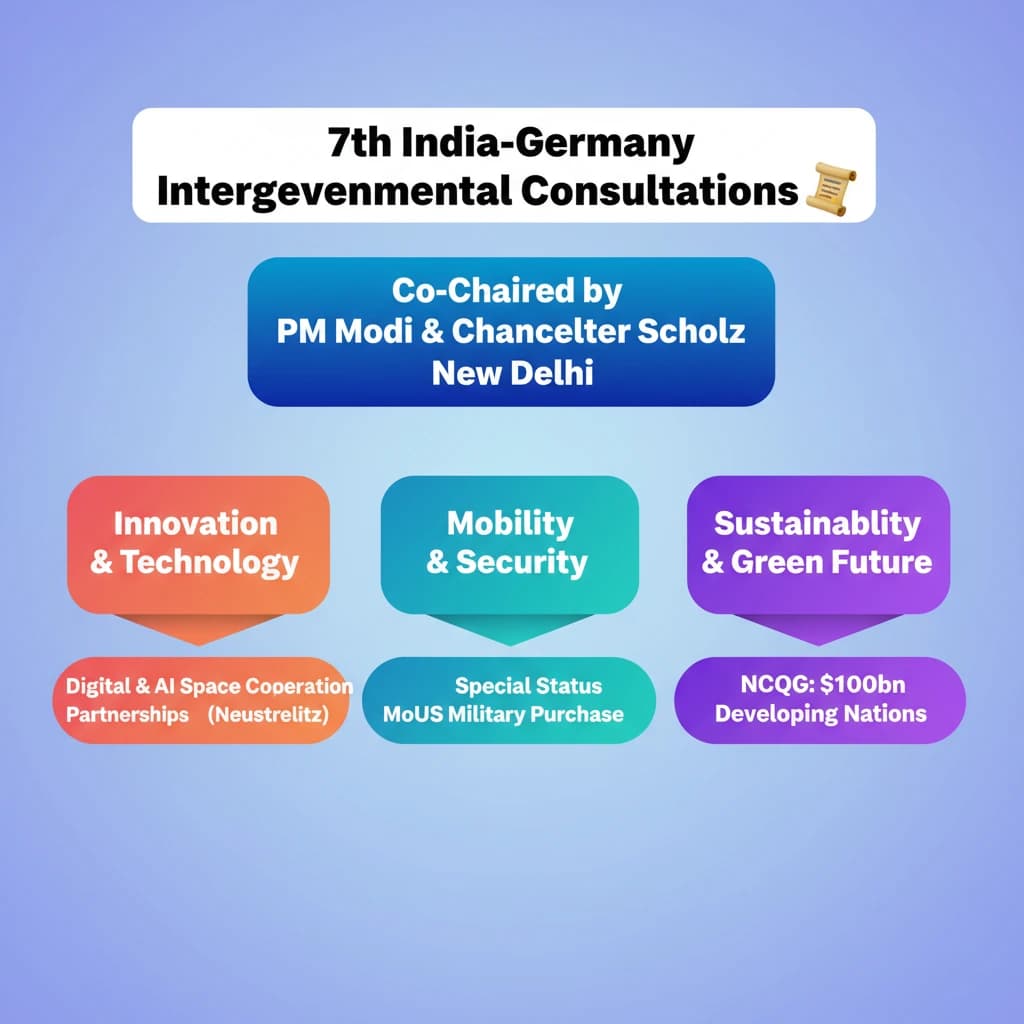
- •7th India-Germany IIC co-chaired by PM Modi and Chancellor Scholz in New Delhi.
- •Motto: 'Growing Together with Innovation, Mobility and Sustainability,' focusing on technology, climate, strategic cooperation.
- •Germany accorded special status to India for quicker military purchase approvals.
- •Key outcomes include Digital & Technology Partnerships (internet governance, AI, IoT), Disaster Mitigation MoUs, and Space Cooperation (Neustrelitz ground station upgrade).
- •Major focus on Green Future: launched Indo-German Green Hydrogen Roadmap, supported NCQG (USD 100bn for developing countries), and promoted sustainable urban mobility.
- •Both nations supported India-EU Trade and Technology Council and India Middle East-Europe Economic Corridor.
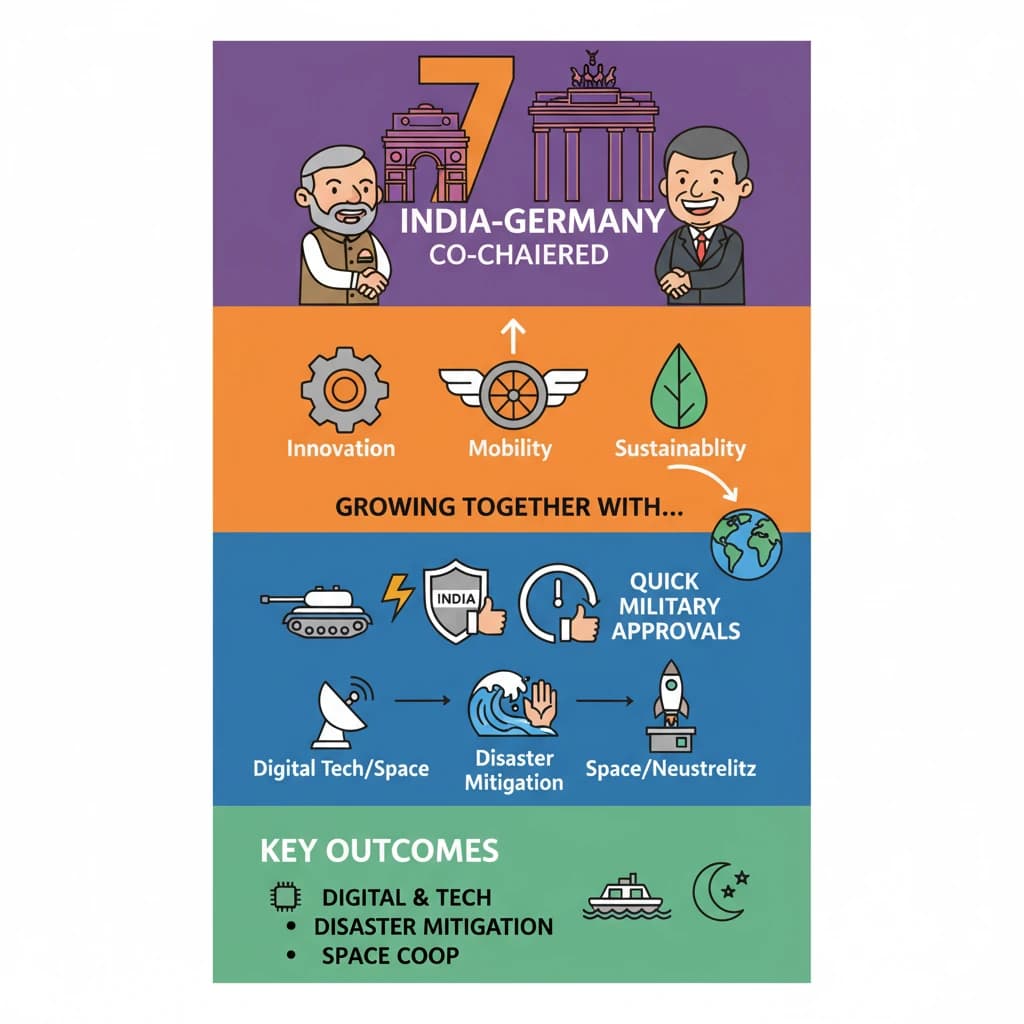
🧠 Memory Techniques
95% Verified Content