Loading page, please wait…
Abraham Accords, I2U2 & Arab Peace Initiative: Middle East Diplomacy for UPSC - UPSC International Relations
What is Abraham Accords, I2U2 & Arab Peace Initiative: Middle East Diplomacy for UPSC in UPSC International Relations?
Abraham Accords, I2U2 & Arab Peace Initiative: Middle East Diplomacy for UPSC is a key topic under International Relations for UPSC Civil Services Examination. Key points include: Abraham Accord (2020): Normalization between Israel, UAE, and Bahrain, mediated by the US.. Shifted West Asian diplomacy by delinking normalization from Palestinian conflict resolution.. I2U2 (India, Israel, USA, UAE): Formed in Oct 2021 for maritime security, infrastructure, and transport.. Understanding this topic is essential for both UPSC Prelims and Mains preparation.
Why is Abraham Accords, I2U2 & Arab Peace Initiative: Middle East Diplomacy for UPSC important for UPSC exam?
Abraham Accords, I2U2 & Arab Peace Initiative: Middle East Diplomacy for UPSC is a Medium-level topic in UPSC International Relations. It is tested in both Prelims (factual MCQs) and Mains (analytical answer writing). Previous year UPSC questions have frequently covered aspects of Abraham Accords, I2U2 & Arab Peace Initiative: Middle East Diplomacy for UPSC, making it essential for comprehensive IAS preparation.
How to prepare Abraham Accords, I2U2 & Arab Peace Initiative: Middle East Diplomacy for UPSC for UPSC?
To prepare Abraham Accords, I2U2 & Arab Peace Initiative: Middle East Diplomacy for UPSC for UPSC: (1) Study the comprehensive notes covering all key concepts on Vaidra. (2) Practice previous year questions on this topic. (3) Connect it with current affairs using daily updates. (4) Revise using key takeaways and mind maps available for International Relations. (5) Write practice answers linking Abraham Accords, I2U2 & Arab Peace Initiative: Middle East Diplomacy for UPSC to related GS Paper topics.
Key takeaways of Abraham Accords, I2U2 & Arab Peace Initiative: Middle East Diplomacy for UPSC for UPSC
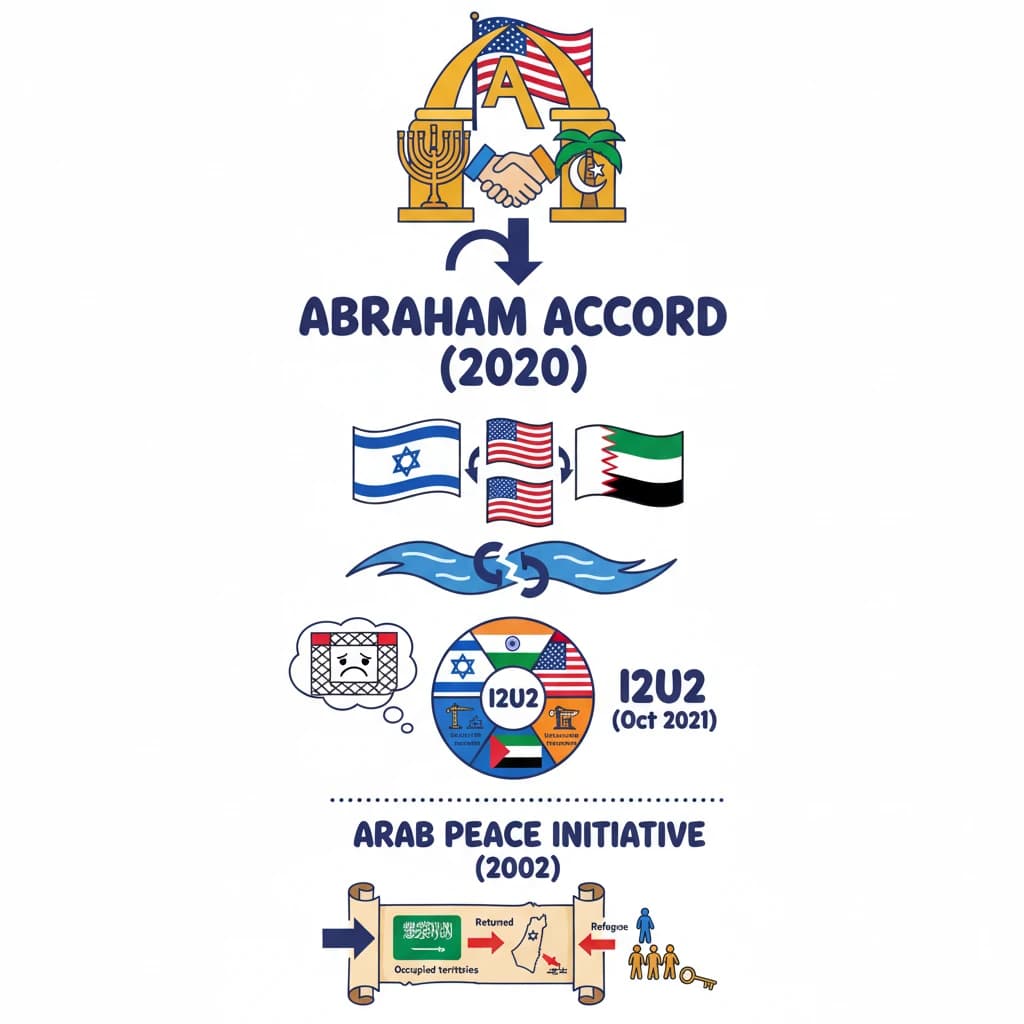
- Abraham Accord (2020): Normalization between Israel, UAE, and Bahrain, mediated by the US.
- Shifted West Asian diplomacy by delinking normalization from Palestinian conflict resolution.
- I2U2 (India, Israel, USA, UAE): Formed in Oct 2021 for maritime security, infrastructure, and transport.
- Arab Peace Initiative (2002): Saudi-led proposal for normalization in exchange for Israeli withdrawal from occupied territories and Palestinian refugee resolution.
- Represents evolving strategic alignments and economic interests in the region.
Abraham Accords, I2U2 & Arab Peace Initiative: Middle East Diplomacy for UPSC
Medium⏱️ 4 min read
international relations
📖 Introduction
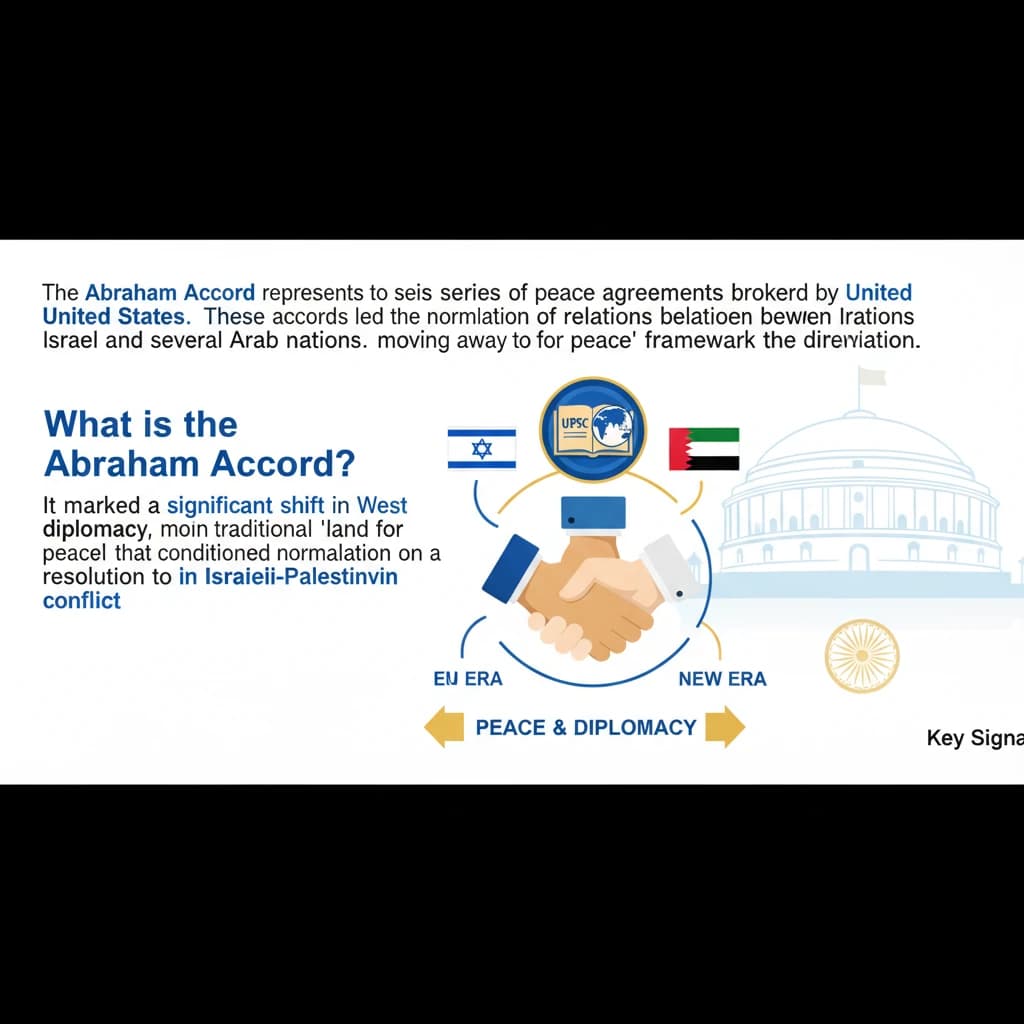
What is the Abraham Accord?
The Abraham Accord represents a series of peace agreements brokered by the United States. These accords led to the normalization of relations between Israel and several Arab nations.
It marked a significant shift in West Asian diplomacy, moving away from the traditional 'land for peace' framework that often conditioned normalization on a resolution to the Israeli-Palestinian conflict.
Key Signatories and Mediator
The primary signatories of the initial Abraham Accord in 2020 were Israel, the United Arab Emirates (UAE), and Bahrain. The agreements were officially signed at the White House.
The United States played a crucial role as the mediator, facilitating the negotiations and the eventual signing of these historic deals.
Emergence of I2U2
Following the spirit of cooperation fostered by the Abraham Accords, a new multilateral grouping emerged. This group is known as I2U2, symbolizing its four member nations.
The I2U2 group was formally established in October 2021. It signifies a new alignment of regional and global powers with shared strategic interests.
Purpose of I2U2
The primary objective of the I2U2 grouping is to address pressing regional challenges and foster cooperation across various sectors. Its agenda is broad and forward-looking.
Key areas of focus for I2U2 include maritime security, ensuring safe passage and stability in vital sea lanes. It also emphasizes enhancing infrastructure development and improving transportation links within the region.
The Arab Peace Initiative
Prior to the Abraham Accords, Arab states had also put forth significant proposals for peace. The Arab Peace Initiative stands as a landmark effort in this regard.
First proposed by Saudi Arabia in 2002, this initiative was subsequently endorsed by the entire Arab League. It offered a comprehensive framework for peace.
Core Demands of Arab Peace Initiative
The Arab Peace Initiative laid out clear conditions for achieving lasting peace and normalized relations with Israel. These conditions centered on addressing the core issues of the Israeli-Palestinian conflict.
The initiative called for Israel's full withdrawal from all occupied territories captured in 1967. It also demanded a just resolution to the sensitive Palestinian refugee issue, based on UN Resolution 194.
💡 Key Takeaways
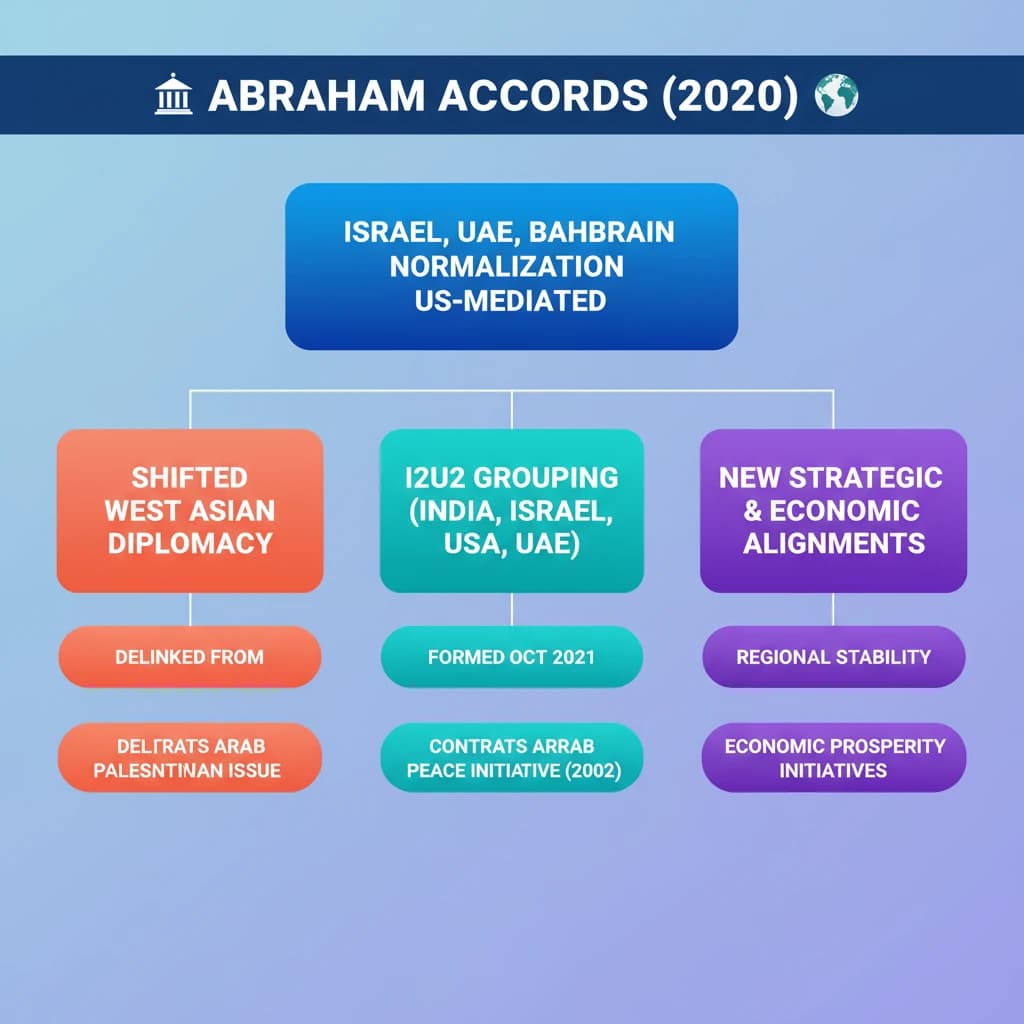
- •Abraham Accord (2020): Normalization between Israel, UAE, and Bahrain, mediated by the US.
- •Shifted West Asian diplomacy by delinking normalization from Palestinian conflict resolution.
- •I2U2 (India, Israel, USA, UAE): Formed in Oct 2021 for maritime security, infrastructure, and transport.
- •Arab Peace Initiative (2002): Saudi-led proposal for normalization in exchange for Israeli withdrawal from occupied territories and Palestinian refugee resolution.
- •Represents evolving strategic alignments and economic interests in the region.
🧠 Memory Techniques
98% Verified Content
📚 Reference Sources
•Official statements from the US Department of State regarding the Abraham Accords
•Arab League official declarations on the Arab Peace Initiative
•News reports and analyses from reputable international media outlets