Loading page, please wait…
Codex Alimentarius Commission - UPSC International Relations
What is Codex Alimentarius Commission in UPSC International Relations?
Codex Alimentarius Commission is a key topic under International Relations for UPSC Civil Services Examination. Key points include: Codex Alimentarius Commission (CAC) is an international food standards body.. Established in May 1963 by FAO and WHO.. Protects consumer health and ensures fair practices in food trade.. Understanding this topic is essential for both UPSC Prelims and Mains preparation.
Why is Codex Alimentarius Commission important for UPSC exam?
Codex Alimentarius Commission is a Medium-level topic in UPSC International Relations. It is tested in both Prelims (factual MCQs) and Mains (analytical answer writing). Previous year UPSC questions have frequently covered aspects of Codex Alimentarius Commission, making it essential for comprehensive IAS preparation.
How to prepare Codex Alimentarius Commission for UPSC?
To prepare Codex Alimentarius Commission for UPSC: (1) Study the comprehensive notes covering all key concepts on Vaidra. (2) Practice previous year questions on this topic. (3) Connect it with current affairs using daily updates. (4) Revise using key takeaways and mind maps available for International Relations. (5) Write practice answers linking Codex Alimentarius Commission to related GS Paper topics.
Key takeaways of Codex Alimentarius Commission for UPSC
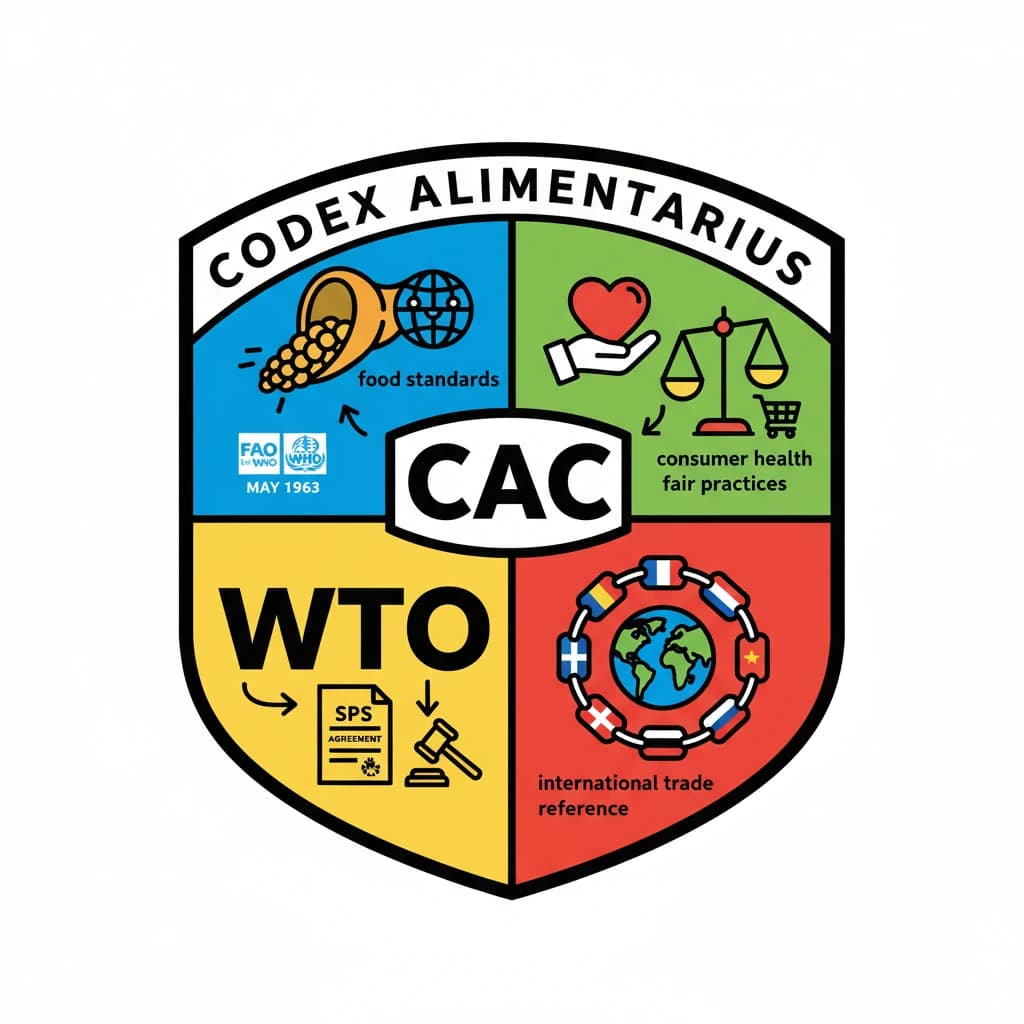
- Codex Alimentarius Commission (CAC) is an international food standards body.
- Established in May 1963 by FAO and WHO.
- Protects consumer health and ensures fair practices in food trade.
- WTO's SPS Agreement recognizes Codex standards as reference for international trade and dispute settlement.
- India recently participated in the 86th session of CAC's Executive Committee.
Codex Alimentarius Commission
Medium⏱️ 4 min read
international relations
📖 Introduction
Why in News?
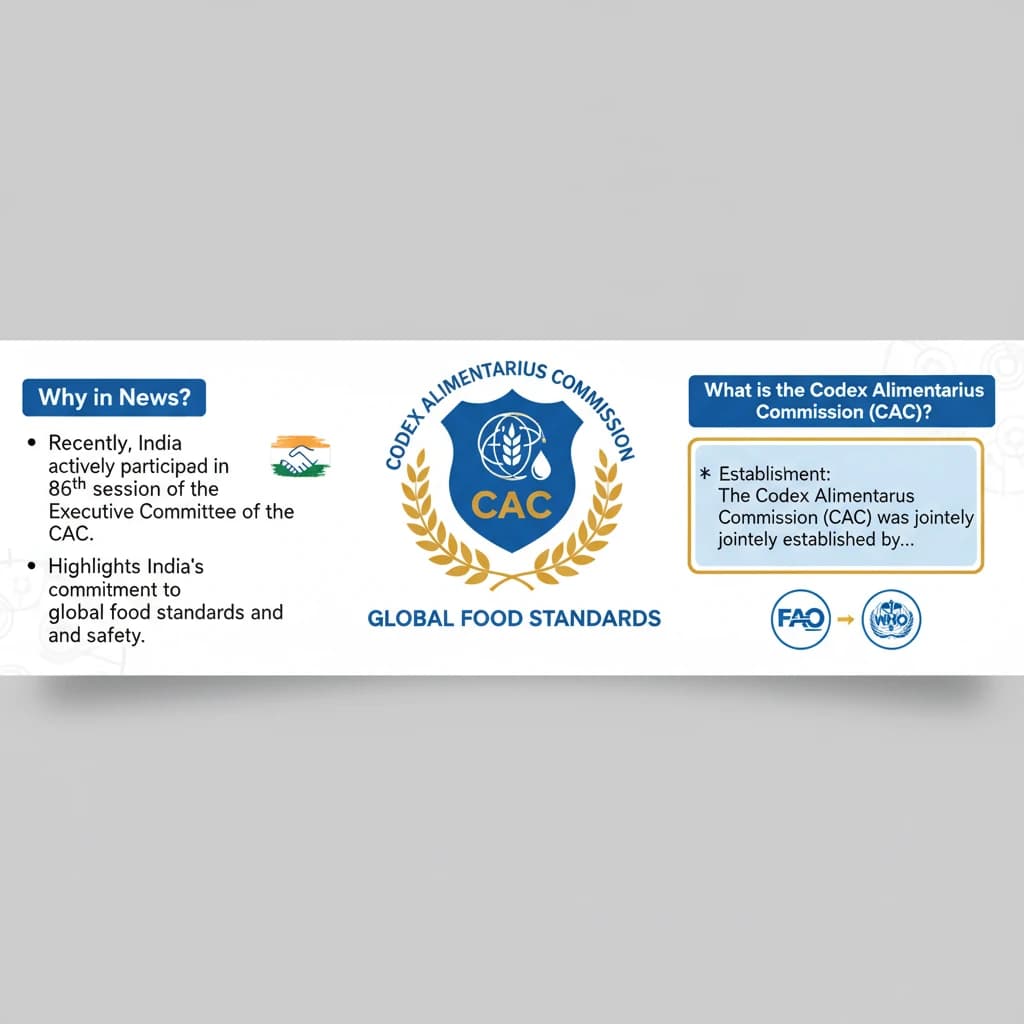
Recently, India actively participated in the 86th session of the Executive Committee of the Codex Alimentarius Commission (CAC). This engagement highlights India's commitment to global food standards and safety.
What is the Codex Alimentarius Commission (CAC)?
Establishment: The Codex Alimentarius Commission (CAC) was jointly established in May 1963.
- Founding Organizations: It was created by the Food and Agriculture Organization (FAO) of the United Nations and the World Health Organization (WHO).
The primary objective of the CAC is twofold: to protect consumer's health and to ensure fair practices in food trade globally. It serves as a crucial international body in setting food standards.
International Recognition and WTO Linkage
The standards, guidelines, and recommendations developed by the Codex Alimentarius Commission hold significant international recognition. They are vital for global commerce and food safety.
WTO Recognition: The Agreement on the Application of Sanitary and Phytosanitary Measures (SPS) of the World Trade Organization (WTO) formally recognizes these Codex standards.
This recognition means that Codex standards serve as reference standards for various aspects of international trade. They are particularly important for resolving trade disputes related to food safety and quality issues.
UPSC Insight: Understanding the link between CAC and WTO's SPS Agreement is crucial. It shows how international health and trade bodies cooperate to regulate global food systems. Questions may link food safety, trade barriers, and the role of international organizations.
💡 Key Takeaways
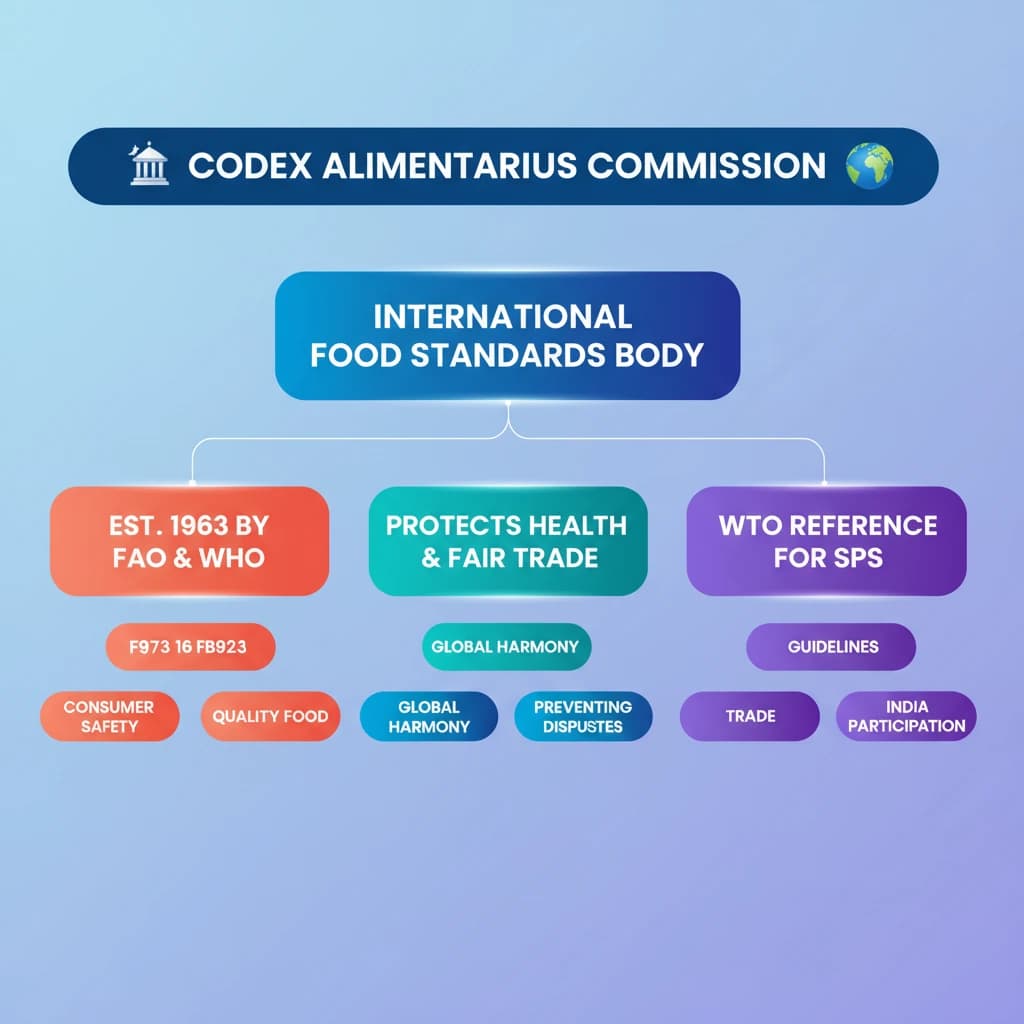
- •Codex Alimentarius Commission (CAC) is an international food standards body.
- •Established in May 1963 by FAO and WHO.
- •Protects consumer health and ensures fair practices in food trade.
- •WTO's SPS Agreement recognizes Codex standards as reference for international trade and dispute settlement.
- •India recently participated in the 86th session of CAC's Executive Committee.
🧠 Memory Techniques
95% Verified Content
📚 Reference Sources
•Food and Agriculture Organization (FAO) official website
•World Health Organization (WHO) official website
•World Trade Organization (WTO) official website