Loading page, please wait…
Codex Alimentarius Commission: Membership and India's Role - UPSC International Relations
What is Codex Alimentarius Commission: Membership and India's Role in UPSC International Relations?
Codex Alimentarius Commission: Membership and India's Role is a key topic under International Relations for UPSC Civil Services Examination. Key points include: Codex Alimentarius Commission (CAC) sets global food standards for safety and trade.. CAC has 189 members: 188 countries and the European Union.. India became a member of CAC in 1964, demonstrating early commitment.. Understanding this topic is essential for both UPSC Prelims and Mains preparation.
Why is Codex Alimentarius Commission: Membership and India's Role important for UPSC exam?
Codex Alimentarius Commission: Membership and India's Role is a Medium-level topic in UPSC International Relations. It is tested in both Prelims (factual MCQs) and Mains (analytical answer writing). Previous year UPSC questions have frequently covered aspects of Codex Alimentarius Commission: Membership and India's Role, making it essential for comprehensive IAS preparation.
How to prepare Codex Alimentarius Commission: Membership and India's Role for UPSC?
To prepare Codex Alimentarius Commission: Membership and India's Role for UPSC: (1) Study the comprehensive notes covering all key concepts on Vaidra. (2) Practice previous year questions on this topic. (3) Connect it with current affairs using daily updates. (4) Revise using key takeaways and mind maps available for International Relations. (5) Write practice answers linking Codex Alimentarius Commission: Membership and India's Role to related GS Paper topics.
Key takeaways of Codex Alimentarius Commission: Membership and India's Role for UPSC
- Codex Alimentarius Commission (CAC) sets global food standards for safety and trade.
- CAC has 189 members: 188 countries and the European Union.
- India became a member of CAC in 1964, demonstrating early commitment.
- Membership facilitates international food trade by aligning with WTO SPS Agreement standards.
- CAC standards protect consumer health and ensure fair practices in food commerce.

Codex Alimentarius Commission: Membership and India's Role
Medium⏱️ 7 min read
international relations
📖 Introduction
Understanding Codex Alimentarius Membership
The Codex Alimentarius Commission (CAC) is a crucial international body responsible for setting global food standards. Its membership is broad, reflecting its universal mandate in food safety and trade.
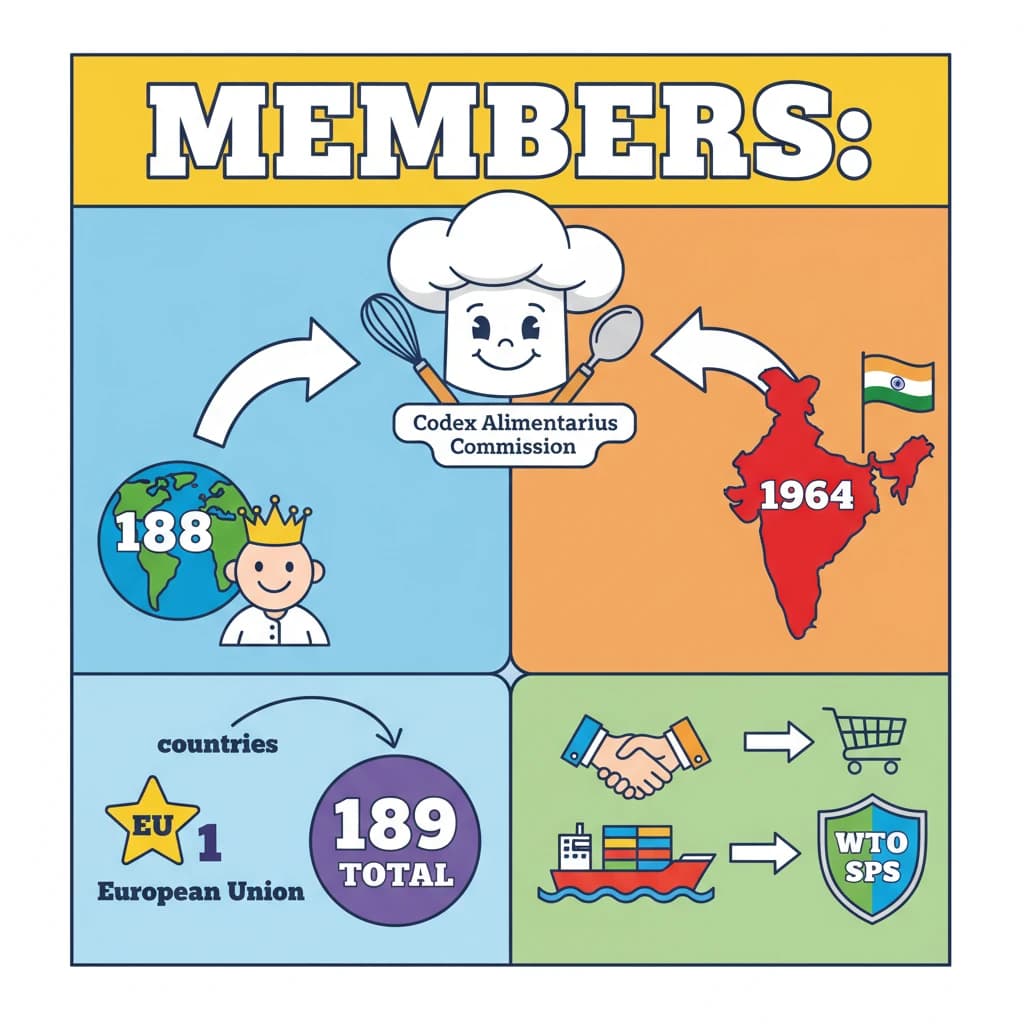
Currently, the Codex Alimentarius Commission comprises 189 Codex Members. This significant number highlights its widespread acceptance and influence across the globe.
Membership Breakdown:
- 188 Member Countries: Individual sovereign nations participating in the Commission's work.
- European Union: A unique member representing its collective member states on food-related matters.
India holds a long-standing commitment to international food safety standards. It became a member of the Codex Alimentarius Commission in 1964, shortly after the Commission's establishment.
Significance of Membership: Membership in Codex Alimentarius allows countries to participate in the development of international food standards, guidelines, and codes of practice. This ensures that national regulations align with global best practices, facilitating international trade and protecting consumer health.
UPSC Insight: Understanding the composition and role of international bodies like the Codex Alimentarius Commission is vital for GS-II (International Relations) and GS-III (Food Processing, Food Security). Note the specific numbers and India's early involvement.
💡 Key Takeaways
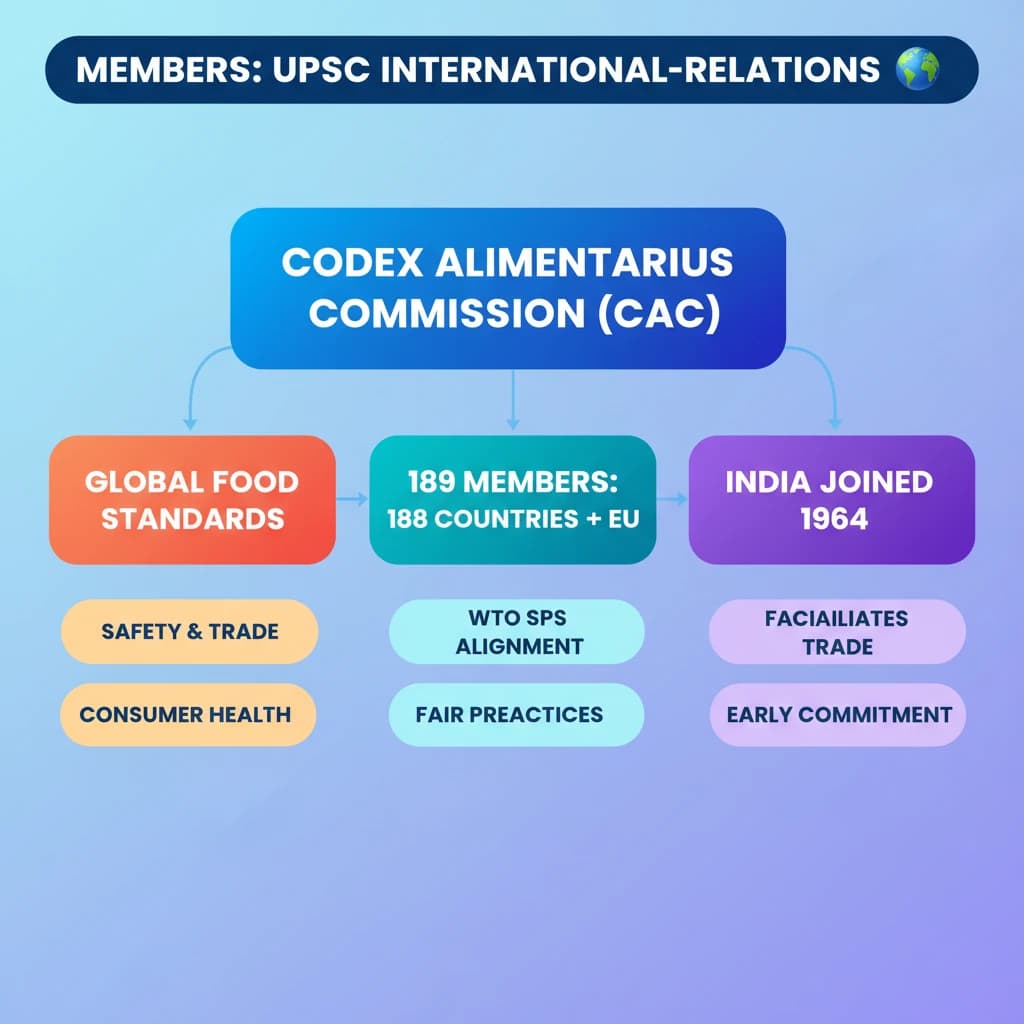
- •Codex Alimentarius Commission (CAC) sets global food standards for safety and trade.
- •CAC has 189 members: 188 countries and the European Union.
- •India became a member of CAC in 1964, demonstrating early commitment.
- •Membership facilitates international food trade by aligning with WTO SPS Agreement standards.
- •CAC standards protect consumer health and ensure fair practices in food commerce.
🧠 Memory Techniques
98% Verified Content
📚 Reference Sources
•Food and Agriculture Organization (FAO) publications
•World Health Organization (WHO) documents
•Drishti IAS study material