Loading page, please wait…
GloBe Network: India Elected to Steering Committee, G20 Anti-Corruption Initiative - UPSC International Relations
What is GloBe Network: India Elected to Steering Committee, G20 Anti-Corruption Initiative in UPSC International Relations?
GloBe Network: India Elected to Steering Committee, G20 Anti-Corruption Initiative is a key topic under International Relations for UPSC Civil Services Examination. Key points include: GloBe Network is a G-20 initiative, established in 2021, to combat cross-border financial crime.. It facilitates intelligence sharing and best practices among anti-corruption law enforcement authorities.. Governed by members, supported by UNODC; currently has 121 countries and 219 authorities.. Understanding this topic is essential for both UPSC Prelims and Mains preparation.
Why is GloBe Network: India Elected to Steering Committee, G20 Anti-Corruption Initiative important for UPSC exam?
GloBe Network: India Elected to Steering Committee, G20 Anti-Corruption Initiative is a Medium-level topic in UPSC International Relations. It is tested in both Prelims (factual MCQs) and Mains (analytical answer writing). Previous year UPSC questions have frequently covered aspects of GloBe Network: India Elected to Steering Committee, G20 Anti-Corruption Initiative, making it essential for comprehensive IAS preparation.
How to prepare GloBe Network: India Elected to Steering Committee, G20 Anti-Corruption Initiative for UPSC?
To prepare GloBe Network: India Elected to Steering Committee, G20 Anti-Corruption Initiative for UPSC: (1) Study the comprehensive notes covering all key concepts on Vaidra. (2) Practice previous year questions on this topic. (3) Connect it with current affairs using daily updates. (4) Revise using key takeaways and mind maps available for International Relations. (5) Write practice answers linking GloBe Network: India Elected to Steering Committee, G20 Anti-Corruption Initiative to related GS Paper topics.
Key takeaways of GloBe Network: India Elected to Steering Committee, G20 Anti-Corruption Initiative for UPSC
- GloBe Network is a G-20 initiative, established in 2021, to combat cross-border financial crime.
- It facilitates intelligence sharing and best practices among anti-corruption law enforcement authorities.
- Governed by members, supported by UNODC; currently has 121 countries and 219 authorities.
- India was elected to its 15-member steering committee, with MHA, CBI, and ED as key Indian participants.
- Represents a shift towards operational, rather than just normative, international anti-corruption cooperation.
GloBe Network: India Elected to Steering Committee, G20 Anti-Corruption Initiative
Medium⏱️ 5 min read
international relations
📖 Introduction
Introduction to GloBe Network
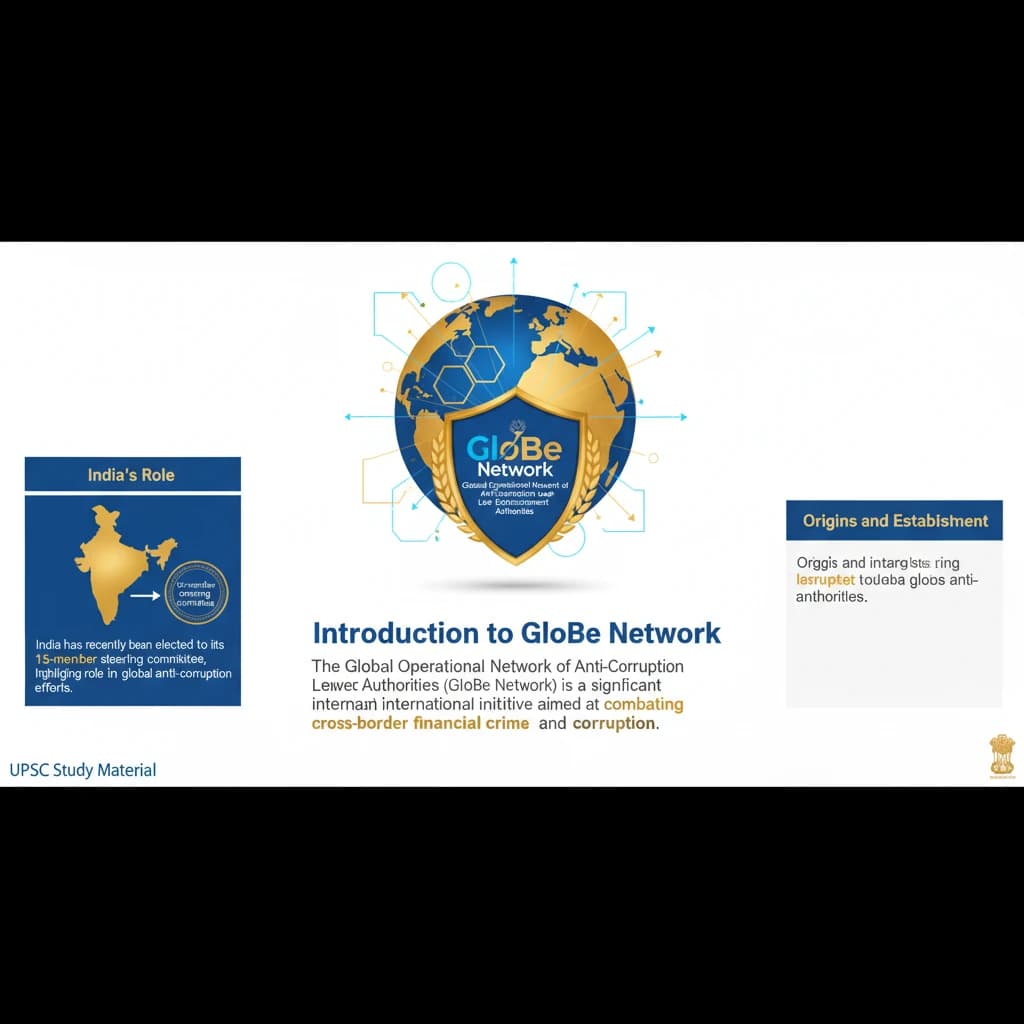
The Global Operational Network of Anti-Corruption Law Enforcement Authorities (GloBe Network) is a significant international initiative aimed at combating cross-border financial crime and corruption.
India has recently been elected to its 15-member steering committee, highlighting its growing role in global anti-corruption efforts.
Origins and Establishment
The GloBe Network originated as a G-20 initiative, with strong support from India since 2020.
It was formally established in 2021 during a special event held at the UN General Assembly Special Session against Corruption.
Governance and Support
The network is primarily governed by its member countries, ensuring a collaborative and member-driven approach to its operations.
Operational support and secretariat services are provided by the United Nations Office on Drugs and Crime (UNODC), which plays a crucial role in its functioning.
Membership and Structure
Currently, the GloBe Network boasts a substantial membership, including 121 member countries and representing 219 authorities globally.
Its leadership structure comprises one chairman, one vice-chairman, and 13 additional members who collectively guide its strategic initiatives.
Core Objective and Function
The primary objective of the GloBe Network is to facilitate the sharing of intelligence and best practices among anti-corruption law enforcement authorities.
This collaborative intelligence exchange is deemed crucial for effectively addressing complex cross-border financial crimes, which often involve multiple jurisdictions.
India's Role and Participating Authorities
In India, the Ministry of Home Affairs (MHA) serves as the central authority coordinating efforts related to the GloBe Network.
Key Indian agencies, including the Central Bureau of Investigation (CBI) and the Enforcement Directorate (ED), are designated as member authorities within the network.
UPSC Insight: India's election to the steering committee signifies its commitment to global anti-corruption efforts and enhances its diplomatic standing in international governance. This can be relevant for GS Paper II (International Relations).
💡 Key Takeaways
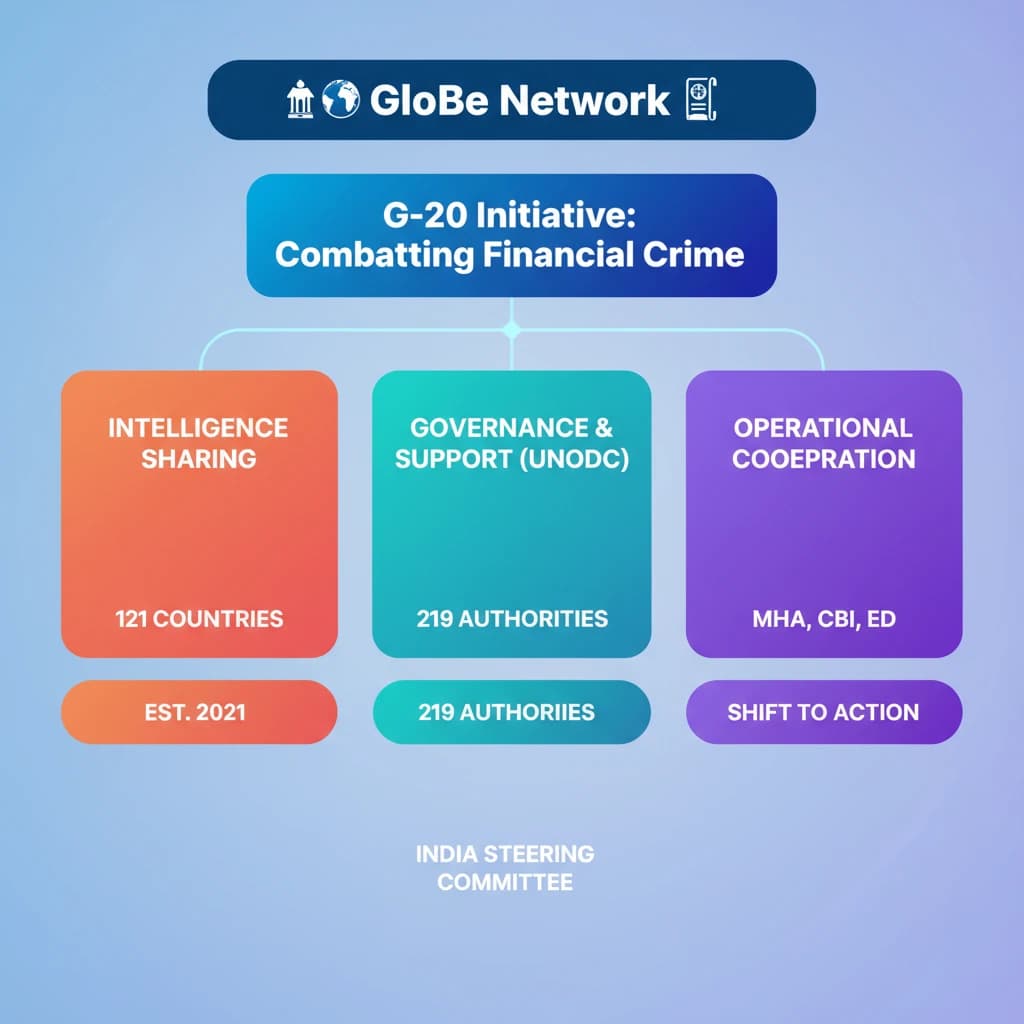
- •GloBe Network is a G-20 initiative, established in 2021, to combat cross-border financial crime.
- •It facilitates intelligence sharing and best practices among anti-corruption law enforcement authorities.
- •Governed by members, supported by UNODC; currently has 121 countries and 219 authorities.
- •India was elected to its 15-member steering committee, with MHA, CBI, and ED as key Indian participants.
- •Represents a shift towards operational, rather than just normative, international anti-corruption cooperation.
🧠 Memory Techniques

95% Verified Content