Loading page, please wait…
MEA’s Development Aid - UPSC International Relations
What is MEA’s Development Aid in UPSC International Relations?
MEA’s Development Aid is a key topic under International Relations for UPSC Civil Services Examination. Key points include: MEA's development aid is a strategic tool for India's foreign policy, expanding global influence.. The 'Neighbourhood First' policy guides aid distribution, prioritizing immediate neighbours.. Bhutan is the largest recipient, reflecting strong bilateral ties and consistent support.. Understanding this topic is essential for both UPSC Prelims and Mains preparation.
Why is MEA’s Development Aid important for UPSC exam?
MEA’s Development Aid is a Medium-level topic in UPSC International Relations. It is tested in both Prelims (factual MCQs) and Mains (analytical answer writing). Previous year UPSC questions have frequently covered aspects of MEA’s Development Aid, making it essential for comprehensive IAS preparation.
How to prepare MEA’s Development Aid for UPSC?
To prepare MEA’s Development Aid for UPSC: (1) Study the comprehensive notes covering all key concepts on Vaidra. (2) Practice previous year questions on this topic. (3) Connect it with current affairs using daily updates. (4) Revise using key takeaways and mind maps available for International Relations. (5) Write practice answers linking MEA’s Development Aid to related GS Paper topics.
Key takeaways of MEA’s Development Aid for UPSC
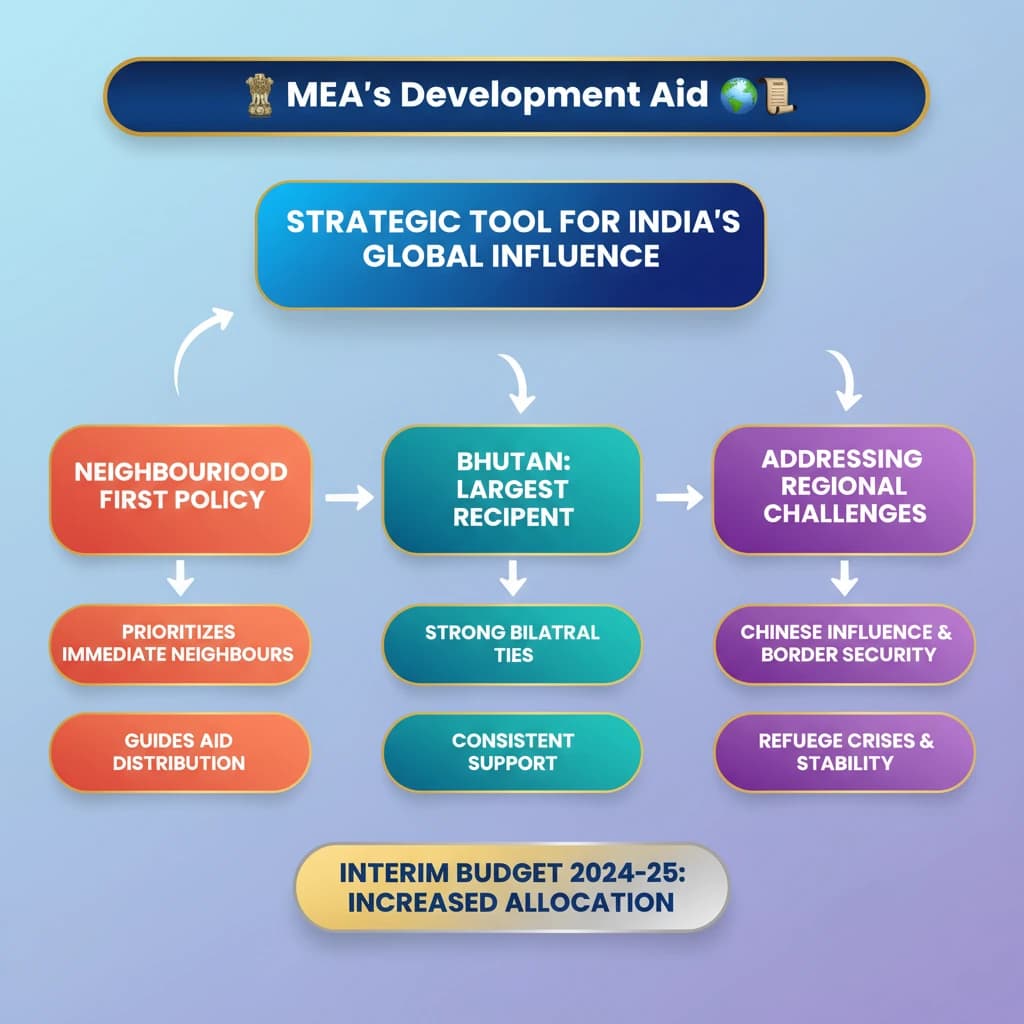
- MEA's development aid is a strategic tool for India's foreign policy, expanding global influence.
- The 'Neighbourhood First' policy guides aid distribution, prioritizing immediate neighbours.
- Bhutan is the largest recipient, reflecting strong bilateral ties and consistent support.
- Aid addresses critical regional challenges like Chinese influence, border security, and refugee crises.
- The Interim Budget 2024-25 saw a significant increase in MEA's development assistance allocation.
- Development aid promotes regional connectivity, cooperation, and stability in India's neighbourhood.
MEA’s Development Aid
Medium⏱️ 7 min read
international relations
📖 Introduction
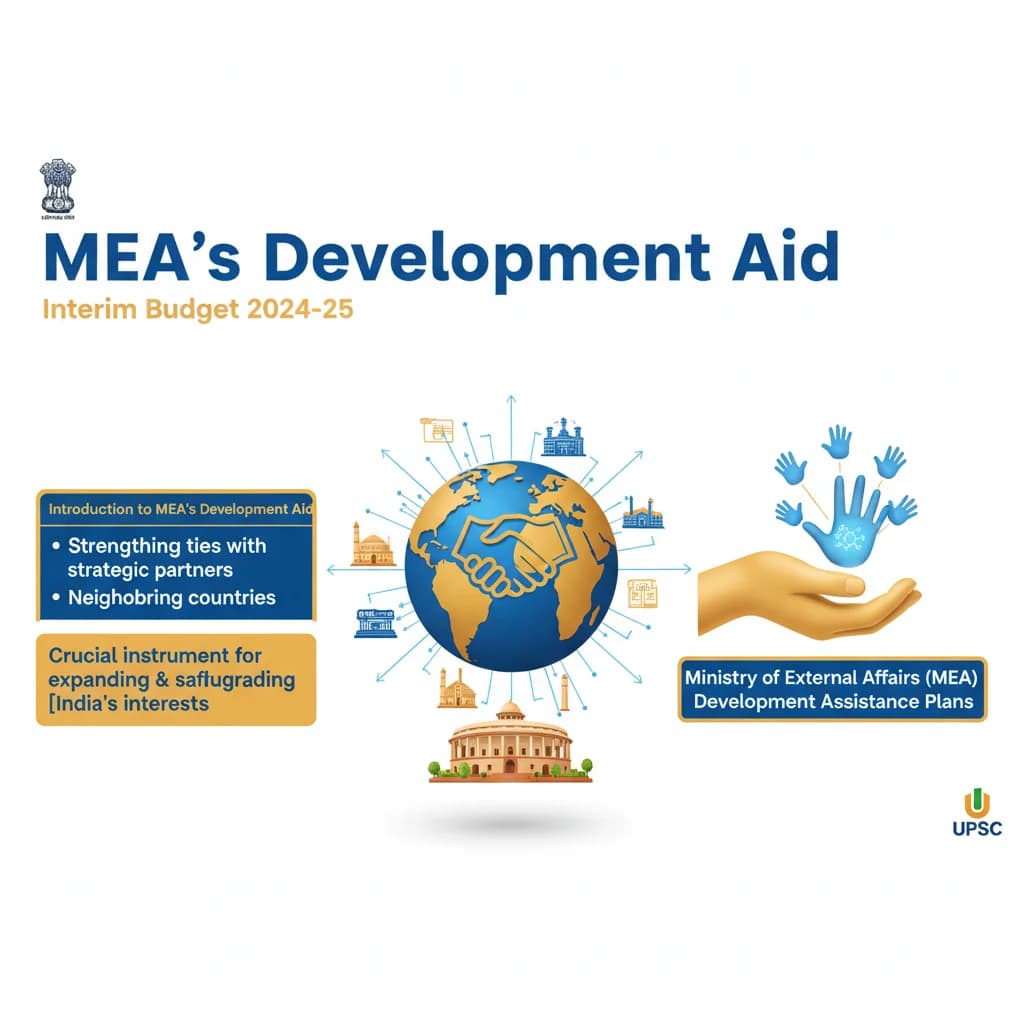
Introduction to MEA's Development Aid
The Ministry of External Affairs (MEA) has outlined its development assistance plans in the recently announced Interim Budget for the fiscal year 2024-25. This initiative focuses on strengthening ties with strategic partners and neighbouring countries.
The MEA's development aid is a crucial instrument for expanding and safeguarding India's global influence and interests. It directly aligns with the nation's broader foreign policy goals.
Key Objectives of Development Assistance
A primary objective of this development aid is to promote regional connectivity, foster greater cooperation, and ensure stability within India's immediate and extended neighbourhood. This is achieved through carefully targeted assistance.
Aid Allocation for Fiscal Year 2024-25
The Ministry has allocated a substantial total of Rs 22,154 crore for the 2024-25 fiscal year in the interim budget. This marks a significant increase from the previous year's outlay of Rs 18,050 crore.
Financial Outlay Comparison:
- FY 2024-25: Rs 22,154 crore
- FY 2023-24: Rs 18,050 crore
Distribution Strategy: 'Neighbourhood First'
In adherence to India's 'Neighbourhood First' policy, the largest share of the development aid portfolio is consistently granted to its immediate neighbours. This policy prioritizes strengthening bilateral relations with countries in the region.
Bhutan has emerged as the frontrunner, receiving a substantial share of this aid. For 2024-25, Bhutan is allocated Rs 2,068 crore, compared to Rs 2,400 crore in 2023-24.
Bhutan's Aid Allocation:
- FY 2024-25: Rs 2,068 crore
- FY 2023-24: Rs 2,400 crore
Strategic Context: Challenges in Neighbouring Regions
India's development aid and diplomatic engagement also navigate complex challenges in its neighbourhood, particularly concerning Bangladesh.
- National Register of Citizens (NRC): The NRC, aimed at curbing illegal migration, has raised significant concerns in Bangladesh.
- Rohingya Crisis: Bangladesh actively seeks Indian support in persuading Myanmar to facilitate the return of Rohingya refugees who sought refuge in Bangladesh.
- Drug Smuggling & Trafficking: There are frequent incidences of cross-border drug smuggling and trafficking. This also includes the trafficking of humans (especially children and women) and the poaching of various animal and bird species across these borders.
- Growing Chinese Influence: Bangladesh is an active partner in China's Belt and Road Initiative (BRI), a venture India is not a part of. China's growing engagement with Bangladesh could potentially reshape regional dynamics and impact India’s strategic interests in South Asia.
UPSC Insight: Understanding MEA's development aid requires analyzing it as a tool of soft power and strategic diplomacy. It's not merely financial assistance but a mechanism to foster goodwill, secure regional stability, and counter rival influences. Be prepared to discuss specific country examples and their underlying strategic rationale.
💡 Key Takeaways
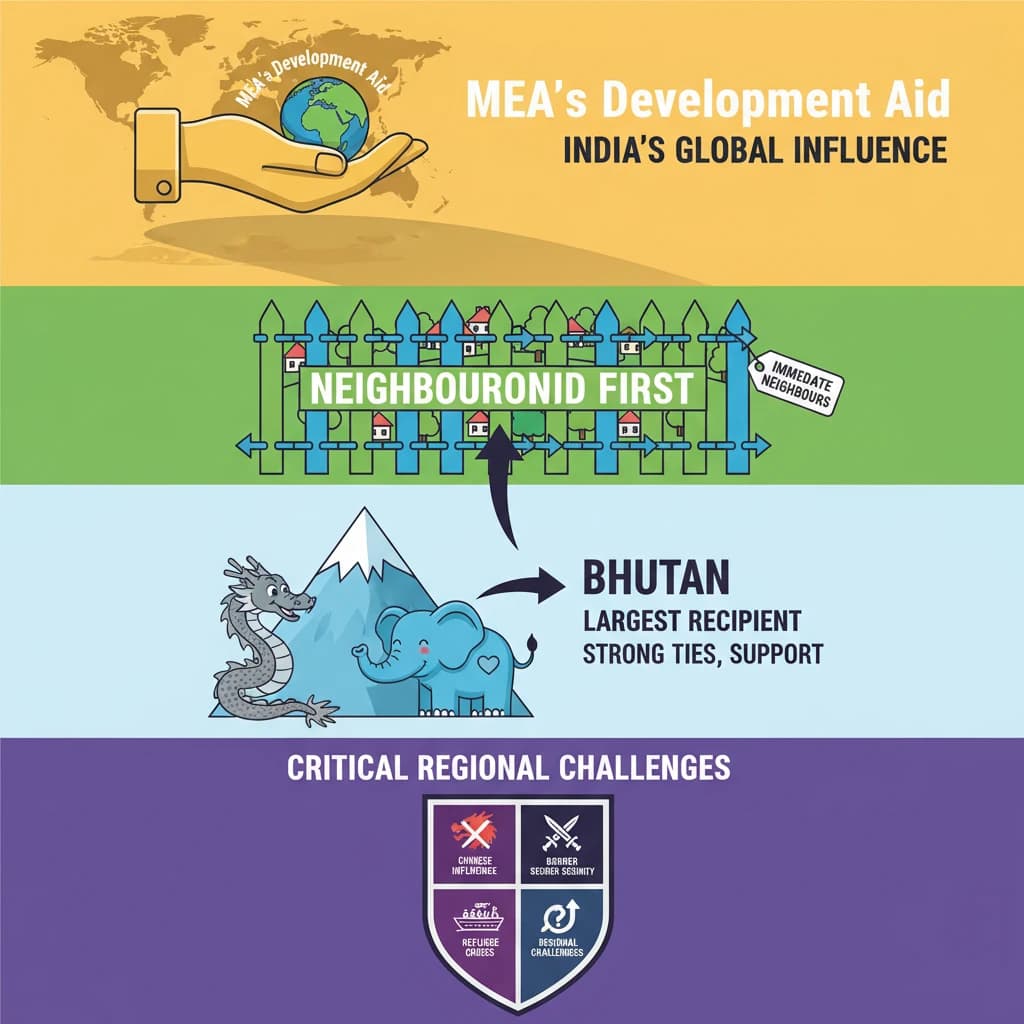
- •MEA's development aid is a strategic tool for India's foreign policy, expanding global influence.
- •The 'Neighbourhood First' policy guides aid distribution, prioritizing immediate neighbours.
- •Bhutan is the largest recipient, reflecting strong bilateral ties and consistent support.
- •Aid addresses critical regional challenges like Chinese influence, border security, and refugee crises.
- •The Interim Budget 2024-25 saw a significant increase in MEA's development assistance allocation.
- •Development aid promotes regional connectivity, cooperation, and stability in India's neighbourhood.
🧠 Memory Techniques
95% Verified Content