Loading page, please wait…
Susta Region Dispute: India-Nepal Border Issue - UPSC International Relations
What is Susta Region Dispute: India-Nepal Border Issue in UPSC International Relations?
Susta Region Dispute: India-Nepal Border Issue is a key topic under International Relations for UPSC Civil Services Examination. Key points include: Susta Region is an India-Nepal border dispute.. The 1816 Treaty of Sugauli defined the Gandak River as the boundary.. Susta village was initially on Nepal's right bank.. Understanding this topic is essential for both UPSC Prelims and Mains preparation.
Why is Susta Region Dispute: India-Nepal Border Issue important for UPSC exam?
Susta Region Dispute: India-Nepal Border Issue is a Medium-level topic in UPSC International Relations. It is tested in both Prelims (factual MCQs) and Mains (analytical answer writing). Previous year UPSC questions have frequently covered aspects of Susta Region Dispute: India-Nepal Border Issue, making it essential for comprehensive IAS preparation.
How to prepare Susta Region Dispute: India-Nepal Border Issue for UPSC?
To prepare Susta Region Dispute: India-Nepal Border Issue for UPSC: (1) Study the comprehensive notes covering all key concepts on Vaidra. (2) Practice previous year questions on this topic. (3) Connect it with current affairs using daily updates. (4) Revise using key takeaways and mind maps available for International Relations. (5) Write practice answers linking Susta Region Dispute: India-Nepal Border Issue to related GS Paper topics.
Key takeaways of Susta Region Dispute: India-Nepal Border Issue for UPSC
- Susta Region is an India-Nepal border dispute.
- The 1816 Treaty of Sugauli defined the Gandak River as the boundary.
- Susta village was initially on Nepal's right bank.
- The Gandak River changed its course, moving Susta to the left bank.
- Susta is currently under India's control, leading to a dispute.
- Riverine boundaries are prone to disputes due to natural course changes.
Susta Region Dispute: India-Nepal Border Issue
Medium⏱️ 6 min read
international relations
📖 Introduction
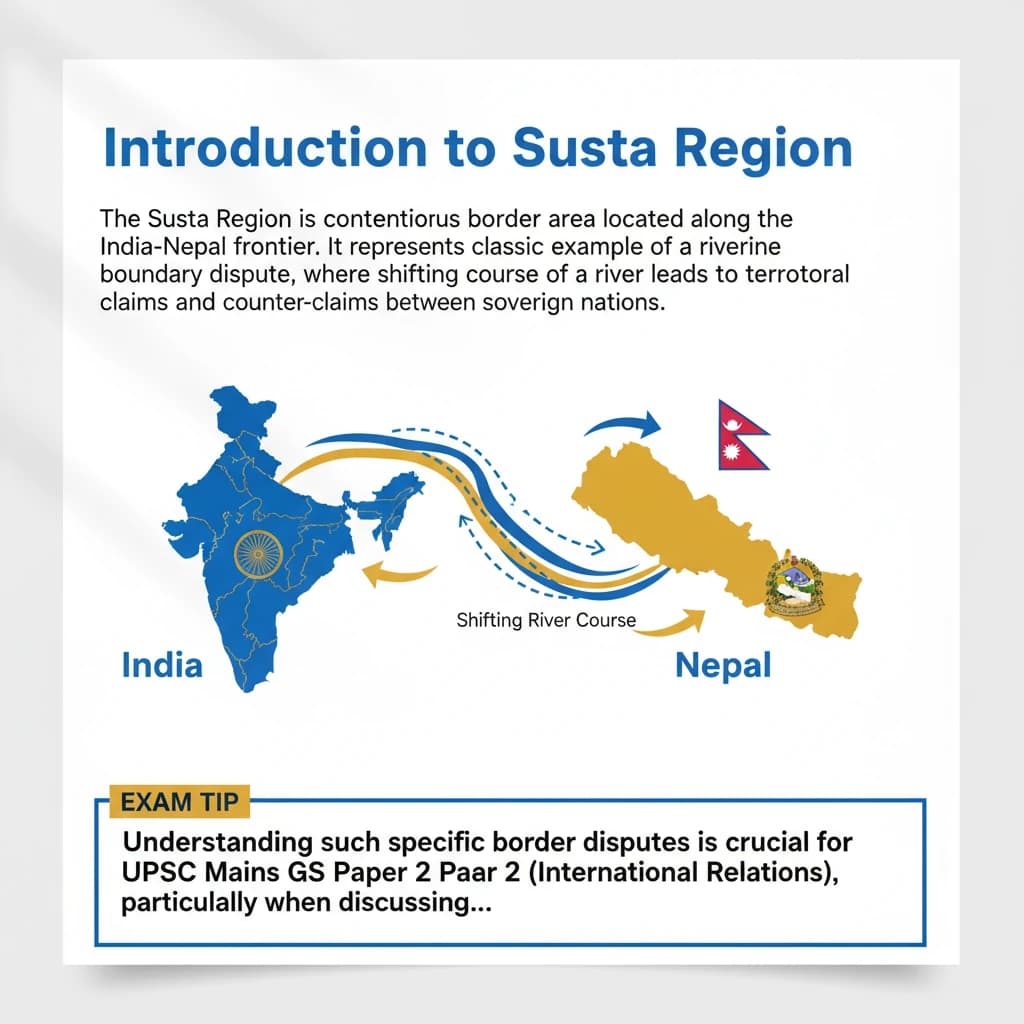
Introduction to Susta Region
The Susta Region is a contentious border area located along the India-Nepal frontier. It represents a classic example of a riverine boundary dispute, where the shifting course of a river leads to territorial claims and counter-claims between sovereign nations.
Understanding such specific border disputes is crucial for UPSC Mains GS Paper 2 (International Relations), particularly when discussing India's relations with its neighbours and border management challenges.
Treaty of Sugauli and Boundary Definition
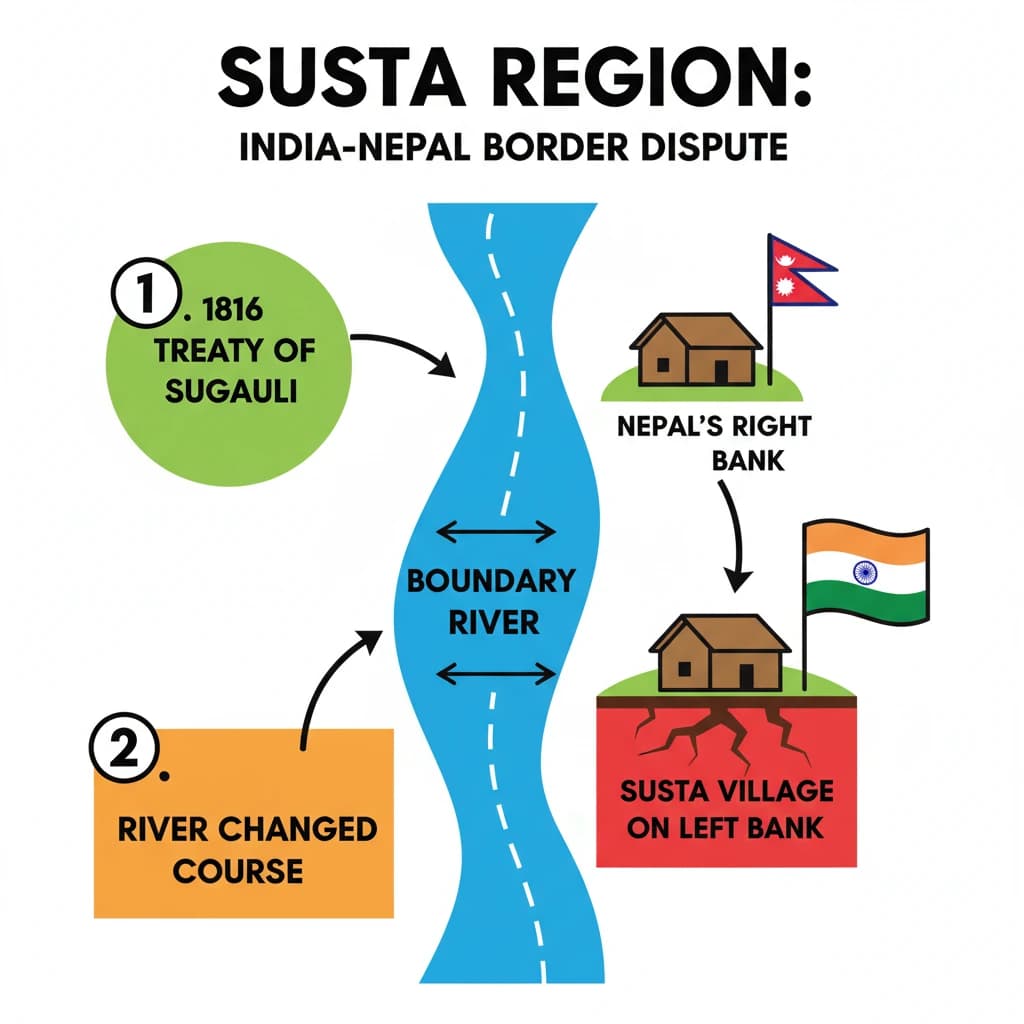
The international boundary between India and Nepal in this sector was historically defined by the Treaty of Sugauli. This significant treaty, signed in 1816, designated the Gandak River as the natural border.
Treaty Provision: The right bank of the Gandak River was stipulated to be under Nepal's control, while the left bank fell under India's jurisdiction.
Initial Status of Susta Village
When the Treaty of Sugauli was initially signed, Susta village was situated on the right bank of the Gandak River. Consequently, based on the treaty's demarcation, Susta was unequivocally recognized as a part of Nepal's territory.
Gandak River's Course Change
Over several decades, the dynamic nature of the Gandak River led to a significant geographical alteration. The river gradually changed its course, a natural phenomenon known as river migration or avulsion.
This change in the river's path resulted in Susta village shifting its position relative to the river. It moved from its original location on the right bank to what is now considered the left bank of the river.
Current Status of Susta Village
Due to the aforementioned change in the Gandak River's course, Susta village is now geographically located on the left bank. As per the original terms of the Treaty of Sugauli, the left bank falls under India's control.
Currently, the Susta region, including the village, is under India's administrative control, leading to an ongoing border dispute with Nepal.
💡 Key Takeaways
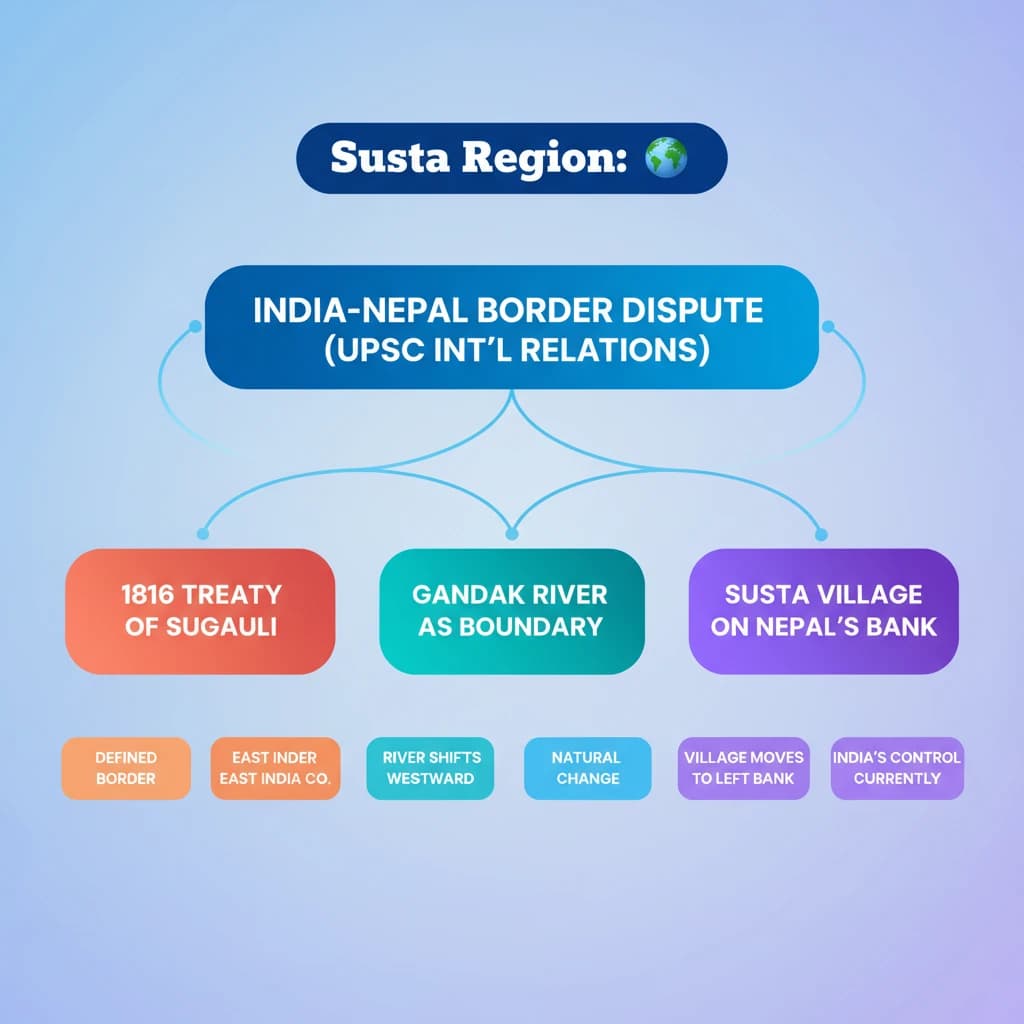
- •Susta Region is an India-Nepal border dispute.
- •The 1816 Treaty of Sugauli defined the Gandak River as the boundary.
- •Susta village was initially on Nepal's right bank.
- •The Gandak River changed its course, moving Susta to the left bank.
- •Susta is currently under India's control, leading to a dispute.
- •Riverine boundaries are prone to disputes due to natural course changes.
🧠 Memory Techniques
95% Verified Content
📚 Reference Sources
•Ministry of External Affairs, Government of India (Official Statements)
•Nepal's Ministry of Foreign Affairs (Official Statements)
•Academic papers on India-Nepal border disputes and riverine boundaries