Loading page, please wait…
What are the Key Highlights of the `22nd India-Russia Annual Summit? - UPSC International Relations
What is What are the Key Highlights of the `22nd India-Russia Annual Summit? in UPSC International Relations?
What are the Key Highlights of the `22nd India-Russia Annual Summit? is a key topic under International Relations for UPSC Civil Services Examination. Key points include: PM Modi received Russia's highest civilian honour, the 'Order of Saint Andrew the Apostle', in 2019.. The award recognized Modi's role in strengthening India-Russia strategic partnership and friendly relations.. The Order was established by Tsar Peter the Great in 1698 and reinstated in 1998, named after Russia's patron saint.. Understanding this topic is essential for both UPSC Prelims and Mains preparation.
Why is What are the Key Highlights of the `22nd India-Russia Annual Summit? important for UPSC exam?
What are the Key Highlights of the `22nd India-Russia Annual Summit? is a Medium-level topic in UPSC International Relations. It is tested in both Prelims (factual MCQs) and Mains (analytical answer writing). Previous year UPSC questions have frequently covered aspects of What are the Key Highlights of the `22nd India-Russia Annual Summit?, making it essential for comprehensive IAS preparation.
How to prepare What are the Key Highlights of the `22nd India-Russia Annual Summit? for UPSC?
To prepare What are the Key Highlights of the `22nd India-Russia Annual Summit? for UPSC: (1) Study the comprehensive notes covering all key concepts on Vaidra. (2) Practice previous year questions on this topic. (3) Connect it with current affairs using daily updates. (4) Revise using key takeaways and mind maps available for International Relations. (5) Write practice answers linking What are the Key Highlights of the `22nd India-Russia Annual Summit? to related GS Paper topics.
Key takeaways of What are the Key Highlights of the `22nd India-Russia Annual Summit? for UPSC
- PM Modi received Russia's highest civilian honour, the 'Order of Saint Andrew the Apostle', in 2019.
- The award recognized Modi's role in strengthening India-Russia strategic partnership and friendly relations.
- The Order was established by Tsar Peter the Great in 1698 and reinstated in 1998, named after Russia's patron saint.
- Other notable recipients include Chinese President Xi Jinping and former Kazakh President Nursultan Nazarbayev.
- Such diplomatic honours are crucial for reinforcing bilateral trust and projecting soft power in international relations.
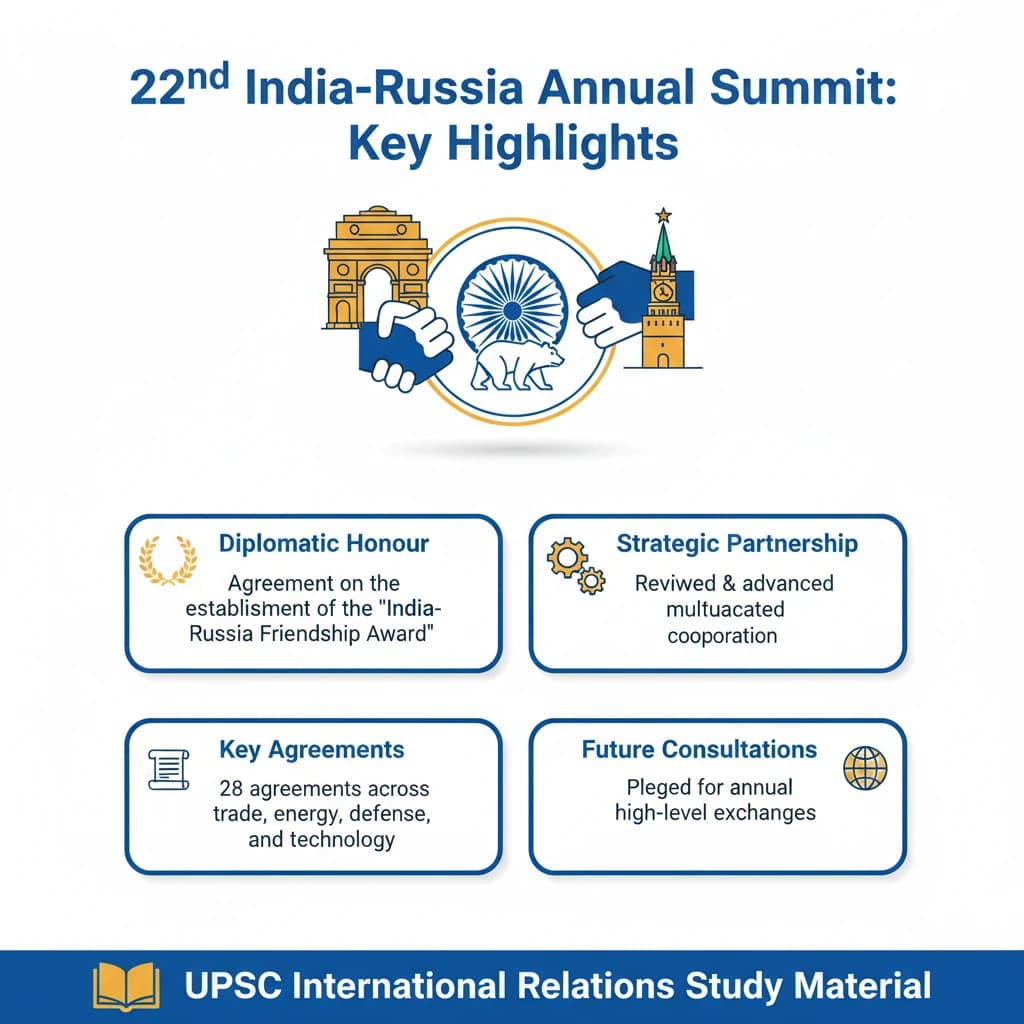
What are the Key Highlights of the `22nd India-Russia Annual Summit?
Medium⏱️ 5 min read
international relations
📖 Introduction
Overview of the 22nd India-Russia Annual Summit's Diplomatic Achievements
The 22nd India-Russia Annual Summit marked a significant moment in the bilateral relationship, highlighted by a prestigious diplomatic honour. These summits are crucial platforms for reviewing and advancing the multifaceted strategic partnership between India and Russia.
Such high-level exchanges underscore the enduring nature of the India-Russia strategic partnership, covering areas from defence to energy and space cooperation.
The Order of Saint Andrew the Apostle
During the summit, President Vladimir Putin of Russia conferred Russia’s highest civilian honour, the “Order of Saint Andrew the Apostle,” upon Prime Minister Narendra Modi.
The Order of Saint Andrew the Apostle was originally established by Tsar Peter the Great in 1698. It was later reinstated in 1998, maintaining its historical significance and prestige.
The award features a distinctive double-headed eagle emblem and is presented with a light blue silk moire ribbon. Its design reflects centuries of Russian imperial tradition and symbolism.
The honour is named after Saint Andrew, who is revered as the patron saint of Russia and Scotland. He is historically recognized for his pivotal role in spreading Christianity across various regions of Europe and Asia.
Prime Minister Modi's Recognition
Prime Minister Modi received this distinguished award for his exceptional contributions to promoting the strategic partnership and fostering friendly relations between Russia and India.
The announcement of this honour was made in 2019, acknowledging Modi’s pivotal role in significantly enhancing bilateral cooperation across various sectors. This recognition highlights the personal commitment and leadership involved in strengthening international ties.
Other Notable Recipients
The Order of Saint Andrew the Apostle is reserved for individuals of immense international standing. Other foreign leaders who have been honoured with this prestigious award include Chinese President Xi Jinping and former Kazakh President Nursultan Nazarbayev.
Understanding such diplomatic awards is important for UPSC Mains GS-II (International Relations). It showcases the depth of bilateral ties and the importance of individual leadership in foreign policy.
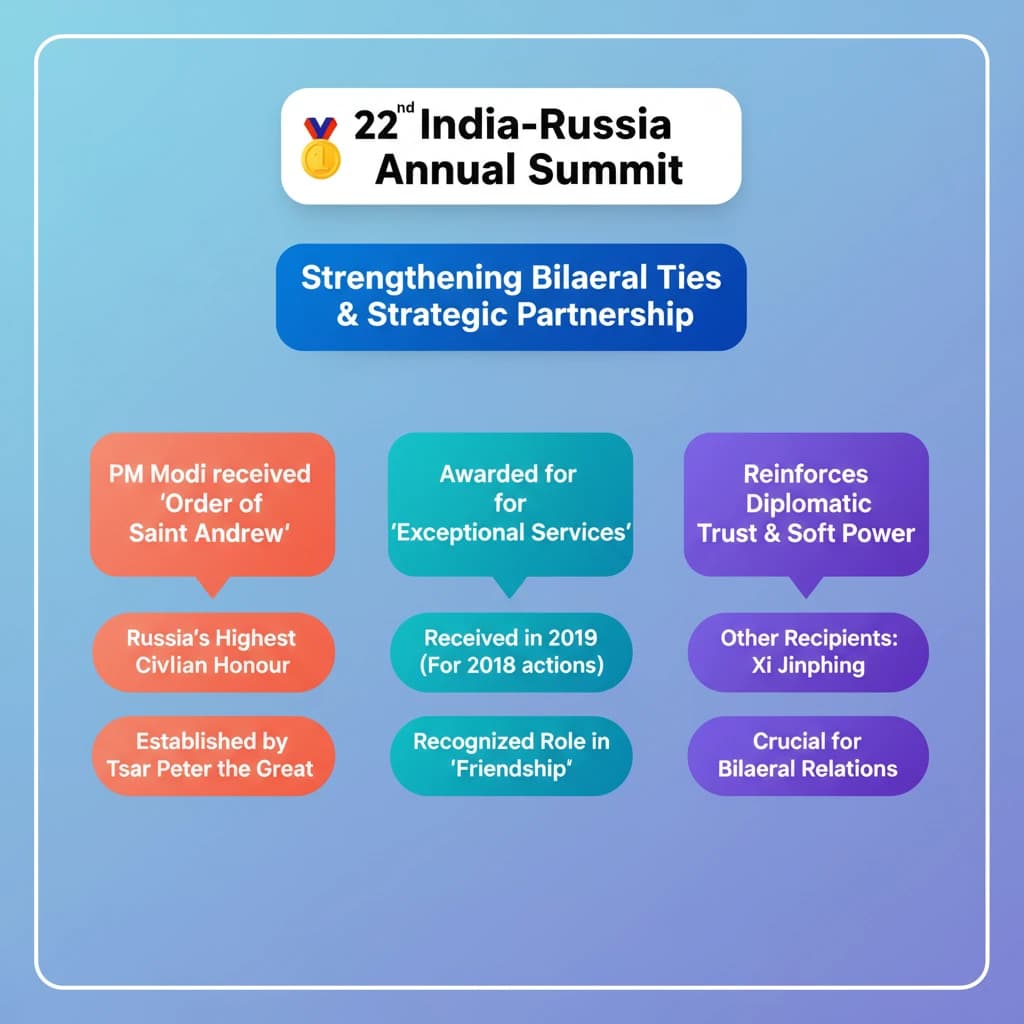
💡 Key Takeaways
- •PM Modi received Russia's highest civilian honour, the 'Order of Saint Andrew the Apostle', in 2019.
- •The award recognized Modi's role in strengthening India-Russia strategic partnership and friendly relations.
- •The Order was established by Tsar Peter the Great in 1698 and reinstated in 1998, named after Russia's patron saint.
- •Other notable recipients include Chinese President Xi Jinping and former Kazakh President Nursultan Nazarbayev.
- •Such diplomatic honours are crucial for reinforcing bilateral trust and projecting soft power in international relations.
🧠 Memory Techniques
95% Verified Content