Loading page, please wait…
What are the Key Highlights of the BIMSTEC Foreign Ministers’ Retreat? - UPSC International Relations
What is What are the Key Highlights of the BIMSTEC Foreign Ministers’ Retreat? in UPSC International Relations?
What are the Key Highlights of the BIMSTEC Foreign Ministers’ Retreat? is a key topic under International Relations for UPSC Civil Services Examination. Key points include: BIMSTEC retreat focused on urgent regional/global challenges and cooperation.. The Myanmar crisis significantly impacts regional stability and developmental projects.. Discussions included potential for broader humanitarian aid within the region.. Understanding this topic is essential for both UPSC Prelims and Mains preparation.
Why is What are the Key Highlights of the BIMSTEC Foreign Ministers’ Retreat? important for UPSC exam?
What are the Key Highlights of the BIMSTEC Foreign Ministers’ Retreat? is a Medium-level topic in UPSC International Relations. It is tested in both Prelims (factual MCQs) and Mains (analytical answer writing). Previous year UPSC questions have frequently covered aspects of What are the Key Highlights of the BIMSTEC Foreign Ministers’ Retreat?, making it essential for comprehensive IAS preparation.
How to prepare What are the Key Highlights of the BIMSTEC Foreign Ministers’ Retreat? for UPSC?
To prepare What are the Key Highlights of the BIMSTEC Foreign Ministers’ Retreat? for UPSC: (1) Study the comprehensive notes covering all key concepts on Vaidra. (2) Practice previous year questions on this topic. (3) Connect it with current affairs using daily updates. (4) Revise using key takeaways and mind maps available for International Relations. (5) Write practice answers linking What are the Key Highlights of the BIMSTEC Foreign Ministers’ Retreat? to related GS Paper topics.
Key takeaways of What are the Key Highlights of the BIMSTEC Foreign Ministers’ Retreat? for UPSC
- BIMSTEC retreat focused on urgent regional/global challenges and cooperation.
- The Myanmar crisis significantly impacts regional stability and developmental projects.
- Discussions included potential for broader humanitarian aid within the region.
- India's current humanitarian assistance is limited to displaced populations in Mizoram.
- Emphasis on capacity building and economic cooperation is crucial for BIMSTEC's future.
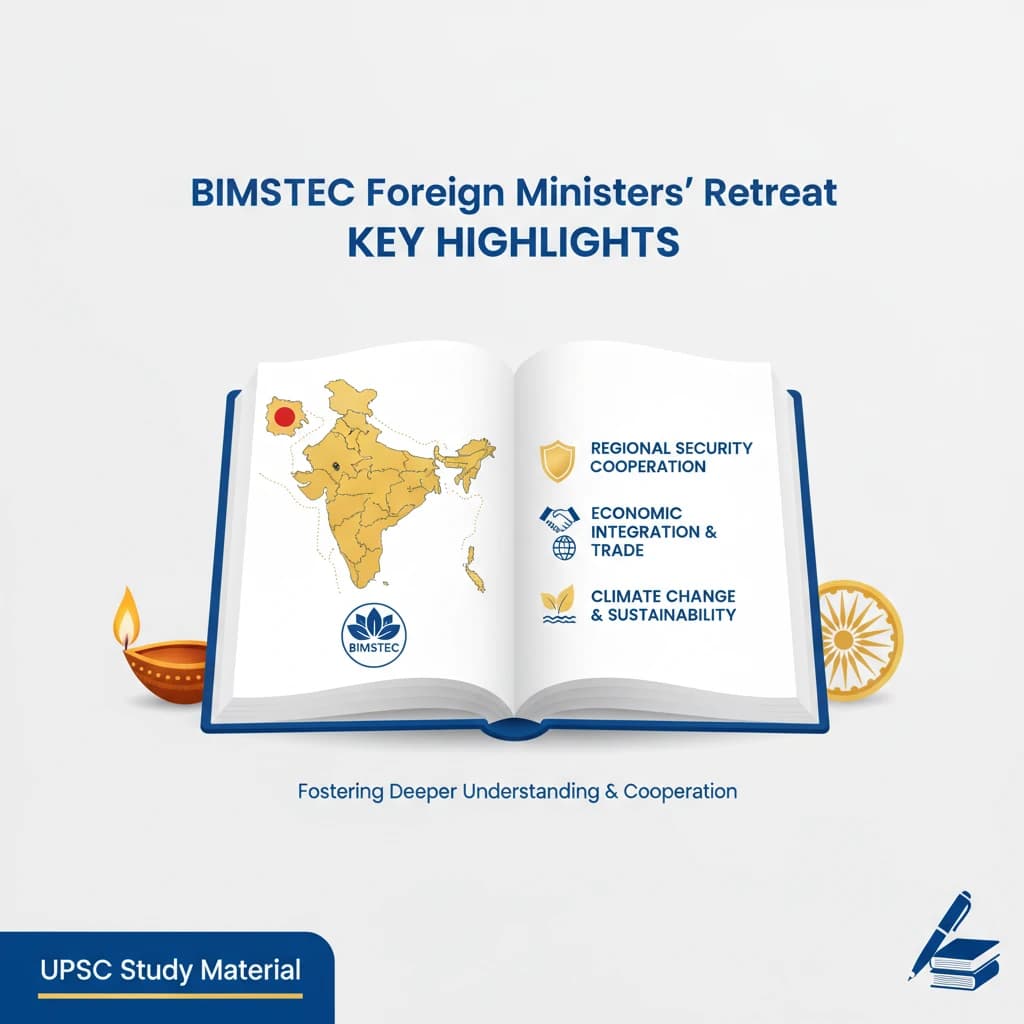
What are the Key Highlights of the BIMSTEC Foreign Ministers’ Retreat?
Medium⏱️ 7 min read
international relations
📖 Introduction
Introduction to the BIMSTEC Foreign Ministers’ Retreat
The recent BIMSTEC Foreign Ministers’ Retreat brought together top diplomats from member nations to discuss pressing regional and global issues. This informal gathering aimed to foster deeper understanding and cooperation among the Bay of Bengal Initiative for Multi-Sectoral Technical and Economic Cooperation countries.
BIMSTEC is a regional organization comprising seven member states lying in the littoral and adjacent areas of the Bay of Bengal. These include Bangladesh, Bhutan, India, Myanmar, Nepal, Sri Lanka, and Thailand.
Global and Regional Developments: Urgent Need for Cooperation
The retreat highlighted the critical need to address long-standing challenges through enhanced capacity building and robust economic cooperation. This urgency stems from the prevailing global and regional developments impacting the member states.
Discussions underscored that current geopolitical shifts and economic pressures necessitate a united front. Strengthening internal mechanisms is crucial for BIMSTEC to navigate these complex scenarios effectively.
The Ministers emphasized leveraging existing tools and frameworks within BIMSTEC to confront shared challenges, promoting collective resilience and regional stability.
The Myanmar Crisis and Regional Stability
A significant portion of the discussions focused on the ongoing Myanmar crisis and its profound impact on regional stability. The internal situation in Myanmar poses considerable challenges to the entire BIMSTEC region.
This instability directly affects various developmental and connectivity projects designed to strengthen ties among member states. Projects involving Nepal, Bhutan, India, Bangladesh, Myanmar, and Thailand face significant hurdles due to the volatile environment.
The Myanmar crisis is a recurring theme in UPSC exams, particularly concerning regional security and India's 'Act East' policy. Understand its multifaceted impact on organizations like BIMSTEC for GS Paper 2.
Humanitarian Assistance Discussions
The retreat also included conversations regarding the potential for broader humanitarian aid within the region. This reflects a growing concern for populations affected by crises, including those in Myanmar.
Currently, India's assistance in this context has been primarily limited. It has focused on providing support to displaced populations and military personnel who have sought refuge in Mizoram, a northeastern Indian state bordering Myanmar.
💡 Key Takeaways
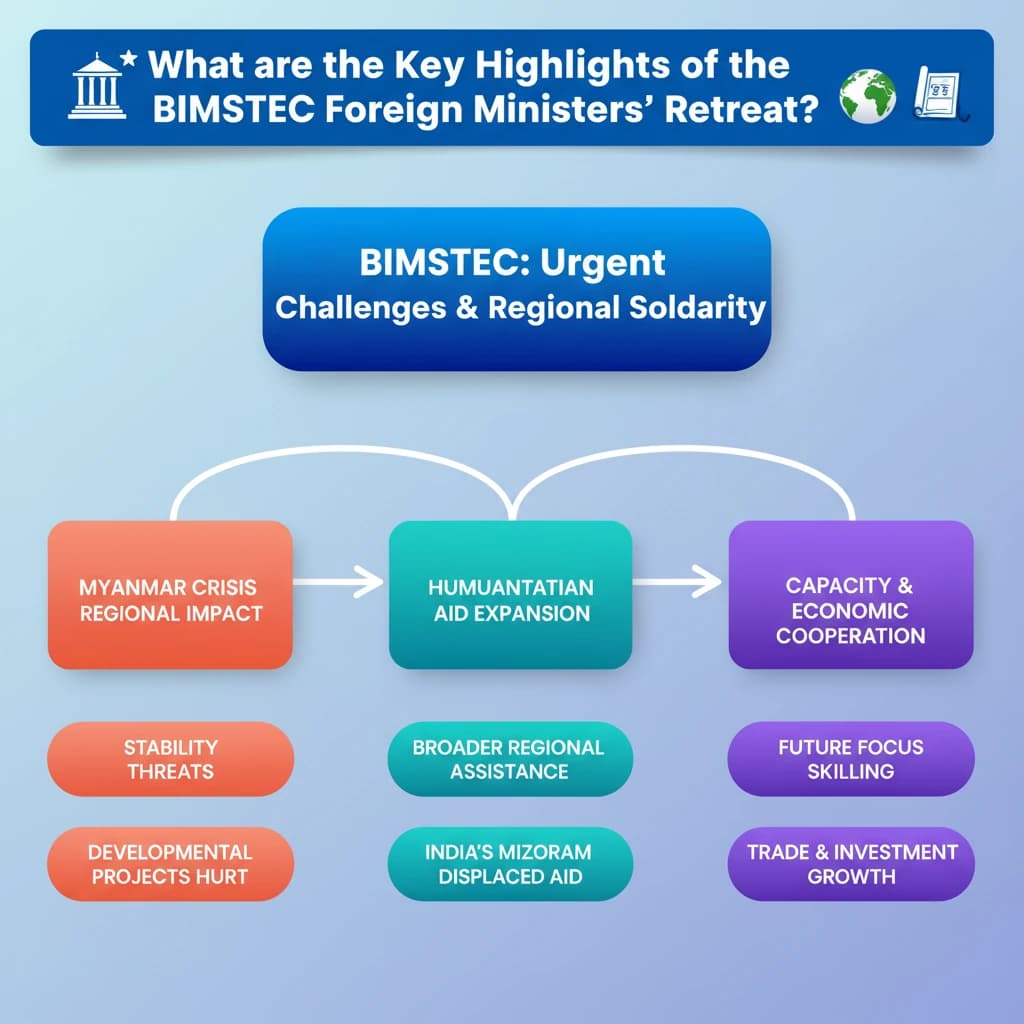
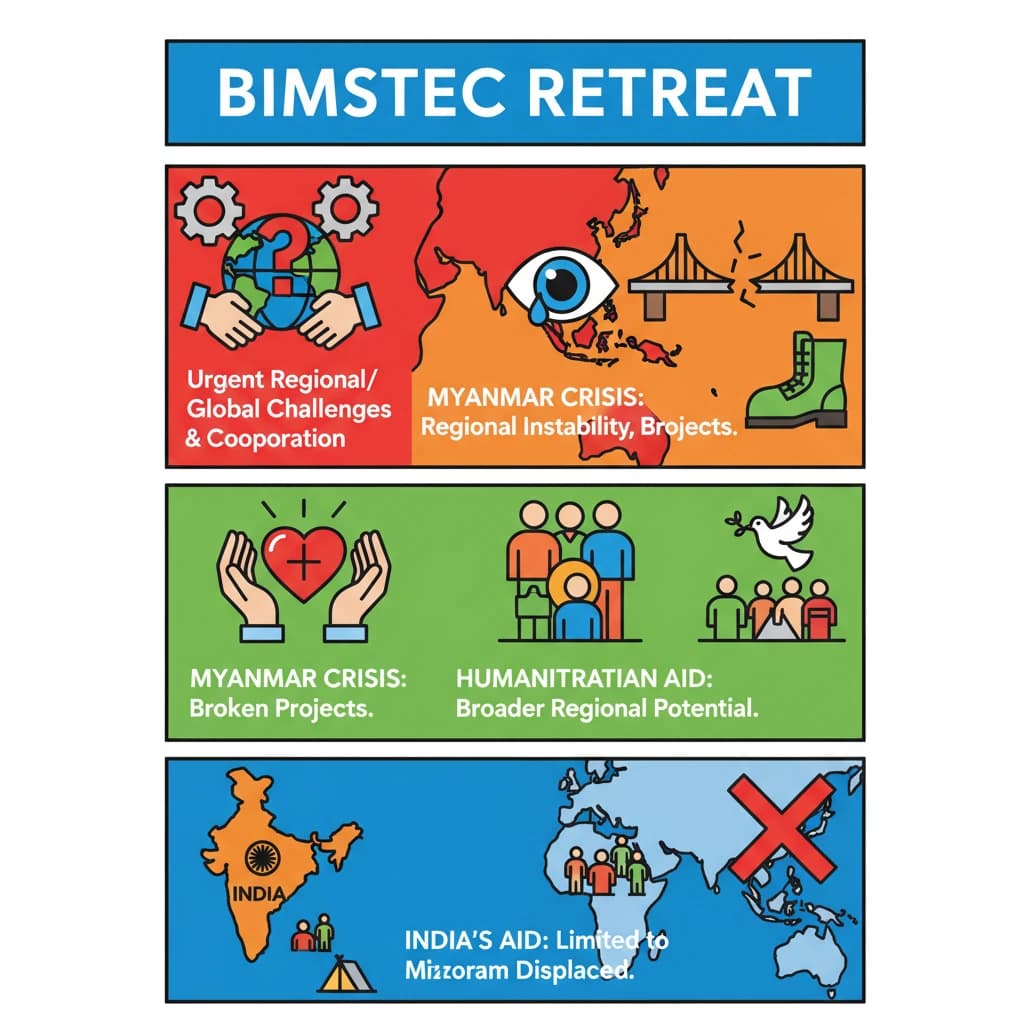
- •BIMSTEC retreat focused on urgent regional/global challenges and cooperation.
- •The Myanmar crisis significantly impacts regional stability and developmental projects.
- •Discussions included potential for broader humanitarian aid within the region.
- •India's current humanitarian assistance is limited to displaced populations in Mizoram.
- •Emphasis on capacity building and economic cooperation is crucial for BIMSTEC's future.
🧠 Memory Techniques
95% Verified Content