Loading page, please wait…
What is the International Criminal Court? - UPSC International Relations
What is What is the International Criminal Court? in UPSC International Relations?
What is the International Criminal Court? is a key topic under International Relations for UPSC Civil Services Examination. Key points include: The International Criminal Court (ICC) is the world's first permanent international criminal court.. It is governed by an international treaty known as 'The Rome Statute'.. The Rome Statute was adopted in 1998 by 120 States.. Understanding this topic is essential for both UPSC Prelims and Mains preparation.
Why is What is the International Criminal Court? important for UPSC exam?
What is the International Criminal Court? is a Easy-level topic in UPSC International Relations. It is tested in both Prelims (factual MCQs) and Mains (analytical answer writing). Previous year UPSC questions have frequently covered aspects of What is the International Criminal Court?, making it essential for comprehensive IAS preparation.
How to prepare What is the International Criminal Court? for UPSC?
To prepare What is the International Criminal Court? for UPSC: (1) Study the comprehensive notes covering all key concepts on Vaidra. (2) Practice previous year questions on this topic. (3) Connect it with current affairs using daily updates. (4) Revise using key takeaways and mind maps available for International Relations. (5) Write practice answers linking What is the International Criminal Court? to related GS Paper topics.
Key takeaways of What is the International Criminal Court? for UPSC
- The International Criminal Court (ICC) is the world's first permanent international criminal court.
- It is governed by an international treaty known as 'The Rome Statute'.
- The Rome Statute was adopted in 1998 by 120 States.
- The ICC aims to create a more just world by prosecuting individuals for the most serious international crimes.
- Its jurisdiction covers genocide, crimes against humanity, war crimes, and the crime of aggression.
What is the International Criminal Court?
Easy⏱️ 4 min read
international relations
📖 Introduction
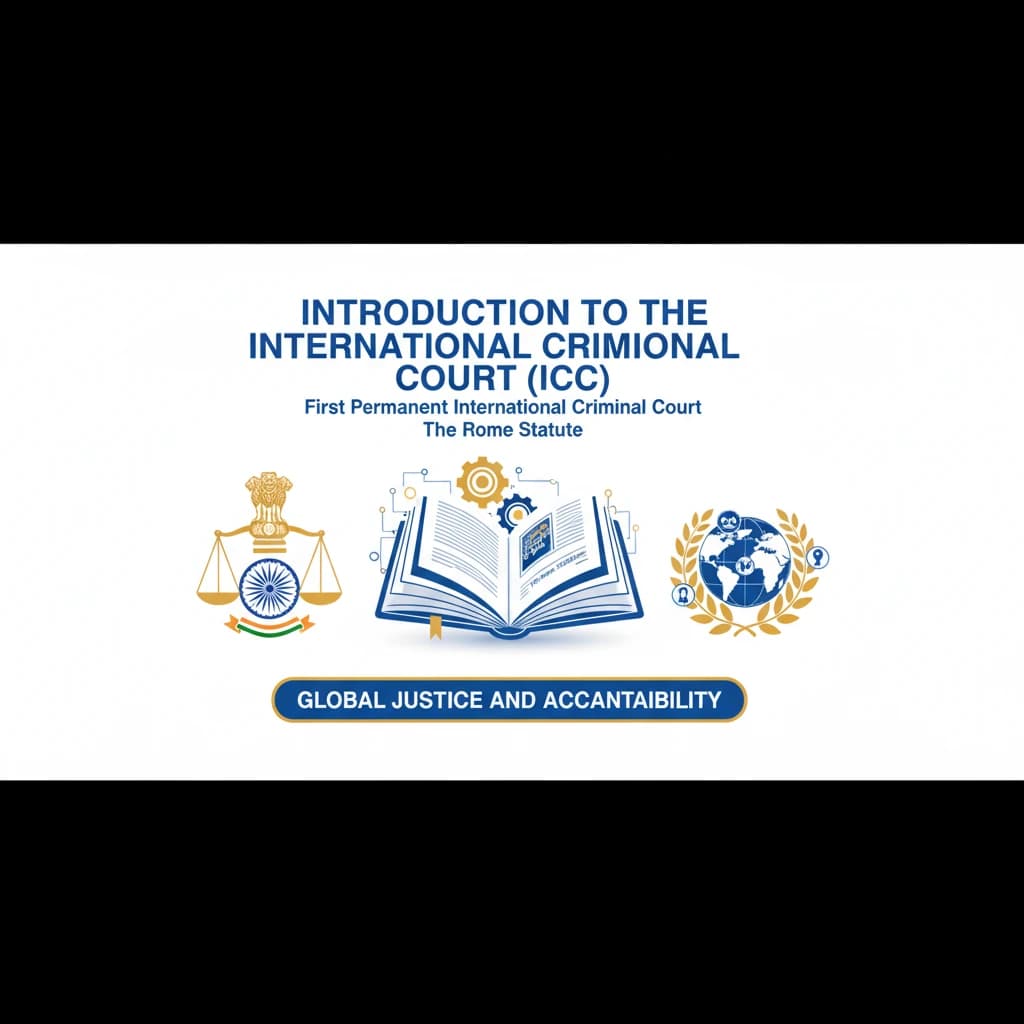
Introduction to the International Criminal Court (ICC)
The International Criminal Court (ICC) stands as the world's first permanent international criminal court. Its establishment marked a significant step towards global justice and accountability.
This judicial body operates under the framework of an international treaty. This foundational document is known as ‘The Rome Statute’, which outlines its jurisdiction, structure, and functions.
Key Fact: The ICC is a court of last resort, meaning it only intervenes when national courts are unwilling or unable to genuinely investigate or prosecute.
The Rome Statute: Founding Treaty
The creation of the ICC was formalized with the adoption of The Rome Statute. This landmark treaty was embraced by a significant number of states globally.
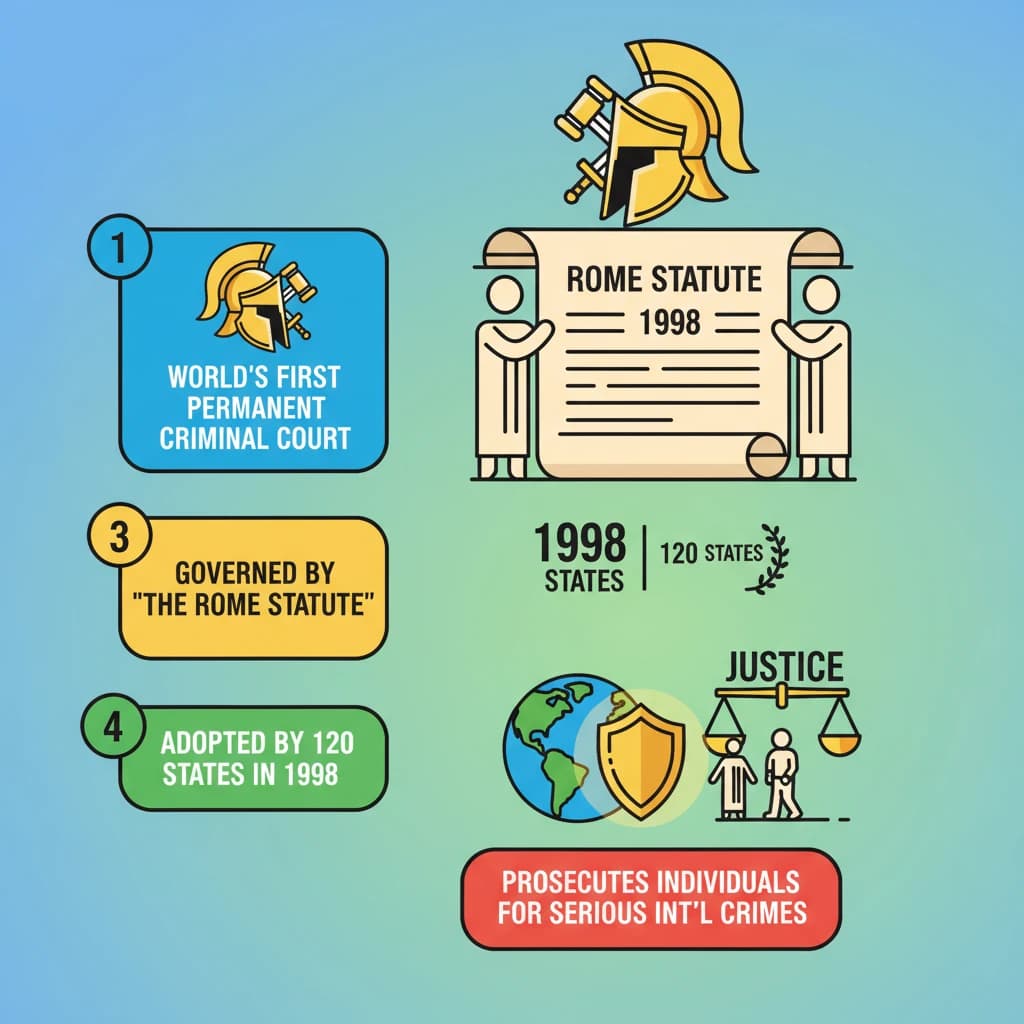
In 1998, a total of 120 States came together to adopt The Rome Statute. This collective action reflected a shared commitment to fostering a more just and accountable international system.
Significance: The adoption by 120 States underscores a broad international consensus on the need for a permanent body to prosecute grave international crimes, thereby contributing to a more just world.
💡 Key Takeaways
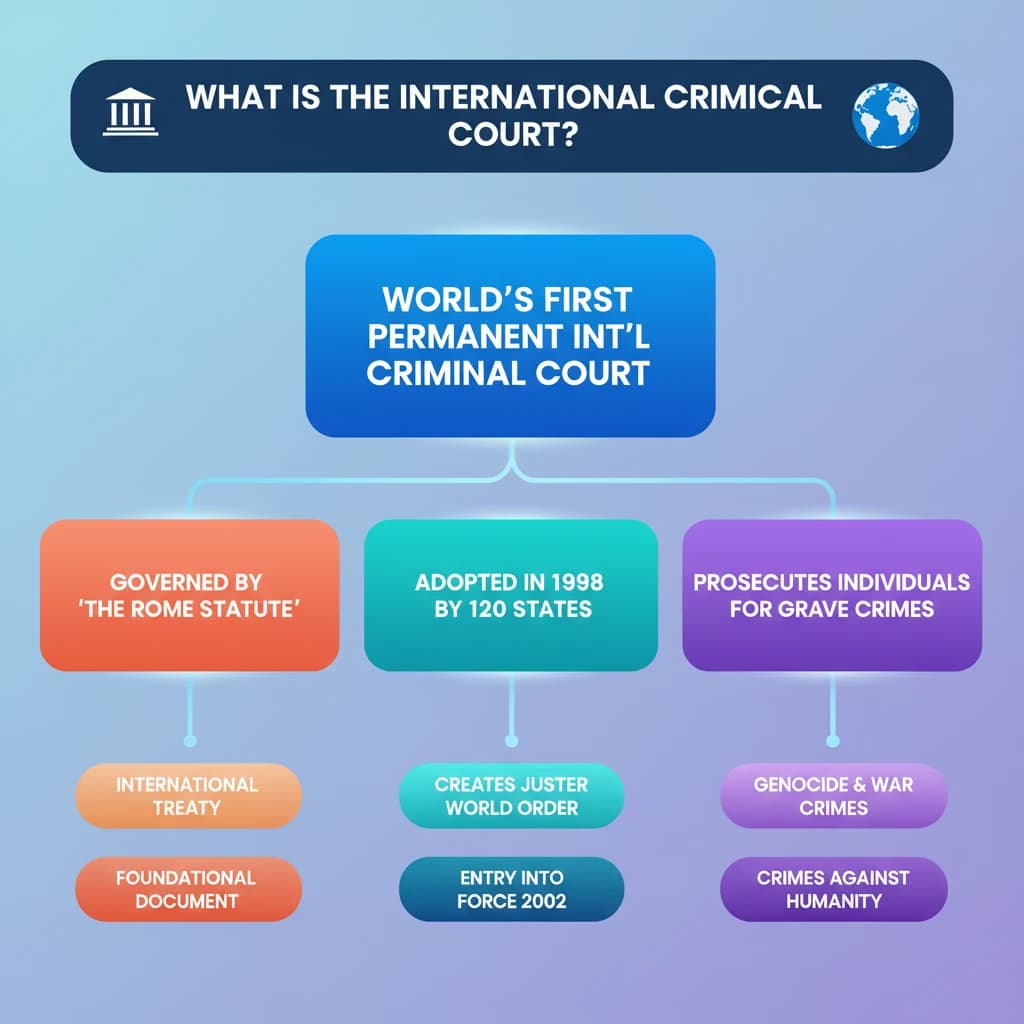
- •The International Criminal Court (ICC) is the world's first permanent international criminal court.
- •It is governed by an international treaty known as 'The Rome Statute'.
- •The Rome Statute was adopted in 1998 by 120 States.
- •The ICC aims to create a more just world by prosecuting individuals for the most serious international crimes.
- •Its jurisdiction covers genocide, crimes against humanity, war crimes, and the crime of aggression.
🧠 Memory Techniques
98% Verified Content
📚 Reference Sources
•Official Website of the International Criminal Court (ICC)
•United Nations Treaty Collection (for Rome Statute details)