Loading page, please wait…
Why is Bhutan Important for India? - UPSC International Relations
What is Why is Bhutan Important for India? in UPSC International Relations?
Why is Bhutan Important for India? is a key topic under International Relations for UPSC Civil Services Examination. Key points include: Bhutan is a crucial buffer state between India and China, vital for India's security.. The 2017 Doklam standoff underscored Bhutan's strategic importance and trust in India.. India provides extensive development assistance, including Rs. 45 billion for Bhutan's 12th FYP.. Understanding this topic is essential for both UPSC Prelims and Mains preparation.
Why is Why is Bhutan Important for India? important for UPSC exam?
Why is Bhutan Important for India? is a Medium-level topic in UPSC International Relations. It is tested in both Prelims (factual MCQs) and Mains (analytical answer writing). Previous year UPSC questions have frequently covered aspects of Why is Bhutan Important for India?, making it essential for comprehensive IAS preparation.
How to prepare Why is Bhutan Important for India? for UPSC?
To prepare Why is Bhutan Important for India? for UPSC: (1) Study the comprehensive notes covering all key concepts on Vaidra. (2) Practice previous year questions on this topic. (3) Connect it with current affairs using daily updates. (4) Revise using key takeaways and mind maps available for International Relations. (5) Write practice answers linking Why is Bhutan Important for India? to related GS Paper topics.
Key takeaways of Why is Bhutan Important for India? for UPSC
- Bhutan is a crucial buffer state between India and China, vital for India's security.
- The 2017 Doklam standoff underscored Bhutan's strategic importance and trust in India.
- India provides extensive development assistance, including Rs. 45 billion for Bhutan's 12th FYP.
- Key Indian initiatives like ITEC and Lines of Credit (LOCs) support Bhutan's capacity building and infrastructure.
- The relationship is a cornerstone of India's 'Neighbourhood First' policy, ensuring regional stability and shared prosperity.
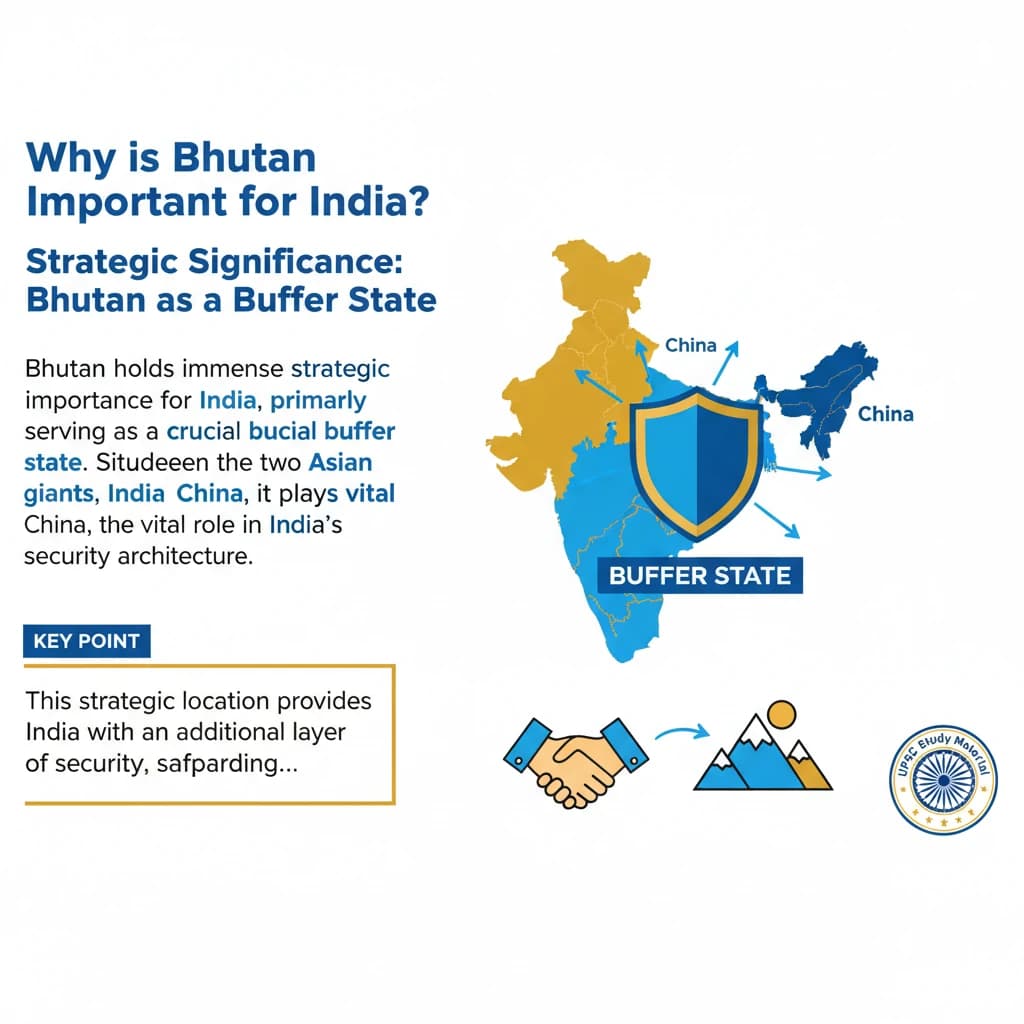
Why is Bhutan Important for India?
Medium⏱️ 8 min read
international relations
📖 Introduction
Strategic Significance: Bhutan as a Buffer State
Bhutan holds immense strategic importance for India, primarily serving as a crucial buffer state. Situated between the two Asian giants, India and China, it plays a vital role in India's security architecture.
This strategic location provides India with an additional layer of security, safeguarding against potential threats emanating from its northern borders, particularly concerning the contested India-China border.
Role in Doklam Standoff (2017)
The strategic importance of Bhutan was vividly demonstrated during the 2017 Doklam standoff. This incident involved a military confrontation between India and China over a disputed plateau near the tri-junction.
During this critical period, Bhutan played a pivotal role by allowing Indian troops to enter its territory. This facilitated India's resistance against Chinese incursions, highlighting the deep trust and strategic alignment between the two nations.
Economic Development and Bilateral Assistance
India's full support for the socio-economic development of Bhutan is a cornerstone of their bilateral relations. This partnership is driven by shared priorities to boost cross-border connectivity and expand ties in areas like trade, infrastructure, and energy.
The Government of India committed a substantial Rs. 45 billion to Bhutan's 12th Five Year Plan (2018-2023). A significant portion of this, Rs. 28 billion, was allocated for Project Tied Assistance (PTA).
The PTA program encompasses a wide array of projects. These initiatives span critical sectors aimed at improving the quality of life and fostering sustainable growth in Bhutan.
- Health: Enhancing healthcare facilities and services.
- Education: Supporting educational infrastructure and programs.
- Culture: Preserving and promoting Bhutanese cultural heritage.
- Livestock Development: Boosting agricultural productivity and food security.
- Infrastructure: Developing essential physical infrastructure like roads and bridges.
Capacity Building and Technical Cooperation
India's development partnership with friendly nations, including Bhutan, prioritizes capacity building. This involves a multi-faceted approach to skill development and knowledge transfer.
Assistance includes offering civilian and military training, conducting on-site programs, and deputing expert personnel. These efforts aim to strengthen human resources and institutional capabilities in partner countries.
The Indian Technical and Economic Cooperation (ITEC) Program, launched in 1964, is a flagship initiative. It extends to 160 partner countries, providing short-term training across diverse disciplines. The program witnessed significant growth, from 4,000 to 14,000 slots by 2019-20.
ITEC courses cover a broad spectrum of areas, contributing to holistic skill enhancement. These include Engineering, Climate Change, Health, and Women Empowerment, reflecting contemporary global needs.
Lines of Credit for Development Projects
Development assistance is also extended through concessional Lines of Credit (LOCs). These are provided by India under the Indian Development and Economic Assistance Scheme (IDEAS), channeled through the Exim Bank of India.
Globally, India has extended a total of 306 LOCs worth USD 30.59 billion to 65 countries. These financial instruments support crucial infrastructure and development projects.
Projects funded under LOCs cover vital sectors. These include transport, power generation, agriculture, manufacturing industries, healthcare, education, and capacity building, contributing to broad-based economic growth.
UPSC Insight: Understanding India's development assistance models like ITEC and LOCs, and their specific application in countries like Bhutan, is crucial for questions on India's foreign policy and regional diplomacy (GS Paper 2).
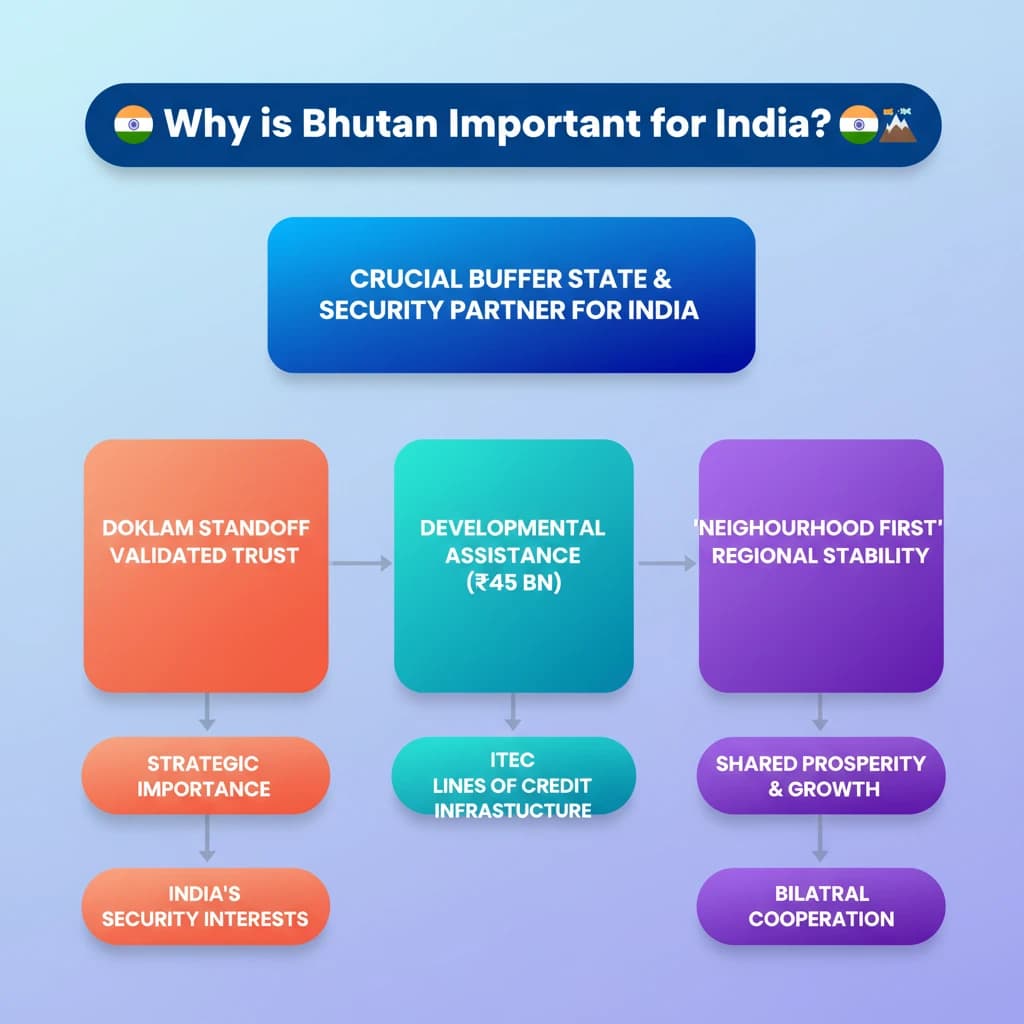
💡 Key Takeaways
- •Bhutan is a crucial buffer state between India and China, vital for India's security.
- •The 2017 Doklam standoff underscored Bhutan's strategic importance and trust in India.
- •India provides extensive development assistance, including Rs. 45 billion for Bhutan's 12th FYP.
- •Key Indian initiatives like ITEC and Lines of Credit (LOCs) support Bhutan's capacity building and infrastructure.
- •The relationship is a cornerstone of India's 'Neighbourhood First' policy, ensuring regional stability and shared prosperity.
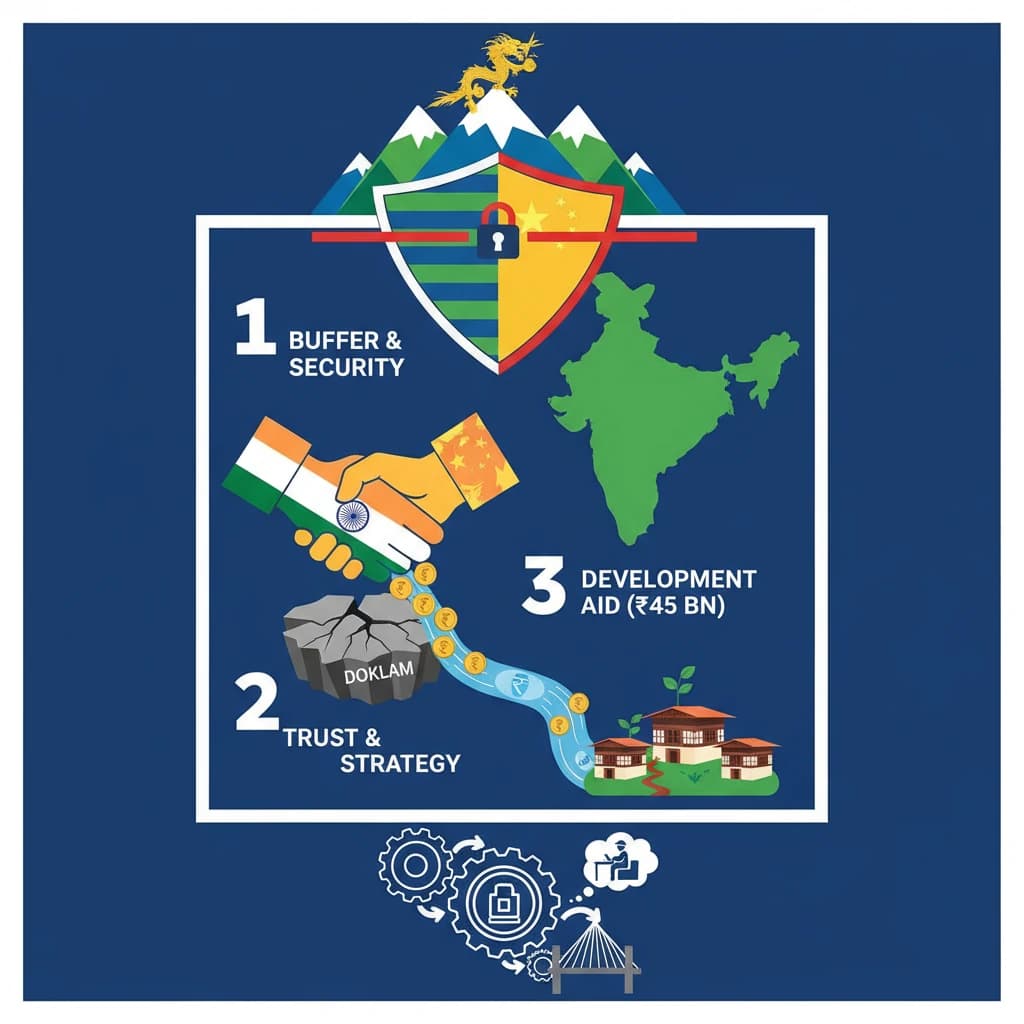
🧠 Memory Techniques
95% Verified Content
📚 Reference Sources
•Ministry of External Affairs (MEA), Government of India: Bilateral Relations - Bhutan
•Exim Bank of India: Lines of Credit (LOC) details
•Official documents related to Bhutan's 12th Five Year Plan