Loading page, please wait…
Vaidra Logo
Vaidra

Top 4 items + smart groups

UPSC GPT
New
Current Affairs
Daily Solutions
Daily Puzzle
Mains Evaluator

Version 2.0.0 • Built with ❤️ for UPSC aspirants

Loading...
Loading...
Loading...
Loading...
Loading...
Loading...
Loading...
Loading...
Loading...
Loading...
Loading...
Loading...
Loading...
Back
All Subjects

Topics

0 topics • 0 completed

Loading topics...
Loading...
Loading...
Loading...
Loading...
Loading...
Overall Progress0%
Precision Medicine and Biobanks - UPSC Science And Technology

Precision Medicine and Biobanks - UPSC Science And Technology

What is Precision Medicine and Biobanks in UPSC Science And Technology?

Precision Medicine and Biobanks is a key topic under Science And Technology for UPSC Civil Services Examination. Key points include: Precision medicine tailors healthcare based on individual genetics, environment, and lifestyle.. Biobanks are crucial repositories of biological samples, enabling research and discovery of genetic disorders.. Hematopoietic Stem Cells (HSCs) are vital for treating blood cancers and disorders through transplants.. Understanding this topic is essential for both UPSC Prelims and Mains preparation.

Why is Precision Medicine and Biobanks important for UPSC exam?

Precision Medicine and Biobanks is a Medium-level topic in UPSC Science And Technology. It is tested in both Prelims (factual MCQs) and Mains (analytical answer writing). Previous year UPSC questions have frequently covered aspects of Precision Medicine and Biobanks, making it essential for comprehensive IAS preparation.

How to prepare Precision Medicine and Biobanks for UPSC?

To prepare Precision Medicine and Biobanks for UPSC: (1) Study the comprehensive notes covering all key concepts on Vaidra. (2) Practice previous year questions on this topic. (3) Connect it with current affairs using daily updates. (4) Revise using key takeaways and mind maps available for Science And Technology. (5) Write practice answers linking Precision Medicine and Biobanks to related GS Paper topics.

Key takeaways of Precision Medicine and Biobanks for UPSC

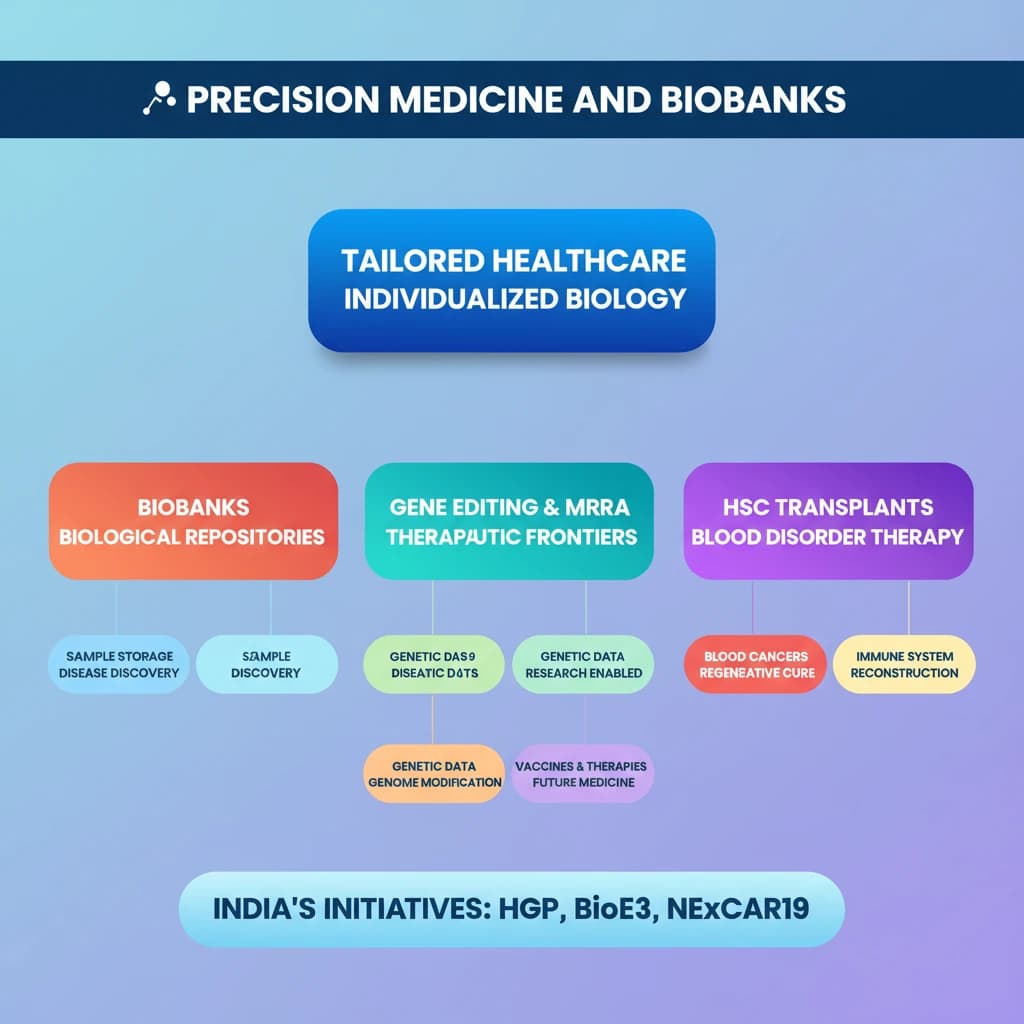
  • Precision medicine tailors healthcare based on individual genetics, environment, and lifestyle.
  • Biobanks are crucial repositories of biological samples, enabling research and discovery of genetic disorders.
  • Hematopoietic Stem Cells (HSCs) are vital for treating blood cancers and disorders through transplants.
  • Emerging technologies like gene editing (CRISPR) and mRNA therapeutics are transforming disease treatment and prevention.
  • India is actively advancing in precision medicine with initiatives like the Indian HGP, BioE3 policy, and indigenous CAR-T cell therapy (NexCAR19).
Precision Medicine and Biobanks

Precision Medicine and Biobanks

Medium⏱️ 7 min read✓ 100% Verified
science and technology

📖 Introduction

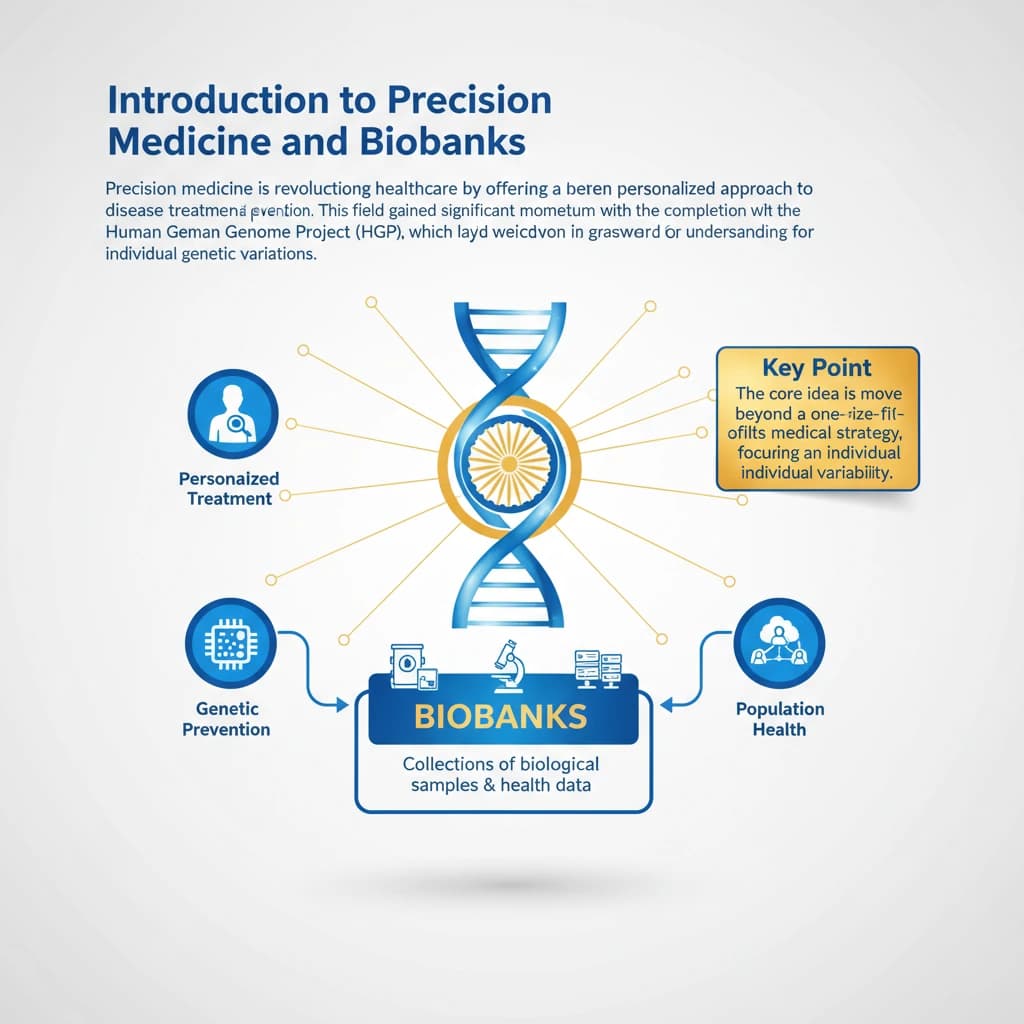
<h4>Introduction to Precision Medicine and Biobanks</h4><p><strong>Precision medicine</strong> is revolutionizing healthcare by offering a personalized approach to disease treatment and prevention. This field gained significant momentum with the completion of the <strong>Human Genome Project (HGP)</strong>, which laid the groundwork for understanding individual genetic variations.</p><div class='key-point-box'><p>The core idea is to move beyond a one-size-fits-all medical strategy, focusing instead on treatments tailored to each patient's unique biological makeup.</p></div><h4>What is Precision Medicine?</h4><p><strong>Precision medicine</strong> is an innovative strategy that considers individual differences in <strong>genetics</strong>, <strong>environment</strong>, and <strong>lifestyle</strong> to treat and prevent diseases. It emphasizes tailoring medical care to the unique characteristics of each patient.</p><p>This approach allows healthcare professionals and researchers to more accurately predict which treatments and preventive measures will be effective for specific groups of individuals.</p><div class='info-box'><p><strong>Scope:</strong> Precision medicine now encompasses genomics for diagnosing and treating a wide range of conditions, including <strong>cancers</strong>, <strong>chronic diseases</strong>, <strong>immunological disorders</strong>, <strong>cardiovascular diseases</strong>, and <strong>liver diseases</strong>.</p></div><h4>The Role of Biobanks in Precision Medicine</h4><p><strong>Biobanks</strong> are essential repositories that store various <strong>biological samples</strong>, such as <strong>DNA</strong>, <strong>cells</strong>, and <strong>tissues</strong>, for research purposes. Their diversity is crucial for ensuring that precision medicine benefits a broader spectrum of populations.</p><p>Recent studies utilizing data from biobanks have been instrumental in identifying previously undiagnosed <strong>rare genetic disorders</strong>, highlighting their critical role in advancing medical knowledge.</p><h4>Emerging Technologies Driving Precision Medicine</h4><p>Several cutting-edge technologies are accelerating the progress and application of precision medicine.</p><h5>Gene Editing Technologies</h5><p>Techniques like <strong>CRISPR</strong> (Clustered Regularly Interspaced Short Palindromic Repeats) have opened new avenues for correcting <strong>genetic defects</strong>. These advancements offer potential cures for conditions that were previously considered untreatable.</p><h5>mRNA Therapeutics</h5><p>The <strong>Covid-19 pandemic</strong> significantly demonstrated the power and versatility of <strong>mRNA technology</strong>. It allowed for the rapid development of highly effective vaccines, proving its potential for quick responses to global health crises.</p><div class='info-box'><p><strong>Nobel Prize:</strong> This innovative approach earned a <strong>Nobel Prize</strong>, underscoring its profound significance and transformative impact on modern medicine.</p></div><h4>Hematopoietic Stem Cells (HSCs) and their Therapeutic Role</h4><p><strong>Hematopoietic Stem Cells (HSCs)</strong> are immature cells with the remarkable ability to develop into all types of blood cells. This includes <strong>white blood cells</strong>, <strong>red blood cells</strong>, and <strong>platelets</strong>.</p><p>The therapeutic potential of HSCs was first explored for human use in the <strong>1950s</strong>, marking an early milestone in regenerative medicine.</p><div class='info-box'><p><strong>Location:</strong> <strong>Hematopoietic stem cells</strong> are primarily found in the <strong>peripheral blood</strong> and <strong>bone marrow</strong>, often referred to simply as <strong>blood stem cells</strong>.</p></div><h5>HSC Transplants</h5><p>An <strong>HSC transplant</strong> involves administering healthy hematopoietic stem cells to patients whose bone marrow is either dysfunctional or depleted. This procedure is critical for restoring the body's ability to produce blood cells.</p><p>These transplants are life-saving interventions, particularly for individuals suffering from various <strong>blood cancers</strong>. After a successful transplant, the donated stem cells help to re-establish the recipient’s blood cell production system.</p><h4>Precision Medicine in India: A Unique Approach</h4><p>India is actively contributing to the field of precision medicine, recognizing the unique genetic diversity of its vast population.</p><div class='key-point-box'><p>The <strong>Indian Human Genome Project (HGP)</strong> aims to identify and catalog genetic variations across various Indian groups. It plans to sequence the entire genomes of <strong>10,000 healthy individuals</strong> from all major ethnic communities nationwide.</p></div><div class='exam-tip-box'><p><strong>UPSC Insight:</strong> Understanding India's specific initiatives like the <strong>Indian HGP</strong> and its policy frameworks (e.g., <strong>BioE3</strong>) is crucial for questions on science and technology in <strong>GS Paper 3</strong>.</p></div>
Concept Diagram

💡 Key Takeaways

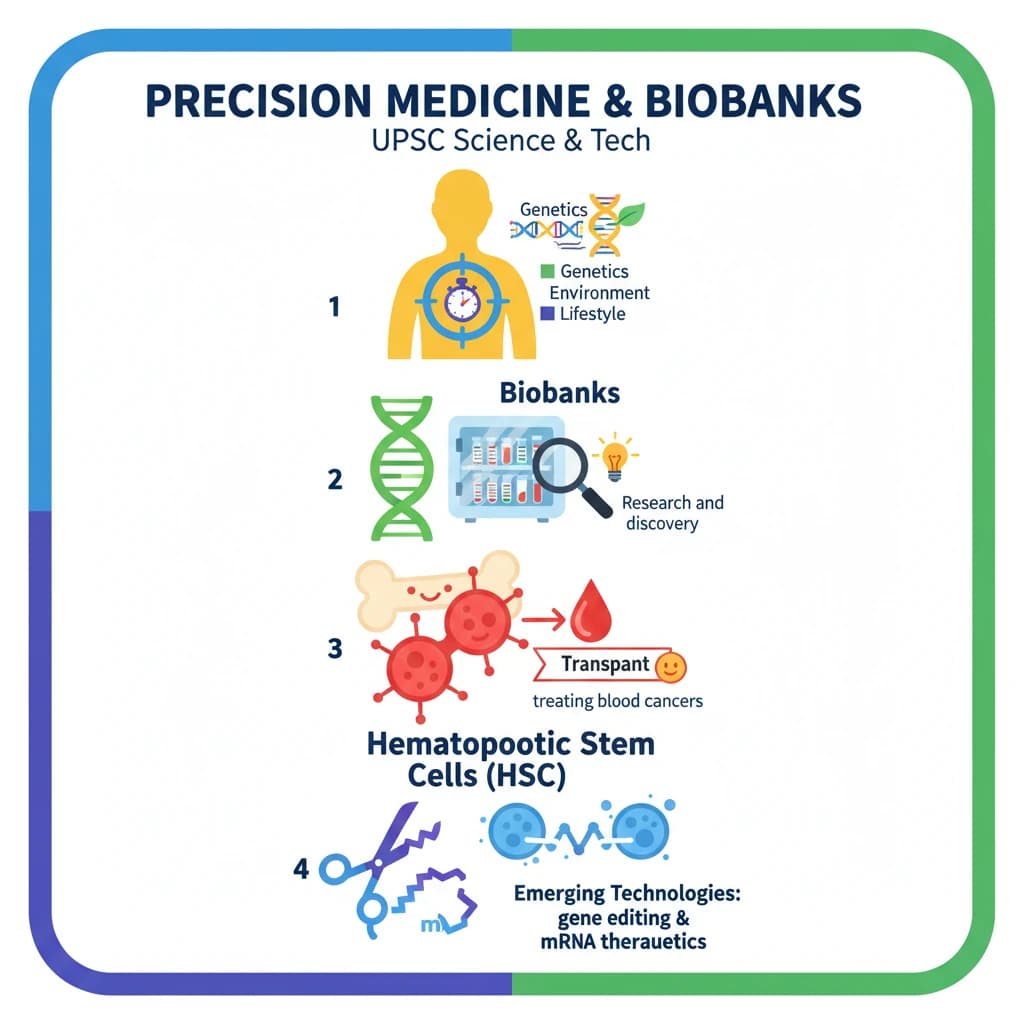
  • •Precision medicine tailors healthcare based on individual genetics, environment, and lifestyle.
  • •Biobanks are crucial repositories of biological samples, enabling research and discovery of genetic disorders.
  • •Hematopoietic Stem Cells (HSCs) are vital for treating blood cancers and disorders through transplants.
  • •Emerging technologies like gene editing (CRISPR) and mRNA therapeutics are transforming disease treatment and prevention.
  • •India is actively advancing in precision medicine with initiatives like the Indian HGP, BioE3 policy, and indigenous CAR-T cell therapy (NexCAR19).

🧠 Memory Techniques
Memory Aid
100% Verified Content

Related Topics

Loading related topics...
Explore:Science And Technology Topics·All Subjects·Daily Current Affairs·Editorial Analysis·Previous Year Questions·UPSC GPT