Loading page, please wait…
Vaidra Logo
Vaidra

Top 4 items + smart groups

UPSC GPT
New
Current Affairs
Daily Solutions
Daily Puzzle
Mains Evaluator

Version 2.0.0 • Built with ❤️ for UPSC aspirants

Loading...
Loading...
Loading...
Loading...
Loading...
Loading...
Loading...
Loading...
Loading...
Loading...
Loading...
Loading...
Loading...
Back
All Subjects

Topics

0 topics • 0 completed

Loading topics...
Loading...
Loading...
Loading...
Loading...
Loading...
Overall Progress0%

Efficacy of Liquid Nano Urea - UPSC Science And Technology

What is Efficacy of Liquid Nano Urea in UPSC Science And Technology?

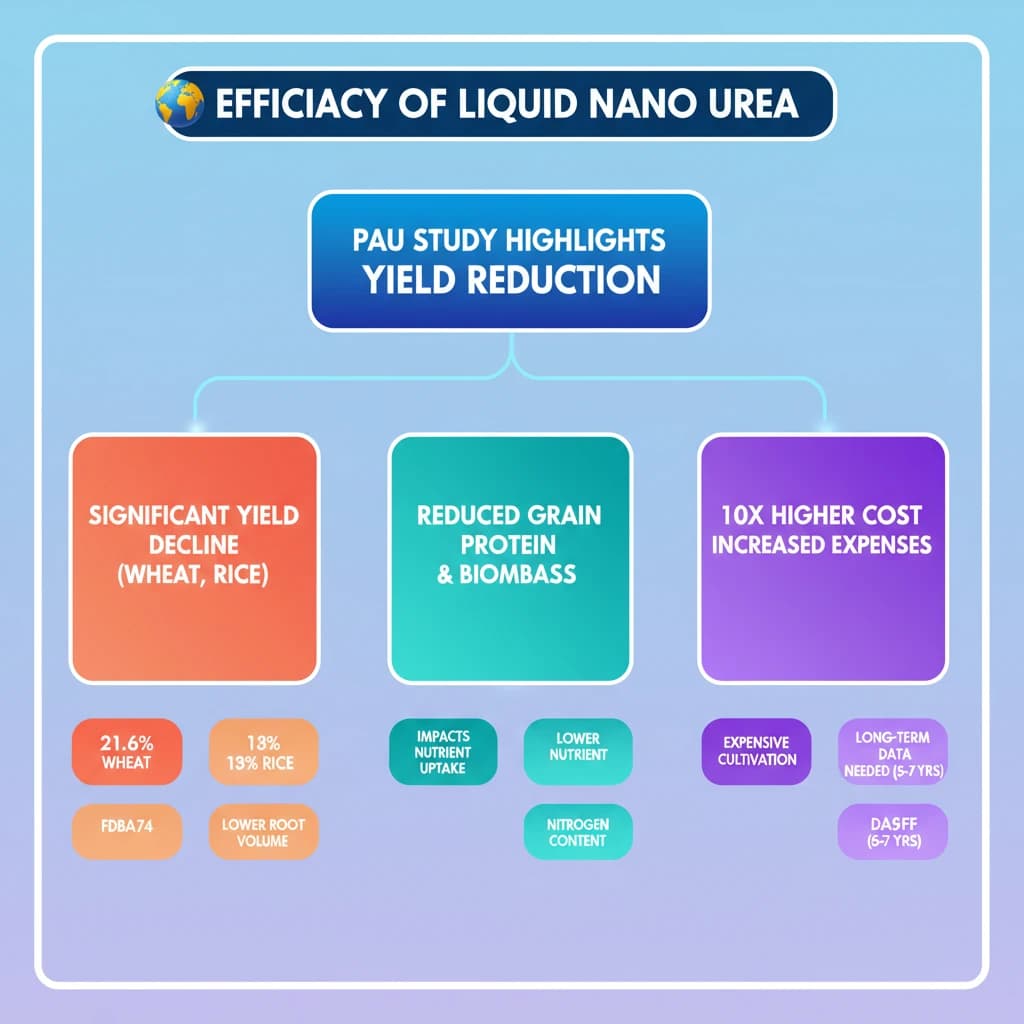
Efficacy of Liquid Nano Urea is a key topic under Science And Technology for UPSC Civil Services Examination. Key points include: PAU study shows significant yield reduction (21.6% wheat, 13% rice) with Liquid Nano Urea compared to conventional urea.. Grain nitrogen content also declined, impacting protein levels in staple foods.. Liquid Nano Urea is 10 times more expensive than granular urea, increasing cultivation costs.. Understanding this topic is essential for both UPSC Prelims and Mains preparation.

Why is Efficacy of Liquid Nano Urea important for UPSC exam?

Efficacy of Liquid Nano Urea is a Medium-level topic in UPSC Science And Technology. It is tested in both Prelims (factual MCQs) and Mains (analytical answer writing). Previous year UPSC questions have frequently covered aspects of Efficacy of Liquid Nano Urea, making it essential for comprehensive IAS preparation.

How to prepare Efficacy of Liquid Nano Urea for UPSC?

To prepare Efficacy of Liquid Nano Urea for UPSC: (1) Study the comprehensive notes covering all key concepts on Vaidra. (2) Practice previous year questions on this topic. (3) Connect it with current affairs using daily updates. (4) Revise using key takeaways and mind maps available for Science And Technology. (5) Write practice answers linking Efficacy of Liquid Nano Urea to related GS Paper topics.

Key takeaways of Efficacy of Liquid Nano Urea for UPSC

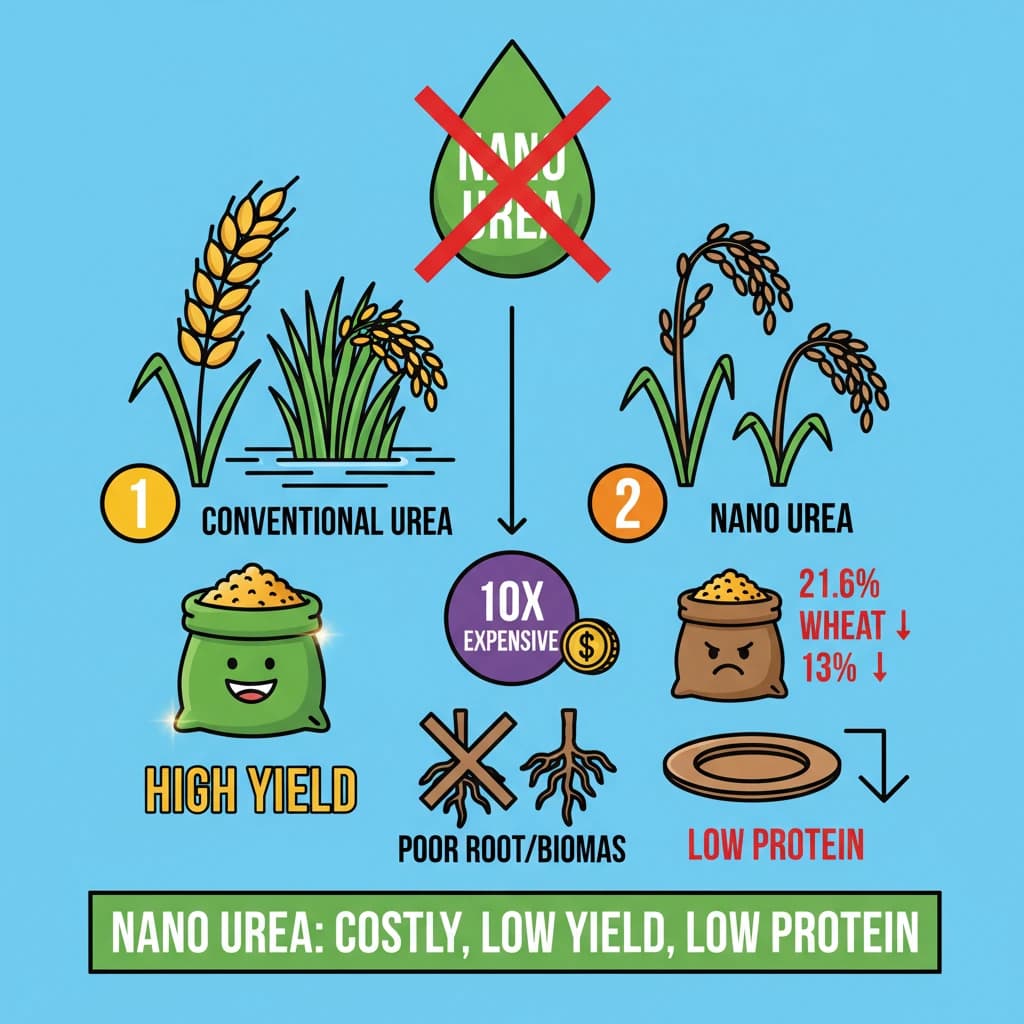
  • PAU study shows significant yield reduction (21.6% wheat, 13% rice) with Liquid Nano Urea compared to conventional urea.
  • Grain nitrogen content also declined, impacting protein levels in staple foods.
  • Liquid Nano Urea is 10 times more expensive than granular urea, increasing cultivation costs.
  • Reduced crop biomass and root volume observed, affecting nutrient uptake.
  • Long-term field evaluations (5-7 years) are crucial to confirm nano urea's equivalence and sustainability.
  • Findings highlight a need for cautious adoption and further research before widespread implementation.
Efficacy of Liquid Nano Urea

Efficacy of Liquid Nano Urea

Medium⏱️ 7 min read✓ 90% Verified
science and technology

📖 Introduction

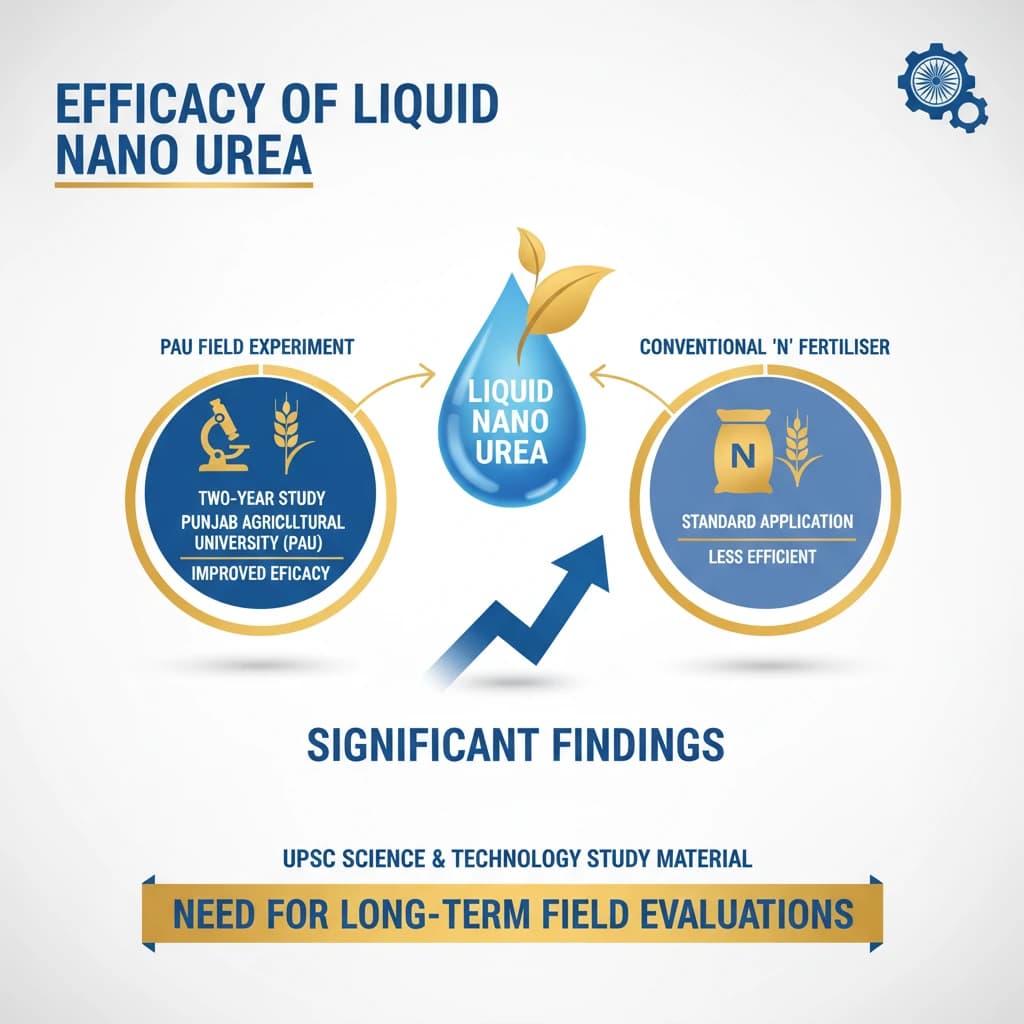
<h4>Introduction to Liquid Nano Urea Efficacy</h4><p>A recent <strong>two-year field experiment</strong> conducted by scientists from <strong>Punjab Agricultural University (PAU)</strong> has shed light on the efficacy of <strong>Liquid Nano Urea</strong>. The study compared its performance against <strong>conventional nitrogen (N) fertiliser application</strong>, revealing significant findings.</p><p>The results underscore the critical need for more extensive <strong>long-term field evaluations</strong>, ideally spanning <strong>5-7 years</strong>. Such prolonged studies are essential to definitively determine if <strong>nano urea</strong> can truly match the performance of <strong>conventional urea</strong> and sustain <strong>crop yields</strong> over time.</p><div class='key-point-box'><p><strong>Key Insight:</strong> The initial findings suggest that <strong>Liquid Nano Urea</strong> may not be a direct substitute for <strong>conventional urea</strong> without further rigorous, long-term validation. This impacts future agricultural policy and farmer adoption.</p></div><h4>Significant Yield Reduction</h4><p>The PAU study observed a substantial decrease in <strong>crop yields</strong> when <strong>nano urea</strong> was utilized in comparison to <strong>conventional nitrogen fertilizers</strong>. This reduction raises concerns about its immediate applicability for maintaining agricultural productivity.</p><div class='info-box'><p><strong>Specific Yield Decreases:</strong></p><ul><li><strong>Wheat yield:</strong> A significant <strong>21.6% decrease</strong> was recorded.</li><li><strong>Rice yield:</strong> A notable <strong>13% decrease</strong> was observed.</li></ul></div><h4>Decline in Grain Nitrogen Content</h4><p>Beyond just yield, the application of <strong>nano urea</strong> also led to a reduction in the <strong>grain nitrogen content</strong> in both <strong>rice</strong> and <strong>wheat crops</strong>. This is a critical factor influencing the nutritional quality of staple foods.</p><div class='info-box'><p><strong>Grain Nitrogen Content Reduction:</strong></p><ul><li><strong>Rice:</strong> A <strong>17% decrease</strong> in grain N content.</li><li><strong>Wheat:</strong> An <strong>11.5% decrease</strong> in grain N content.</li></ul></div><p>The lowered <strong>grain nitrogen content</strong> directly implies reduced <strong>protein levels</strong> in the harvested crops. For a country like <strong>India</strong>, where <strong>rice</strong> and <strong>wheat</strong> are primary staple foods providing essential <strong>protein</strong> and <strong>carbohydrates</strong>, this decline is a significant public health concern.</p><div class='exam-tip-box'><p><strong>UPSC Relevance:</strong> The impact of reduced <strong>protein content</strong> in staple foods can be linked to <strong>food security</strong>, <strong>malnutrition</strong>, and public health challenges in India (<strong>GS-II Social Justice, GS-III Food Security</strong>). This highlights the socio-economic implications of agricultural research findings.</p></div><h4>Elevated Cost Considerations</h4><p>The study also highlighted the economic implications for farmers. The <strong>cost of nano urea formulation</strong> was found to be significantly higher than that of traditional granular urea.</p><div class='info-box'><p><strong>Cost Comparison:</strong> The cost of <strong>nano urea</strong> was approximately <strong>10 times higher</strong> than that of <strong>granular urea</strong>.</p></div><p>This substantial price difference means that adopting <strong>nano urea</strong> could considerably increase the <strong>cost of cultivation</strong> for farmers, potentially impacting their profitability and economic viability.</p><h4>Reduced Crop Biomass and Root Volume</h4><p>Another key finding was the negative effect of <strong>nano urea</strong> on the physical development of crops. Its application resulted in a reduction in both <strong>above-ground biomass</strong> and <strong>root volume</strong>.</p><div class='info-box'><p><strong>Impact on Plant Structure:</strong> Decreased <strong>root volume</strong> leads to a smaller <strong>root-surface area</strong>, which is crucial for efficient <strong>nutrient uptake processes</strong> by the roots. This can impair the plant's overall health and productivity.</p></div>
Concept Diagram

💡 Key Takeaways

  • •PAU study shows significant yield reduction (21.6% wheat, 13% rice) with Liquid Nano Urea compared to conventional urea.
  • •Grain nitrogen content also declined, impacting protein levels in staple foods.
  • •Liquid Nano Urea is 10 times more expensive than granular urea, increasing cultivation costs.
  • •Reduced crop biomass and root volume observed, affecting nutrient uptake.
  • •Long-term field evaluations (5-7 years) are crucial to confirm nano urea's equivalence and sustainability.
  • •Findings highlight a need for cautious adoption and further research before widespread implementation.

🧠 Memory Techniques
Memory Aid
90% Verified Content

📚 Reference Sources

•Reference to Punjab Agricultural University (PAU) research findings.

Related Topics

Loading related topics...
Explore:Science And Technology Topics·All Subjects·Daily Current Affairs·Editorial Analysis·Previous Year Questions·UPSC GPT
Efficacy of Liquid Nano Urea - UPSC Science And Technology