Loading page, please wait…
Vaidra Logo
Vaidra

Top 4 items + smart groups

UPSC GPT
New
Current Affairs
Daily Solutions
Daily Puzzle
Mains Evaluator

Version 2.0.0 • Built with ❤️ for UPSC aspirants

Loading...
Loading...
Loading...
Loading...
Loading...
Loading...
Loading...
Loading...
Loading...
Loading...
Loading...
Loading...
Loading...
Genome Sequencing - UPSC Science And Technology
Back
All Subjects

Topics

0 topics • 0 completed

Loading topics...
Loading...
Loading...
Loading...
Loading...
Loading...
Overall Progress0%

Genome Sequencing - UPSC Science And Technology

What is Genome Sequencing in UPSC Science And Technology?

Genome Sequencing is a key topic under Science And Technology for UPSC Civil Services Examination. Key points include: DNA is the molecule carrying genetic information, structured as a double helix.. A genome is the complete set of DNA instructions in an organism's cell.. Genome sequencing determines the precise order of nucleotides in DNA.. Understanding this topic is essential for both UPSC Prelims and Mains preparation.

Why is Genome Sequencing important for UPSC exam?

Genome Sequencing is a Medium-level topic in UPSC Science And Technology. It is tested in both Prelims (factual MCQs) and Mains (analytical answer writing). Previous year UPSC questions have frequently covered aspects of Genome Sequencing, making it essential for comprehensive IAS preparation.

How to prepare Genome Sequencing for UPSC?

To prepare Genome Sequencing for UPSC: (1) Study the comprehensive notes covering all key concepts on Vaidra. (2) Practice previous year questions on this topic. (3) Connect it with current affairs using daily updates. (4) Revise using key takeaways and mind maps available for Science And Technology. (5) Write practice answers linking Genome Sequencing to related GS Paper topics.

Key takeaways of Genome Sequencing for UPSC

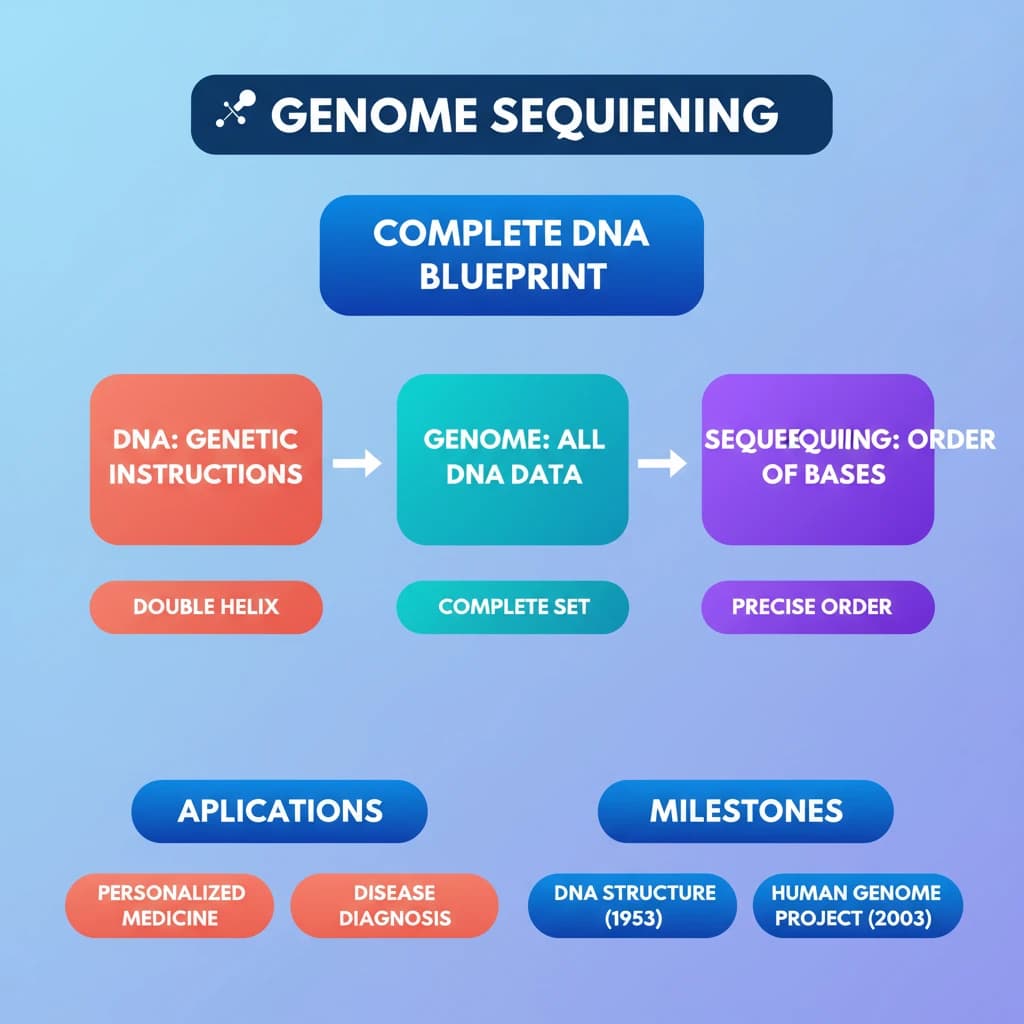
  • DNA is the molecule carrying genetic information, structured as a double helix.
  • A genome is the complete set of DNA instructions in an organism's cell.
  • Genome sequencing determines the precise order of nucleotides in DNA.
  • Key applications include personalized medicine, disease diagnosis, and agricultural improvement.
  • Historical milestones include the discovery of DNA structure and the Human Genome Project.
  • India's IndiGen Project highlights national relevance and efforts in genomic research.
  • Ethical considerations like data privacy and genetic discrimination are critical aspects.
Genome Sequencing

Genome Sequencing

Medium⏱️ 8 min read✓ 95% Verified
science and technology

📖 Introduction

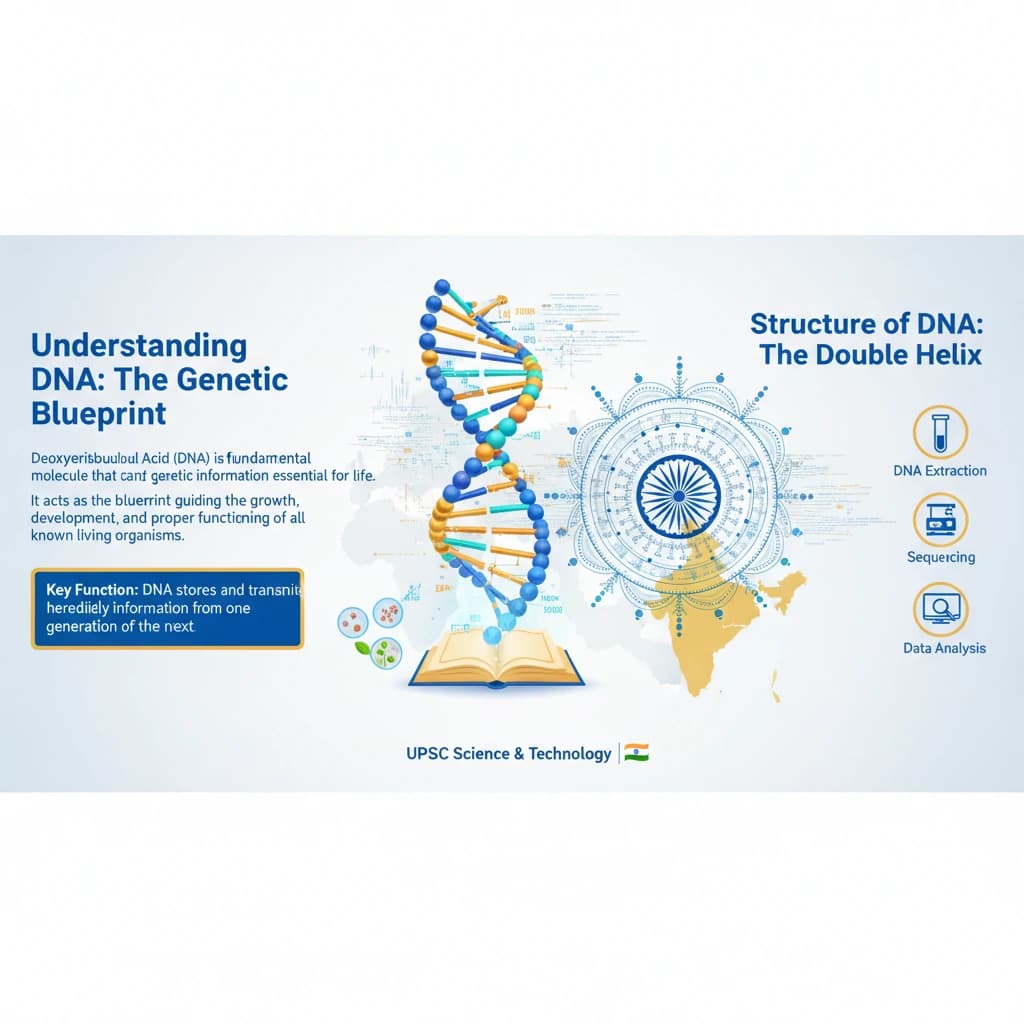
<h4>Understanding DNA: The Genetic Blueprint</h4><p><strong>Deoxyribonucleic Acid (DNA)</strong> is a fundamental molecule that carries the genetic information essential for life.</p><p>It acts as the <strong>blueprint</strong> guiding the growth, development, and proper functioning of all known living organisms.</p><div class='info-box'><p><strong>Key Function:</strong> DNA stores and transmits hereditary information from one generation to the next.</p></div><h4>Structure of DNA: The Double Helix</h4><p>DNA is characterized by its distinctive <strong>two-stranded molecule</strong> structure, famously known as a <strong>double helix</strong>.</p><p>This twisted ladder-like shape is crucial for its stability and function in storing genetic data.</p><ul><li>Each strand of DNA is composed of repeating units called <strong>nucleotides</strong>.</li><li>A nucleotide consists of three main components: a <strong>phosphate molecule</strong>, a <strong>deoxyribose sugar</strong>, and a <strong>nitrogen-containing base</strong>.</li></ul><h4>What is a Genome?</h4><p>The <strong>genome</strong> refers to the complete set of <strong>DNA instructions</strong> found within a cell of an organism.</p><p>It encompasses all the genes and other genetic material present in an organism's chromosomes.</p><div class='info-box'><p>In humans, the genome is organized into <strong>23 pairs of chromosomes</strong>, totaling 46 chromosomes.</p></div><h4>Introduction to Genome Sequencing</h4><p><strong>Genome sequencing</strong> is the process of determining the complete DNA sequence of an organism's genome.</p><p>This involves identifying the exact order of the <strong>nucleotides</strong> (Adenine, Guanine, Cytosine, and Thymine) that make up an organism's DNA.</p><div class='key-point-box'><p>Understanding the genome sequence provides profound insights into genetic variations, disease susceptibility, and evolutionary relationships.</p></div><div class='exam-tip-box'><p>UPSC often asks about the applications and ethical implications of <strong>genome sequencing</strong> in science and technology papers (<strong>GS Paper III</strong>).</p></div>
Concept Diagram

💡 Key Takeaways

  • •DNA is the molecule carrying genetic information, structured as a double helix.
  • •A genome is the complete set of DNA instructions in an organism's cell.
  • •Genome sequencing determines the precise order of nucleotides in DNA.
  • •Key applications include personalized medicine, disease diagnosis, and agricultural improvement.
  • •Historical milestones include the discovery of DNA structure and the Human Genome Project.
  • •India's IndiGen Project highlights national relevance and efforts in genomic research.
  • •Ethical considerations like data privacy and genetic discrimination are critical aspects.

🧠 Memory Techniques
Memory Aid
95% Verified Content

📚 Reference Sources

•National Human Genome Research Institute (NHGRI) - Genome.gov
•NCBI (National Center for Biotechnology Information)
•Reports on India's IndiGen Project

Related Topics

Loading related topics...
Explore:Science And Technology Topics·All Subjects·Daily Current Affairs·Editorial Analysis·Previous Year Questions·UPSC GPT