Loading page, please wait…
Vaidra Logo
Vaidra

Top 4 items + smart groups

UPSC GPT
New
Current Affairs
Daily Solutions
Daily Puzzle
Mains Evaluator

Version 2.0.0 • Built with ❤️ for UPSC aspirants

Loading...
Loading...
Loading...
Loading...
Loading...
Loading...
Loading...
Loading...
Loading...
Loading...
Loading...
Loading...
Loading...
Back
All Subjects

Topics

0 topics • 0 completed

Loading topics...
Loading...
Loading...
Loading...
Loading...
Loading...
Overall Progress0%

Nanoplastics Causing Antibiotic Resistance - UPSC Science And Technology

What is Nanoplastics Causing Antibiotic Resistance in UPSC Science And Technology?

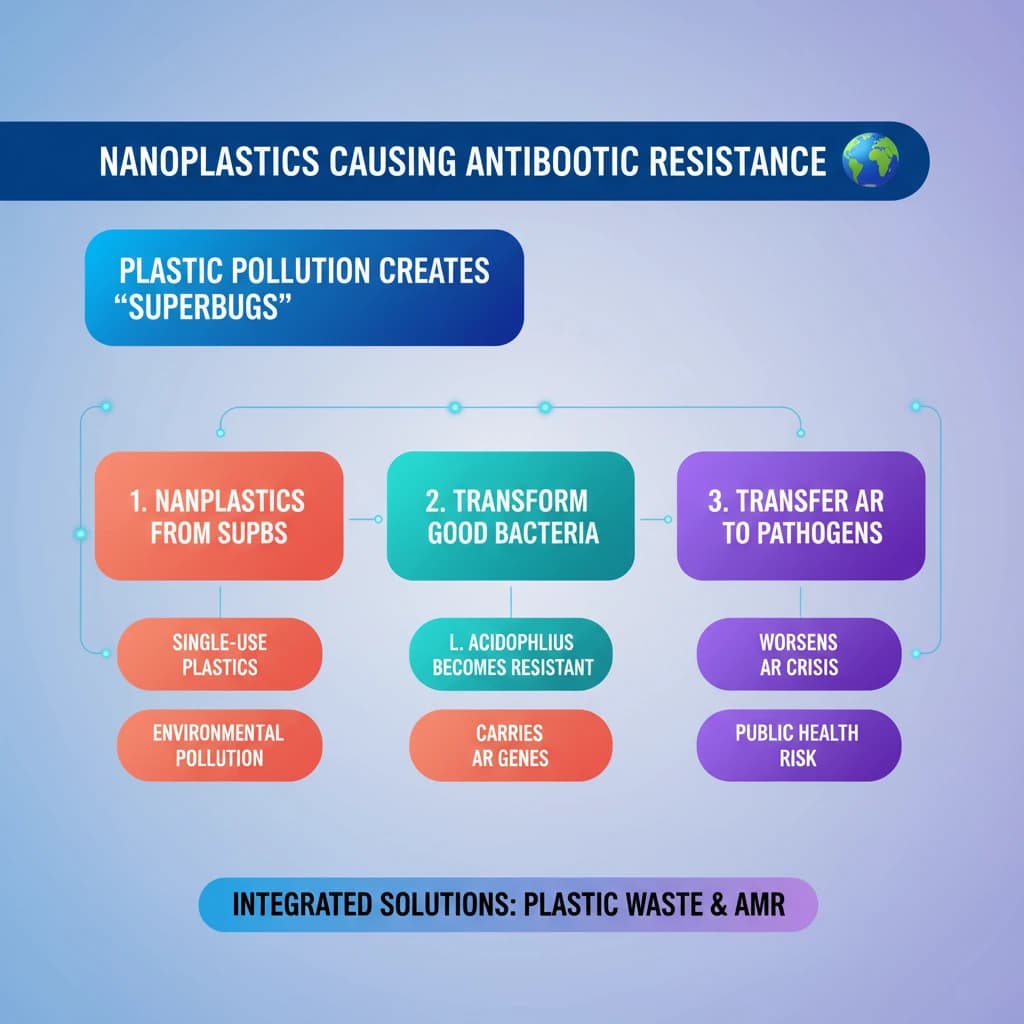
Nanoplastics Causing Antibiotic Resistance is a key topic under Science And Technology for UPSC Civil Services Examination. Key points include: Nanoplastics from single-use plastic bottles (SUPBs) contribute to antibiotic resistance (AR).. They can transform beneficial gut bacteria (like Lactobacillus acidophilus) into AR gene carriers.. AR genes can then transfer to pathogenic bacteria, worsening the AR crisis.. Understanding this topic is essential for both UPSC Prelims and Mains preparation.

Why is Nanoplastics Causing Antibiotic Resistance important for UPSC exam?

Nanoplastics Causing Antibiotic Resistance is a Medium-level topic in UPSC Science And Technology. It is tested in both Prelims (factual MCQs) and Mains (analytical answer writing). Previous year UPSC questions have frequently covered aspects of Nanoplastics Causing Antibiotic Resistance, making it essential for comprehensive IAS preparation.

How to prepare Nanoplastics Causing Antibiotic Resistance for UPSC?

To prepare Nanoplastics Causing Antibiotic Resistance for UPSC: (1) Study the comprehensive notes covering all key concepts on Vaidra. (2) Practice previous year questions on this topic. (3) Connect it with current affairs using daily updates. (4) Revise using key takeaways and mind maps available for Science And Technology. (5) Write practice answers linking Nanoplastics Causing Antibiotic Resistance to related GS Paper topics.

Key takeaways of Nanoplastics Causing Antibiotic Resistance for UPSC

  • Nanoplastics from single-use plastic bottles (SUPBs) contribute to antibiotic resistance (AR).
  • They can transform beneficial gut bacteria (like Lactobacillus acidophilus) into AR gene carriers.
  • AR genes can then transfer to pathogenic bacteria, worsening the AR crisis.
  • This represents an overlooked public health risk linking environmental pollution and health.
  • The study highlights the critical need for integrated solutions to plastic waste and antimicrobial resistance.
Nanoplastics Causing Antibiotic Resistance

Nanoplastics Causing Antibiotic Resistance

Medium⏱️ 6 min read✓ 95% Verified
science and technology

📖 Introduction

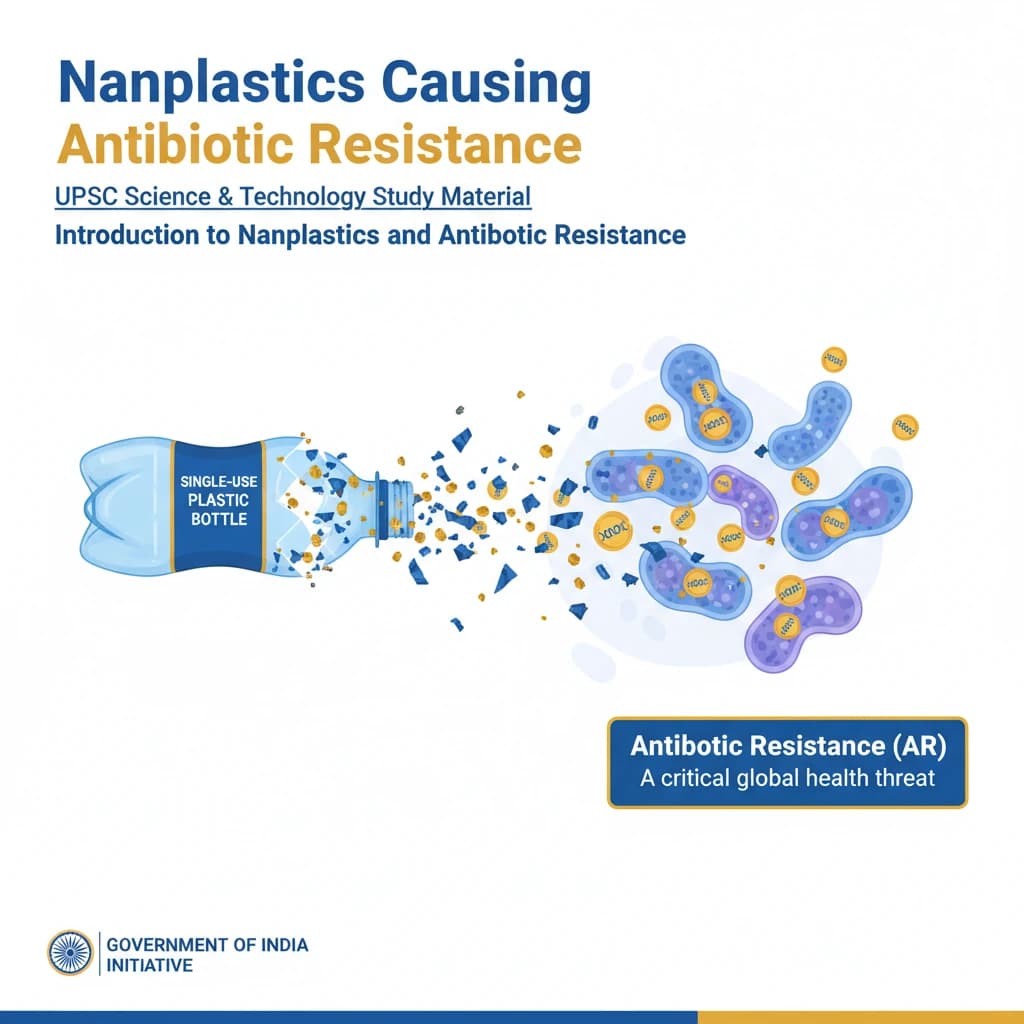
<h4>Introduction to Nanoplastics and Antibiotic Resistance</h4><p>A recent study has brought to light a significant, yet often overlooked, public health risk: <strong>nanoplastics</strong>. These tiny plastic particles, specifically those derived from <strong>single-use plastic bottles (SUPBs)</strong>, are now understood to contribute to the spread of <strong>antibiotic resistance (AR)</strong>.</p><div class='info-box'><p><strong>Antibiotic Resistance (AR)</strong> is a critical global health challenge. It occurs when bacteria evolve and develop the ability to withstand the effects of drugs that were once effective in killing them or inhibiting their growth. This renders treatments for bacterial infections ineffective.</p></div><h4>Key Findings of the Study</h4><p>The study focused on the intricate relationship between <strong>nanoplastics</strong> and the human <strong>gut microbiome</strong>, revealing a worrying mechanism that exacerbates the <strong>AR crisis</strong>.</p><div class='key-point-box'><p><strong>Risk to Gut Microbiome:</strong> The research indicates that <strong>nanoplastics</strong> possess the capability to transform certain beneficial gut bacteria, such as <strong>Lactobacillus acidophilus</strong>, into carriers of <strong>antibiotic resistance (AR) genes</strong>. This transformation is a major concern for public health.</p></div><p>Once these beneficial bacteria become carriers, there is a high probability that these <strong>AR genes</strong> can be transferred to <strong>pathogenic bacteria</strong> during infections. This horizontal gene transfer mechanism can significantly worsen the existing <strong>antibiotic resistance crisis</strong>, making common infections harder to treat.</p><div class='exam-tip-box'><p><strong>UPSC Insight:</strong> This topic connects <strong>environmental pollution</strong> (nanoplastics) with <strong>public health</strong> (antibiotic resistance), making it highly relevant for <strong>GS-III Science & Technology</strong> and <strong>Environment</strong> sections. Understanding the mechanism of gene transfer and its impact on the gut microbiome is crucial.</p></div>
Concept Diagram

💡 Key Takeaways

  • •Nanoplastics from single-use plastic bottles (SUPBs) contribute to antibiotic resistance (AR).
  • •They can transform beneficial gut bacteria (like Lactobacillus acidophilus) into AR gene carriers.
  • •AR genes can then transfer to pathogenic bacteria, worsening the AR crisis.
  • •This represents an overlooked public health risk linking environmental pollution and health.
  • •The study highlights the critical need for integrated solutions to plastic waste and antimicrobial resistance.

🧠 Memory Techniques

Memory Aid
95% Verified Content

📚 Reference Sources

•Scientific Studies on Nanoplastics and Antibiotic Resistance (General Research)

Related Topics

Loading related topics...
Explore:Science And Technology Topics·All Subjects·Daily Current Affairs·Editorial Analysis·Previous Year Questions·UPSC GPT
Nanoplastics Causing Antibiotic Resistance - UPSC Science And Technology