Loading page, please wait…
Vaidra Logo
Vaidra

Top 4 items + smart groups

UPSC GPT
New
Current Affairs
Daily Solutions
Daily Puzzle
Mains Evaluator

Version 2.0.0 • Built with ❤️ for UPSC aspirants

Loading...
Loading...
Loading...
Loading...
Loading...
Loading...
Loading...
Loading...
Loading...
Loading...
Loading...
Loading...
Loading...
Back
All Subjects

Topics

0 topics • 0 completed

Loading topics...
Loading...
Loading...
Loading...
Loading...
Loading...
Overall Progress0%

What are the Key Facts About Leptospirosis? - UPSC Science And Technology

What is What are the Key Facts About Leptospirosis? in UPSC Science And Technology?

What are the Key Facts About Leptospirosis? is a key topic under Science And Technology for UPSC Civil Services Examination. Key points include: Leptospirosis is a zoonotic bacterial disease caused by pathogenic Leptospira spirochaetes.. It is primarily transmitted from animals (especially rodents, cattle, pigs, dogs) to humans via contaminated urine or environment.. Entry into humans occurs through cuts, mucous membranes, or waterlogged skin; human-to-human transmission is rare.. Understanding this topic is essential for both UPSC Prelims and Mains preparation.

Why is What are the Key Facts About Leptospirosis? important for UPSC exam?

What are the Key Facts About Leptospirosis? is a Medium-level topic in UPSC Science And Technology. It is tested in both Prelims (factual MCQs) and Mains (analytical answer writing). Previous year UPSC questions have frequently covered aspects of What are the Key Facts About Leptospirosis?, making it essential for comprehensive IAS preparation.

How to prepare What are the Key Facts About Leptospirosis? for UPSC?

To prepare What are the Key Facts About Leptospirosis? for UPSC: (1) Study the comprehensive notes covering all key concepts on Vaidra. (2) Practice previous year questions on this topic. (3) Connect it with current affairs using daily updates. (4) Revise using key takeaways and mind maps available for Science And Technology. (5) Write practice answers linking What are the Key Facts About Leptospirosis? to related GS Paper topics.

Key takeaways of What are the Key Facts About Leptospirosis? for UPSC

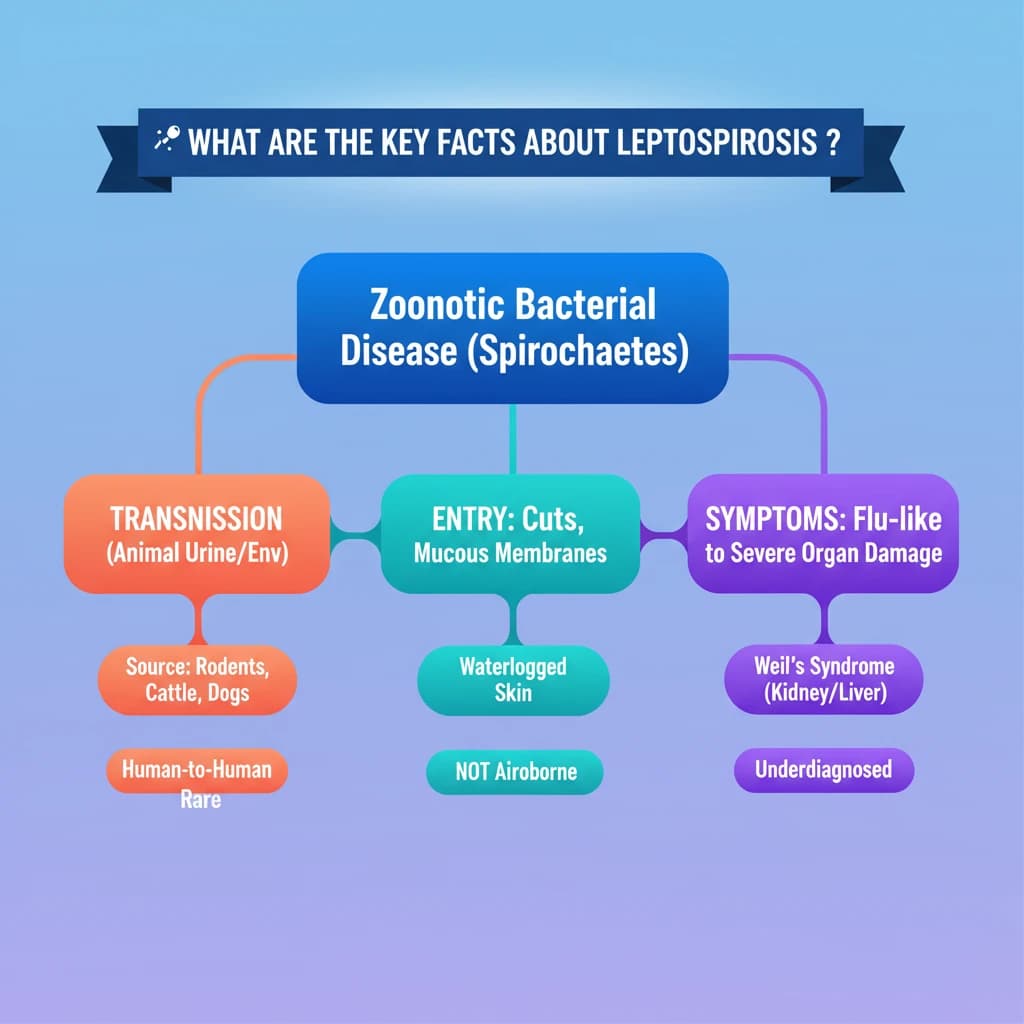
  • Leptospirosis is a zoonotic bacterial disease caused by pathogenic Leptospira spirochaetes.
  • It is primarily transmitted from animals (especially rodents, cattle, pigs, dogs) to humans via contaminated urine or environment.
  • Entry into humans occurs through cuts, mucous membranes, or waterlogged skin; human-to-human transmission is rare.
  • Symptoms range from mild flu-like illness to severe conditions like Weil’s syndrome (kidney/liver dysfunction), meningitis, and pulmonary hemorrhage.
  • It is often underdiagnosed due to varied symptoms mimicking other diseases and limited diagnostic access.
  • Most prevalent in tropical and subtropical regions with high rainfall and frequent flooding.
What are the Key Facts About Leptospirosis?

What are the Key Facts About Leptospirosis?

Medium⏱️ 8 min read✓ 98% Verified
science and technology

📖 Introduction

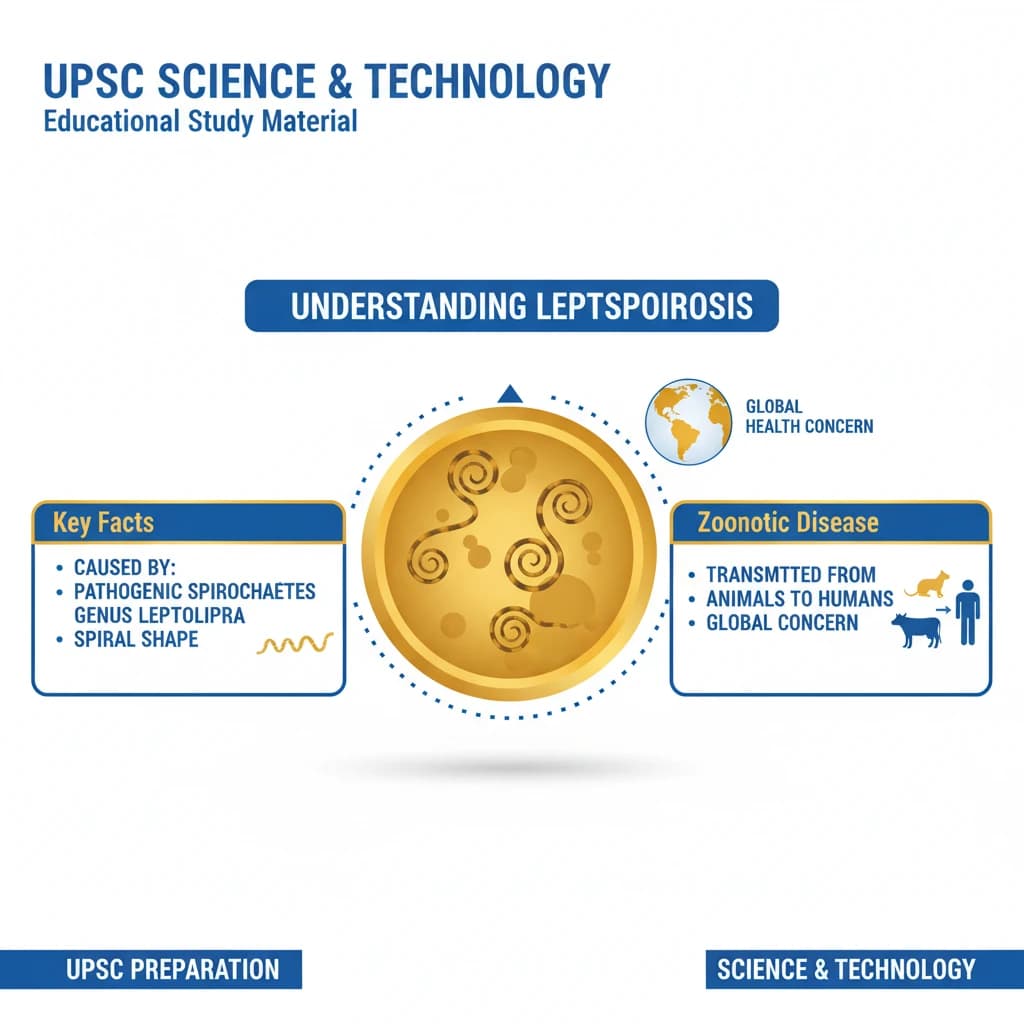
<h4>Understanding Leptospirosis</h4><p><strong>Leptospirosis</strong> is a significant <strong>zoonotic disease</strong> caused by specific bacteria. It is a global health concern, particularly in certain regions.</p><div class='info-box'><p>It is caused by <strong>pathogenic spirochaetes</strong> belonging to the genus <strong>Leptospira</strong>. These bacteria are characterized by their spiral shape.</p></div><p>The term <strong>zoonotic</strong> means that the disease is naturally transmissible from <strong>animals to humans</strong>. This highlights the importance of animal health in preventing human infections.</p><h4>The Causative Agent: Leptospira Bacteria</h4><p>The specific bacteria responsible for <strong>Leptospirosis</strong> are <strong>leptospires</strong>. Not all leptospires are pathogenic, but certain strains can cause severe illness.</p><p>These <strong>pathogenic leptospires</strong> reside primarily in the <strong>kidneys</strong> and <strong>genital tracts</strong> of infected animals. This is crucial for understanding the transmission cycle.</p><div class='key-point-box'><p>They are the direct cause of <strong>leptospirosis</strong> in humans, underscoring the animal-human interface of the disease.</p></div><h4>Primary Reservoirs of Infection</h4><p>Many <strong>mammalian species</strong> can harbor <strong>leptospires</strong> within their kidneys. These animals act as natural hosts and reservoirs for the bacteria.</p><p>Common reservoirs include <strong>rodents</strong>, <strong>cattle</strong>, <strong>pigs</strong>, and <strong>dogs</strong>. Understanding these reservoirs is vital for disease control strategies.</p><div class='info-box'><p><strong>Rodents</strong> are particularly significant reservoirs. They can excrete <strong>leptospires</strong> in their urine throughout their entire lifespan without showing any symptoms themselves.</p></div><p>It is important to note that not all infected animals exhibit symptoms. Natural hosts often show no or few ill effects, though they may develop illness if infected with a different <strong>serovar</strong> (a distinct variation within a species of bacteria).</p><h4>Modes of Transmission to Humans</h4><p>The disease is primarily transmitted through direct contact with the <strong>urine of infected animals</strong>. This is the most common pathway for human infection.</p><p>Indirect transmission also occurs through contact with environments contaminated with infected animal urine. This includes <strong>water</strong>, <strong>soil</strong>, or <strong>food</strong>.</p><p>The bacteria can enter the human body through various entry points:</p><ul><li><strong>Cuts</strong> or abrasions on the skin.</li><li><strong>Mucous membranes</strong>, such as those in the eyes, nose, or mouth.</li><li><strong>Waterlogged skin</strong>, which can become permeable to the bacteria.</li></ul><div class='key-point-box'><p>Human-to-human transmission of <strong>Leptospirosis</strong> is extremely rare. The disease cycle predominantly involves animals and environmental factors.</p></div><h4>Diverse Symptoms and Clinical Manifestations</h4><p><strong>Leptospirosis</strong> presents with a wide spectrum of symptoms, ranging from mild to severe. This makes diagnosis challenging.</p><p>Mild cases often resemble a <strong>flu-like illness</strong>, characterized by general malaise, fever, and headache.</p><p>Severe conditions can include:</p><ul><li><strong>Weil’s syndrome</strong>: A severe form involving dysfunction of the <strong>kidneys</strong> and <strong>liver</strong>, leading to jaundice.</li><li><strong>Meningitis</strong>: Inflammation of the membranes surrounding the brain and spinal cord.</li><li><strong>Pulmonary hemorrhage</strong>: Bleeding in the lungs, which can be life-threatening.</li></ul><div class='info-box'><p>The typical <strong>incubation period</strong> for <strong>Leptospirosis</strong> is <strong>7-10 days</strong>. Common initial symptoms include <strong>fever</strong>, <strong>headache</strong>, and <strong>jaundice</strong>.</p></div><div class='exam-tip-box'><p><strong>Leptospirosis</strong> is often <strong>underdiagnosed</strong> due to its wide range of symptoms that mimic other diseases. Additionally, limited access to diagnostic tests in many affected regions contributes to this challenge. This is a crucial point for UPSC mains answers on public health challenges.</p></div><h4>Epidemiology and Global Distribution</h4><p><strong>Leptospirosis</strong> is a <strong>global disease</strong>, meaning it occurs worldwide. However, its prevalence is not uniform across all regions.</p><p>It is most common in <strong>tropical and subtropical regions</strong>. These areas typically experience <strong>high rainfall</strong>, which facilitates the spread of the bacteria through contaminated water and soil.</p><div class='info-box'><p>Environmental factors like flooding and poor sanitation significantly contribute to the epidemiological pattern of <strong>Leptospirosis</strong> in these vulnerable regions.</p></div>
Concept Diagram

💡 Key Takeaways

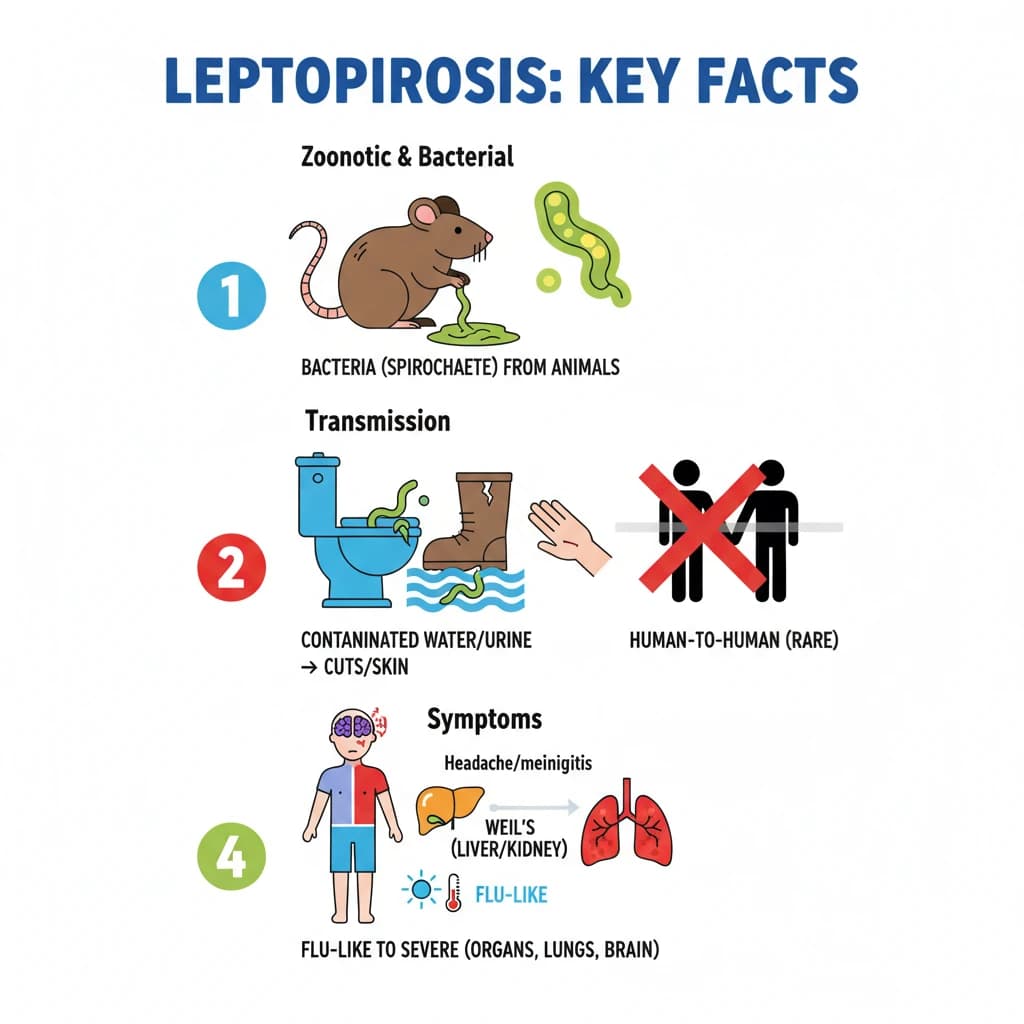
  • •Leptospirosis is a zoonotic bacterial disease caused by pathogenic Leptospira spirochaetes.
  • •It is primarily transmitted from animals (especially rodents, cattle, pigs, dogs) to humans via contaminated urine or environment.
  • •Entry into humans occurs through cuts, mucous membranes, or waterlogged skin; human-to-human transmission is rare.
  • •Symptoms range from mild flu-like illness to severe conditions like Weil’s syndrome (kidney/liver dysfunction), meningitis, and pulmonary hemorrhage.
  • •It is often underdiagnosed due to varied symptoms mimicking other diseases and limited diagnostic access.
  • •Most prevalent in tropical and subtropical regions with high rainfall and frequent flooding.

🧠 Memory Techniques
Memory Aid
98% Verified Content

📚 Reference Sources

•World Health Organization (WHO) fact sheets on Leptospirosis
•Centers for Disease Control and Prevention (CDC) information on Leptospirosis

Related Topics

Loading related topics...
Explore:Science And Technology Topics·All Subjects·Daily Current Affairs·Editorial Analysis·Previous Year Questions·UPSC GPT
What are the Key Facts About Leptospirosis? - UPSC Science And Technology