Loading page, please wait…
Vaidra Logo
Vaidra

Top 4 items + smart groups

UPSC GPT
New
Current Affairs
Daily Solutions
Daily Puzzle
Mains Evaluator

Version 2.0.0 • Built with ❤️ for UPSC aspirants

Loading...
Loading...
Loading...
Loading...
Loading...
Loading...
Loading...
Loading...
Loading...
Loading...
Loading...
Loading...
Loading...
Back
All Subjects

Topics

0 topics • 0 completed

Loading topics...
Loading...
Loading...
Loading...
Loading...
Loading...
Overall Progress0%

Parkinson’s Disease - UPSC Science And Technology

What is Parkinson’s Disease in UPSC Science And Technology?

Parkinson’s Disease is a key topic under Science And Technology for UPSC Civil Services Examination. Key points include: Parkinson's Disease (PD) is a progressive neurodegenerative disorder primarily affecting dopamine-producing neurons.. The 'gut-first hypothesis' suggests PD may originate in the gut, highlighting a crucial gut-brain connection in its onset.. Early gastrointestinal symptoms, such as constipation, are identified as potential initial indicators of PD.. Understanding this topic is essential for both UPSC Prelims and Mains preparation.

Why is Parkinson’s Disease important for UPSC exam?

Parkinson’s Disease is a Medium-level topic in UPSC Science And Technology. It is tested in both Prelims (factual MCQs) and Mains (analytical answer writing). Previous year UPSC questions have frequently covered aspects of Parkinson’s Disease, making it essential for comprehensive IAS preparation.

How to prepare Parkinson’s Disease for UPSC?

To prepare Parkinson’s Disease for UPSC: (1) Study the comprehensive notes covering all key concepts on Vaidra. (2) Practice previous year questions on this topic. (3) Connect it with current affairs using daily updates. (4) Revise using key takeaways and mind maps available for Science And Technology. (5) Write practice answers linking Parkinson’s Disease to related GS Paper topics.

Key takeaways of Parkinson’s Disease for UPSC

  • Parkinson's Disease (PD) is a progressive neurodegenerative disorder primarily affecting dopamine-producing neurons.
  • The 'gut-first hypothesis' suggests PD may originate in the gut, highlighting a crucial gut-brain connection in its onset.
  • Early gastrointestinal symptoms, such as constipation, are identified as potential initial indicators of PD.
  • Abnormal protein aggregates called Lewy bodies (composed of misfolded alpha-synuclein) are found in both the gut and brain.
  • This research could significantly shift diagnostic and therapeutic approaches for PD, moving towards earlier intervention and novel gut-targeted treatments.
Parkinson’s Disease

Parkinson’s Disease

Medium⏱️ 5 min read✓ 95% Verified
science and technology

📖 Introduction

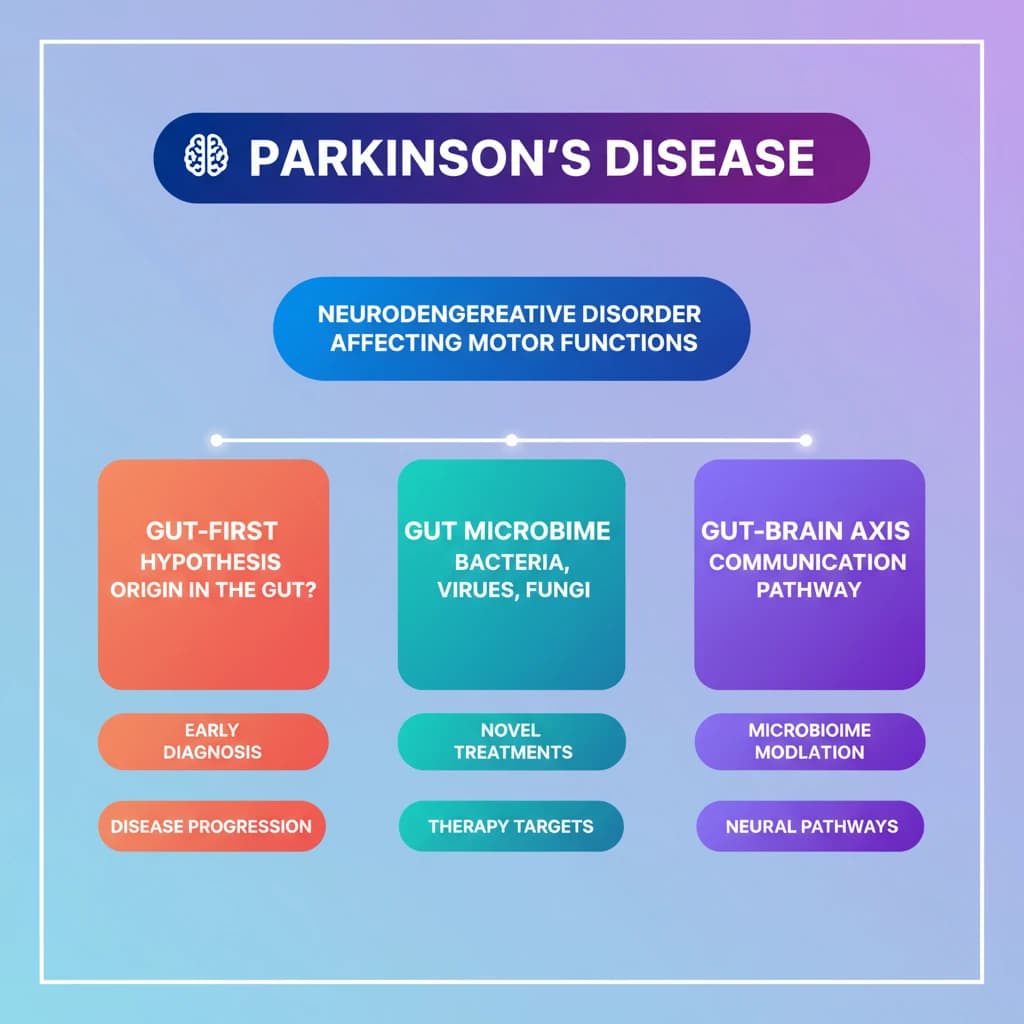
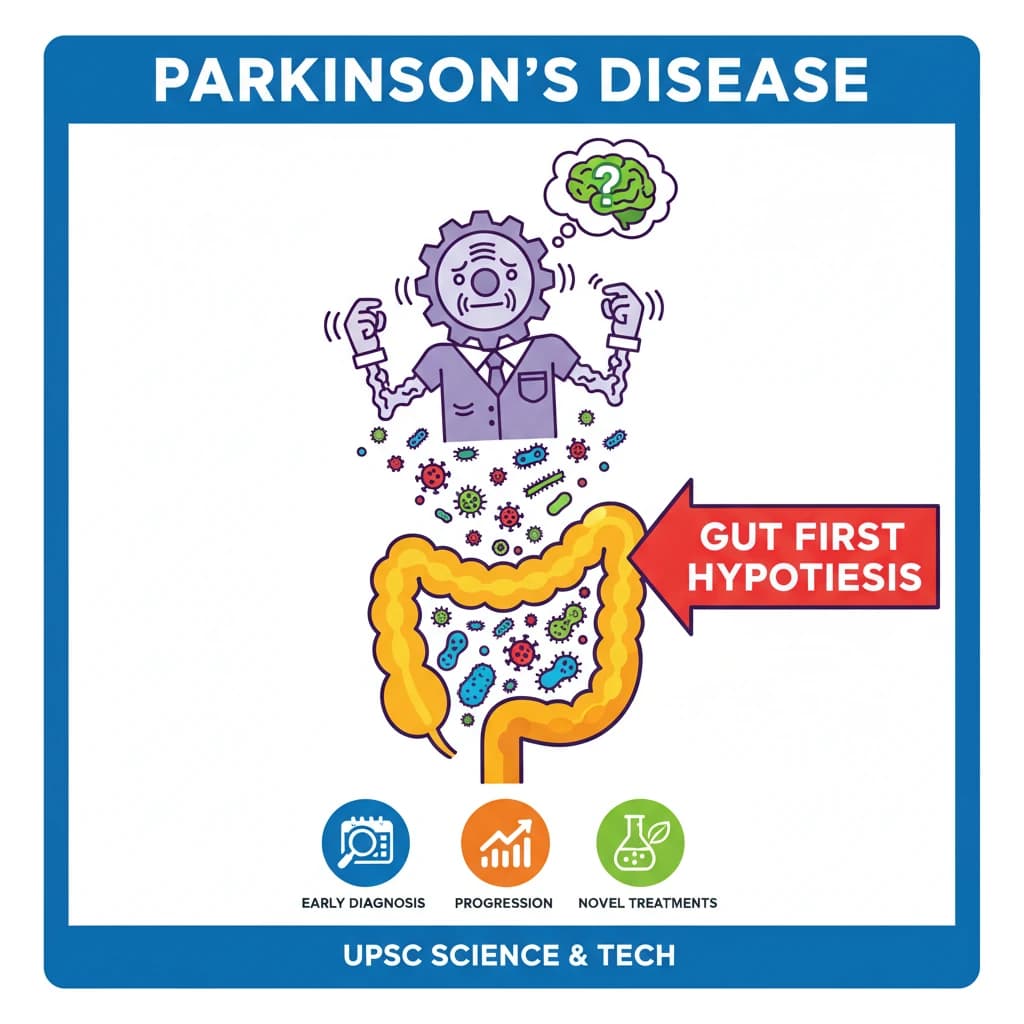
<h4>Understanding Parkinson's Disease: A New Perspective</h4><p><strong>Parkinson's Disease (PD)</strong> is a progressive neurodegenerative disorder affecting millions globally. Recent research has proposed a significant shift in understanding <strong>PD</strong> through the <strong>“gut-hypothesis”</strong>.</p><p>This hypothesis suggests a crucial <strong>gut-brain connection</strong> in its onset and progression.</p><div class='key-point-box'><p>The research is pivotal as it may fundamentally alter the understanding of <strong>diagnosis</strong>, <strong>disease development</strong>, and <strong>therapeutic strategies</strong> for this complex neurodegenerative disorder.</p></div><h4>The "Gut-First Hypothesis" in Focus</h4><p>The <strong>“gut-first hypothesis”</strong> suggests that <strong>Parkinson's Disease</strong> may actually begin in the <strong>gut</strong>.</p><p>This perspective has profound implications for understanding the entire <strong>disease progression</strong> and developing more effective <strong>therapeutic strategies</strong>.</p><h4>Role of the Gut Microbiome</h4><p>A central component of this hypothesis is the <strong>gut microbiome</strong>.</p><div class='info-box'><p>The <strong>gut microbiome</strong> is the vast network of <strong>microorganisms</strong>—including <strong>bacteria, viruses, fungi</strong>, and their collective genetic material—that resides within the intestinal tract, spanning from the mouth to the colon.</p></div><h4>Early Signs and Diagnostic Implications</h4><p>The research identifies specific <strong>gastrointestinal symptoms</strong>, such as <strong>constipation</strong>, as potential <strong>early signs</strong> of <strong>PD</strong>.</p><p>Recognizing these symptoms early could significantly reshape current <strong>diagnostic approaches</strong> and lead to earlier intervention strategies.</p><h4>Abnormal Protein Aggregates: Lewy Bodies</h4><p>A key finding supporting the gut-first hypothesis is the presence of <strong>abnormal protein aggregates</strong>, known as <strong>Lewy bodies</strong>, in both the <strong>gut</strong> and the <strong>brain</strong> of individuals with <strong>PD</strong>.</p><p>This dual presence indicates a complex and intricate interplay between these two systems in the overall development of the disease.</p><div class='info-box'><p><strong>Lewy bodies</strong> are primarily composed of <strong>alpha-synuclein</strong>, a protein that undergoes <strong>misfolding</strong> and <strong>clumping together</strong>. This aggregation is a major factor contributing to the death of <strong>dopamine-producing neurons</strong> in the brain, which is a hallmark of <strong>Parkinson's Disease</strong>.</p></div>
Concept Diagram

💡 Key Takeaways

  • •Parkinson's Disease (PD) is a progressive neurodegenerative disorder primarily affecting dopamine-producing neurons.
  • •The 'gut-first hypothesis' suggests PD may originate in the gut, highlighting a crucial gut-brain connection in its onset.
  • •Early gastrointestinal symptoms, such as constipation, are identified as potential initial indicators of PD.
  • •Abnormal protein aggregates called Lewy bodies (composed of misfolded alpha-synuclein) are found in both the gut and brain.
  • •This research could significantly shift diagnostic and therapeutic approaches for PD, moving towards earlier intervention and novel gut-targeted treatments.

🧠 Memory Techniques
Memory Aid
95% Verified Content

📚 Reference Sources

•General scientific understanding of Parkinson's Disease and the gut-brain axis

Related Topics

Loading related topics...
Explore:Science And Technology Topics·All Subjects·Daily Current Affairs·Editorial Analysis·Previous Year Questions·UPSC GPT
Parkinson’s Disease - UPSC Science And Technology