Loading page, please wait…
Vaidra Logo
Vaidra

Top 4 items + smart groups

UPSC GPT
New
Current Affairs
Daily Solutions
Daily Puzzle
Mains Evaluator

Version 2.0.0 • Built with ❤️ for UPSC aspirants

Loading...
Loading...
Loading...
Loading...
Loading...
Loading...
Loading...
Loading...
Loading...
Loading...
Loading...
Loading...
Loading...
What are Obelisks? - UPSC Science And Technology
Back
All Subjects

Topics

0 topics • 0 completed

Loading topics...
Loading...
Loading...
Loading...
Loading...
Loading...
Overall Progress0%

What are Obelisks? - UPSC Science And Technology

What is What are Obelisks? in UPSC Science And Technology?

What are Obelisks? is a key topic under Science And Technology for UPSC Civil Services Examination. Key points include: Obelisks are newly discovered virus-like entities composed of diverse RNA molecules.. They are found in the human body and global microbiome, particularly associated with gut and oral bacteria.. Characterized by highly symmetrical, rod-like structures and short (~1,000 nucleotides) genetic sequences with no known biological similarities.. Understanding this topic is essential for both UPSC Prelims and Mains preparation.

Why is What are Obelisks? important for UPSC exam?

What are Obelisks? is a Medium-level topic in UPSC Science And Technology. It is tested in both Prelims (factual MCQs) and Mains (analytical answer writing). Previous year UPSC questions have frequently covered aspects of What are Obelisks?, making it essential for comprehensive IAS preparation.

How to prepare What are Obelisks? for UPSC?

To prepare What are Obelisks? for UPSC: (1) Study the comprehensive notes covering all key concepts on Vaidra. (2) Practice previous year questions on this topic. (3) Connect it with current affairs using daily updates. (4) Revise using key takeaways and mind maps available for Science And Technology. (5) Write practice answers linking What are Obelisks? to related GS Paper topics.

Key takeaways of What are Obelisks? for UPSC

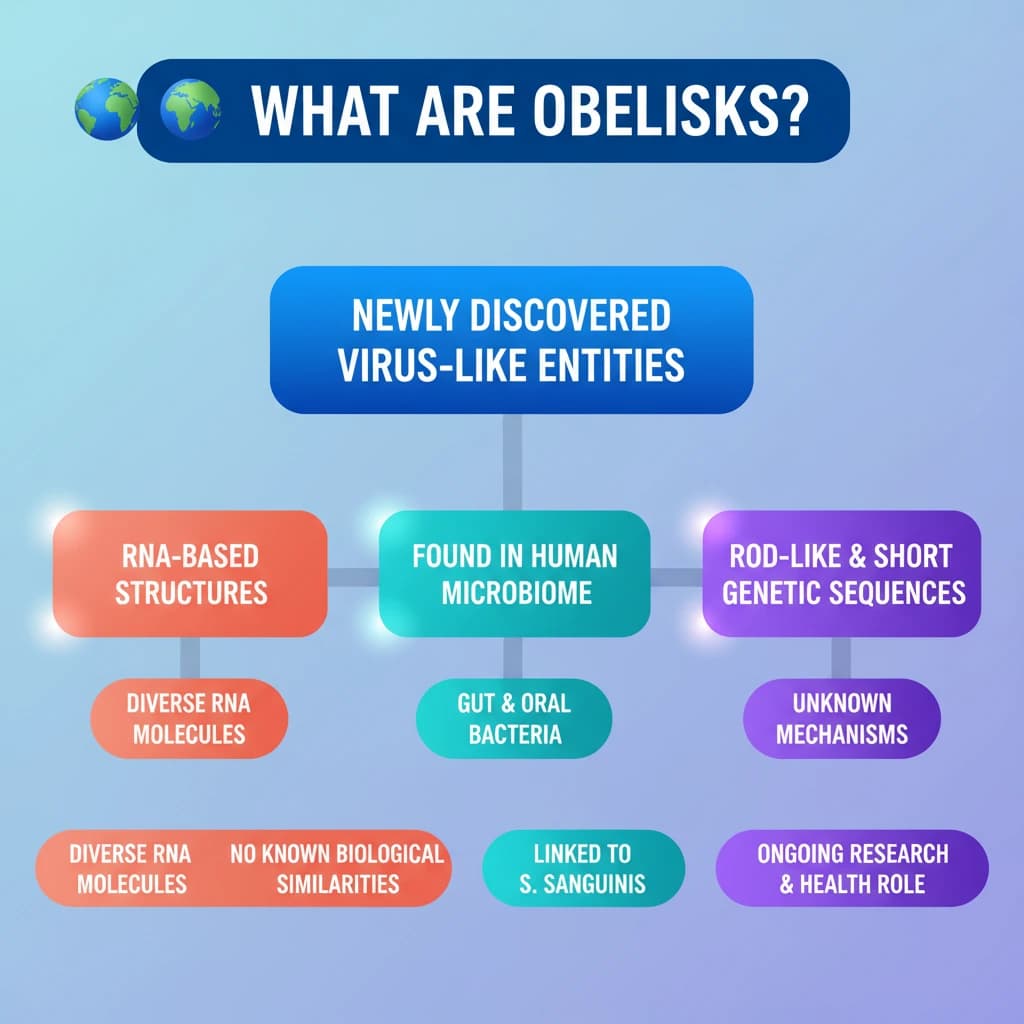
  • Obelisks are newly discovered virus-like entities composed of diverse RNA molecules.
  • They are found in the human body and global microbiome, particularly associated with gut and oral bacteria.
  • Characterized by highly symmetrical, rod-like structures and short (~1,000 nucleotides) genetic sequences with no known biological similarities.
  • Initial research suggests a possible link to the oral bacterium Streptococcus sanguinis.
  • Their mechanisms of genome replication, transmission, pathogenicity, evolution, and specific roles in human health and disease are currently unknown and are subjects of ongoing research.
What are Obelisks?

What are Obelisks?

Medium⏱️ 5 min read✓ 98% Verified
science and technology

📖 Introduction

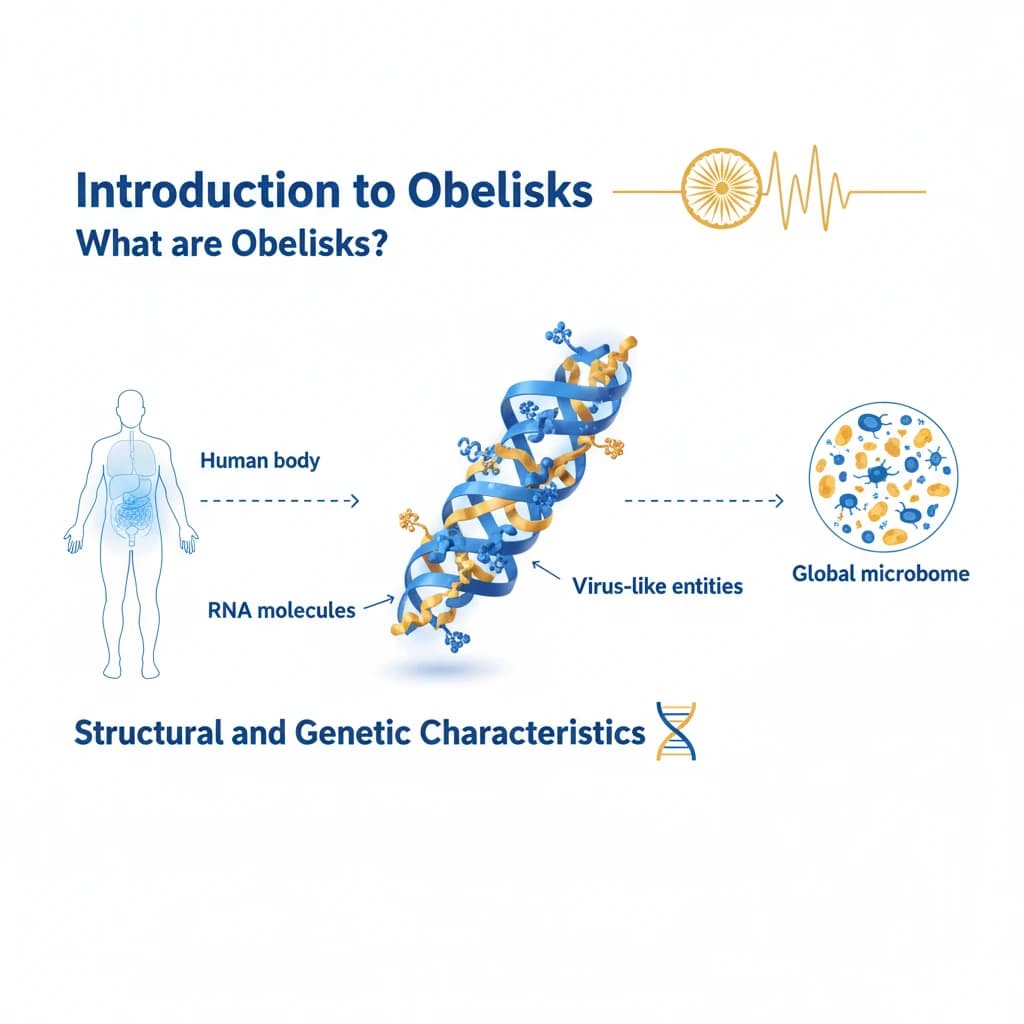
<h4>Introduction to Obelisks</h4><p><strong>Obelisks</strong> represent a novel category of <strong>virus-like entities</strong>. They are primarily composed of diverse <strong>RNA molecules</strong>, distinguishing them from traditional viruses.</p><p>These entities have been identified residing within the <strong>human body</strong> and across the vast <strong>global microbiome</strong>, indicating a widespread, yet previously undetected, presence.</p><h4>Structural and Genetic Characteristics</h4><div class='info-box'><p><strong>Obelisks</strong> are characterized by their highly <strong>symmetrical, rod-like structures</strong>. This distinctive shape visually resembles the ancient monumental obelisks, inspiring their name.</p></div><p>Their <strong>genetic sequences</strong> are notably short, typically around <strong>1,000 nucleotides long</strong>. A significant finding is the absence of any detectable similarities to previously known <strong>biological agents</strong>, highlighting their unique nature.</p><h4>Discovery and Potential Host</h4><p>The initial study involved analyzing <strong>RNA data</strong> obtained from both <strong>gut and oral bacteria</strong>. However, researchers could not definitively pinpoint which specific bacteria hosted a given obelisk.</p><div class='key-point-box'><p>Initial findings suggest a possible association with the bacterial species <strong><em>Streptococcus sanguinis</em></strong>. This bacterium is commonly found within the <strong>human mouth</strong>, hinting at a potential oral microbiome connection.</p></div><h4>Unanswered Questions and Future Research</h4><p>The discovery of <strong>Obelisks</strong> has opened a new frontier in microbiology, posing numerous critical questions regarding their fundamental biology and ecological role.</p><ul><li>How do they achieve <strong>genome replication</strong>?</li><li>What are their mechanisms of <strong>transmission</strong> between hosts?</li><li>Do they exhibit <strong>pathogenicity</strong> (ability to cause disease) in humans or other organisms?</li><li>How have they undergone <strong>evolution</strong>, and what are their evolutionary relationships?</li><li>What are their potential roles in overall <strong>human health and disease</strong>, and do they contribute to specific conditions?</li></ul><div class='exam-tip-box'><p>Further research is crucial to unravel the mysteries surrounding <strong>Obelisks</strong>. This will shed light on their <strong>ecological significance</strong> and their broader <strong>impact on human health</strong>, a topic potentially relevant for <strong>UPSC Mains GS-III Science & Technology</strong> and <strong>Public Health</strong>.</p></div>
Concept Diagram

💡 Key Takeaways

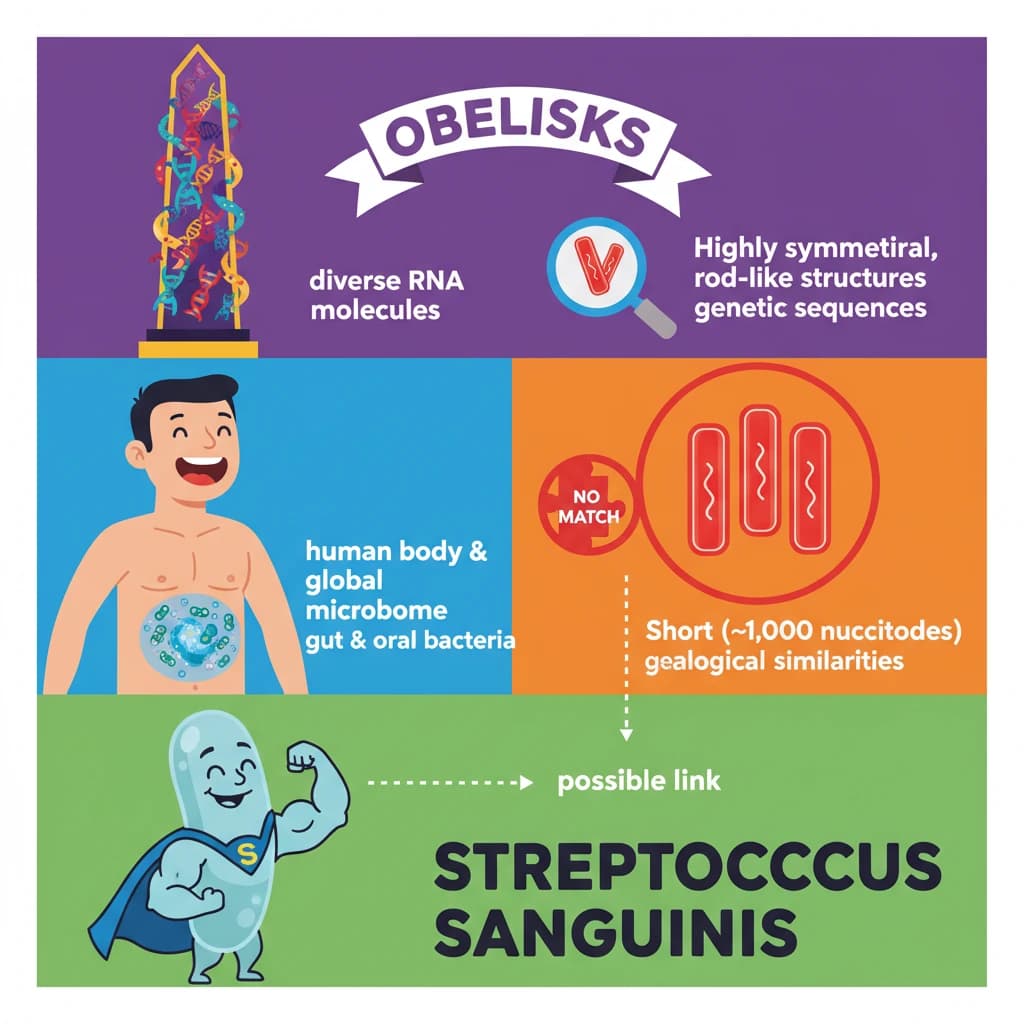
  • •Obelisks are newly discovered virus-like entities composed of diverse RNA molecules.
  • •They are found in the human body and global microbiome, particularly associated with gut and oral bacteria.
  • •Characterized by highly symmetrical, rod-like structures and short (~1,000 nucleotides) genetic sequences with no known biological similarities.
  • •Initial research suggests a possible link to the oral bacterium Streptococcus sanguinis.
  • •Their mechanisms of genome replication, transmission, pathogenicity, evolution, and specific roles in human health and disease are currently unknown and are subjects of ongoing research.

🧠 Memory Techniques
Memory Aid
98% Verified Content

Related Topics

Loading related topics...
Explore:Science And Technology Topics·All Subjects·Daily Current Affairs·Editorial Analysis·Previous Year Questions·UPSC GPT