West Nile Fever - UPSC Science And Technology
What is West Nile Fever in UPSC Science And Technology?
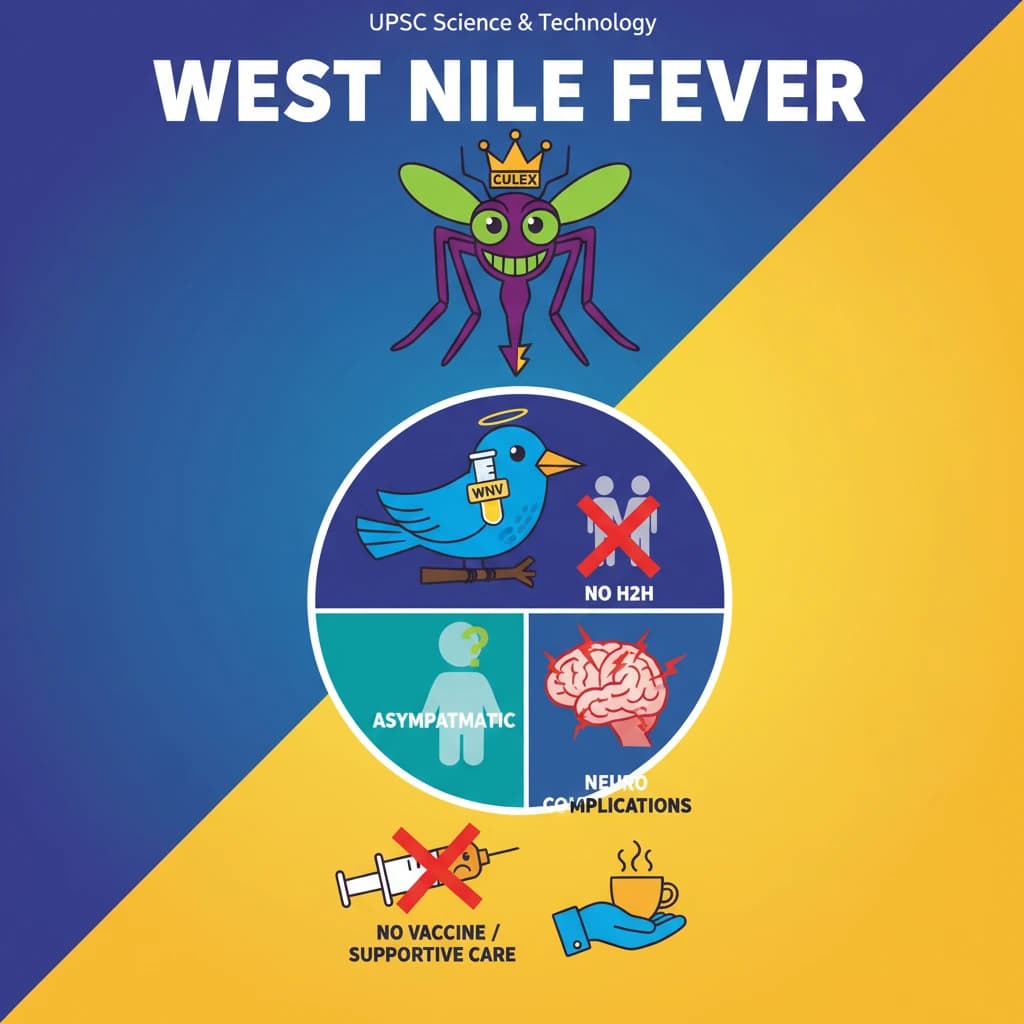
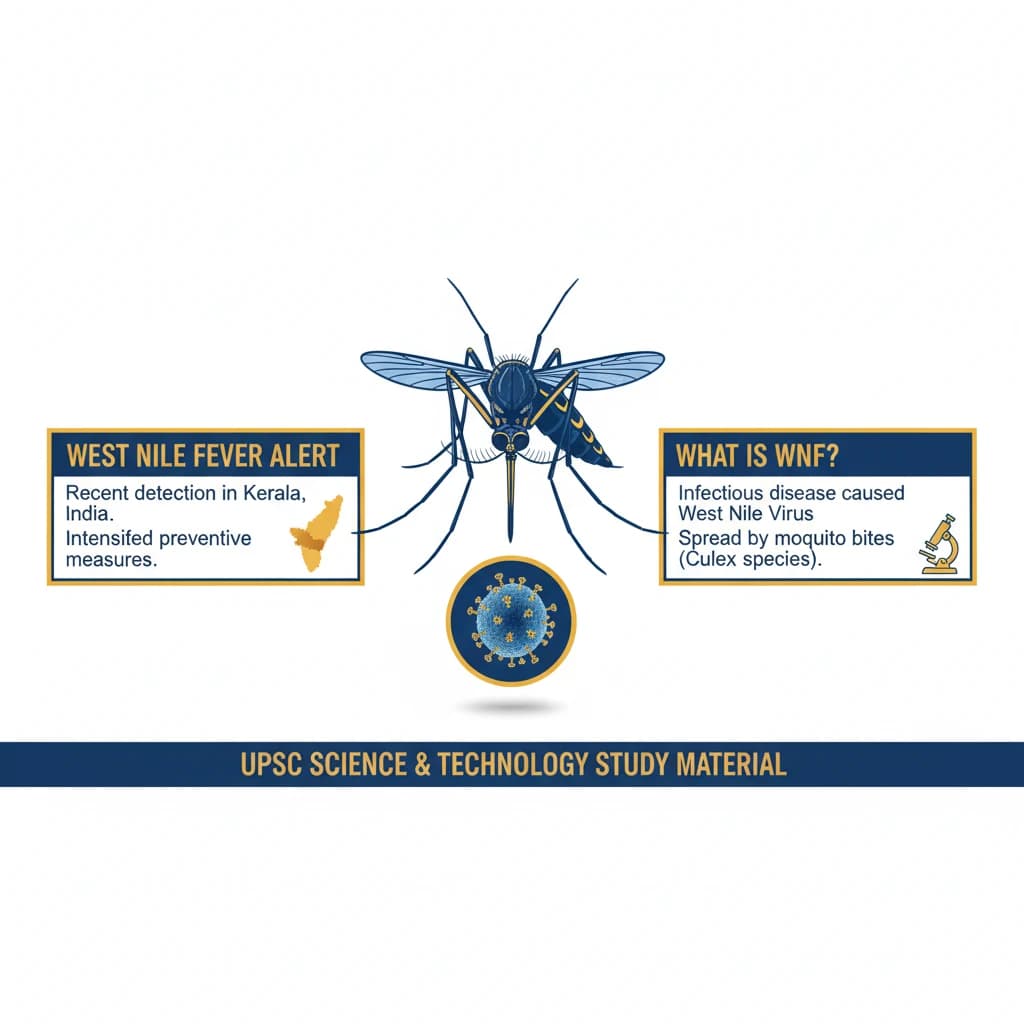
West Nile Fever is a key topic under Science And Technology for UPSC Civil Services Examination. Key points include: West Nile Fever (WNF) is a zoonotic viral disease caused by West Nile virus (WNV), primarily transmitted by Culex mosquitoes.. Birds are the reservoir hosts; humans are incidental hosts. No human-to-human transmission via casual contact.. Most WNF cases are asymptomatic; severe cases can lead to neurological complications.. Understanding this topic is essential for both UPSC Prelims and Mains preparation.
Why is West Nile Fever important for UPSC exam?
West Nile Fever is a Medium-level topic in UPSC Science And Technology. It is tested in both Prelims (factual MCQs) and Mains (analytical answer writing). Previous year UPSC questions have frequently covered aspects of West Nile Fever, making it essential for comprehensive IAS preparation.
How to prepare West Nile Fever for UPSC?
To prepare West Nile Fever for UPSC: (1) Study the comprehensive notes covering all key concepts on Vaidra. (2) Practice previous year questions on this topic. (3) Connect it with current affairs using daily updates. (4) Revise using key takeaways and mind maps available for Science And Technology. (5) Write practice answers linking West Nile Fever to related GS Paper topics.
Key takeaways of West Nile Fever for UPSC
- West Nile Fever (WNF) is a zoonotic viral disease caused by West Nile virus (WNV), primarily transmitted by Culex mosquitoes.
- Birds are the reservoir hosts; humans are incidental hosts. No human-to-human transmission via casual contact.
- Most WNF cases are asymptomatic; severe cases can lead to neurological complications.
- No human vaccine is currently available; treatment is supportive care.
- Recent detection in Kerala highlights ongoing public health challenges and the need for robust surveillance and vector control.
- Challenges in vaccine development (e.g., HIV) underscore the complexity of viral mutation and immune evasion.
West Nile Fever
📖 Introduction
💡 Key Takeaways
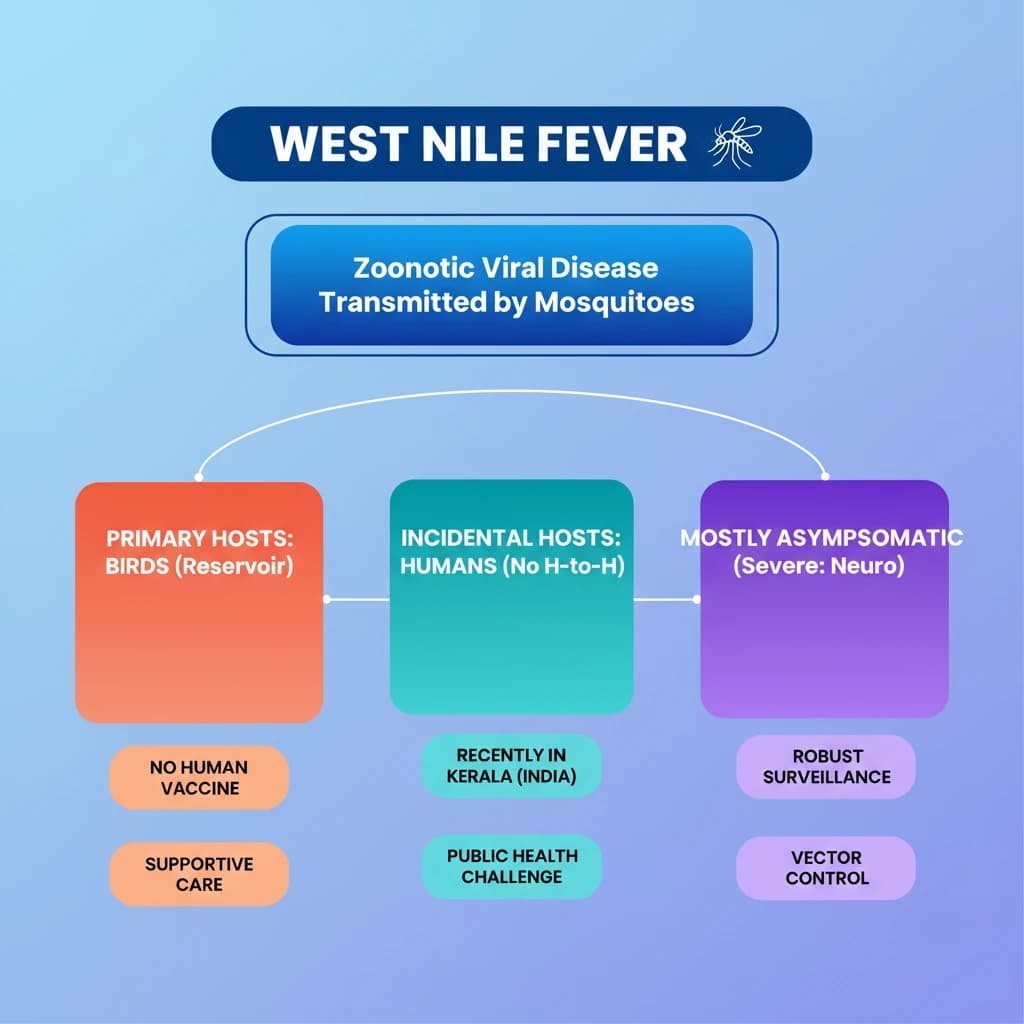
- •West Nile Fever (WNF) is a zoonotic viral disease caused by West Nile virus (WNV), primarily transmitted by Culex mosquitoes.
- •Birds are the reservoir hosts; humans are incidental hosts. No human-to-human transmission via casual contact.
- •Most WNF cases are asymptomatic; severe cases can lead to neurological complications.
- •No human vaccine is currently available; treatment is supportive care.
- •Recent detection in Kerala highlights ongoing public health challenges and the need for robust surveillance and vector control.
- •Challenges in vaccine development (e.g., HIV) underscore the complexity of viral mutation and immune evasion.
🧠 Memory Techniques