📖 Introduction
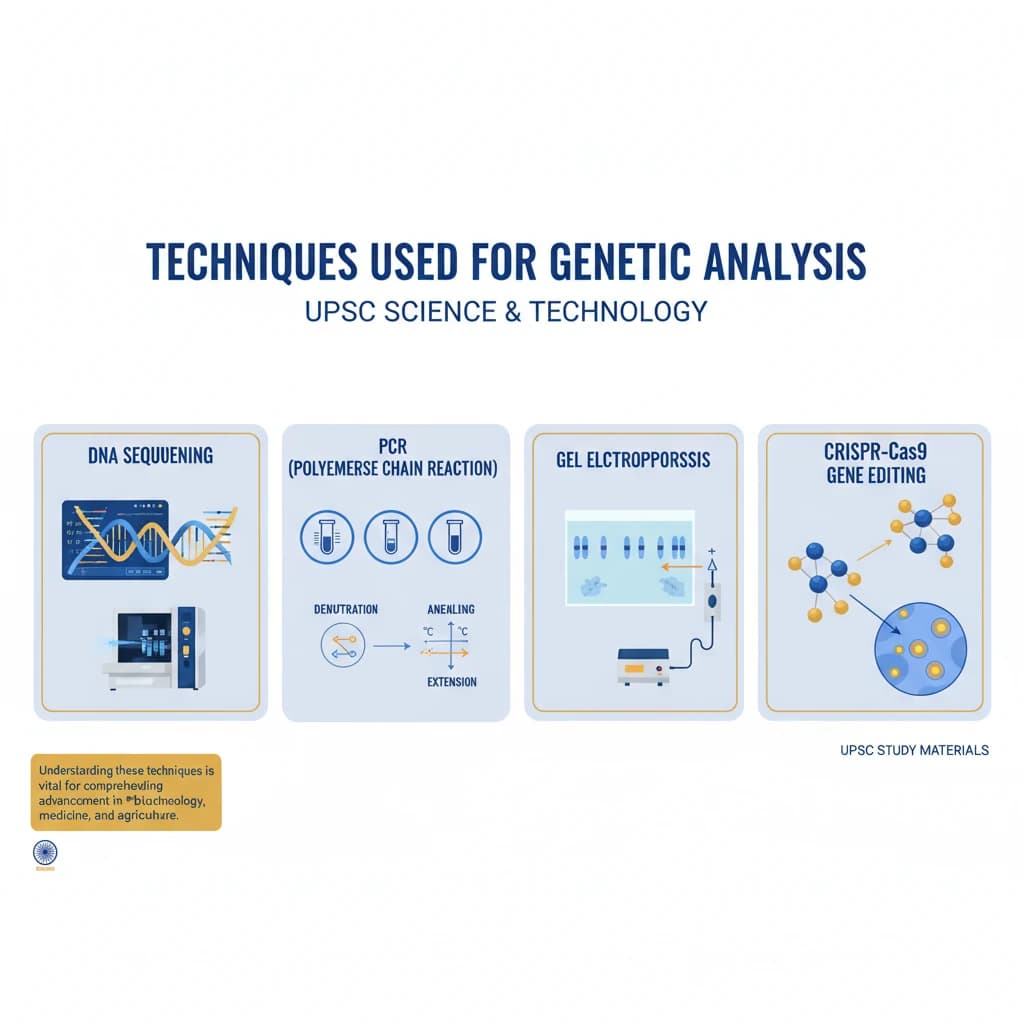
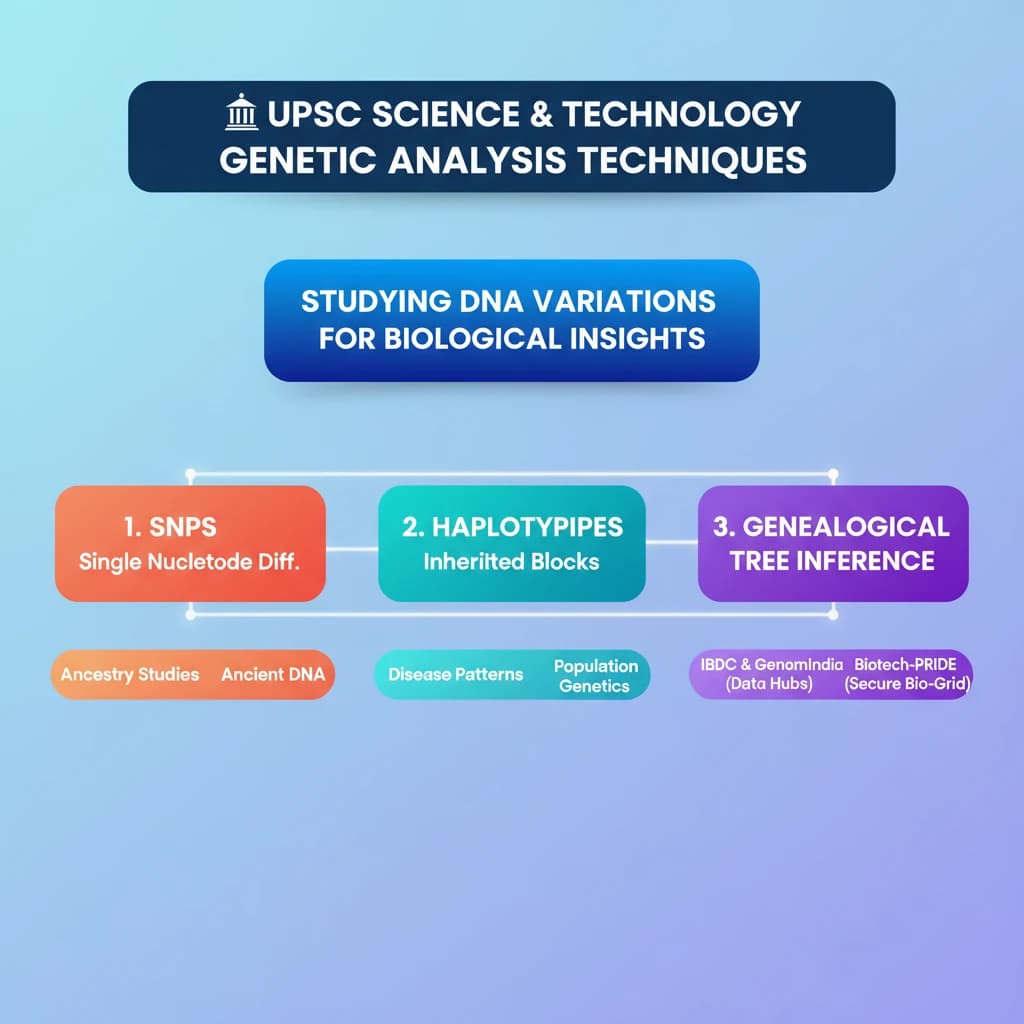
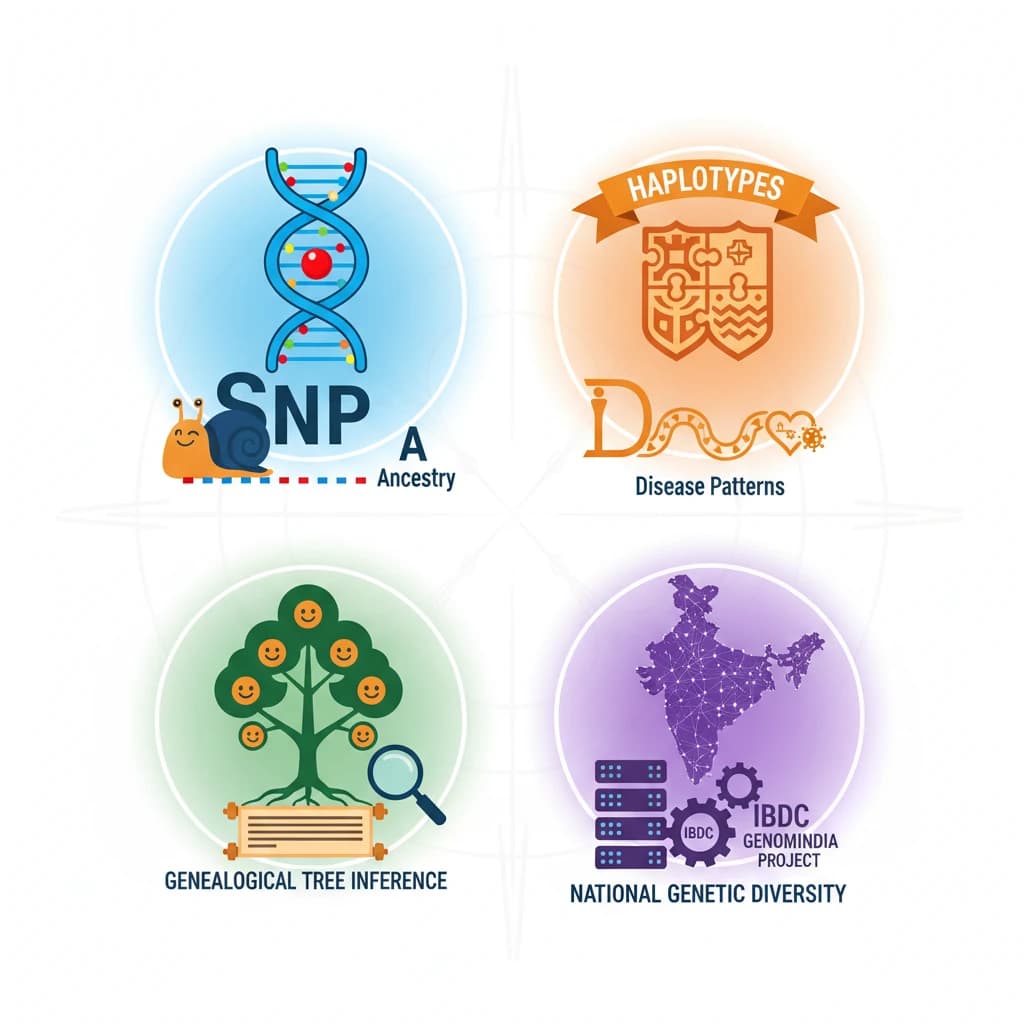
<h4>Introduction to Genetic Analysis Techniques</h4><p><strong>Genetic analysis</strong> involves various laboratory methods to study the structure and function of an organism's genetic material. These techniques are crucial for understanding disease patterns, population genetics, and reconstructing evolutionary histories.</p><div class='key-point-box'><p>Understanding these techniques is vital for comprehending advancements in <strong>biotechnology</strong>, <strong>medicine</strong>, and <strong>forensics</strong>, often relevant for UPSC General Studies Paper 3.</p></div><h4>Single Nucleotide Polymorphisms (SNPs)</h4><p>A <strong>Single Nucleotide Polymorphism (SNP)</strong> refers to a variation at a single position in a <strong>DNA sequence</strong> among individuals. It is the most common type of genetic variation.</p><div class='info-box'><p><strong>Definition:</strong> An <strong>SNP</strong> occurs when a single nucleotide (<strong>A, C, G, or T</strong>) in the genome differs between members of a species or paired chromosomes in an individual.</p></div><p><strong>SNP analysis</strong> is a laboratory method used to identify these single nucleotide variations. It helps in finding differences in a DNA sequence where one nucleotide varies.</p><p>This technique is widely employed to reconstruct <strong>genetic histories</strong> and develop <strong>ancestry models</strong>, particularly from <strong>ancient genetic material (aDNA)</strong>. It provides insights into population movements and relationships.</p><div class='key-point-box'><p><strong>Challenges:</strong> <strong>SNP analysis</strong> requires <strong>high-quality DNA samples</strong>. It also faces difficulties when distinguishing between closely related ancestral groups due to minimal genetic divergence.</p></div><h4>Haplotypes Method</h4><p>The <strong>Haplotypes Method</strong> focuses on studying combinations of <strong>genetic markers</strong> that are inherited together. These markers are typically located on the same <strong>chromosome</strong>.</p><div class='info-box'><p><strong>Definition:</strong> A <strong>haplotype</strong> is a group of <strong>alleles</strong> (different forms of a gene) at different loci on a single chromosome that are inherited together from a single parent.</p></div><p>This technique offers deeper insights into <strong>disease patterns</strong> and <strong>population genetics</strong>. It can reveal information that might be overlooked when analyzing individual genetic markers in isolation.</p><p>By examining these inherited blocks of genetic information, researchers can gain a more comprehensive understanding of genetic predispositions and population structures.</p><h4>Genealogical Tree Inference</h4><p><strong>Genealogical Tree Inference</strong> is a method used to map the ancestry and genetic relationships among individuals. It achieves this by constructing detailed <strong>family trees</strong> or <strong>genealogical trees</strong>.</p><p>This technique involves analyzing both <strong>modern genomes</strong> and <strong>ancient genomes</strong>. Its primary goal is to understand complex <strong>population structures</strong> and track <strong>demographic changes</strong> over time.</p><p>It helps in tracing lineage, identifying common ancestors, and understanding how populations have evolved and migrated across generations.</p><h4>Indian Biological Data Centre (IBDC)</h4><p>The <strong>Indian Biological Data Centre (IBDC)</strong> is India’s first national repository specifically designed for <strong>life science data</strong>. It plays a crucial role in managing and sharing vast amounts of biological information.</p><div class='info-box'><p>The <strong>IBDC</strong> archives <strong>whole genome sequencing (WGS) samples</strong>. These samples are invaluable resources for genomic research and personalized medicine initiatives.</p></div><p>A significant dataset from the <strong>GenomIndia Project</strong>, comprising <strong>whole genome sequencing (WGS) samples</strong>, is archived at the <strong>IBDC</strong>. This makes it accessible to the global research community.</p><p>The <strong>IBDC Portal</strong> facilitates seamless access to this genetic data. This accessibility supports global advancements in <strong>genomics research</strong> and the development of <strong>personalized medicine</strong> approaches.</p><h4>FeeD Protocols</h4><p>The <strong>FeeD Protocols</strong> are designed to ensure the <strong>ethical, transparent, and secure sharing</strong> of high-quality genomic data. These protocols operate under the overarching framework of the <strong>Biotech-PRIDE Guidelines</strong>.</p><div class='key-point-box'><p><strong>Purpose:</strong> <strong>FeeD Protocols</strong> aim to standardize the process of data exchange, ensuring integrity and privacy while maximizing the utility of genomic data for research.</p></div><h4>GenomIndia Project (GIP)</h4><p>The <strong>GenomIndia Project (GIP)</strong> is a flagship initiative led by the <strong>Department of Biotechnology (DBT)</strong>. It emphasizes the critical importance of understanding India's unique genetic diversity.</p><p>The project's main objective is to create a <strong>comprehensive database of India’s genetic diversity</strong>. This database will serve as a foundational resource for various biomedical and agricultural research efforts.</p><div class='exam-tip-box'><p>The <strong>GenomIndia Project</strong> is a key example of national scientific initiatives relevant for questions on <strong>Science & Technology policy</strong> and <strong>biotechnology advancements</strong> in UPSC Mains <strong>GS Paper 3</strong>.</p></div><h4>Biotech-PRIDE Guidelines</h4><p>The <strong>“Biotech-PRIDE Guidelines” (Promotion of Research and Innovation through Data Exchange)</strong> were released in <strong>2021</strong> by the <strong>Department of Biotechnology (DBT)</strong>.</p><p>These guidelines establish a robust framework for the exchange of <strong>biological data</strong> among various research groups across India. They promote collaboration and data integration.</p><p>Key objectives of the guidelines include:</p><ul><li><strong>Ensuring better integration</strong> of biological data.</li><li>Facilitating informed <strong>decision-making</strong> in research.</li><li>Promoting <strong>equitable access</strong> to valuable biological datasets.</li><li>Encouraging <strong>timely sharing</strong> of research data.</li><li><strong>Avoiding duplication</strong> of research efforts.</li><li>Maximizing the benefits derived from <strong>public investment in research</strong>.</li></ul><p>The guidelines are implemented through the <strong>Indian Biological Data Centre (IBDC)</strong>, which is housed at the <strong>Regional Centre for Biotechnology (RCB)</strong> in <strong>Haryana</strong>.</p><p>Under the <strong>Biotech-PRIDE Guidelines</strong>, existing biological datasets are connected to the <strong>IBDC</strong>, forming a larger network known as the <strong>Bio-Grid</strong>.</p><div class='info-box'><p>The <strong>Bio-Grid</strong> functions as a <strong>National Repository for biological data</strong>. It ensures the secure exchange of data while maintaining high standards of safety, quality, and clear data access protocols.</p></div><h4>Regional Centre for Biotechnology (RCB)</h4><p>The <strong>Regional Centre for Biotechnology (RCB)</strong> was established by the <strong>Department of Biotechnology (DBT)</strong>. It is a key institution focused on advancing biotechnology in India.</p><p>The <strong>RCB</strong>'s mandate includes providing high-quality <strong>biotechnology education</strong>, conducting cutting-edge <strong>research</strong>, and offering specialized <strong>training</strong> programs.</p><div class='info-box'><p>The <strong>RCB</strong> was recognized as an <strong>Institution of National Importance</strong> in <strong>2016</strong>. This designation underscores its strategic importance in India's scientific landscape.</p></div><p>The center actively fosters <strong>innovation</strong> and is dedicated to developing <strong>skilled human resources</strong>. These efforts aim to address critical challenges in sectors such as <strong>health, agriculture, and the environment</strong>.</p>