Tardigrades: Adaptations, Cryptobiosis, and Potential Human Applications - UPSC Science And Technology
What is Tardigrades: Adaptations, Cryptobiosis, and Potential Human Applications in UPSC Science And Technology?
Tardigrades: Adaptations, Cryptobiosis, and Potential Human Applications is a key topic under Science And Technology for UPSC Civil Services Examination. Key points include: Tardigrades ('water bears') are microscopic extremophiles known for extraordinary resilience.. They can survive extreme radiation, starvation, lack of oxygen, dehydration, freezing, and even space vacuum.. Cryptobiosis is a key survival mechanism, allowing them to halt biological activity in adverse conditions.. Understanding this topic is essential for both UPSC Prelims and Mains preparation.
Why is Tardigrades: Adaptations, Cryptobiosis, and Potential Human Applications important for UPSC exam?
Tardigrades: Adaptations, Cryptobiosis, and Potential Human Applications is a Medium-level topic in UPSC Science And Technology. It is tested in both Prelims (factual MCQs) and Mains (analytical answer writing). Previous year UPSC questions have frequently covered aspects of Tardigrades: Adaptations, Cryptobiosis, and Potential Human Applications, making it essential for comprehensive IAS preparation.
How to prepare Tardigrades: Adaptations, Cryptobiosis, and Potential Human Applications for UPSC?
To prepare Tardigrades: Adaptations, Cryptobiosis, and Potential Human Applications for UPSC: (1) Study the comprehensive notes covering all key concepts on Vaidra. (2) Practice previous year questions on this topic. (3) Connect it with current affairs using daily updates. (4) Revise using key takeaways and mind maps available for Science And Technology. (5) Write practice answers linking Tardigrades: Adaptations, Cryptobiosis, and Potential Human Applications to related GS Paper topics.
Key takeaways of Tardigrades: Adaptations, Cryptobiosis, and Potential Human Applications for UPSC
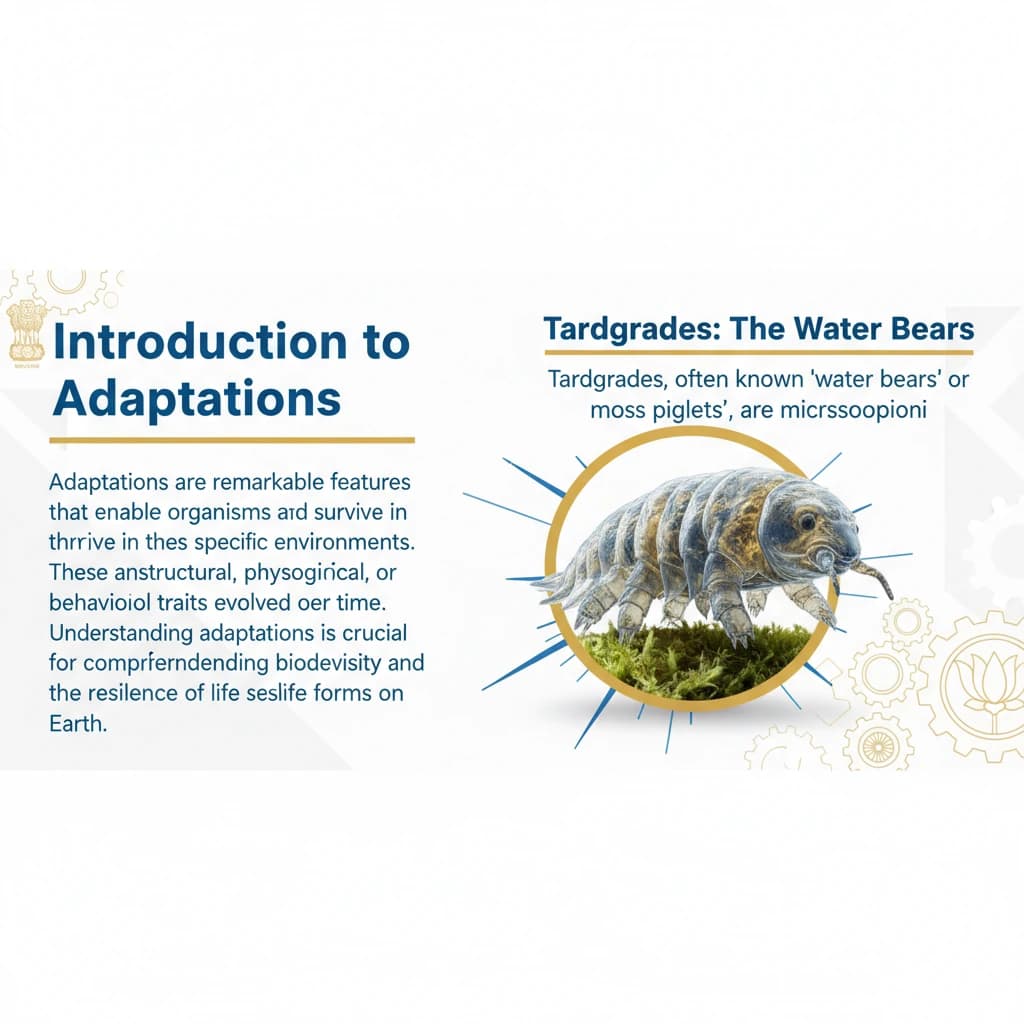
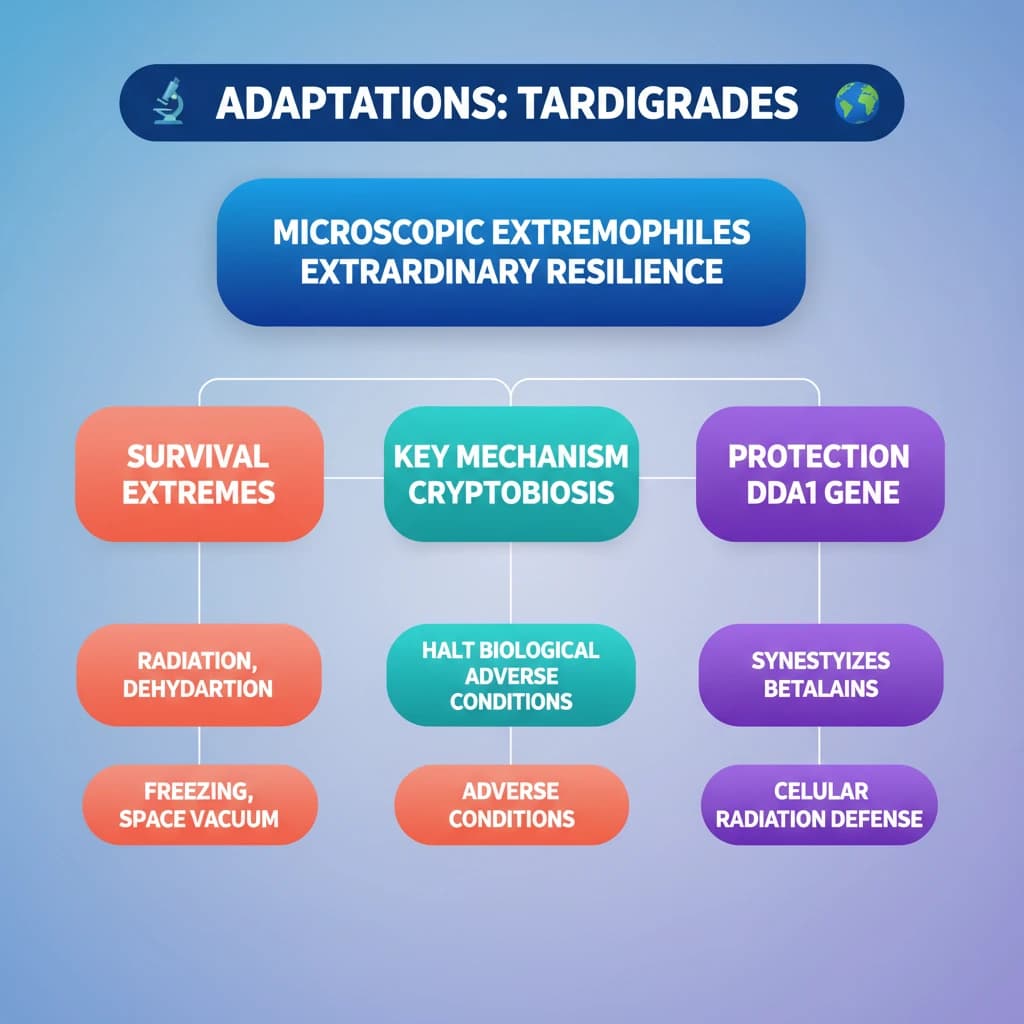
- Tardigrades ('water bears') are microscopic extremophiles known for extraordinary resilience.
- They can survive extreme radiation, starvation, lack of oxygen, dehydration, freezing, and even space vacuum.
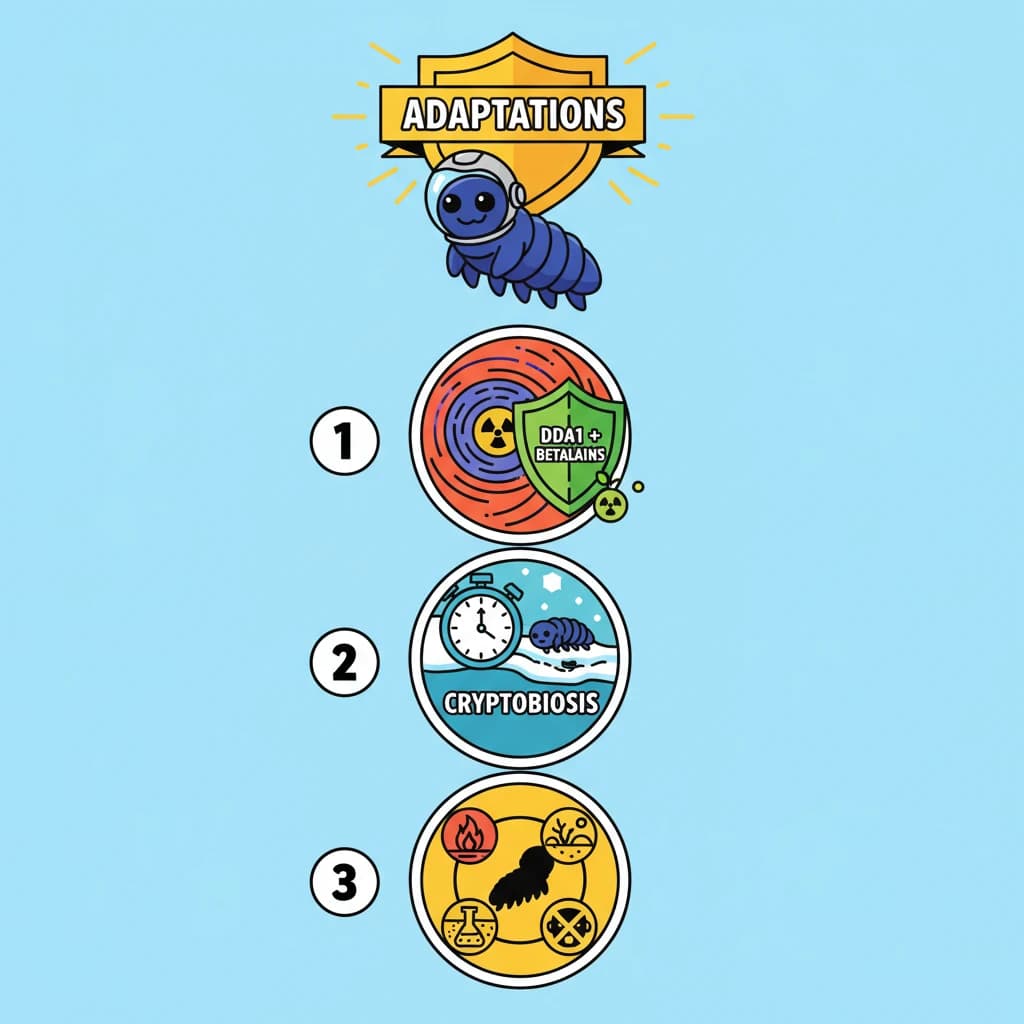
- Cryptobiosis is a key survival mechanism, allowing them to halt biological activity in adverse conditions.
- The DDA1 gene helps synthesize betalains (antioxidants) that protect cells from radiation damage.
- Their properties offer potential applications in medicine (organ preservation), space technology, and radiation protection.
Tardigrades: Adaptations, Cryptobiosis, and Potential Human Applications
📖 Introduction
💡 Key Takeaways
- •Tardigrades ('water bears') are microscopic extremophiles known for extraordinary resilience.
- •They can survive extreme radiation, starvation, lack of oxygen, dehydration, freezing, and even space vacuum.
- •Cryptobiosis is a key survival mechanism, allowing them to halt biological activity in adverse conditions.
- •The DDA1 gene helps synthesize betalains (antioxidants) that protect cells from radiation damage.
- •Their properties offer potential applications in medicine (organ preservation), space technology, and radiation protection.
🧠 Memory Techniques