Loading page, please wait…
Vaidra Logo
Vaidra

Top 4 items + smart groups

UPSC GPT
New
Current Affairs
Daily Solutions
Daily Puzzle
Mains Evaluator

Version 2.0.0 • Built with ❤️ for UPSC aspirants

Loading...
Loading...
Loading...
Loading...
Loading...
Loading...
Loading...
Loading...
Loading...
Loading...
Loading...
Loading...
Loading...
Back
All Subjects

Topics

0 topics • 0 completed

Loading topics...
Loading...
Loading...
Loading...
Loading...
Loading...
Overall Progress0%

What are the Key Facts About Tuberculosis? - UPSC Science And Technology

What is What are the Key Facts About Tuberculosis? in UPSC Science And Technology?

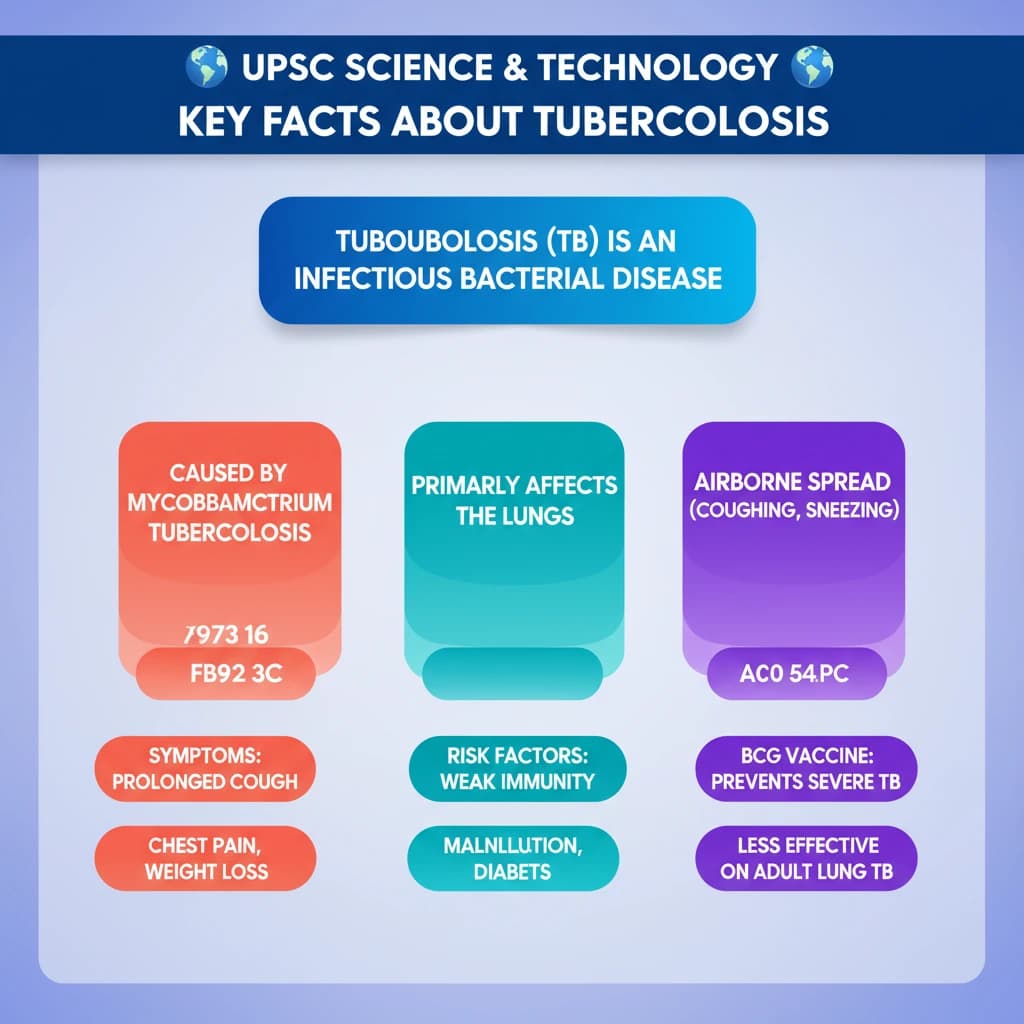
What are the Key Facts About Tuberculosis? is a key topic under Science And Technology for UPSC Civil Services Examination. Key points include: Tuberculosis (TB) is an infectious disease caused by Mycobacterium tuberculosis, primarily affecting the lungs.. It spreads through airborne droplets from coughing, sneezing, or spitting.. Common symptoms include prolonged cough, chest pain, weight loss, fever, and night sweats.. Understanding this topic is essential for both UPSC Prelims and Mains preparation.

Why is What are the Key Facts About Tuberculosis? important for UPSC exam?

What are the Key Facts About Tuberculosis? is a Medium-level topic in UPSC Science And Technology. It is tested in both Prelims (factual MCQs) and Mains (analytical answer writing). Previous year UPSC questions have frequently covered aspects of What are the Key Facts About Tuberculosis?, making it essential for comprehensive IAS preparation.

How to prepare What are the Key Facts About Tuberculosis? for UPSC?

To prepare What are the Key Facts About Tuberculosis? for UPSC: (1) Study the comprehensive notes covering all key concepts on Vaidra. (2) Practice previous year questions on this topic. (3) Connect it with current affairs using daily updates. (4) Revise using key takeaways and mind maps available for Science And Technology. (5) Write practice answers linking What are the Key Facts About Tuberculosis? to related GS Paper topics.

Key takeaways of What are the Key Facts About Tuberculosis? for UPSC

  • Tuberculosis (TB) is an infectious disease caused by Mycobacterium tuberculosis, primarily affecting the lungs.
  • It spreads through airborne droplets from coughing, sneezing, or spitting.
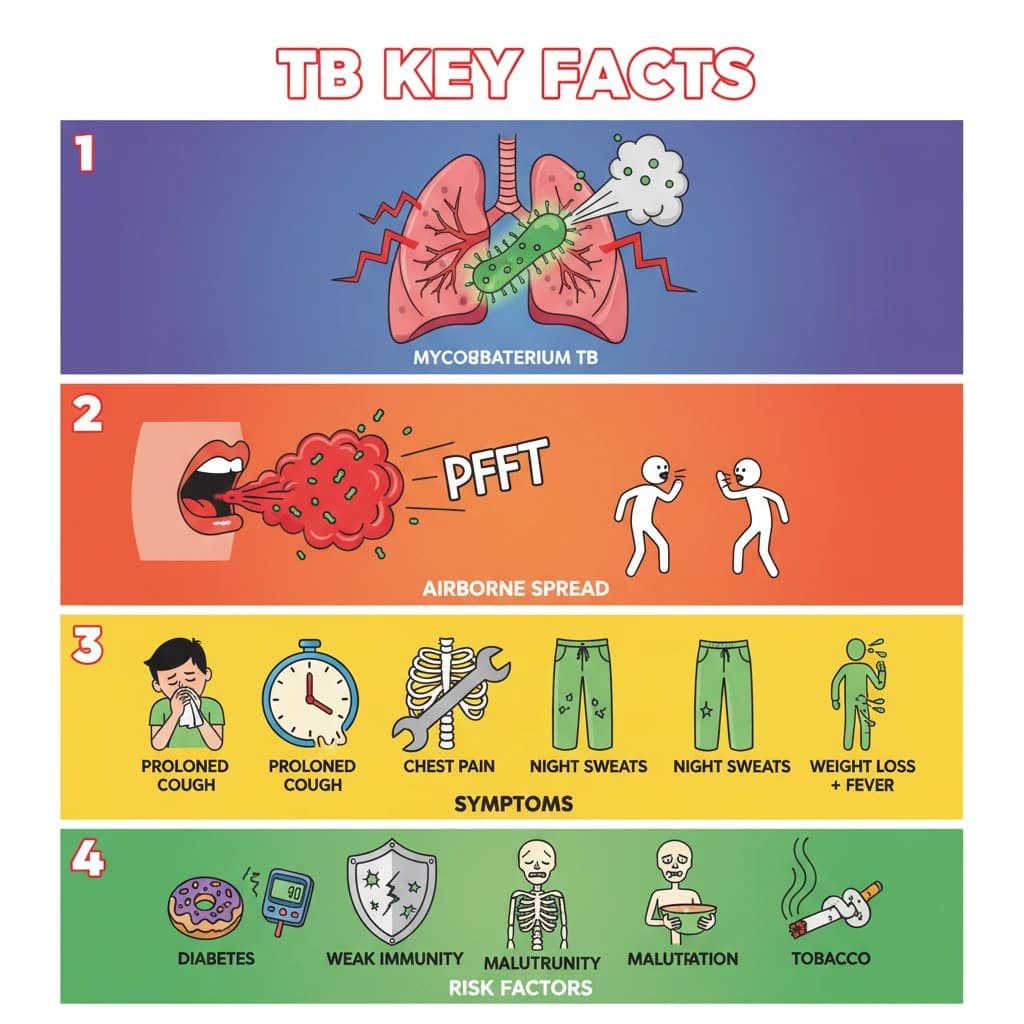
  • Common symptoms include prolonged cough, chest pain, weight loss, fever, and night sweats.
  • Risk factors include diabetes, weakened immune system, malnutrition, and tobacco use.
  • The BCG vaccine prevents severe forms of TB outside the lungs but is less effective against adult pulmonary TB.
  • TB is preventable and curable with a multi-drug antibiotic regimen, typically lasting 6-9 months.
  • Multidrug-resistant TB (MDR-TB) is a serious challenge, requiring longer and more toxic second-line treatments.
What are the Key Facts About Tuberculosis?

What are the Key Facts About Tuberculosis?

Medium⏱️ 7 min read✓ 95% Verified
science and technology

📖 Introduction

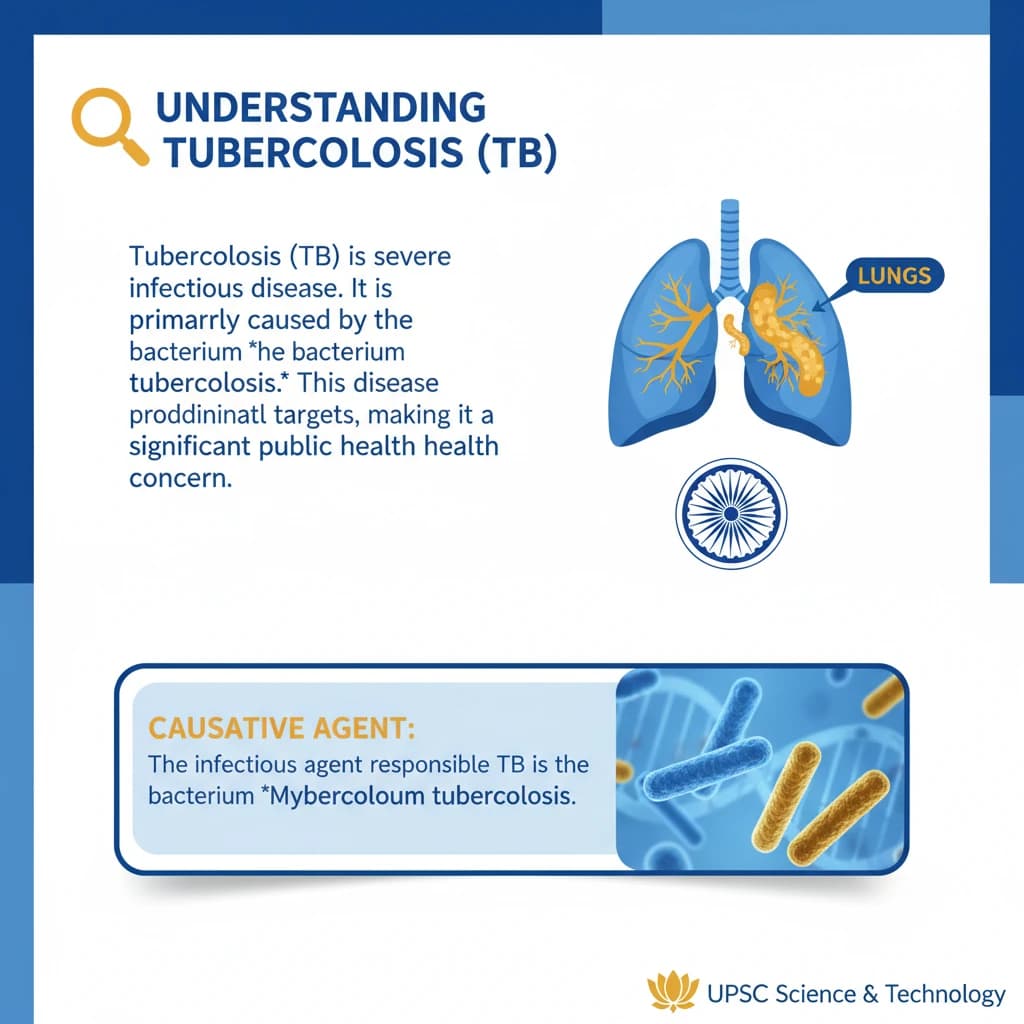
<h4>Understanding Tuberculosis (TB)</h4><p><strong>Tuberculosis (TB)</strong> is a severe infectious disease. It is primarily caused by the bacterium <strong><em>Mycobacterium tuberculosis</em></strong>. This disease predominantly targets the <strong>lungs</strong>, making it a significant public health concern.</p><div class='info-box'><p><strong>Causative Agent:</strong> The infectious agent responsible for TB is the bacterium <strong><em>Mycobacterium tuberculosis</em></strong>.</p></div><h4>Transmission of TB</h4><p>TB spreads through the air, making it highly contagious. When an infected individual performs actions like <strong>coughing</strong>, <strong>sneezing</strong>, or <strong>spitting</strong>, tiny droplets containing the bacteria are released into the atmosphere, which can then be inhaled by others.</p><h4>Common Symptoms of Tuberculosis</h4><p>The symptoms of TB can vary but often include a range of debilitating signs. Recognizing these symptoms is crucial for early diagnosis and treatment.</p><ul><li><strong>Prolonged cough:</strong> A persistent cough lasting for several weeks is a hallmark symptom.</li><li><strong>Chest pain:</strong> Discomfort or pain in the chest area.</li><li><strong>Weakness and fatigue:</strong> General feelings of malaise and lack of energy.</li><li><strong>Weight loss:</strong> Unexplained and significant reduction in body weight.</li><li><strong>Fever:</strong> Elevated body temperature, often low-grade.</li><li><strong>Night sweats:</strong> Excessive sweating during sleep.</li></ul><h4>Risk Factors for TB Disease</h4><p>Certain conditions and lifestyle choices can significantly increase an individual's susceptibility to developing active TB disease after exposure to the bacteria.</p><ul><li><strong>Diabetes:</strong> Compromises the immune system.</li><li><strong>Weakened immune system:</strong> Conditions like HIV/AIDS or immunosuppressive therapy.</li><li><strong>Malnutrition:</strong> A poor nutritional state weakens the body's defenses.</li><li><strong>Tobacco use:</strong> Damages lung health and overall immunity.</li></ul><h4>Prevention Strategies for Tuberculosis</h4><p>Effective prevention involves a multi-pronged approach, focusing on early detection and vaccination.</p><ul><li><strong>Seek medical attention:</strong> Prompt consultation for persistent symptoms.</li><li><strong>Get tested if at risk:</strong> Regular screening for individuals in high-risk groups.</li><li><strong>Early treatment:</strong> Initiating therapy immediately upon diagnosis prevents further spread.</li></ul><div class='info-box'><p><strong>BCG Vaccine:</strong> The <strong>Bacille Calmette-Guérin (BCG) vaccine</strong> is crucial for preventing severe forms of TB, particularly in children. It primarily helps prevent <strong>TB outside the lungs</strong> (e.g., TB meningitis, disseminated TB) but offers limited protection against <strong>pulmonary TB</strong> in adults.</p></div><h4>Prevalence and Treatment of Tuberculosis</h4><p>Tuberculosis remains a global health challenge due to its widespread prevalence and the complexities of its treatment.</p><div class='info-box'><p><strong>Global Prevalence:</strong> Approximately <strong>25% of the global population</strong> is estimated to be infected with TB bacteria. Out of these, about <strong>5-10%</strong> of infections typically progress to active TB disease.</p></div><div class='key-point-box'><p><strong>Curability:</strong> Despite its severity, TB is both <strong>preventable and curable</strong>. Treatment involves a regimen of specific antibiotics.</p></div><p>Standard treatment for active TB disease involves a combination of antibiotics, typically administered over several months to ensure complete eradication of the bacteria.</p><div class='info-box'><p><strong>First-line Anti-TB Drugs:</strong> The primary antibiotics used in standard TB treatment include <strong>isoniazid</strong>, <strong>rifampin</strong>, <strong>pyrazinamide</strong>, <strong>ethambutol</strong>, and sometimes <strong>streptomycin</strong>.</p></div><h4>Understanding Multidrug-Resistant TB (MDR-TB)</h4><p>A significant challenge in TB control is the emergence of drug-resistant strains, particularly <strong>Multidrug-resistant TB (MDR-TB)</strong>.</p><div class='info-box'><p><strong>MDR-TB Definition:</strong> <strong>MDR-TB</strong> is a form of tuberculosis caused by bacteria that are resistant to at least the two most potent first-line anti-TB drugs: <strong>isoniazid</strong> and <strong>rifampin</strong>.</p></div><p>Treating MDR-TB is considerably more complex and resource-intensive. It requires the use of <strong>second-line drugs</strong>, which are often more costly, have more severe side effects, and require longer treatment durations.</p>
Concept Diagram

💡 Key Takeaways

  • •Tuberculosis (TB) is an infectious disease caused by Mycobacterium tuberculosis, primarily affecting the lungs.
  • •It spreads through airborne droplets from coughing, sneezing, or spitting.
  • •Common symptoms include prolonged cough, chest pain, weight loss, fever, and night sweats.
  • •Risk factors include diabetes, weakened immune system, malnutrition, and tobacco use.
  • •The BCG vaccine prevents severe forms of TB outside the lungs but is less effective against adult pulmonary TB.
  • •TB is preventable and curable with a multi-drug antibiotic regimen, typically lasting 6-9 months.
  • •Multidrug-resistant TB (MDR-TB) is a serious challenge, requiring longer and more toxic second-line treatments.

🧠 Memory Techniques
Memory Aid
95% Verified Content

📚 Reference Sources

•World Health Organization (WHO) - Global Tuberculosis Report
•Ministry of Health & Family Welfare, Government of India - National TB Elimination Programme (NTEP) guidelines
•Centers for Disease Control and Prevention (CDC) - About TB

Related Topics

Loading related topics...
Explore:Science And Technology Topics·All Subjects·Daily Current Affairs·Editorial Analysis·Previous Year Questions·UPSC GPT
What are the Key Facts About Tuberculosis? - UPSC Science And Technology