Loading page, please wait…
4th Nuclear-Powered Ballistic Missile Submarine - UPSC Science And Technology
What is 4th Nuclear-Powered Ballistic Missile Submarine in UPSC Science And Technology?
4th Nuclear-Powered Ballistic Missile Submarine is a key topic under Science And Technology for UPSC Civil Services Examination. Key points include: India launched its 4th nuclear-powered ballistic missile submarine (SSBN) at Visakhapatnam.. This strengthens India's nuclear triad, particularly the sea-based second-strike capability.. SSBNs offer extended endurance and stealth, crucial for credible nuclear deterrence.. Understanding this topic is essential for both UPSC Prelims and Mains preparation.
Why is 4th Nuclear-Powered Ballistic Missile Submarine important for UPSC exam?
4th Nuclear-Powered Ballistic Missile Submarine is a Medium-level topic in UPSC Science And Technology. It is tested in both Prelims (factual MCQs) and Mains (analytical answer writing). Previous year UPSC questions have frequently covered aspects of 4th Nuclear-Powered Ballistic Missile Submarine, making it essential for comprehensive IAS preparation.
How to prepare 4th Nuclear-Powered Ballistic Missile Submarine for UPSC?
To prepare 4th Nuclear-Powered Ballistic Missile Submarine for UPSC: (1) Study the comprehensive notes covering all key concepts on Vaidra. (2) Practice previous year questions on this topic. (3) Connect it with current affairs using daily updates. (4) Revise using key takeaways and mind maps available for Science And Technology. (5) Write practice answers linking 4th Nuclear-Powered Ballistic Missile Submarine to related GS Paper topics.
Key takeaways of 4th Nuclear-Powered Ballistic Missile Submarine for UPSC
- India launched its 4th nuclear-powered ballistic missile submarine (SSBN) at Visakhapatnam.
- This strengthens India's nuclear triad, particularly the sea-based second-strike capability.
- SSBNs offer extended endurance and stealth, crucial for credible nuclear deterrence.
- The development highlights India's indigenous defense manufacturing prowess ('Atmanirbhar Bharat').
- It enhances India's strategic autonomy and influence in the Indo-Pacific region.
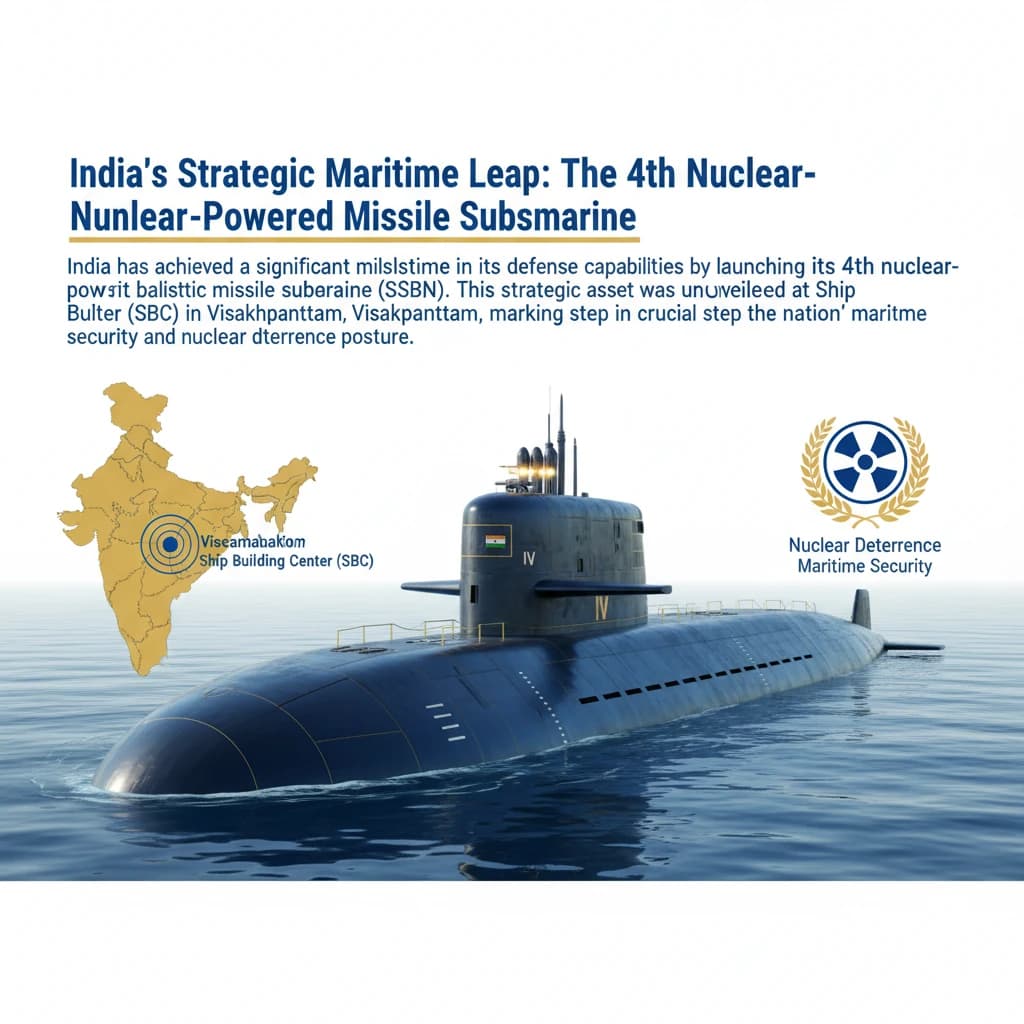
4th Nuclear-Powered Ballistic Missile Submarine
Medium⏱️ 8 min read
science and technology
📖 Introduction
India's Strategic Maritime Leap: The 4th Nuclear-Powered Ballistic Missile Submarine
India has achieved a significant milestone in its defense capabilities by launching its 4th nuclear-powered ballistic missile submarine (SSBN). This strategic asset was unveiled at the Ship Building Center (SBC) in Visakhapatnam, marking a crucial step in strengthening the nation's maritime security and nuclear deterrence posture.
What is an SSBN?
An SSBN is a submarine powered by a nuclear reactor, designed to carry and launch ballistic missiles, often equipped with nuclear warheads. Their primary role is to provide a credible second-strike capability, ensuring retaliation even if land-based or air-based nuclear assets are neutralized.
The launch of this submarine underscores India's commitment to indigenous defense production and its pursuit of a robust nuclear triad. A nuclear triad comprises delivery systems from land (missiles), air (bombers), and sea (submarines), offering diversified and resilient deterrence.
Significance of Nuclear Power
Nuclear-powered submarines can remain submerged for much longer periods than conventional diesel-electric submarines, limited only by crew endurance and food supplies. This extended endurance and stealth are vital for maintaining a constant, undetected presence in oceans, crucial for a second-strike capability.
Reinforcing the Nuclear Triad
With the induction of the 4th SSBN, India further solidifies the sea-based leg of its nuclear triad. This capability is paramount for India's 'No First Use' (NFU) policy, which relies on the assurance of massive retaliation in response to a nuclear attack. The survivability of SSBNs makes them the most credible platform for this.
UPSC Insight: Nuclear Triad
Understanding the components and strategic importance of India's nuclear triad is crucial for GS Paper 3 (Internal Security/Defense). Questions often revolve around its implications for India's foreign policy and regional stability. Remember to link it to India's 'No First Use' doctrine.
The development and launch of such advanced platforms demonstrate India's growing technological prowess in complex defense manufacturing. It also signals India's resolve to protect its strategic interests in the evolving geopolitical landscape, particularly in the Indo-Pacific region.
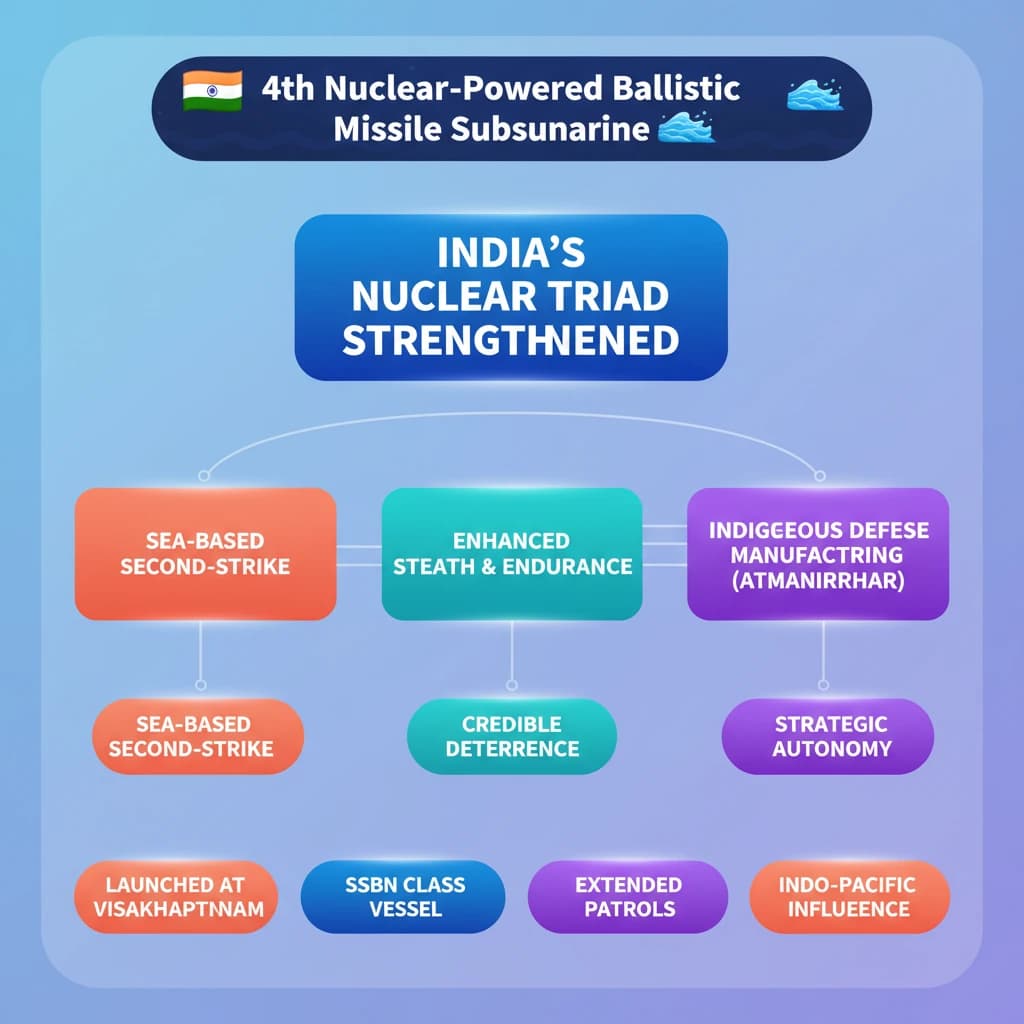
💡 Key Takeaways
- •India launched its 4th nuclear-powered ballistic missile submarine (SSBN) at Visakhapatnam.
- •This strengthens India's nuclear triad, particularly the sea-based second-strike capability.
- •SSBNs offer extended endurance and stealth, crucial for credible nuclear deterrence.
- •The development highlights India's indigenous defense manufacturing prowess ('Atmanirbhar Bharat').
- •It enhances India's strategic autonomy and influence in the Indo-Pacific region.
🧠 Memory Techniques
95% Verified Content
📚 Reference Sources
•Ministry of Defence, Government of India official statements (general knowledge)
•Reputable defense news outlets (e.g., The Hindu, Livefist, Naval News for general SSBN program details)
•Think tank reports on India's nuclear doctrine and naval capabilities