Hayflick Limit: Cellular Senescence and its Role in Ageing - UPSC Science And Technology
What is Hayflick Limit: Cellular Senescence and its Role in Ageing in UPSC Science And Technology?
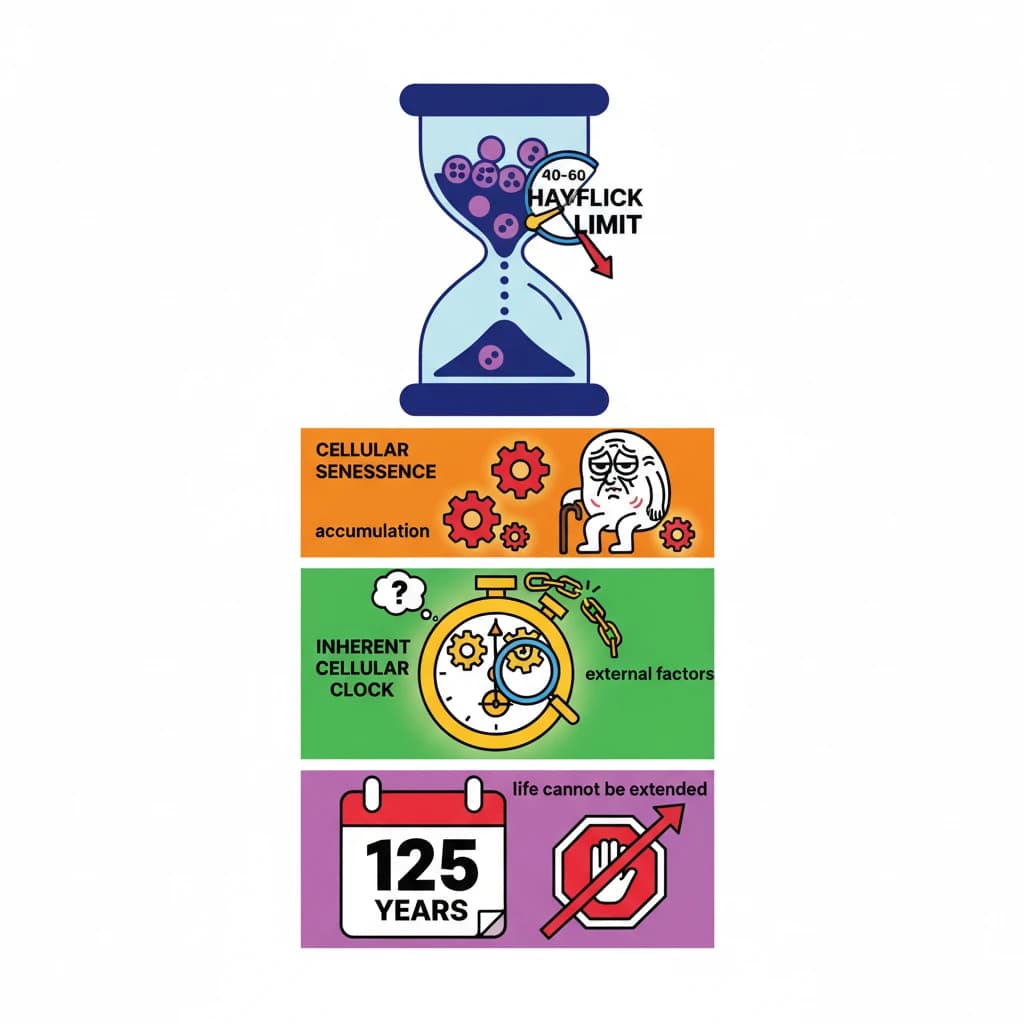
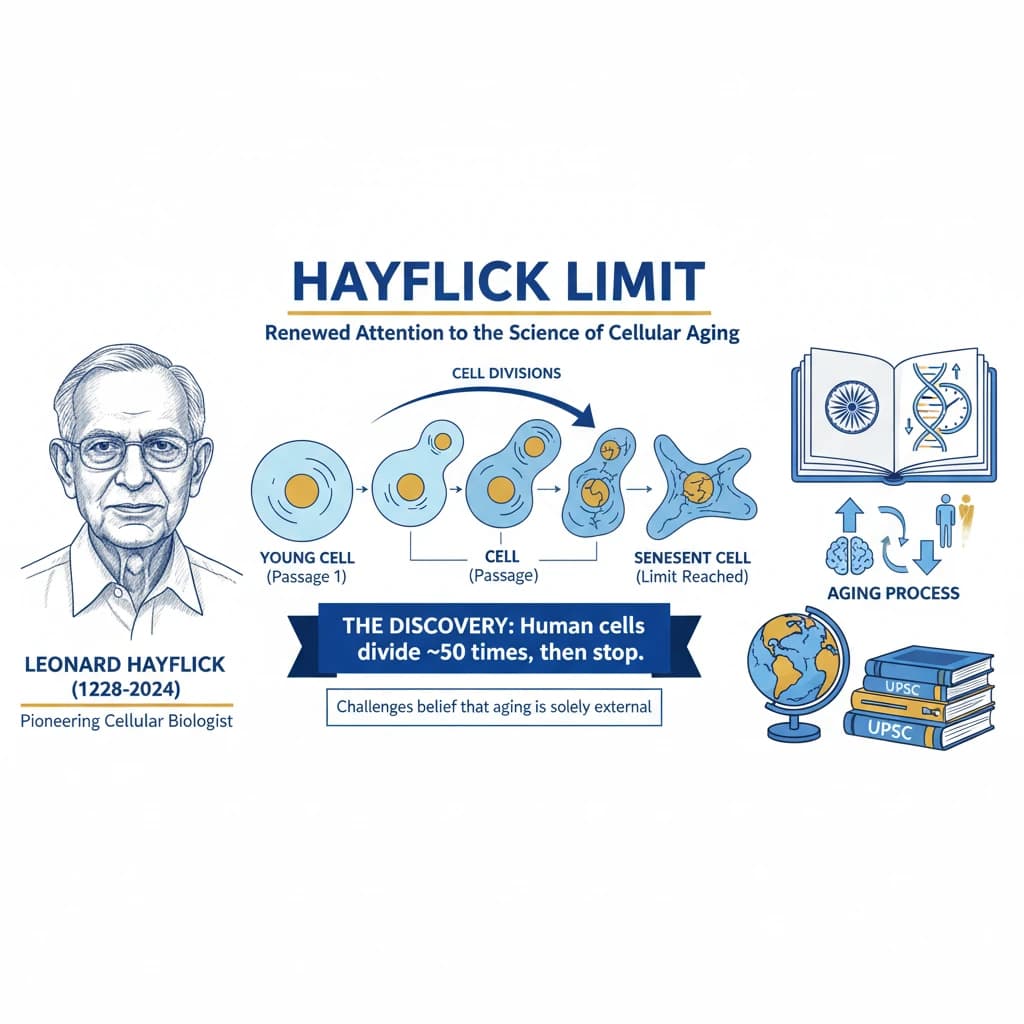
Hayflick Limit: Cellular Senescence and its Role in Ageing is a key topic under Science And Technology for UPSC Civil Services Examination. Key points include: The <strong>Hayflick Limit</strong> states that <strong>somatic cells</strong> can only divide a finite number of times (40-60) before stopping.. This cessation of division is called <strong>cellular senescence</strong>, and its accumulation contributes to aging.. The discovery challenged the belief that aging was solely due to external factors, introducing the concept of an <strong>inherent cellular clock</strong>.. Understanding this topic is essential for both UPSC Prelims and Mains preparation.
Why is Hayflick Limit: Cellular Senescence and its Role in Ageing important for UPSC exam?
Hayflick Limit: Cellular Senescence and its Role in Ageing is a Medium-level topic in UPSC Science And Technology. It is tested in both Prelims (factual MCQs) and Mains (analytical answer writing). Previous year UPSC questions have frequently covered aspects of Hayflick Limit: Cellular Senescence and its Role in Ageing, making it essential for comprehensive IAS preparation.
How to prepare Hayflick Limit: Cellular Senescence and its Role in Ageing for UPSC?
To prepare Hayflick Limit: Cellular Senescence and its Role in Ageing for UPSC: (1) Study the comprehensive notes covering all key concepts on Vaidra. (2) Practice previous year questions on this topic. (3) Connect it with current affairs using daily updates. (4) Revise using key takeaways and mind maps available for Science And Technology. (5) Write practice answers linking Hayflick Limit: Cellular Senescence and its Role in Ageing to related GS Paper topics.
Key takeaways of Hayflick Limit: Cellular Senescence and its Role in Ageing for UPSC
- The <strong>Hayflick Limit</strong> states that <strong>somatic cells</strong> can only divide a finite number of times (40-60) before stopping.
- This cessation of division is called <strong>cellular senescence</strong>, and its accumulation contributes to aging.
- The discovery challenged the belief that aging was solely due to external factors, introducing the concept of an <strong>inherent cellular clock</strong>.
- For humans, the maximum lifespan is estimated around <strong>125 years</strong>, beyond which this limit suggests life cannot be extended.
- Different species exhibit different <strong>Hayflick Limits</strong>, highlighting species-specific biological determinants of longevity.
Hayflick Limit: Cellular Senescence and its Role in Ageing
📖 Introduction
💡 Key Takeaways
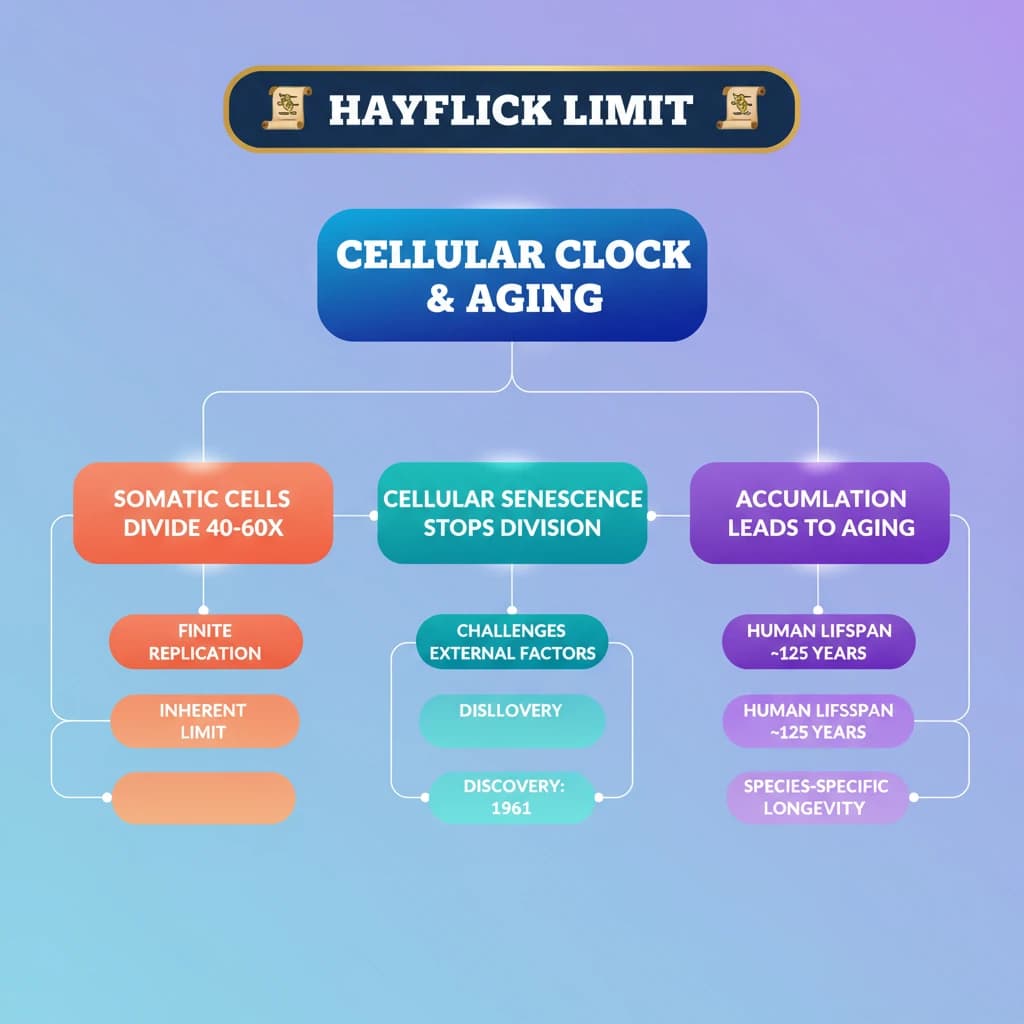
- •The <strong>Hayflick Limit</strong> states that <strong>somatic cells</strong> can only divide a finite number of times (40-60) before stopping.
- •This cessation of division is called <strong>cellular senescence</strong>, and its accumulation contributes to aging.
- •The discovery challenged the belief that aging was solely due to external factors, introducing the concept of an <strong>inherent cellular clock</strong>.
- •For humans, the maximum lifespan is estimated around <strong>125 years</strong>, beyond which this limit suggests life cannot be extended.
- •Different species exhibit different <strong>Hayflick Limits</strong>, highlighting species-specific biological determinants of longevity.
🧠 Memory Techniques