📖 Introduction
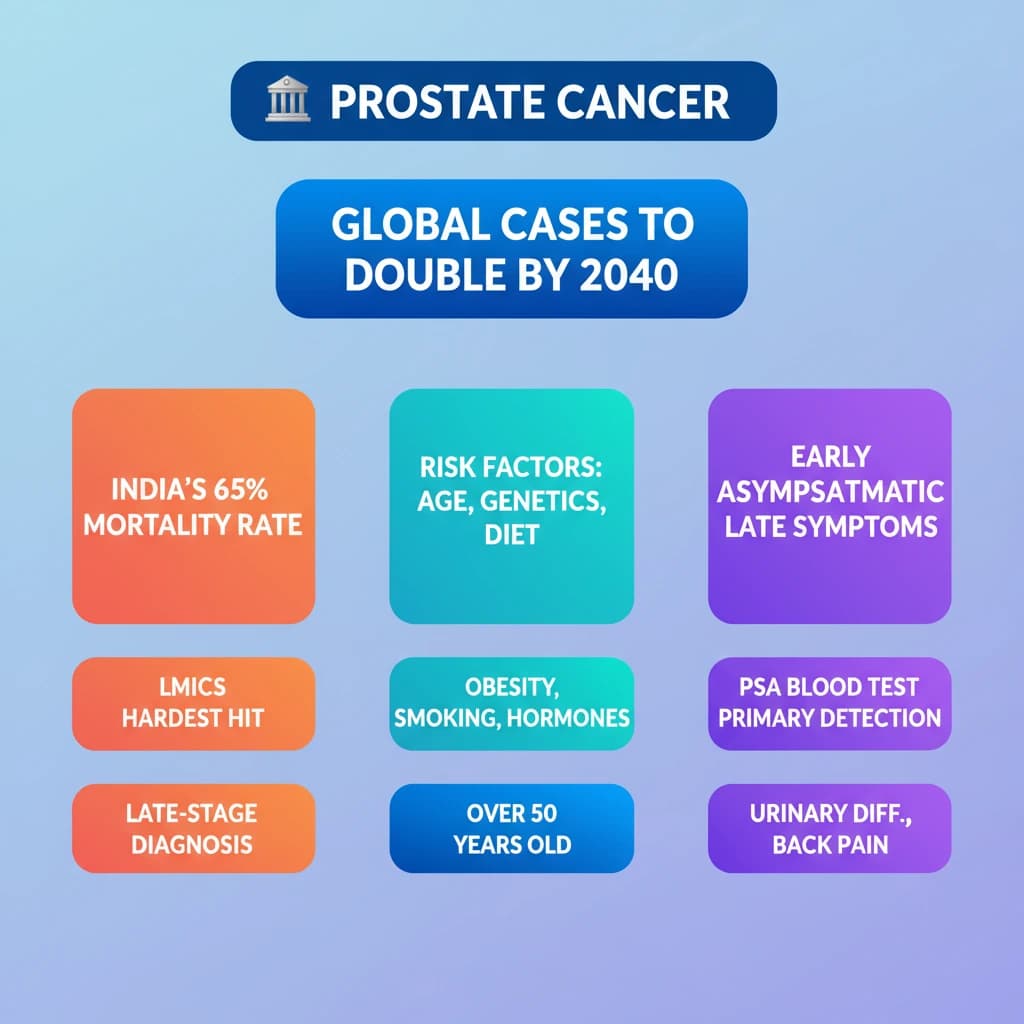
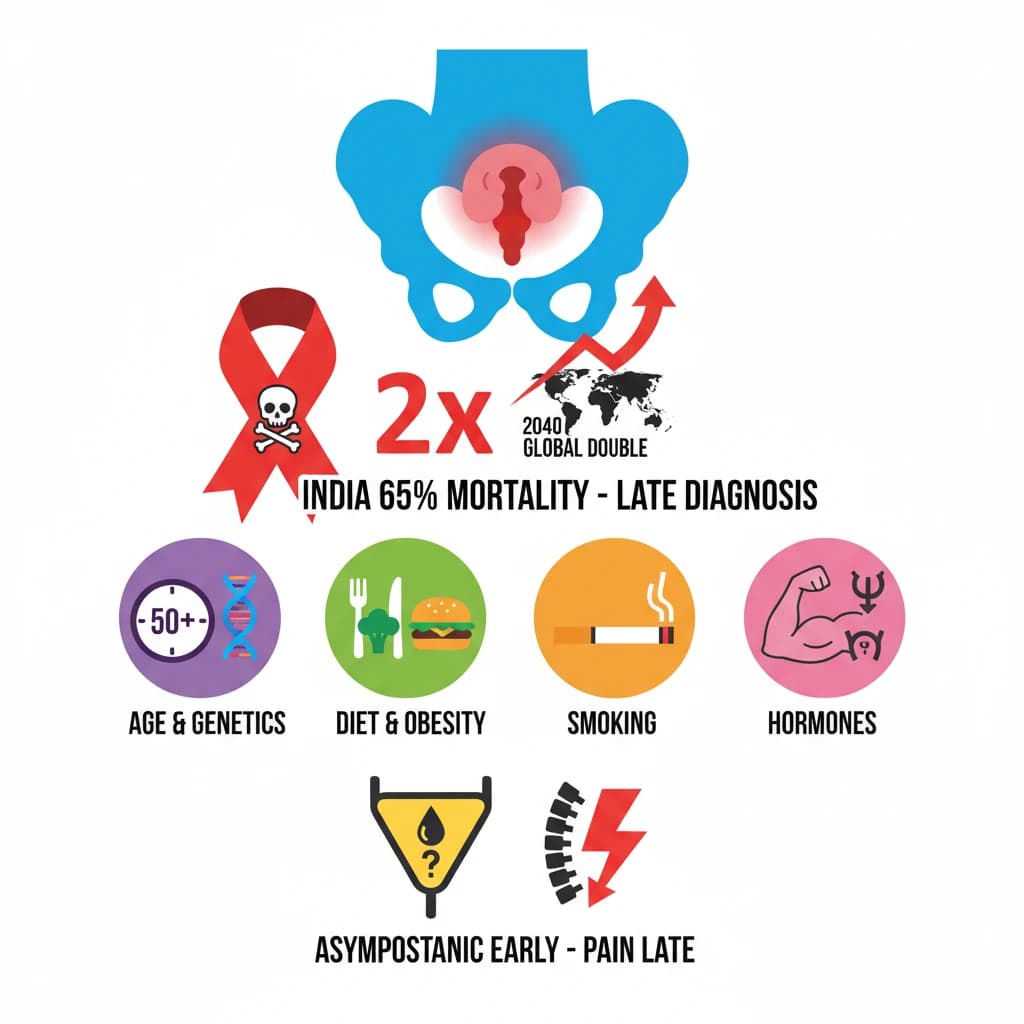
<h4>Why in News?</h4><p>A recent <strong>Lancet Commission paper</strong> has brought to light a concerning increase in <strong>prostate cancer cases</strong> across India. This surge is linked to a higher <strong>mortality rate</strong>, primarily due to diagnoses occurring at advanced stages of the disease.</p><div class='info-box'><p>In India, a significant <strong>65% mortality rate</strong> is observed among prostate cancer patients, largely attributed to late-stage diagnosis.</p><p>Globally, <strong>prostate cancer cases</strong> are projected to <strong>double by 2040</strong>. Low and middle-income countries, including India, are expected to bear the brunt of this rise, with new cases in India potentially reaching <strong>71,000 annually</strong>.</p></div><h4>What is Prostate Cancer?</h4><p><strong>Prostate cancer</strong> is a form of cancer that originates in the <strong>prostate gland</strong>. This small gland is an integral part of the male reproductive system, situated just below the bladder.</p><div class='info-box'><p>The <strong>prostate gland's primary function</strong> is to produce fluid that is essential for nourishing and transporting sperm.</p></div><h4>Prevalence and Global Impact</h4><p>The <strong>Lancet Commission report</strong> forecasts a substantial global increase in prostate cancer cases, with the most significant rise anticipated in <strong>low and middle-income countries</strong>.</p><div class='info-box'><p>In <strong>2020</strong>, prostate cancer was responsible for approximately <strong>3,75,000 deaths worldwide</strong>, making it the <strong>fifth leading cause of cancer-related deaths in men</strong>.</p><p>Currently, it accounts for about <strong>3% of all cancers in India</strong>, with an estimated <strong>33,000 to 42,000 new cases</strong> diagnosed each year.</p></div><p>The global increase in <strong>ageing populations</strong> and enhanced <strong>life expectancy</strong> contributes to a larger demographic of older men, which inherently elevates the risk of developing prostate cancer.</p><h4>Key Risk Factors</h4><p>Several factors are known to increase the risk of developing <strong>prostate cancer</strong>. Understanding these can aid in prevention and early detection strategies.</p><ul><li><strong>Age:</strong> The risk significantly increases with age, particularly in men <strong>over 50</strong>.</li><li><strong>Genetics:</strong> A family history of prostate cancer can elevate an individual's risk.</li><li><strong>Diet:</strong> Certain dietary patterns may contribute to increased risk.</li><li><strong>Obesity:</strong> Being overweight or obese is linked to a higher risk.</li><li><strong>Smoking:</strong> Tobacco use is a known risk factor for various cancers, including prostate cancer.</li><li><strong>Chemical Exposure:</strong> Exposure to certain chemicals can increase susceptibility.</li><li><strong>Prostate Inflammation:</strong> Chronic inflammation of the prostate (prostatitis) may play a role.</li><li><strong>Hormonal Factors:</strong> Androgen hormones, like testosterone, are known to influence prostate growth.</li></ul><h4>Symptoms of Prostate Cancer</h4><p>In its <strong>early stages</strong>, prostate cancer is often <strong>asymptomatic</strong>, meaning it shows no noticeable signs. However, as the disease progresses, various symptoms may emerge.</p><ul><li><strong>Difficulty urinating:</strong> This can include a weak stream or straining.</li><li><strong>Frequent urination:</strong> Especially noticeable during the night (<strong>nocturia</strong>).</li><li><strong>Blood in the urine:</strong> Known medically as <strong>hematuria</strong>.</li><li><strong>Erectile dysfunction:</strong> Difficulty achieving or maintaining an erection.</li><li><strong>Lower back or thigh pain:</strong> This can indicate advanced disease where cancer has spread.</li></ul><div class='key-point-box'><p>Early detection is critical, as symptoms often appear only in later stages when treatment may be more challenging.</p></div><h4>Detection Methods</h4><p>The primary method for screening and detecting potential prostate cancer involves a specific blood test.</p><div class='info-box'><p>The <strong>Prostate-Specific Antigen (PSA) blood test</strong> measures the level of <strong>PSA</strong> in the blood. Elevated PSA levels can be an indicator of prostate cancer.</p><p>However, it's important to note that elevated PSA levels can also result from other conditions, such as an enlarged prostate (<strong>benign prostatic hyperplasia - BPH</strong>) or inflammation (<strong>prostatitis</strong>), not necessarily cancer.</p></div><div class='exam-tip-box'><p>For UPSC, understand that the <strong>PSA test</strong> is a screening tool, not a definitive diagnostic test. Further investigations are required for confirmation.</p></div><h4>Treatment Options</h4><p>Treatment for prostate cancer varies depending on the stage of the cancer, the patient's overall health, and other factors. Common treatment modalities include:</p><ul><li><strong>Surgery:</strong> This typically involves a <strong>radical prostatectomy</strong>, which is the surgical removal of the entire prostate gland.</li><li><strong>Radiation Therapy:</strong> This treatment uses high-energy rays, such as X-rays or protons, to target and destroy cancer cells.</li><li><strong>Hormone Therapy:</strong> Also known as <strong>androgen deprivation therapy (ADT)</strong>, this approach aims to reduce the amount of <strong>testosterone</strong> in the body, as testosterone can fuel prostate cancer growth.</li><li><strong>Brachytherapy:</strong> A form of internal radiation therapy where tiny <strong>radioactive seeds</strong> are implanted directly into the prostate gland to deliver radiation precisely to the cancerous tissue.</li></ul>