Loading page, please wait…
Vaidra Logo
Vaidra

Top 4 items + smart groups

UPSC GPT
New
Current Affairs
Daily Solutions
Daily Puzzle
Mains Evaluator

Version 2.0.0 • Built with ❤️ for UPSC aspirants

Loading...
Loading...
Loading...
Loading...
Loading...
Loading...
Loading...
Loading...
Loading...
Loading...
Loading...
Loading...
Loading...
Back
All Subjects

Topics

0 topics • 0 completed

Loading topics...
Loading...
Loading...
Loading...
Loading...
Loading...
Overall Progress0%

Mosquitofish: Ecological Impact & Use in Mosquito Control (India) - UPSC Science And Technology

What is Mosquitofish: Ecological Impact & Use in Mosquito Control (India) in UPSC Science And Technology?

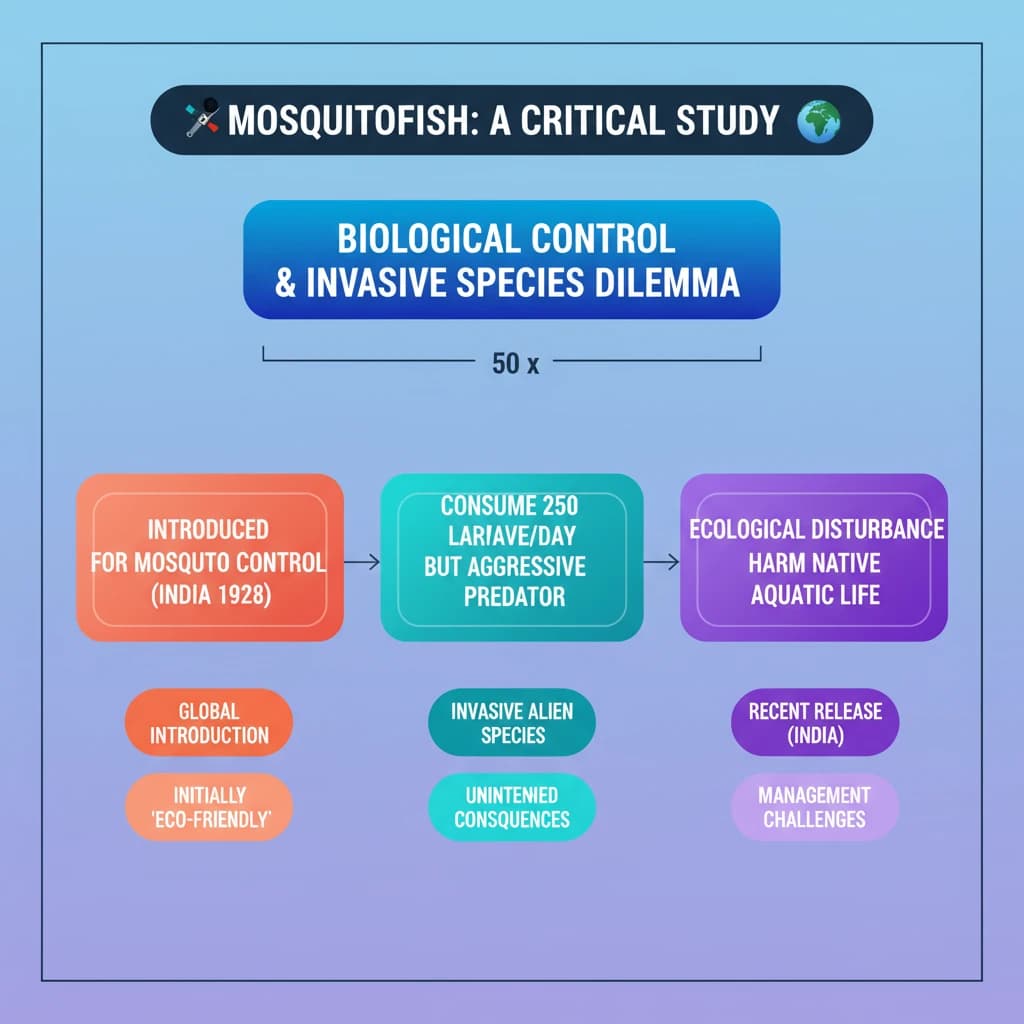
Mosquitofish: Ecological Impact & Use in Mosquito Control (India) is a key topic under Science And Technology for UPSC Civil Services Examination. Key points include: Mosquitofish (Gambusia affinis, G. holbrooki) were introduced globally, including India (1928), for mosquito larvae control.. Initially seen as eco-friendly, they became invasive alien species, causing significant ecological disturbances.. They consume up to 250 larvae/day, but their aggressive nature harms native aquatic life.. Understanding this topic is essential for both UPSC Prelims and Mains preparation.

Why is Mosquitofish: Ecological Impact & Use in Mosquito Control (India) important for UPSC exam?

Mosquitofish: Ecological Impact & Use in Mosquito Control (India) is a Medium-level topic in UPSC Science And Technology. It is tested in both Prelims (factual MCQs) and Mains (analytical answer writing). Previous year UPSC questions have frequently covered aspects of Mosquitofish: Ecological Impact & Use in Mosquito Control (India), making it essential for comprehensive IAS preparation.

How to prepare Mosquitofish: Ecological Impact & Use in Mosquito Control (India) for UPSC?

To prepare Mosquitofish: Ecological Impact & Use in Mosquito Control (India) for UPSC: (1) Study the comprehensive notes covering all key concepts on Vaidra. (2) Practice previous year questions on this topic. (3) Connect it with current affairs using daily updates. (4) Revise using key takeaways and mind maps available for Science And Technology. (5) Write practice answers linking Mosquitofish: Ecological Impact & Use in Mosquito Control (India) to related GS Paper topics.

Key takeaways of Mosquitofish: Ecological Impact & Use in Mosquito Control (India) for UPSC

  • Mosquitofish (Gambusia affinis, G. holbrooki) were introduced globally, including India (1928), for mosquito larvae control.
  • Initially seen as eco-friendly, they became invasive alien species, causing significant ecological disturbances.
  • They consume up to 250 larvae/day, but their aggressive nature harms native aquatic life.
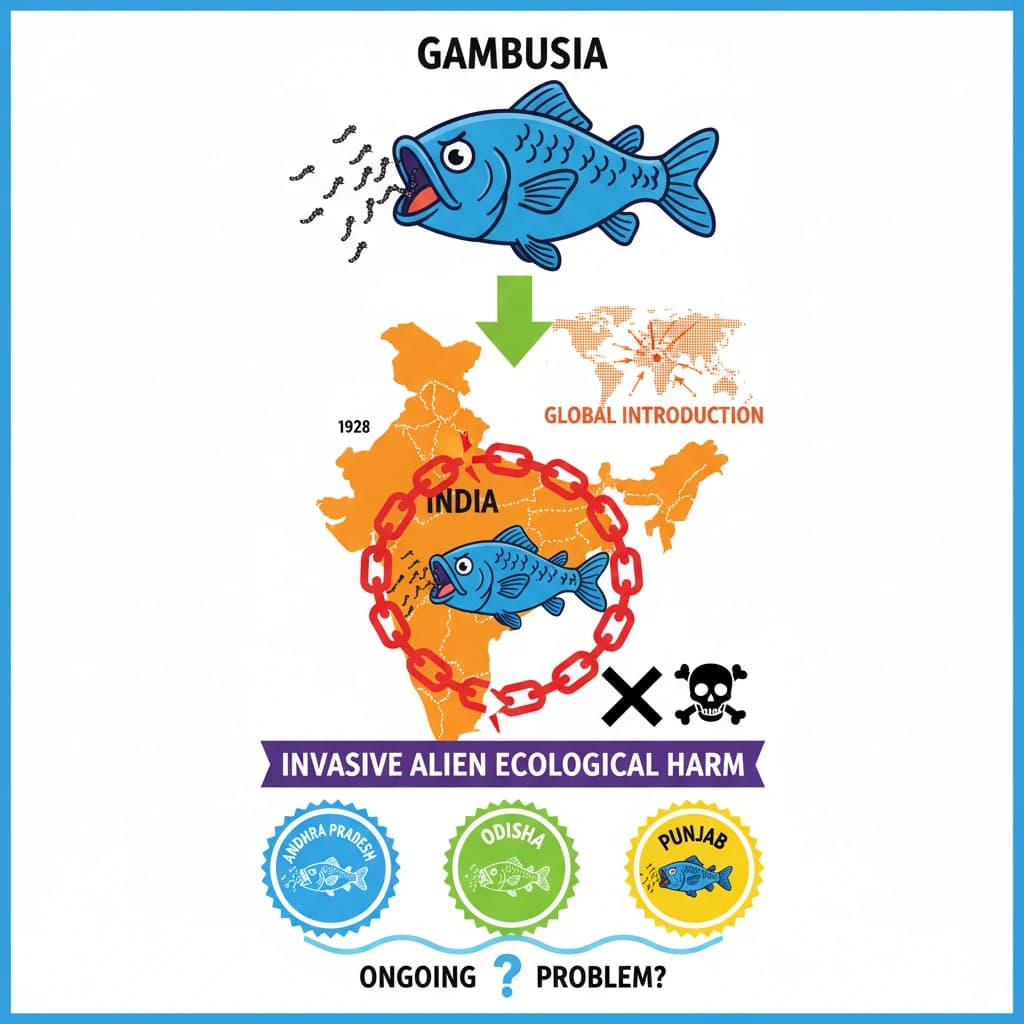
  • Recent releases in Andhra Pradesh, Odisha, and Punjab highlight the ongoing, yet problematic, reliance on this method.
  • The case of Mosquitofish is a critical example of the unintended consequences of biological control and invasive species management challenges.
  • Mosquito-borne diseases remain a major public health challenge in India and globally, necessitating careful selection of control methods.
Mosquitofish: Ecological Impact & Use in Mosquito Control (India)

Mosquitofish: Ecological Impact & Use in Mosquito Control (India)

Medium⏱️ 8 min read✓ 95% Verified
science and technology

📖 Introduction

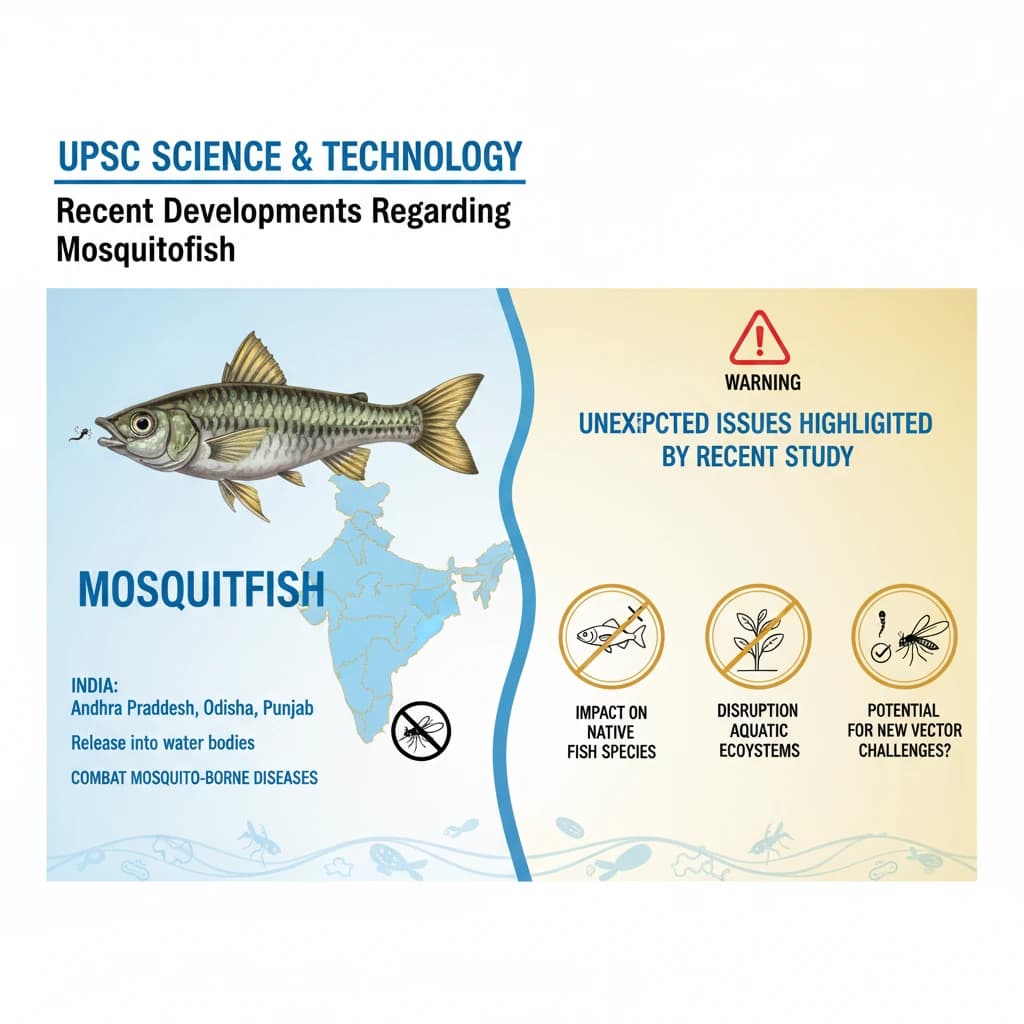
<h4>Recent Developments Regarding Mosquitofish</h4><p>Recently, various regions across India, including <strong>Andhra Pradesh</strong>, <strong>Odisha</strong>, and <strong>Punjab</strong>, have initiated the release of <strong>mosquitofish</strong> into local water bodies. This action aims to combat the escalating menace of <strong>mosquito-borne diseases</strong>.</p><p>However, a recent study has brought to light significant, unexpected issues associated with this approach. It underscores the potential drawbacks inherent in this method of <strong>biological control</strong>.</p><h4>What are Mosquitofish?</h4><p>The term <strong>Mosquitofish</strong> primarily refers to two species: <strong><em>Gambusia affinis</em></strong> and <strong><em>Gambusia holbrooki</em></strong>. These fish originated from the <strong>U.S.</strong> and were initially perceived as an environmentally friendly and sustainable solution for mosquito control.</p><div class='info-box'><p><strong>Key Species:</strong></p><ul><li><strong><em>Gambusia affinis</em></strong></li><li><strong><em>Gambusia holbrooki</em></strong></li></ul><p>These small freshwater fish belong to the family <strong>Poeciliidae</strong>.</p></div><h4>Mechanism of Action and Initial Intent</h4><p>The primary idea behind using <strong>Mosquitofish</strong> was their predatory nature. They are known to consume a large number of <strong>mosquito larvae</strong>, making them a potential biological weapon against mosquito populations.</p><div class='info-box'><p><strong>Larval Consumption:</strong> Mosquitofish can consume up to <strong>250 mosquito larvae per day</strong>, which was the basis for their widespread introduction.</p></div><h4>The Unintended Consequences: Invasive Alien Species</h4><p>Despite their initial promise, the strategy of introducing <strong>Mosquitofish</strong> globally has largely backfired. The unintended result was the worldwide dissemination of these fish, leading to significant <strong>ecological disturbances</strong>.</p><div class='key-point-box'><p><strong>Transformation into Invasive Species:</strong> The introduced <strong>Mosquitofish</strong> have transformed into <strong>invasive alien species</strong>. They outcompete native fish, prey on the eggs and larvae of other aquatic organisms, and disrupt local ecosystems.</p></div><h4>Introduction of Mosquitofish in India</h4><p>The first introduction of <strong>Gambusia</strong> (Mosquitofish) in <strong>India</strong> dates back to <strong>1928</strong> during <strong>British rule</strong>. The objective was to combat the rapid spread of mosquitoes and control malaria.</p><p>Following this initial introduction, various <strong>government bodies</strong> and <strong>private organizations</strong> in India collectively joined efforts to combat malaria by promoting this biological control method.</p><h4>Global Challenge of Mosquito-Borne Diseases</h4><p>Over the last century, global climate and habitat changes have significantly heightened the prevalence of <strong>mosquito-borne diseases</strong>. These diseases now impact over <strong>500 million people</strong> across more than <strong>150 countries</strong>.</p><p>In <strong>India</strong> alone, approximately <strong>40 million individuals</strong> annually suffer from these diseases. This persistent public health challenge has been a concern for decades, driving the search for effective control methods.</p><div class='exam-tip-box'><p><strong>UPSC Relevance:</strong> Understanding the dual nature of biological control agents like <strong>Mosquitofish</strong> is crucial. While offering a solution, they can also become <strong>invasive alien species</strong>, impacting biodiversity (<strong>GS Paper 3: Environment & Ecology</strong>).</p></div>
Concept Diagram

💡 Key Takeaways

  • •Mosquitofish (Gambusia affinis, G. holbrooki) were introduced globally, including India (1928), for mosquito larvae control.
  • •Initially seen as eco-friendly, they became invasive alien species, causing significant ecological disturbances.
  • •They consume up to 250 larvae/day, but their aggressive nature harms native aquatic life.
  • •Recent releases in Andhra Pradesh, Odisha, and Punjab highlight the ongoing, yet problematic, reliance on this method.
  • •The case of Mosquitofish is a critical example of the unintended consequences of biological control and invasive species management challenges.
  • •Mosquito-borne diseases remain a major public health challenge in India and globally, necessitating careful selection of control methods.

🧠 Memory Techniques
Memory Aid
95% Verified Content

📚 Reference Sources

•General knowledge on Mosquitofish and invasive species

Related Topics

Loading related topics...
Explore:Science And Technology Topics·All Subjects·Daily Current Affairs·Editorial Analysis·Previous Year Questions·UPSC GPT
Mosquitofish: Ecological Impact & Use in Mosquito Control (India) - UPSC Science And Technology