📖 Introduction
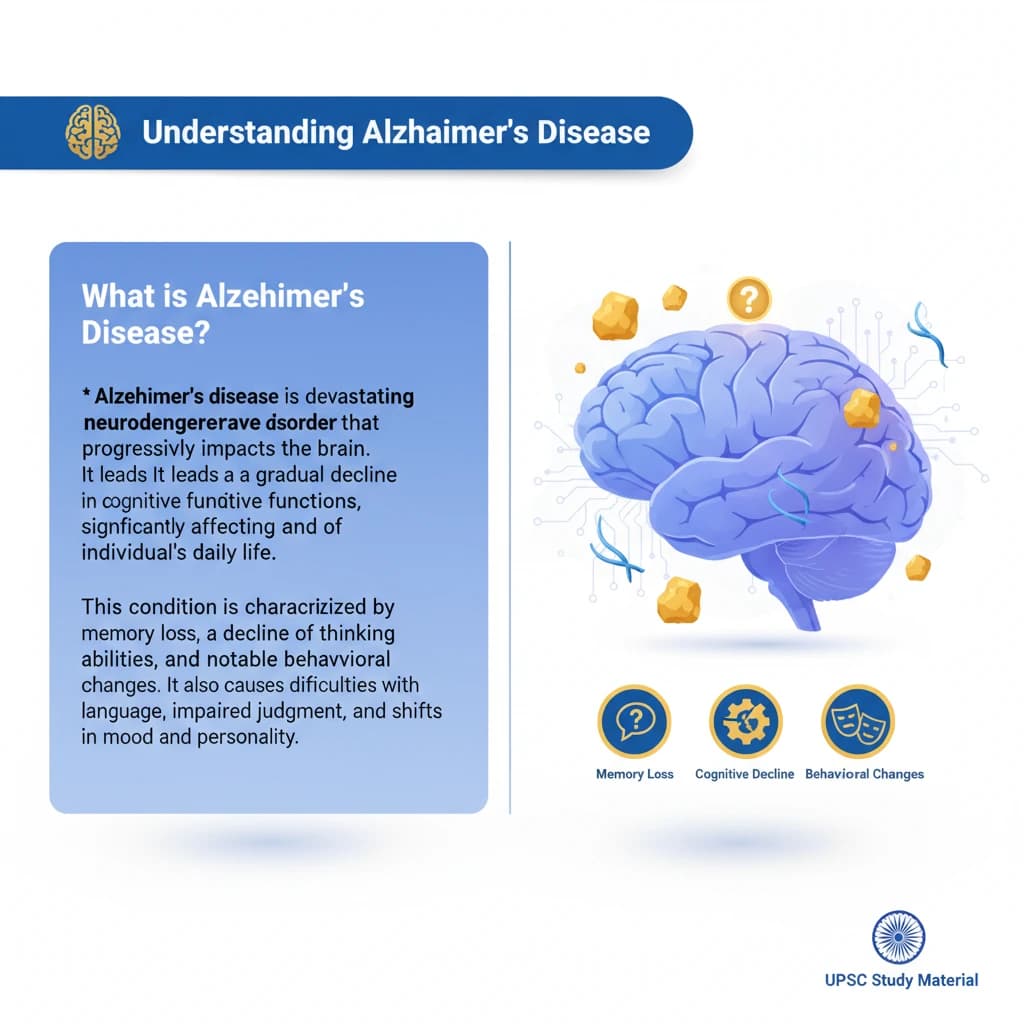
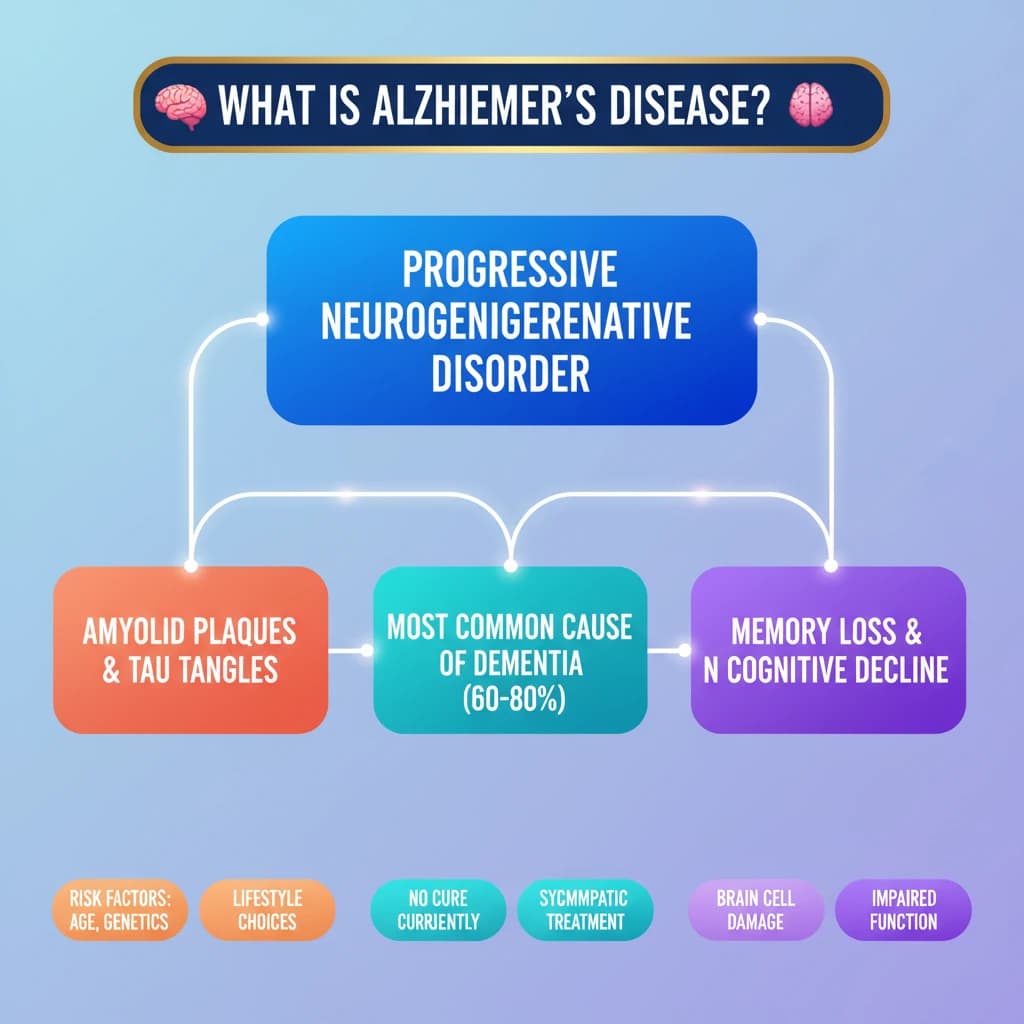
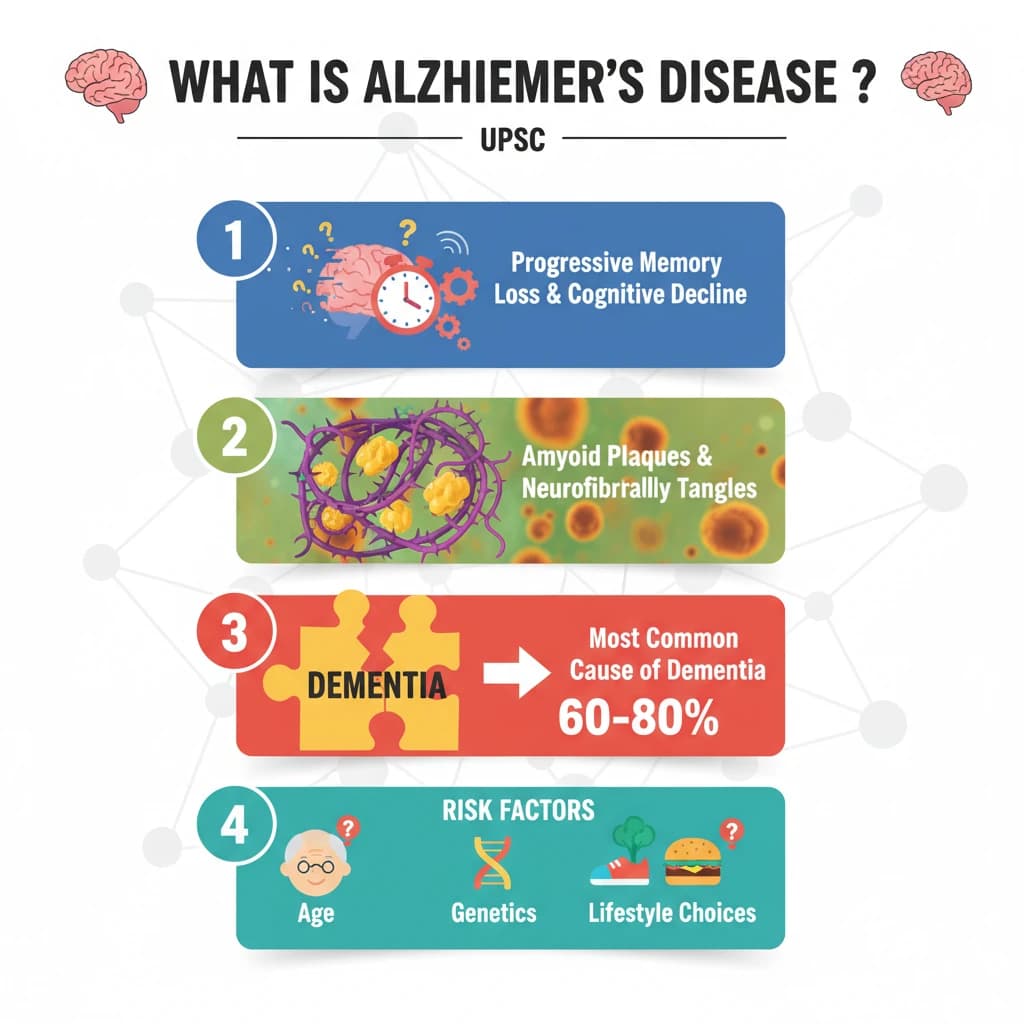
<h4>Understanding Alzheimer's Disease</h4><p><strong>Alzheimer's disease</strong> is a devastating <strong>neurodegenerative disorder</strong> that progressively impacts the brain. It leads to a gradual decline in cognitive functions, significantly affecting an individual's daily life.</p><p>This condition is characterized by memory loss, a decline in thinking abilities, and notable behavioral changes. It also causes difficulties with language, impaired judgment, and shifts in mood and personality.</p><div class='info-box'><p><strong>Key Symptoms of Alzheimer's:</strong><ul><li><strong>Memory loss</strong> affecting daily life</li><li>Challenges in <strong>planning or solving problems</strong></li><li>Difficulty completing familiar tasks</li><li><strong>Confusion</strong> with time or place</li><li>Trouble understanding visual images and spatial relationships</li><li>New problems with <strong>words in speaking or writing</strong></li><li>Misplacing things and losing the ability to retrace steps</li><li>Decreased or poor judgment</li><li>Changes in <strong>mood or personality</strong></li></ul></p></div><h4>Pathological Hallmarks of Alzheimer's</h4><p>The disease involves distinct changes within the brain. Two primary pathological features are the formation of <strong>amyloid plaques</strong> and <strong>neurofibrillary tangles</strong>.</p><p>These abnormal protein deposits contribute to the accelerated aging and eventual death of neurons, particularly those critical for memory storage and processing.</p><div class='key-point-box'><p><strong>Alzheimer's and Dementia:</strong> <strong>Alzheimer's disease</strong> is the most prevalent cause of <strong>dementia</strong>, accounting for approximately <strong>60-80%</strong> of all dementia cases globally. Dementia is a broader term for a decline in mental ability severe enough to interfere with daily life.</p></div><h4>Causes and Risk Factors</h4><p>The exact causes of Alzheimer's disease are not yet fully understood. However, several factors are known to increase the risk of developing the condition.</p><ul><li><strong>Age:</strong> Advancing age is the most significant risk factor. The majority of cases occur in individuals <strong>over 65 years</strong>.</li><li><strong>Genetics:</strong> Specific <strong>gene mutations</strong> can significantly elevate an individual's risk. While some forms are strongly hereditary, most cases are not directly inherited.</li><li><strong>Amyloid Protein:</strong> A central hypothesis suggests that the abnormal accumulation of proteins, particularly <strong>amyloid-beta</strong>, in and around brain cells is a primary driver. These deposits form <strong>plaques</strong>.</li><li><strong>Tau Protein:</strong> Another protein, <strong>tau</strong>, forms abnormal structures called <strong>neurofibrillary tangles</strong> inside brain cells, further disrupting neuronal function.</li><li><strong>Lifestyle Factors:</strong> Chronic health conditions and lifestyle choices play a role. These include <strong>cardiovascular disease</strong>, <strong>diabetes</strong>, <strong>obesity</strong>, <strong>smoking</strong>, and a <strong>sedentary lifestyle</strong>.</li></ul><h4>Diagnosis of Alzheimer's</h4><p>Diagnosing Alzheimer's involves a combination of clinical assessments and advanced medical tests. Early and accurate diagnosis is crucial for management.</p><ul><li><strong>Cognitive and Neuropsychological Tests:</strong> These assessments evaluate memory, thinking, problem-solving abilities, and other cognitive functions.</li><li><strong>Imaging Techniques:</strong> <strong>MRI</strong> (Magnetic Resonance Imaging) and <strong>PET scans</strong> (Positron Emission Tomography) are used to identify structural and metabolic changes in the brain, such as brain shrinkage or reduced activity in certain areas.</li><li><strong>Biomarker Tests:</strong> Advanced tests, including <strong>cerebrospinal fluid (CSF) analysis</strong> and <strong>amyloid PET scans</strong>, can detect the presence of amyloid plaques and tau tangles, which are specific markers of the disease.</li></ul><h4>Treatment and Management</h4><p>Currently, there is <strong>no cure</strong> for Alzheimer's disease. However, various treatments and supportive therapies are available to help manage symptoms and improve the quality of life for affected individuals.</p><p>Medicines can temporarily reduce some symptoms, such as memory loss and cognitive decline. Non-pharmacological interventions, including cognitive stimulation and lifestyle adjustments, also play a vital role.</p><h4>Global and Indian Prevalence</h4><p>Alzheimer's disease represents a significant global public health challenge, with its prevalence expected to rise due to aging populations worldwide.</p><div class='info-box'><p><strong>Prevalence Data (WHO, 2023):</strong><ul><li>Over <strong>55 million</strong> individuals globally are affected by <strong>dementia</strong>.</li><li><strong>Alzheimer's disease</strong> accounts for approximately <strong>75%</strong> of these dementia cases.</li><li>In <strong>India</strong>, an estimated <strong>3 to 9 million</strong> people are believed to be affected.</li><li>This figure is projected to increase substantially as India's population continues to age.</li></ul></p></div><div class='exam-tip-box'><p><strong>UPSC Insight:</strong> Understanding the prevalence and socio-economic impact of diseases like Alzheimer's is crucial for <strong>GS-II (Social Justice - Health)</strong> and <strong>GS-I (Social Issues - Ageing Population)</strong>. Be prepared to discuss policy implications.</p></div>